



Antique Woven Art
Antique woven art brings centuries of textile skill into your interior, spanning tribal bags, verdure wall hangings and rush-seated chairs.
Antique Woven Art
When you search for antique woven art, you encounter a diverse range of historic textiles, seating and wall decorations from various European and tribal traditions. These pieces span centuries of craftsmanship, including Persian nomadic bags, Flemish verdure tapestries and Arts and Crafts rush-seated chairs.
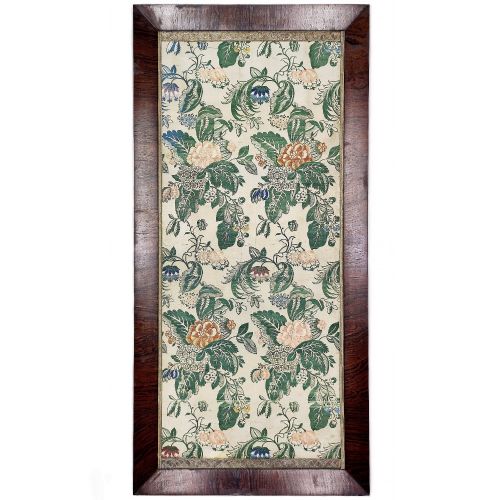
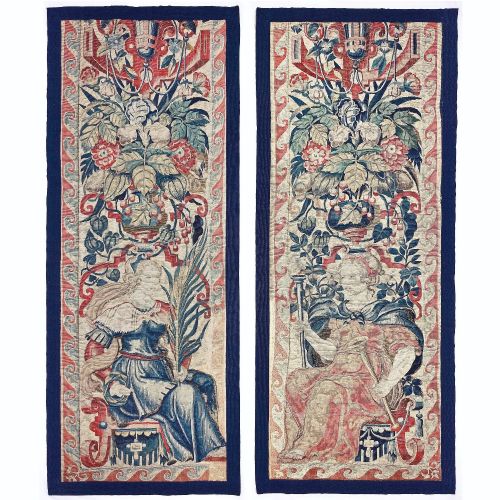
You are most likely to meet wall tapestries depicting pastoral or woodland scenes alongside tribal salt-bags and horse decorations from nineteenth and early twentieth-century origins. Utility and artistry blend together in these items, whether they served as nomadic horse trappings or domestic seat furnishings.
The selection ranges from sixteenth-century Flemish panels to Edwardian cane armchairs, uniting disparate cultures through the medium of interlaced plant and animal fibres. Each piece carries the distinct structural marks of its regional workshop or nomadic weaver.
Materials and construction methods
The objects rely primarily on natural materials such as wool, silk, cotton, rush, cane, rattan and sturdy timbers like oak, beech and laburnum. Artisans utilised natural dyes to colour the yarns used in tribal weavings and pictorial wall tapestries.
Weavers interlaced warp and weft threads on upright or horizontal looms to build dense pictorial surfaces, while furniture makers integrated woven rush and cane into wooden frames. Structural integrity depended on tight tension during weaving and precise joinery for the chairs and baskets.
Antique Woven Art Retail Price Guide 2026
Typical asking prices for woven art among the pieces listed under this phrase on Sellingantiques today, from the lower quarter to the upper quarter. They describe what is for sale here now, not the wider market.
Listings incorporate items produced across several centuries, from sixteenth-century Flemish panels to twentieth-century wicker furniture.
Determinants of quality
Quality rests upon the tightness of the weave, the complexity of the dye work and the survival of original structural elements. Finer specimens display dense knotting or precise tapestry weft-work that maintains crisp pictorial details and structural stability.
The integrity of the materials, such as undamaged natural fibres and stable wooden frames, elevates a piece within its category. Greater precision in regional motifs and well-preserved borders distinguish superior examples from standard utility items.
Dryad of Leicester·Morris and Co·Stevens of Coventry
The Antique Woven Art Glossary
- Verdure tapestry
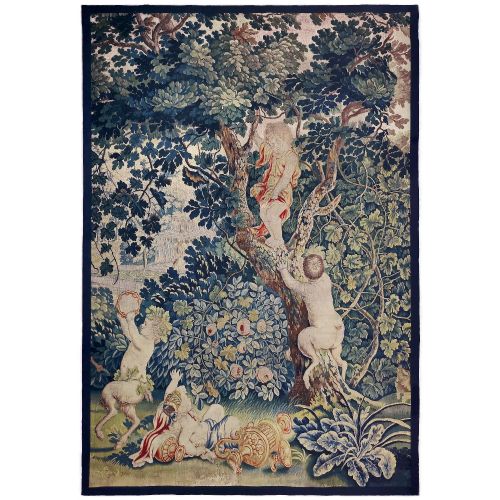
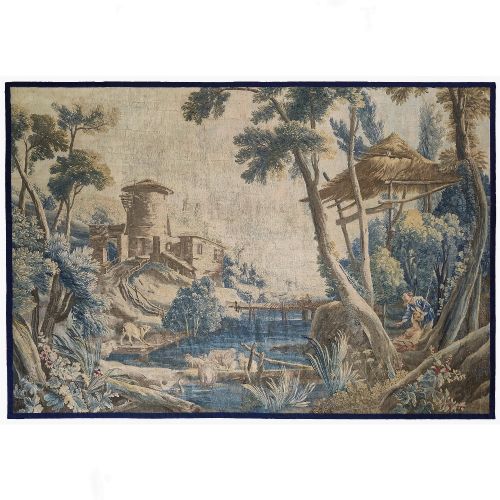
- A wall hanging featuring a stylized landscape or woodland foliage, popular in seventeenth and eighteenth-century European weaving. These panels often depict lush leaves and distant trees.
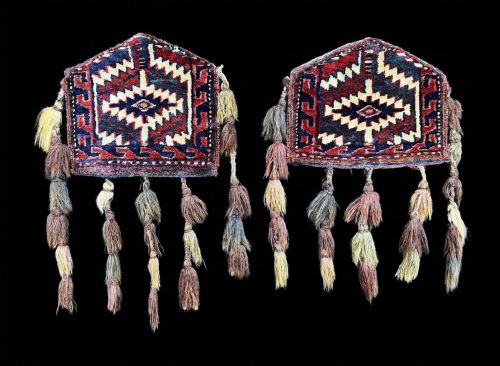
- Asmalyk
- A pentagonal camel trapping produced by Turkmen tribes, traditionally hung on the flanks of a bridal camel during wedding processions. They display geometric motifs executed in rich wool.
- Rush seating
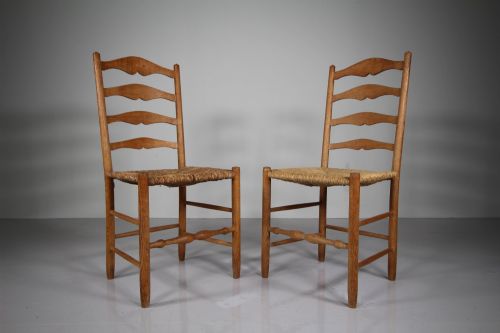
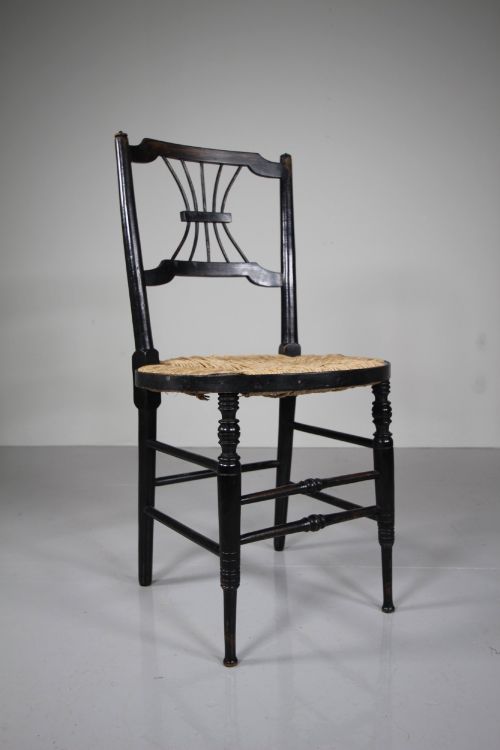
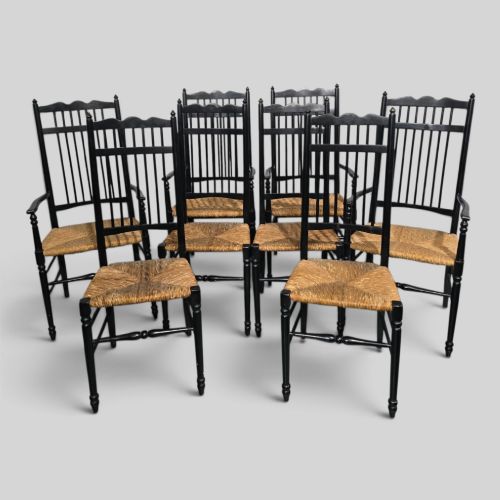
- Chair seats constructed from twisted marsh rushes woven tightly around a wooden frame. This technique provides a resilient and supportive surface for vernacular and Arts and Crafts chairs.
- Chanteh
- A small tribal bag or vanity pouch woven by nomadic groups in Persia for personal possessions. Collectors prize them for their concentrated tribal patterns and use of natural dyes.
- Ikat
- A dyeing technique where yarn is resist-dyed in patterns prior to weaving the textile. This method creates characteristic soft edges along the design motifs.
Antique Woven Art: Frequently Asked Questions
How were antique tapestries displayed?
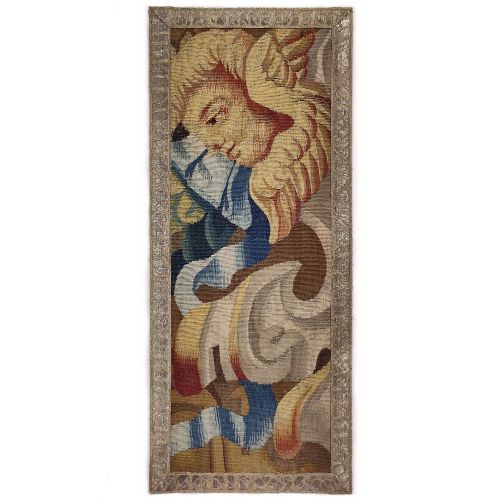
Historic wall tapestries were hung directly on stone or plaster walls to provide insulation and decorative splendour in large rooms.
Today, they require careful mounting onto supporting linen backings to distribute their weight evenly without straining the ancient threads.
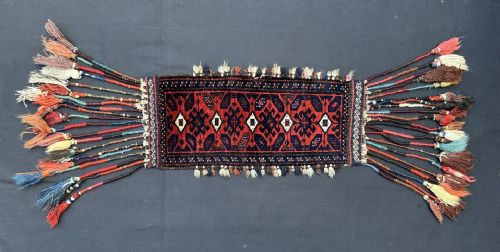
What is a tribal salt-bag?
Nomadic tribes utilised small woven salt-bags to carry essential minerals for their livestock during seasonal migrations across harsh terrain.
These utilitarian pouches double as miniature displays of regional weaving traditions, featuring dense geometric patterns and natural dyes.
How do I care for rush seats?
Rush-seated chairs require stable indoor humidity to prevent the natural marsh fibres from becoming excessively dry and brittle over time.
Routine dusting with a soft brush keeps the woven plant material clean without introducing harmful moisture that could rot the fibres.
How are nomadic weavings attributed?
Experts identify the origins of tribal bags and trappings by analysing specific structural traits, palette choices and characteristic geometric motifs.
Regions such as Khorassan, Fars and the Trans-Caspian steppes produced distinct styles associated with specific tribal confederations.