





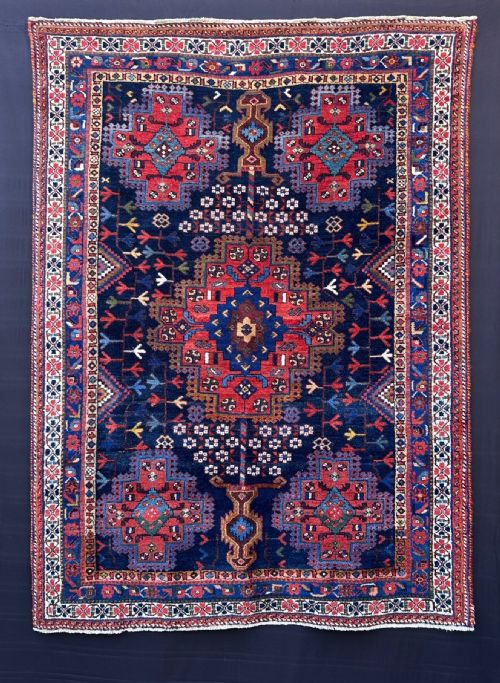
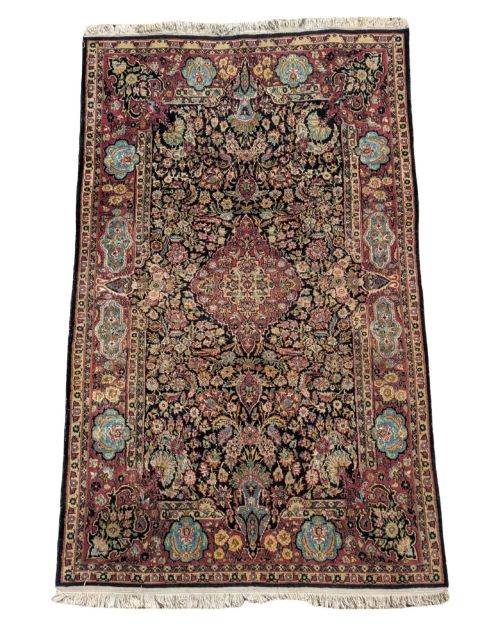
Antique Wool Floor Carpet
These heavy floor coverings bring warmth and rich pattern to a room, grounding a space with centuries of weaving tradition.

Antique Wool Floor Carpet
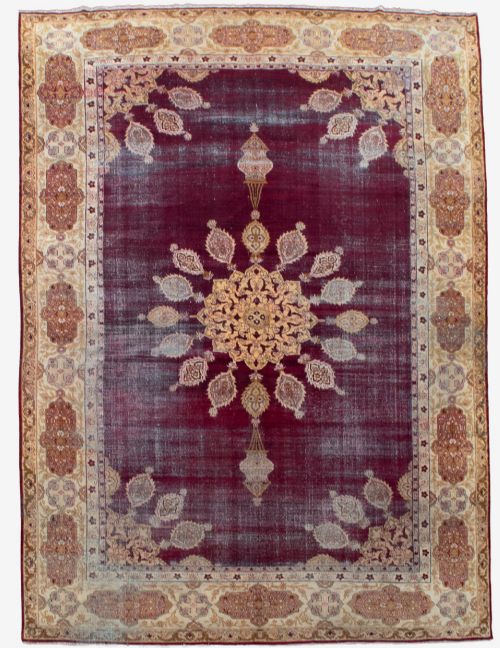
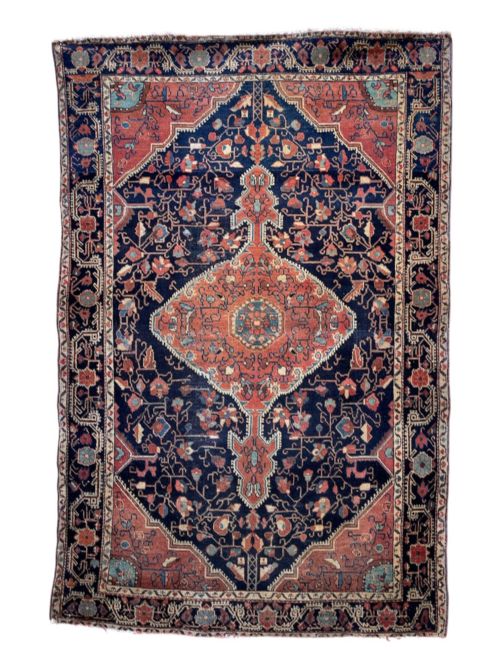
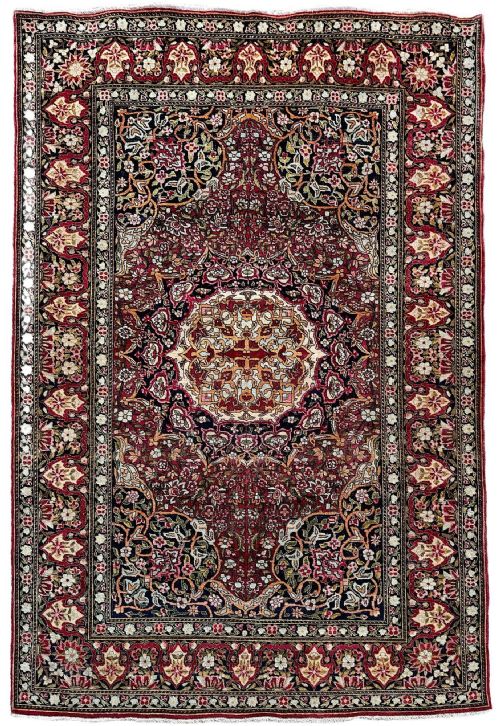
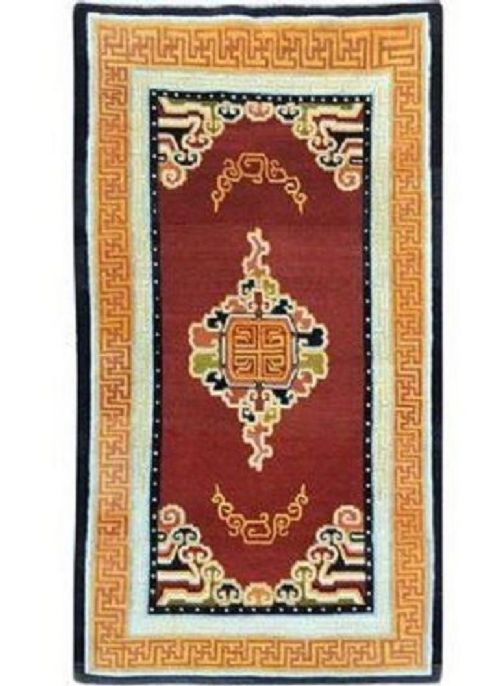
An antique wool floor carpet represents a durable textile foundation woven across regions spanning Persia, the Caucasus, Turkey, and Central Asia. These floor coverings arrive in various formats, from expansive saloon carpets down to smaller area rugs and long hallway runners.
The pieces on this page span from the middle of the nineteenth century through the early decades of the twentieth century. Buyers encounter rural village works, nomadic tribal compositions, and workshop pieces originating from established regional centres.
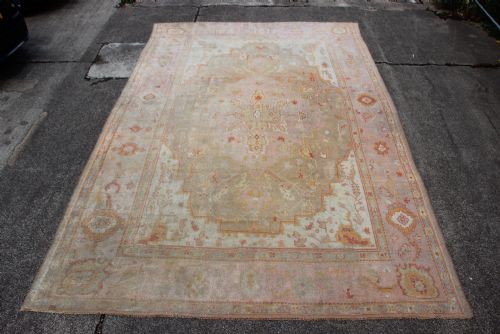
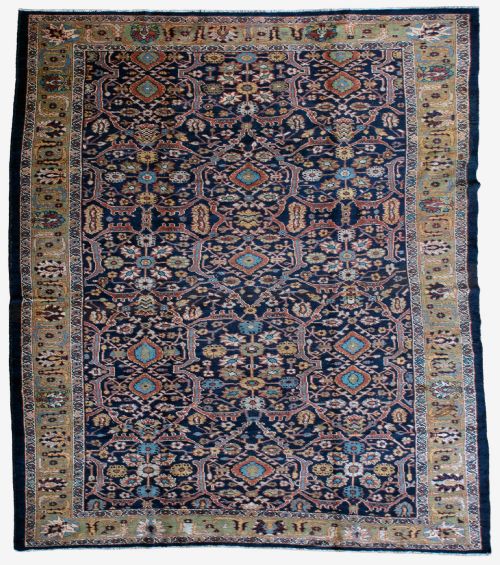
Forms include specific regional weaves such as Heriz, Oushak, Bidjar, and Kazak. Each type carries distinct structural traits and local motifs passed down through generations of makers.
Materials and construction methods
Makers utilised resilient local wool for the pile, foundation warps, and wefts, sometimes combining cotton for stability in larger formats. Natural dyes derived from plants and minerals provided the palette, producing deep reds, indigos, and earthy tones that age gracefully over time.
Weavers knotted the wool yarn by hand onto vertical or horizontal looms using either symmetrical or asymmetrical knots. Finishing touches involved securing the selvages and securing the ends to prevent fraying during daily domestic use.
Antique Wool Floor Carpet Retail Price Guide 2026
Typical asking prices for wool floor carpet among the pieces listed under this phrase on Sellingantiques today, from the lower quarter to the upper quarter. They describe what is for sale here now, not the wider market.
Listings feature pieces spanning from the mid-nineteenth century through the 1930s, utilising wool, cotton, silk, and natural dyes across diverse regional styles.
Evaluating quality and execution
The density of the knotting dictates the crispness of the design and the resilience of the pile under foot. Finer execution allows complex floral lattices and geometric medallions to hold their definition across large surfaces.
The purity and depth of the natural dyes influence visual harmony as the piece ages. Skill in dye extraction creates subtle variations in tone, known as abrash, which add texture and life to the field.
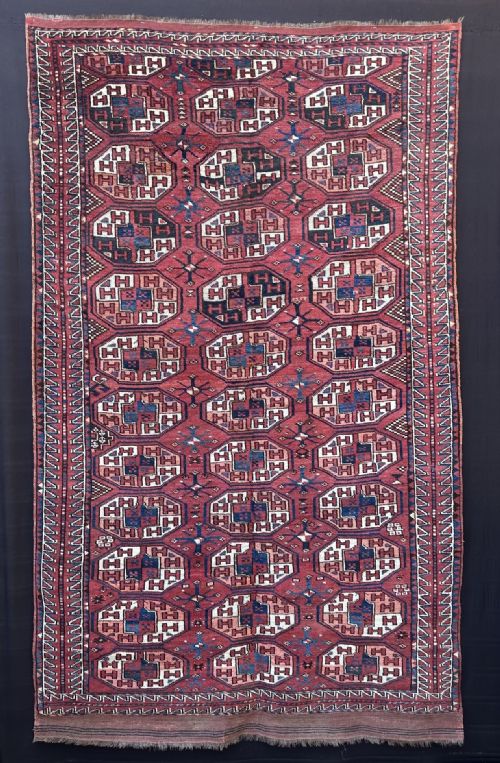
Kizyl Ayak Tribe·Ersari Turkmen
The Antique Wool Floor Carpet Glossary
- Abrash
- Natural variation in wool colour caused by changes in dye batches or immersion times. This tonal shift appears as horizontal bands across the pile.
- Warp
- The vertical threads stretched tightly on the loom that form the structural skeleton of the carpet. The visible fringe at either end usually consists of the extended warp threads.
- Weft
- The horizontal threads passed between rows of knots to bind the structure together. Wefts are beaten down firmly with a heavy comb during weaving.
- Pile
- The vertical tufts of wool clipped to an even height that form the upper surface of the carpet. The length of the pile affects the softness underfoot.
- Selvage
- The reinforced outer edge binding the width of the carpet to prevent unravelling. Strong side cords protect the perimeter from heavy wear.
Antique Wool Floor Carpet: Frequently Asked Questions
How do I clean an antique wool floor carpet?
Regular gentle vacuuming without a rotating brush lifts surface grit before it settles into the wool foundation. Professional hand washing removes deep dirt safely without damaging natural dyes.
Avoid harsh chemical detergents or steam cleaning, which strip natural oils from the wool fibres and dull the colours. Proper drying prevents mildew and keeps the foundation flat.
Can I place these carpets in high traffic areas?
Traditional wool floor coverings handle moderate foot traffic well thanks to the natural lanolin remaining in the fibres. Placing a quality underlay beneath the piece prevents slipping and cushions the weave against hard floors.
Rotating the layout periodically ensures even wear across the surface, especially when positioned beneath heavy furniture or near doorways.
How do I distinguish tribal from workshop carpets?
Tribal pieces usually display geometric motifs, bold memory patterns, and looser knotting reflecting nomadic life. Workshop carpets often feature symmetrical floral designs, curvilinear medallions, and tighter structural precision.
Regional palettes also offer clues, as village weavers relied on local dyestuffs while city workshops coordinated complex colour schemes across large looms.
What causes colour variation in old carpets?
Natural dyes react to sunlight, cleaning, and age by mellowing into softer secondary tones over decades. Variations within a single colour field occur naturally when dyers mix small batches of plant extracts.
These subtle shifts, rather than uniform factory perfection, demonstrate the traditional handcrafting methods used by the original makers.