



Antique Woodland Scene Art
Antique woodland scene art brings the quiet depth of forest canopies and forest floors directly into a room, offering enduring pastoral calm.
Antique Woodland Scene Art
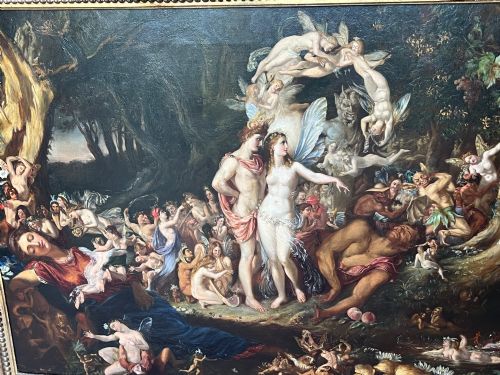
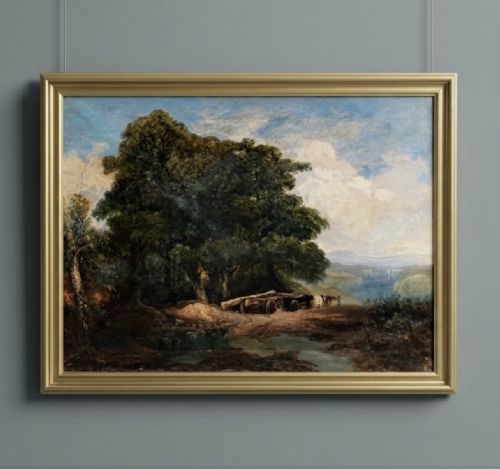
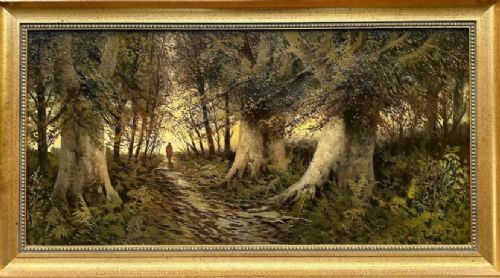
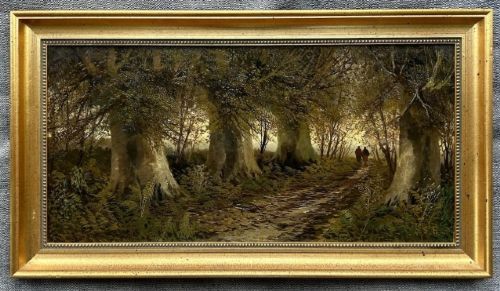
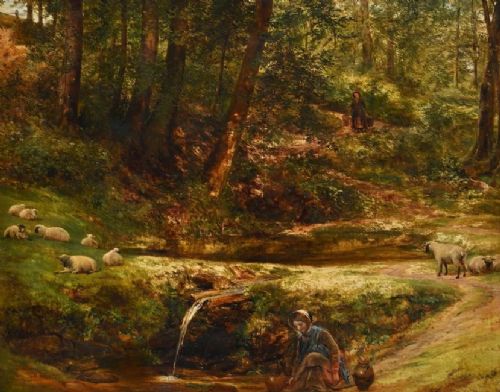
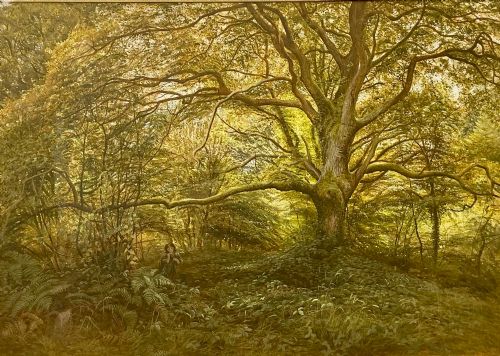
Buyers seeking antique woodland scene art encounter a rich variety of landscape depictions spanning the nineteenth century through the mid-twentieth century. These pieces capture quiet forest paths, dense groves, and riverbanks through the eyes of Victorian naturalists and later impressionists.
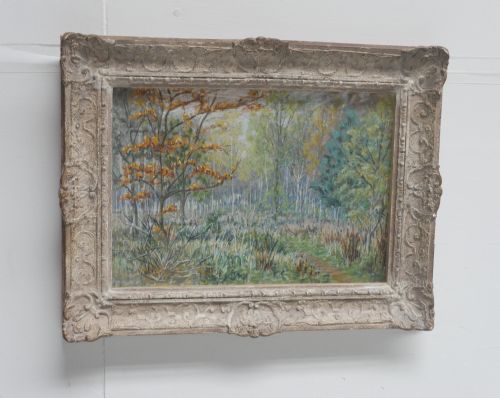
The selections available on this page run from detailed nineteenth-century oil paintings on canvas to delicate watercolours and pastels from the Edwardian and post-war decades. Works often integrate figures, cattle, or rustic architecture amidst the trees, grounding the natural vistas in human scale.
Originating predominantly from British and Irish artistic traditions, these works reflect shifting attitudes toward nature across different eras. From romantic twilight scenes to crisp autumnal studies, each piece records a distinct historical observation of rural woodland.
Materials and methods behind the works
Artists relied primarily on oil paint applied to stretched canvas or board, alongside watercolour and pastel pigments on paper. These traditional media allowed creators to build luminous layers of foliage, shadow, and filtered light.
Support materials range from sturdy wooden stretchers and canvas grounds to heavy-grade paper sheets protected beneath glass. The interaction between pigment and substrate defines the enduring tactile quality of each surviving artwork.
Listings feature works spanning the nineteenth and twentieth centuries, incorporating oil, watercolour, pastel, and tapestry mediums.
Elements that distinguish quality
Quality rests upon the artist's command of light, depth, and brushwork within the woodland canopy. Superior pieces achieve a convincing atmosphere through nuanced tonal gradations rather than formulaic repetition.
The integrity of the physical medium further separates examples, seen in the stability of the canvas, the preservation of original pigments, and the sensitivity of the paper or framing.
Sir Joseph Noel Paton·Richard Sebastian Bond·William H Myers·Thomas W Lascelles·Richard Redgrave·Arthur Herbert Rigg·James Mallard Bromley·David Watts·Alfred Grey RHA·John Wright Oakes·Walter Follen Bishop·James Proudfoot·Rowland Henry Hill·Edmund George Warren·Charles James Adams·George Graham·Charles Edward Holloway·Edward H Holder·George F Wetherbee·Charles Edward Wilson
The Antique Woodland Scene Art Glossary
- Oil on Canvas
- Pigment bound in drying oil applied to a woven fabric stretched across a wooden frame. This medium allowed artists to build rich textures and deep chromatic layers.
- Watercolour
- A paint consisting of water-soluble pigments used on paper. It creates luminous, translucent washes well suited to capturing fleeting atmospheric light.
- Victorian Naturalism
- An artistic movement focused on the unidealised, detailed observation of the natural world. Practitioners rendered flora, fauna, and rural environments with scientific precision.
- Impressionism
- A style characterised by relatively small, thin, yet visible brush strokes and an open composition. The emphasis rests on accurate depiction of light in its changing qualities.
- Verdure Tapestry
- A textile wall hanging featuring a stylized landscape heavy with foliage and trees. These works often utilised wool and silk threads to create rich pastoral scenes.
Antique Woodland Scene Art: Frequently Asked Questions
How should I hang canvas oil paintings?
Support heavy canvas works securely using appropriate wall anchors matched to the weight of the wooden stretcher frame. Avoid positioning them in direct sunlight or near sudden heat sources that could dry the oil paint.
Ensure the hanging height places the centre of the woodland scene at standard eye level for optimal viewing. Stable indoor humidity protects both the canvas and the original wooden elements.
What protection do watercolours need?
Watercolour paintings require framing behind glass with acid-free mounts to prevent paper degradation and pigment fading. Keep them away from damp environments to avoid foxing spots on the paper.
Displaying works on interior walls away from direct natural light preserves the delicate washes characteristic of nineteenth-century landscape art.
How do I date a woodland painting?
Examine the stretcher frames, canvas stamps, and paper types alongside any artist signatures or dates recorded on the reverse. Stylistic clues such as Victorian costume or impressionistic brushwork offer further chronological markers.
Examine exhibition labels or old gallery stamps often found on the backing boards or frames for additional provenance clues.
Are tapestries different from painted art?
Tapestries are woven textile wall hangings rather than painted surfaces, utilising dyed threads to construct pastoral scenes. Verdure tapestries specifically focus on dense forest foliage and landscape motifs.
Care for textiles involves gentle dusting and protection from direct sunlight, differing from the preservation requirements of oil or watercolour paintings.