




Antique Wooden Vitrine
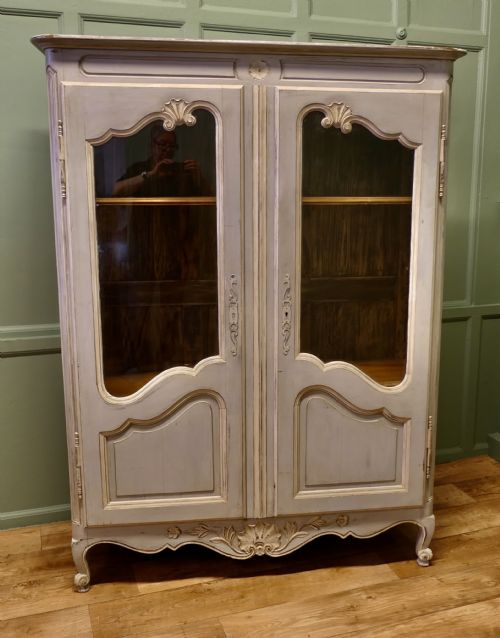
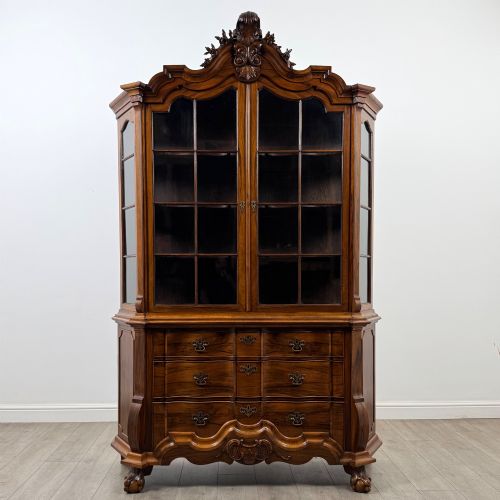
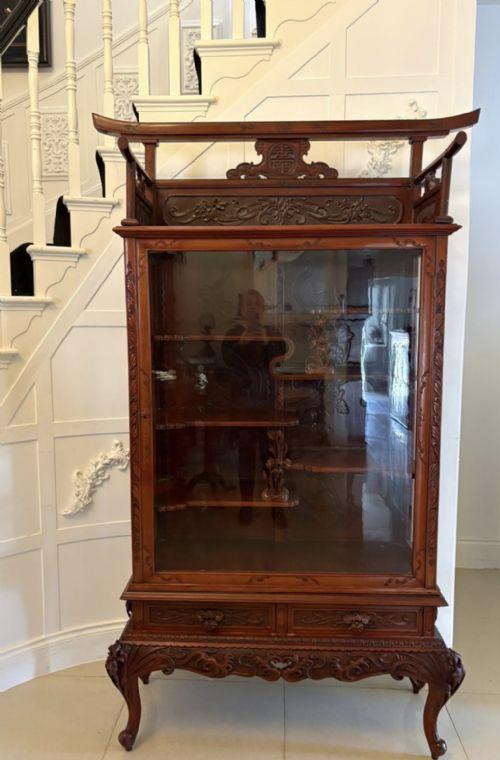
An antique wooden vitrine displays cherished ceramics and glass behind glazed panels.

Antique Wooden Vitrine
An antique wooden vitrine is primarily a glazed display cabinet designed to protect and showcase precious objects within a room. When buyers search for an antique wooden vitrine, they encounter forms ranging from towering floor-standing bookcases to compact countertop cases.
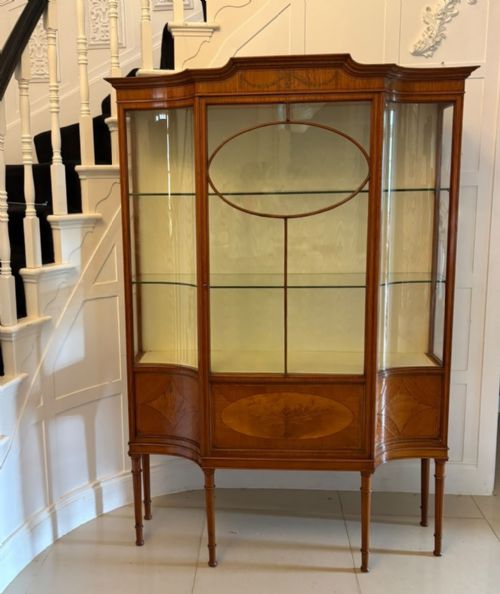
The pieces on this page span the Victorian and Edwardian eras, alongside several revival styles and continental pieces. Most examples adopt upright proportions with glazed doors and sides to maximise light penetration onto the shelves inside.
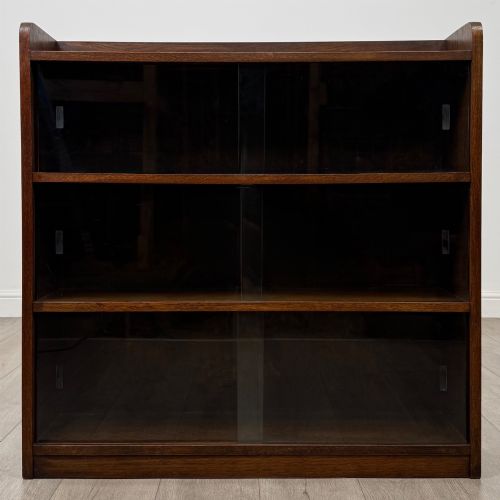
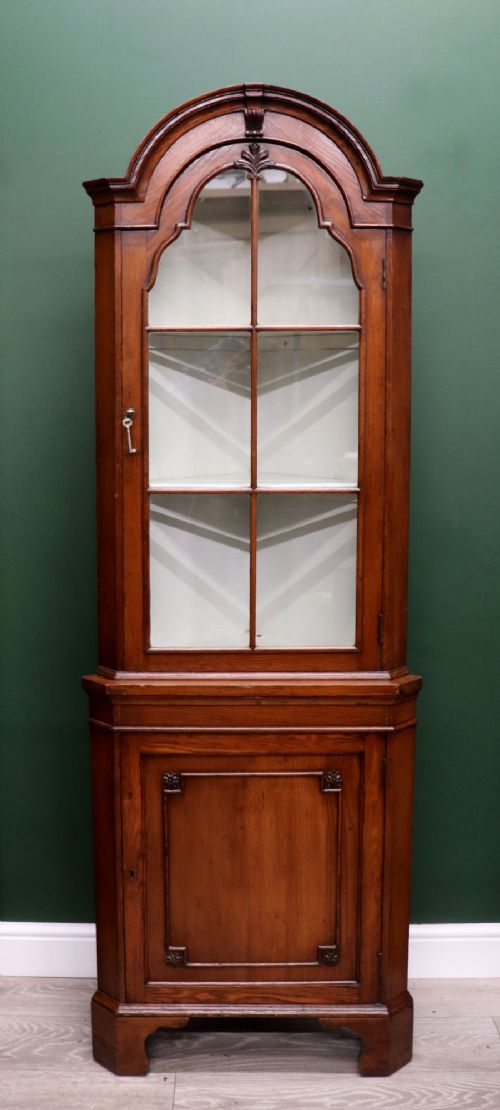
Makers adapted these cabinets for domestic parlours, grand libraries, and retail shops alike. Corner cabinets and low display tables also appear among the selection to suit different interior spaces.
How they were made
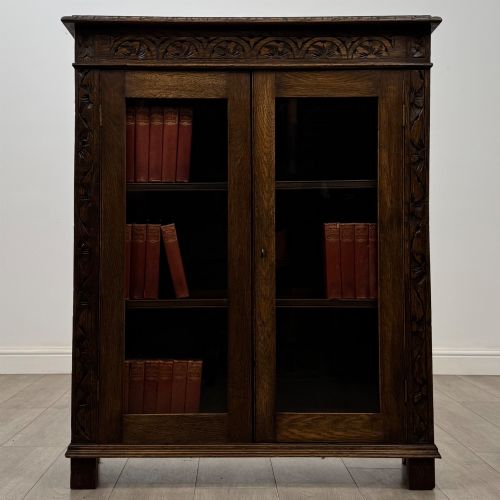
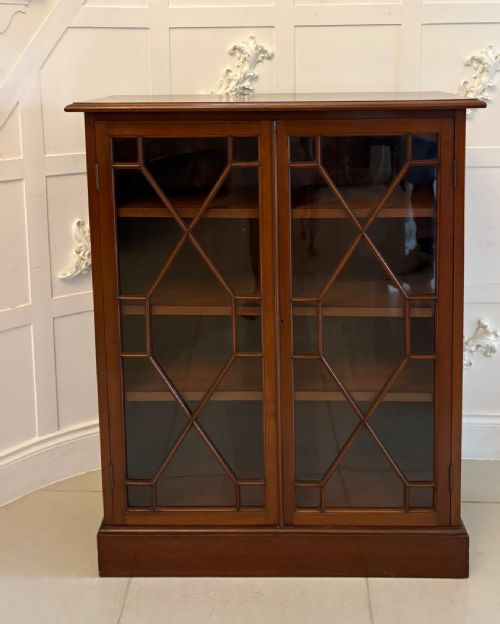
Cabinet makers built these vitrines using solid and veneered timbers including mahogany, walnut, satinwood, and oak. Frame and panel construction kept the large glazed doors stable while supporting the weight of heavy glass panes.
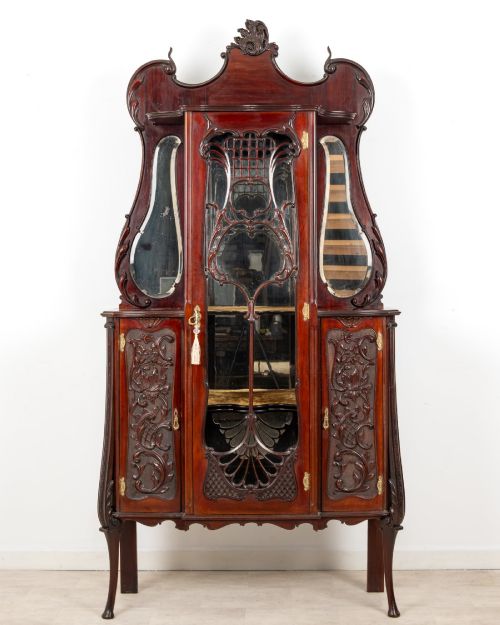
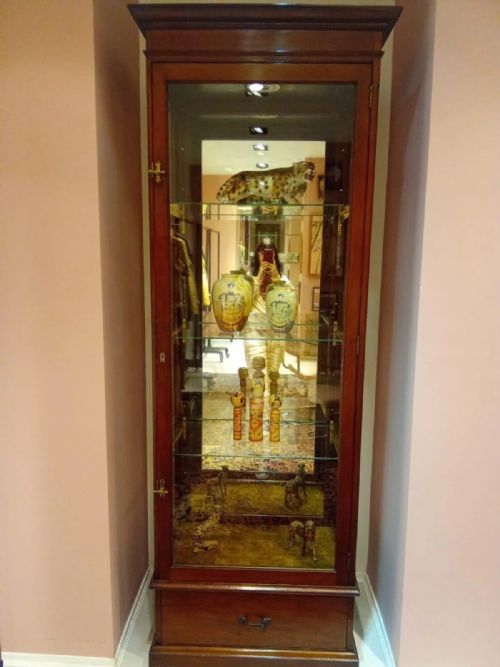
Surface decoration often involved marquetry inlay, ormolu mounts, and hand-carved mahogany details. Interior shelves were frequently made of glass or matching timber to hold collections securely.
Corner cabinets and low display tables represent the alternative formats alongside standard floor-standing vitrines.
What varies in quality
The standard of timber selection and complexity of marquetry dictate the distinction between simpler domestic pieces and high-end commission work. Finer cabinets display meticulous book-matching in the walnut or satinwood veneers alongside crisp, deep carving.
The integration of metalwork, such as gilt ormolu mounts and brass key escutcheons, reveals the maker's hand. Heavier structural joinery and better-balanced doors separate superior workshop production from standard commercial output.
Warings
The Antique Wooden Vitrine Glossary
- Vitrine
- A glazed cabinet or case specifically designed for displaying fine objects, porcelain, or curiosities. These pieces rely heavily on glass panels to permit all-round viewing.
- Marquetry
- Decorative patterns formed by fitting together thin veneers of different coloured woods or other materials onto a structural carcass. This technique flourished during revival periods.
- Ormolu
- Gilt bronze mounts applied to furniture for decorative effect, common on French-influenced cabinet work. The metal is cast and then gilded with gold leaf.
- Sheraton Revival
- A late nineteenth-century design movement inspired by the lighter furniture styles of the eighteenth century. Pieces from this aesthetic frequently feature satinwood and delicate inlay.
- Bijouterie table
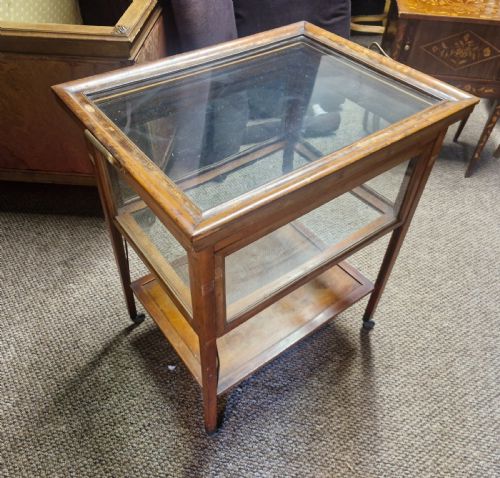
- A glass-topped display table intended for holding small valuable items such as jewellery or medals. These items usually feature hinged lids for easy access.
Antique Wooden Vitrine: Frequently Asked Questions
What is an antique wooden vitrine used for?
These cabinets served primarily to display porcelain, glassware, and treasured ornaments while protecting them from household dust. Victorian and Edwardian households placed them in drawing rooms and reception spaces to exhibit family collections.
Today, they fulfil the exact same purpose in modern homes. The glazed panels allow natural light to illuminate ceramics or books while keeping the contents secure.
How do I date an antique wooden vitrine?
Dating relies on identifying the prevailing timber fashions, construction methods, and stylistic revivals present in the piece. Victorian examples often feature heavy carved mahogany, whereas Edwardian pieces frequently utilise lighter satinwood and subtle inlay.
Hardware such as hinges, locks, and internal shelf supports also provide chronological clues. Examining the interior linings and backboards helps distinguish nineteenth-century work from later twentieth-century revivals.
Where should I place a vitrine in my home?
Floor-standing vitrines and corner cabinets require stable wall space away from direct sunlight to protect timber veneers and interior contents. Rooms with good ambient light help illuminate the glazed display sections effectively.
Countertop models and display tables suit smaller spaces or placement on existing sideboards. Corner units make efficient use of unutilised room angles while providing generous shelf capacity.
What is the difference between a vitrine and a bookcase?
A vitrine places primary emphasis on display through glazed sides as well as doors, allowing light to enter from multiple angles. Bookcases traditionally feature solid wooden sides with glass restricted strictly to the front doors.
Many listings combine both forms, describing pieces as glazed bookcase display cabinets. Interior adjustable shelving also distinguishes cabinets built for displaying mixed collections from standard book storage.