


Antique Wooden Tallboy Dresser
An antique wooden tallboy dresser is a stately storage piece that brings height, timber grain, and practical proportions to a bedroom.
Antique Wooden Tallboy Dresser
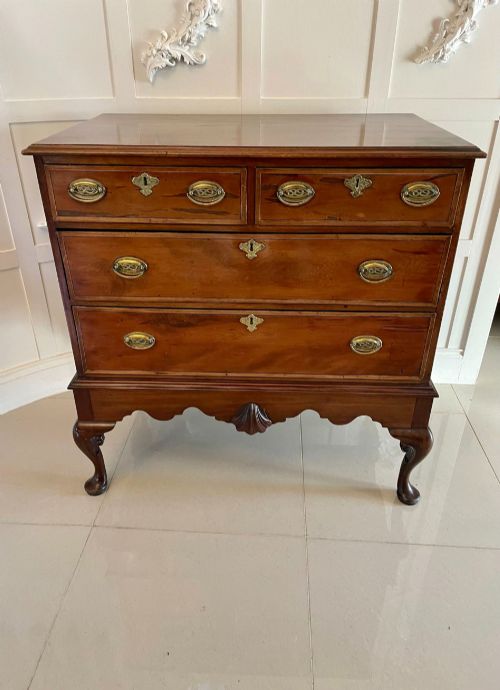
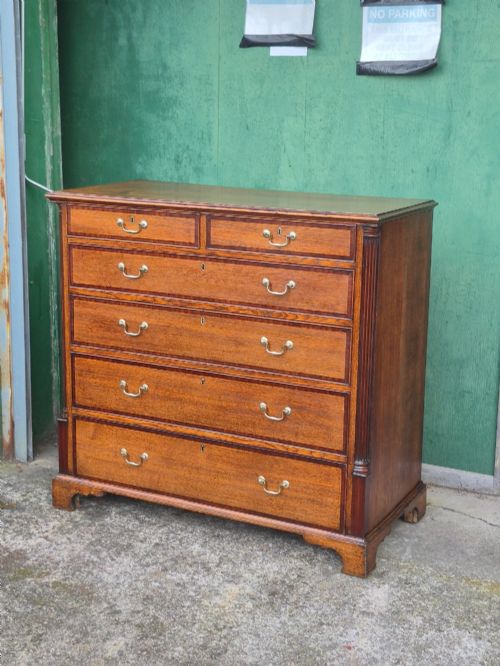
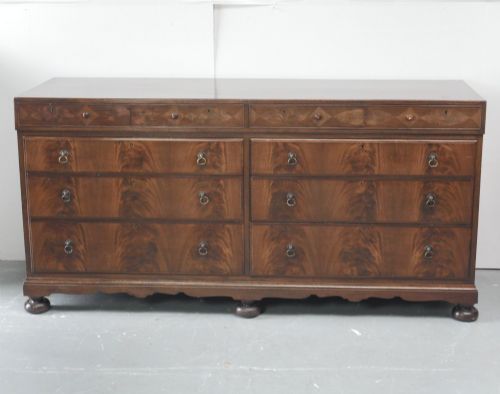
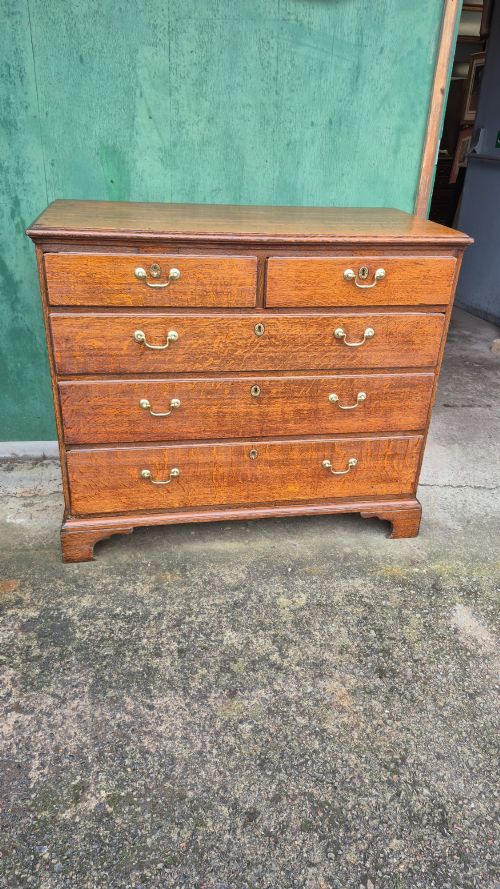
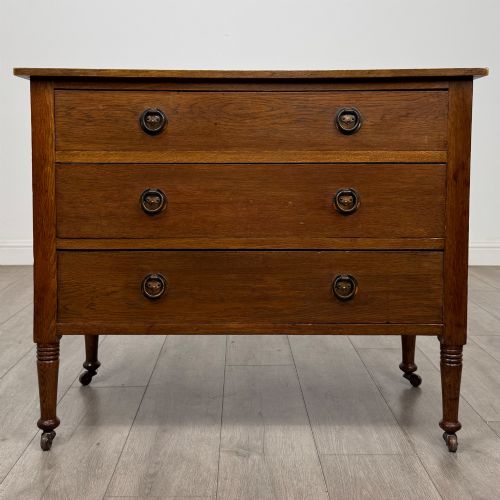
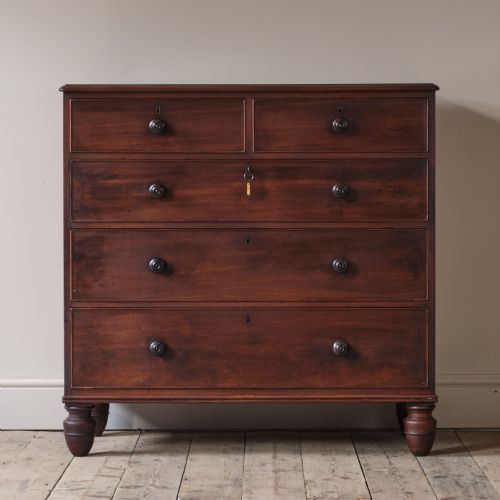
An antique wooden tallboy dresser combines generous storage capacity with a commanding vertical presence, typically stacking multiple drawers to maximise floor space. Buyers searching this phrase encounter forms spanning the eighteenth, nineteenth, and early twentieth centuries, reflecting shifting domestic needs.
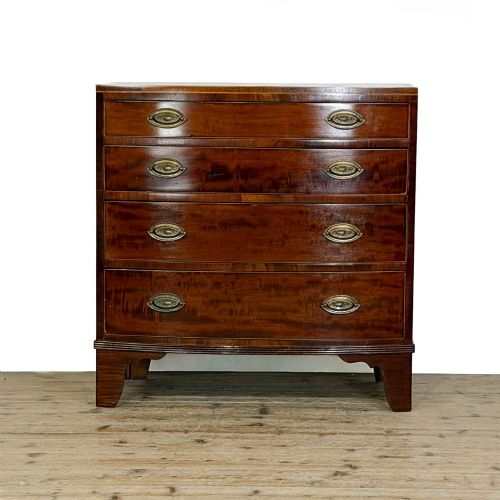
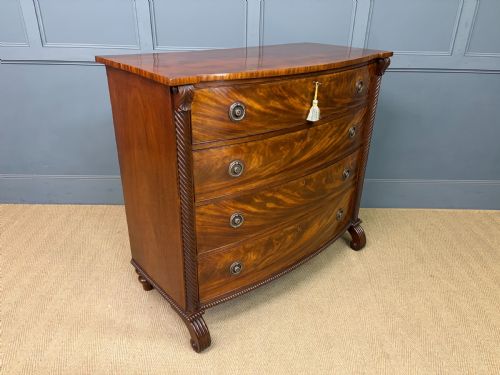
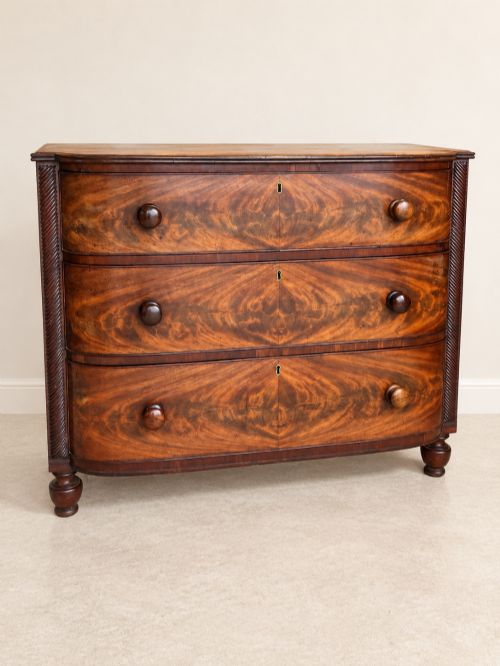
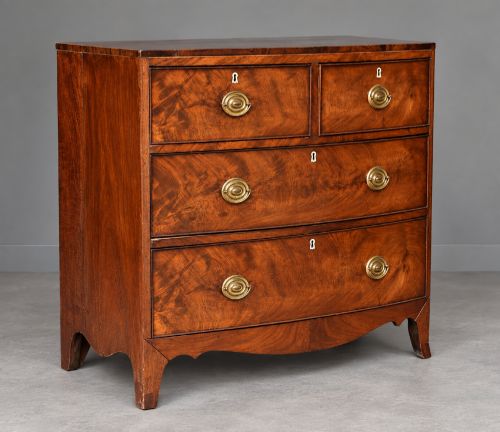
The pieces on this page lean heavily towards Georgian, Regency, and Victorian iterations, alongside Edwardian examples. Standard configurations include chest of drawers designs, bow fronts, and serpentine profiles.
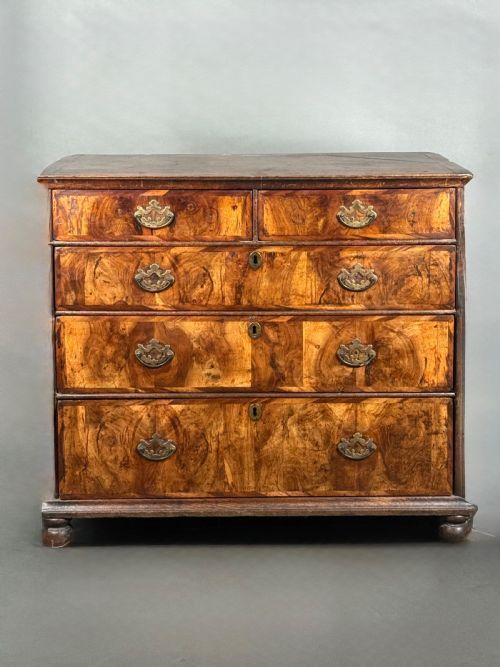
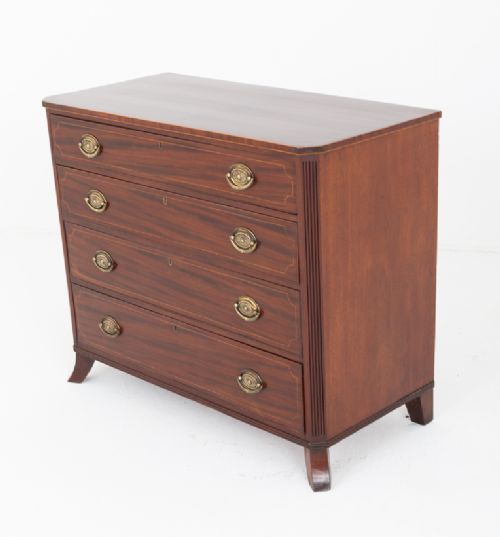
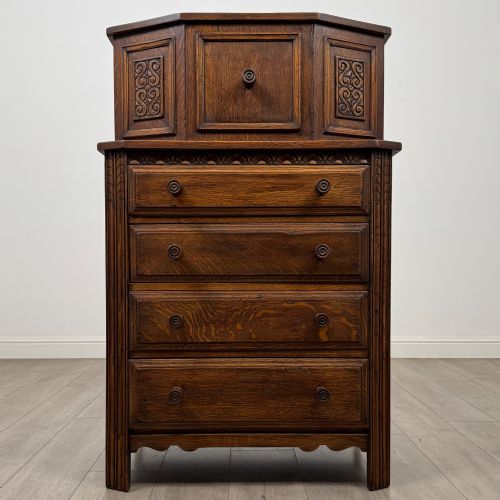
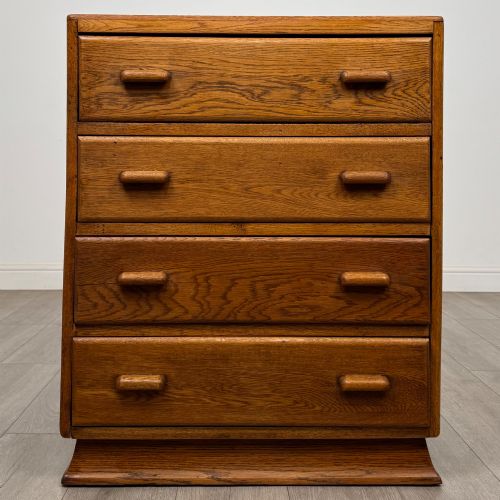
Materials range from figured walnut and flame mahogany veneer to golden oak, pine, and brass hardware. Certain examples incorporate specialised additions such as brushing slides or cupboard sections above the primary drawers.
Materials and construction methods
Cabinet makers utilised dense hardwoods such as mahogany, oak, and walnut, frequently applying flame mahogany or figured walnut veneers to primary display surfaces. Secondary timbers like pine appear within drawer linings and internal framing.
Joinery relied on traditional hand-cut dovetailing for drawer construction, ensuring durability across centuries of daily opening and closing. Brass drop handles, oval backplates, and escutcheons were fitted to secure and operate the stacked drawers.
Listings span periods from the late 17th century William and Mary era through Georgian, Victorian, and Edwardian times, up to the 1930s.
Distinctions in quality and execution
The refinement of timber selection dictates much of the visual appeal, separating standard planks from carefully matched flame veneer or figured walnut grain across the drawer fronts. Higher grade examples exhibit tighter dovetails and superior timber thickness in internal carcases.
Proportion and decorative restraint set finer pieces apart, particularly where cock-beading, bracket feet, or serpentine shaping are executed with precision rather than heavy-handed symmetry.
Whytock & Reid·T & G Seddon·Sir Clough Williams-Ellis·J Moorcroft
The Antique Wooden Tallboy Dresser Glossary
- Tallboy
- A tall chest of drawers, often constructed in two sections with multiple stacked drawers. This form provides substantial storage while occupying a compact footprint.
- Bow front
- A convex curved front elevation popular during the Regency and Georgian periods. It softens the linear appearance of a standard rectangular chest.
- Brushing slide
- A pull-out shelf integrated above the top drawers, historically used for folding garments or inspecting items. It retracts flush when not in use.
- Serpentine front
- A horizontally undulating front profile featuring a convex centre flanked by concave curves. This intricate shape requires advanced cabinet-making skill.
- Dovetail
- An interlocking joint formed by wedge-shaped tenons and mortises, used at the corners of drawers. Hand-cut dovetails indicate earlier craftsmanship before machine production.
Antique Wooden Tallboy Dresser: Frequently Asked Questions
How do I spot a genuine antique tallboy?
Examine the drawer construction for hand-cut dovetails and inspect the interior timbers for consistency with the stated period. Look for signs of age such as shrinkage cracks and hand-planed secondary boards.
Check the hardware fixing methods and ensure the timber has developed a natural patina that corresponds to centuries of handling.
Where were these pieces used historically?
Tallboy dressers served primarily in bedchambers and dressing rooms for storing linens, garments, and personal effects. Their vertical layout made them ideal for rooms with limited wall space.
Wealthier households placed finer walnut and mahogany versions in principal chambers, while simpler pine variants functioned in secondary spaces.
How do I care for an antique wooden tallboy?
Keep the timber away from direct heat sources and strong sunlight to prevent the veneers from drying, warping, or fading. Maintain a stable room temperature and humidity level.
Apply traditional bees-wax periodically to nourish the wood grain and gently clean surfaces with a soft, dry cloth without harsh chemical polishes.
What is the difference between George III and Regency styles?
George III furniture typically displays classical proportions, bracket or ogee feet, and understated brass hardware on solid mahogany or oak. The aesthetic remains grounded in traditional Georgian symmetry.
Regency pieces introduce bolder veneers, brass inlay, and more pronounced curved fronts like the bow or serpentine shape, influenced by classical antiquity.