





Antique Wooden Secretaire
An antique wooden secretaire offers a clever drop-down writing surface concealed within traditional cabinetry for domestic correspondence.
Antique Wooden Secretaire
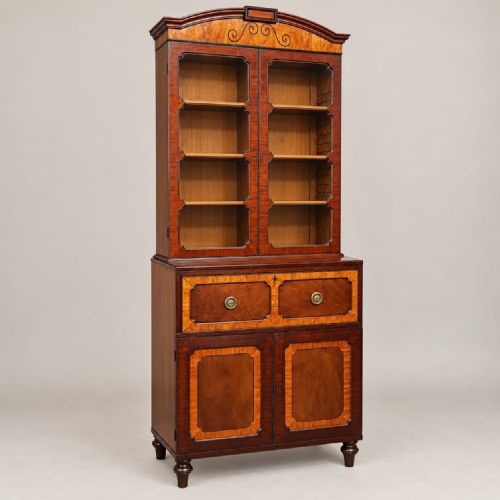
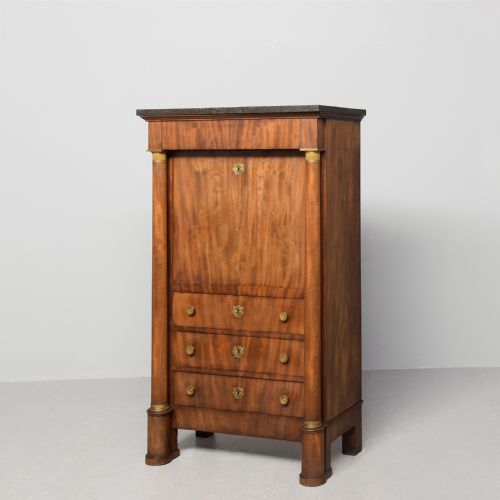
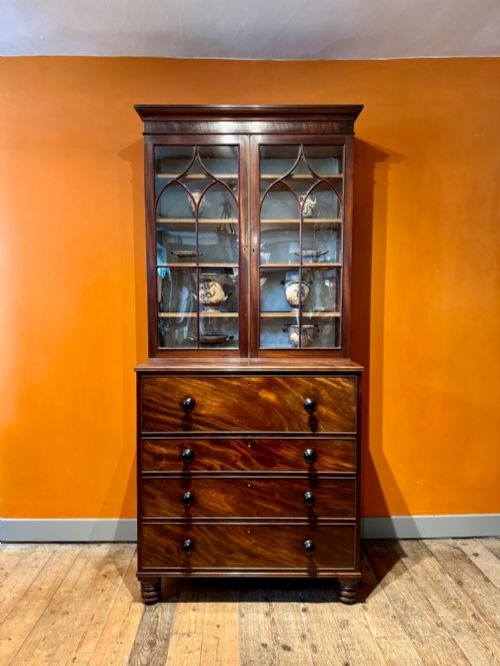
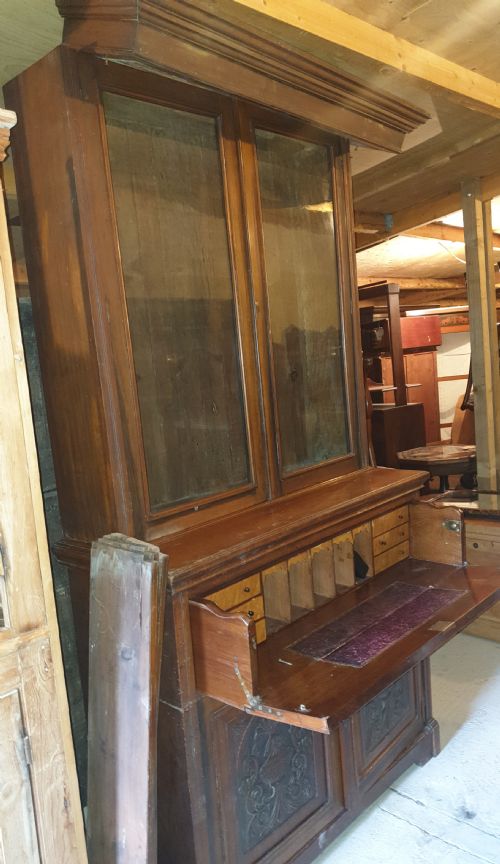
When you search for an antique wooden secretaire, you are looking at practical case furniture designed for writing and storage, most frequently encountered here as a tall bookcase or chest of drawers fitted with a drop-front flap.
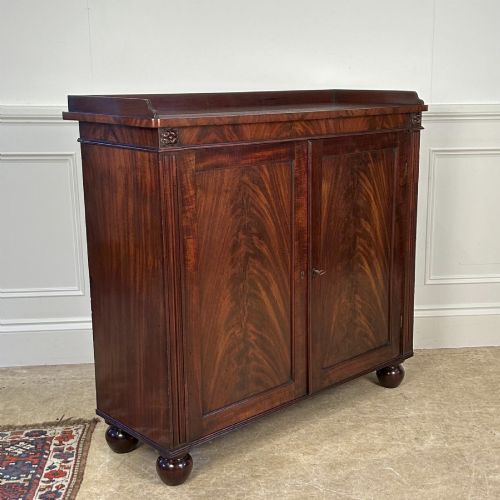
The pieces on this page span the Georgian, Regency, and Victorian periods, alongside Edwardian and Art Deco examples, taking the form of secretaire bookcases, campaign chests, and bureau cabinets.
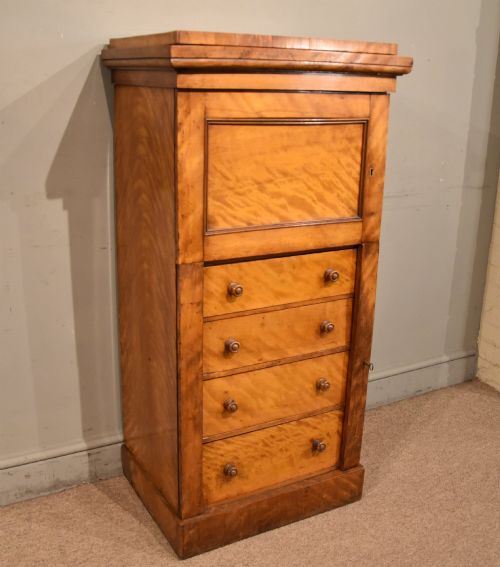
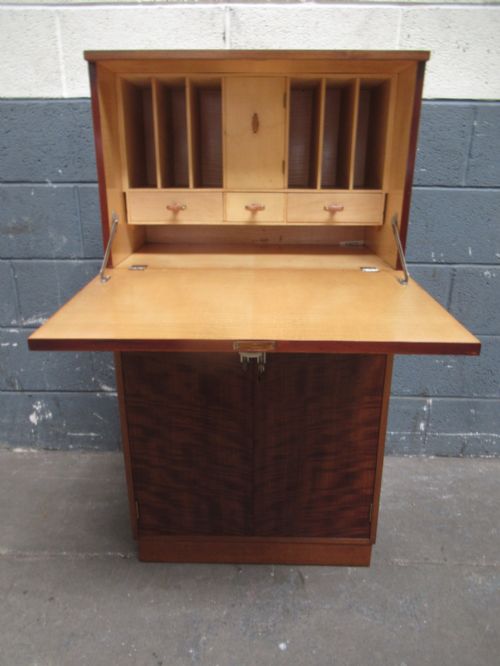
Makers from various regions constructed these dual-purpose items in mahogany, walnut, pine, elm, and camphor wood, often incorporating satinwood or satin birch details for interior fittings.
Materials and construction methods
Cabinet makers built the primary carcass frames of these secretaires using solid timbers such as mahogany, walnut, and pine, frequently applying flame mahogany or satinwood veneers to the exterior surfaces for decorative grain patterns.
Antique Wooden Secretaire Retail Price Guide 2026
Typical asking prices for wooden secretaire among the pieces listed under this phrase on Sellingantiques today, from the lower quarter to the upper quarter. They describe what is for sale here now, not the wider market.
Several pieces conceal hidden spring-loaded drawers behind dummy pigeonholes, designed to keep private correspondence safe from wandering eyes.
Distinctions in quality
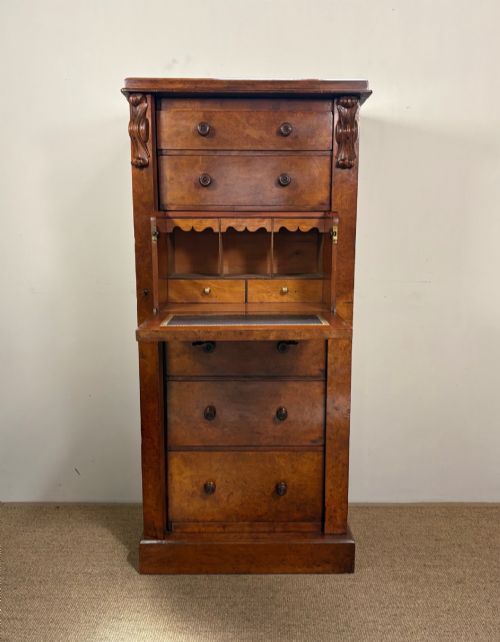
The standard of a secretaire rests on the selection of timber veneers and the precision of the joinery within the hidden writing compartment, where intricate pigeonholes and small drawers demonstrate the maker's skill.
Proportion and the integration of the fall-front flap into the surrounding drawers or bookcase doors separate standard production pieces from finer cabinet work originating from workshops like Gillows or Maple and Co.
Gillows·Maple and Co.
The Antique Wooden Secretaire Glossary
- Secretaire
- A piece of furniture containing a built-in writing drawer or fold-down writing flap. It conceals a fitted interior with small compartments for letters and stationery.
- Campaign chest
- A modular chest of drawers made in sections with brass corners and recessed handles for military transport. Many examples include a central secretaire drawer fitted for writing in the field.
- Wellington chest
- A tall, narrow Victorian chest of drawers secured by a hinged locking side-bar. Some variations incorporate a secretaire drawer within the vertical stack.
- Flame mahogany
- A timber veneer sliced from the point where a branch joins the tree trunk, producing a distinctive flickering flame pattern. Cabinet makers used this on drawer fronts for visual impact.
- Biedermeier
- A Central European style dating from the early nineteenth century emphasising clean lines and domestic comfort. These pieces rely on the natural grain of woods like birch and walnut rather than heavy ornamentation.
Antique Wooden Secretaire: Frequently Asked Questions
How do I use a secretaire desk?
Lower the hinged front flap to reveal the writing surface and interior pigeonholes. Support brackets or the fall-front itself holds the weight while you write.
Close and lock the flap when finished to conceal correspondence and maintain a tidy cabinet appearance.
How do I date a wooden secretaire?
Examine the secondary woods inside the drawers, the style of the brass hardware, and the overall proportions of the cabinet. Georgian pieces display different moulding profiles and bracket feet compared to Victorian or Edwardian examples.
Cabinet makers often incorporated prevailing design traits of their specific decade, from George III neoclassical inlay to Art Deco geometry.
Can I use a secretaire as a modern workstation?
Many secretaire compartments accommodate compact laptops and stationery within their historical pigeonholes. Ensure the depth and height of the open flap match your seating and writing posture.
Protect the writing surface with a blotter or leather insert to prevent wear on antique wood veneers during daily use.