



Antique Wooden Screw
These antique wooden screw pieces are mechanical treen and domestic presses built to last, prized by collectors for their honest carpentry and functional form.
Antique Wooden Screw
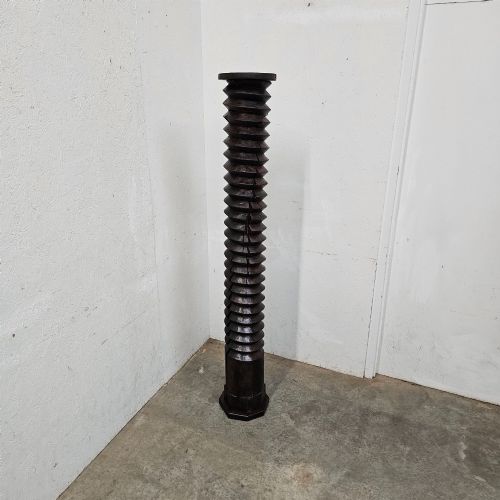
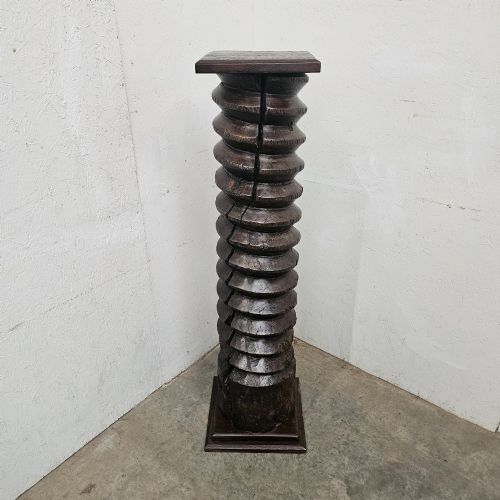
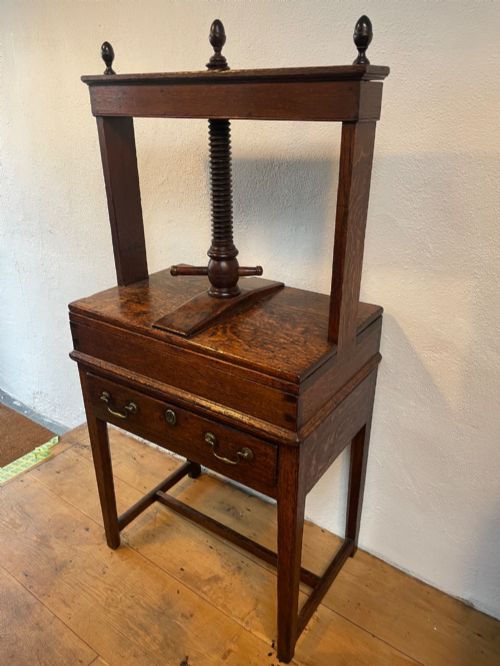
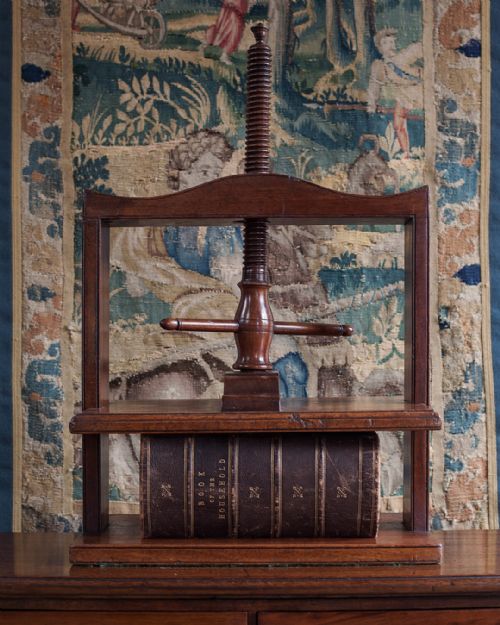
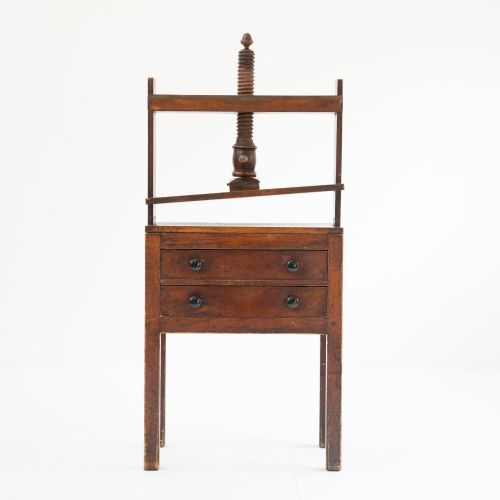
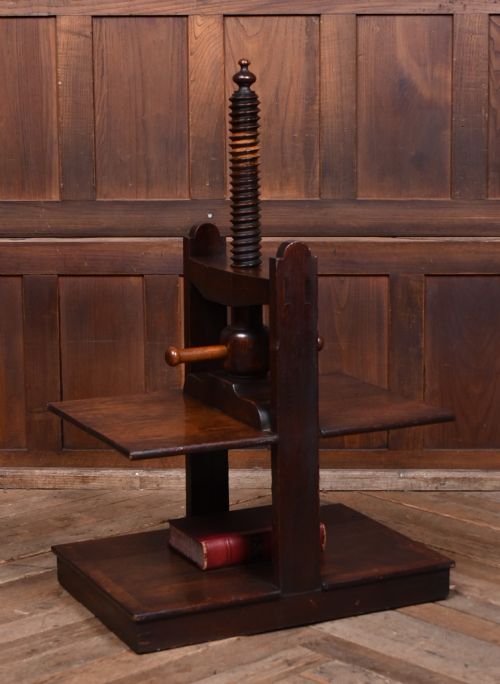
When you search for an antique wooden screw, you are looking at functional domestic objects and furniture driven by carved wooden threads and screw mechanisms. The pieces on this page span the Georgian, Victorian, and Edwardian periods, taking forms such as table top book presses, linen presses, and kitchenalia.
You will most frequently encounter heavy oak and mahogany book presses alongside small treen items like nutcrackers and lemon squeezers. These items originated in country houses, workshops, and dairies where sturdy wooden mechanics were essential for pressing cheese, fruit, linen, or paper.
How they were made
Cabinetmakers and turners shaped these objects from dense hardwoods like oak, mahogany, boxwood, fruitwood, and elm. The large threaded screws required precise hand-cutting to ensure the wooden components meshed smoothly without stripping under heavy pressure.
Many items combine timber frames with iron or brass fittings, whilst smaller treen pieces display fine hand carving and turned details. Construction relied on traditional joinery techniques suited to the heavy loads placed upon the screw mechanisms.
Antique Wooden Screw Retail Price Guide 2026
Typical asking prices for wooden screw among the pieces listed under this phrase on Sellingantiques today, from the lower quarter to the upper quarter. They describe what is for sale here now, not the wider market.
Squirrels and clenched fists stare out from the Victorian nutcracker handles.
What varies in quality
The standard of an antique wooden screw depends on the crispness of the hand-carved threads and the integrity of the timber. Pieces with smoothly operating mechanisms and minimal wear to the wooden teeth stand apart from those with damaged or sluggish threads.
Proportion and material choice also dictate quality, with tightly grained hardwoods and refined maker attribution elevating certain book presses and piano stools above plain utilitarian examples.
Johnston’s of London·Gillows
The Antique Wooden Screw Glossary
- Treen
- Small handmade wooden domestic objects produced from timber. This term covers items such as nutcrackers, lemon squeezers, and spice towers.
- Book press
- A mechanical device using a heavy wooden screw to flatten paper or bind books. These were common fixtures in Georgian and Victorian libraries.
- Linen press
- A tall piece of furniture designed to store and flatten textiles using an internal screw mechanism. They were often constructed in mahogany, oak, or pine.
- Nutcracker
- A handheld tool operated by leverage or a screw thread to crack shells. Examples in this category often take carved figurative or animal shapes.
Antique Wooden Screw: Frequently Asked Questions
How do wooden screw presses work?
These presses operate by turning a large wooden handle connected to a threaded shaft. Rotating the handle drives the moving block downward to apply even pressure.
Over centuries, woodworkers mastered the art of cutting matching internal and external threads so the mechanism could handle heavy loads of paper or linen without slipping.
What were small screw pieces used for?
Smaller treen items with screw mechanisms were used daily in the Victorian and Georgian home for tasks like cracking nuts or squeezing fruit and spices.
Objects such as acorn nutcrackers and treen lemon squeezers combined utility with decorative carving, making them both practical tools and decorative pocket-sized items.
How do I date an antique book press?
Dating relies on timber choice, hardware details, and the overall style of the cabinetwork. Georgian presses often show simpler, heavier framing while Victorian examples feature bolder mouldings.
The evolution from purely wooden machinery to designs incorporating iron bolts also helps place an object within the nineteenth century.
Can I still use a vintage book press?
Most of these presses remain structurally sound and capable of light functional use in bookbinding or flattening paper. Turning the wooden screw should be done gently to preserve the aged threads.
Many collectors prefer to keep them as display pieces in studies or libraries to protect the dry, historical timber from new stress.