




Antique Wooden Scoop
An antique wooden scoop is a practical piece of treen shaped by hand for domestic tasks, prized for its honest grain and tactile form.
Antique Wooden Scoop
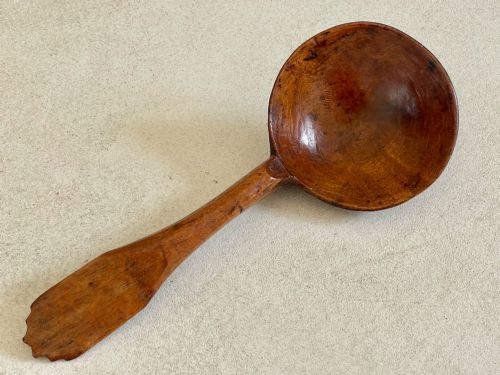
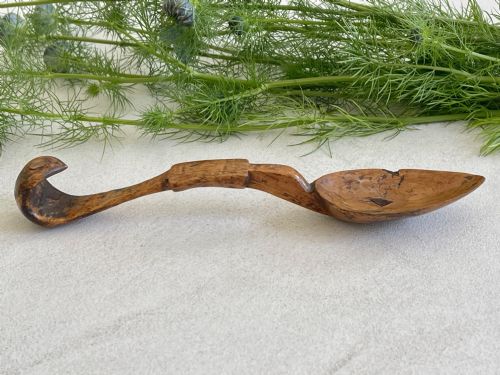
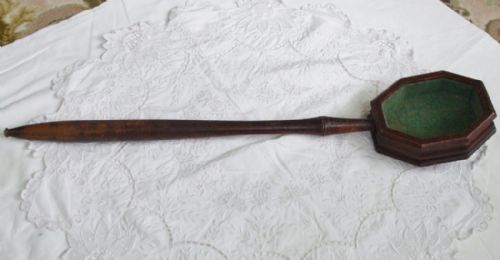
An antique wooden scoop represents traditional utility, taking forms such as flour and grain measures, kitchen ladles, and small caddy spoons. These domestic items emerge from periods spanning the Georgian era through the Victorian period and into the early twentieth century.
Buyers encountering this page are most likely to meet pieces rooted in Welsh country and folk art traditions. Common regional examples include sycamore and beechwood scoops alongside fruitwood apple corers and treen ladles.
The objects serve as tangible links to rural domestic life, shaped from native timbers for heavy kitchen use. Their simple utility translates into decorative appeal for modern interiors.
How they were made
Maker-craftsmen shaped these items from dense native hardwoods using gouges, drawknives, and lathes. Sycamore, beechwood, fruitwood, and cherrywood provided the fine grain necessary for thin bowls and sturdy handles.
Simple iron bands and brass fixtures occasionally reinforced larger carrying vessels and coal scuttles where structural strength was vital. Painted surfaces appeared on utilitarian flour and grain scoops to protect the wood from damp and wear.
Antique Wooden Scoop Retail Price Guide 2026
Typical asking prices for wooden scoop among the pieces listed under this phrase on Sellingantiques today, from the lower quarter to the upper quarter. They describe what is for sale here now, not the wider market.
The listings show regional pieces made from sycamore, beechwood, and cherrywood across the Georgian and Victorian eras.
What varies in quality
The distinction between ordinary utility items and superior examples lies in the fluidity of the carved line and the balance of the handle. A well-proportioned scoop shows confident tool marks that reveal the hand of the maker rather than mechanical production.
Patina dictates much of the desirability among surviving kitchenalia. Years of handling and flour dust create a deep, warm surface sheen that lesser or over-cleaned examples lack.
The Antique Wooden Scoop Glossary
- Treen
- Small wooden domestic objects made by turners and woodworkers. This category includes spoons, bowls, ladles, and scoops.
- Folk art
- Utilitarian items made by rural craftsmen outside formal academic traditions. These objects often display regional quirks and direct methods of construction.
- Sycamore
- A pale, close-grained hardwood favoured for treen and dairy utensils because it resists splitting and does not taint food.
- Fruitwood
- A dense timber taken from fruit-bearing trees such as apple or pear. Woodworkers valued it for fine carving and miniature items.
Antique Wooden Scoop: Frequently Asked Questions
What were antique wooden scoops used for?
These implements served practical roles in domestic kitchens, farmhouses, and shops for measuring dry goods like flour, grain, and sugar. Smaller versions handled snuff, tea leaves, or spices.
Over decades of daily service, the wood absorbed oils from hands and grain, developing the rich patination that collectors value today.
How do I date an old wooden scoop?
Dating relies on tool marks, timber choice, and the regional style of the carving. Georgian and Victorian examples often display hand-turned handles or adzed bowls.
Comparing the wear patterns and wood species to documented folk art helps narrow down the period of manufacture.
How do I care for wooden kitchenalia?
Keep wooden items away from direct heat sources, radiators, and strong sunlight to prevent the timber from drying out and splitting. Environmental stability preserves the historic surface.
Apply a light coat of neutral beeswax or mineral oil occasionally if the wood appears dry, avoiding modern synthetic varnishes.