


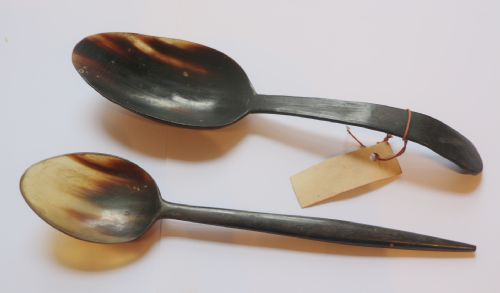

Welsh Treen Spoon
These welsh treen spoon examples are carved domestic wooden implements born from rural vernacular craft traditions, offering collectors tactile pieces of social history.
Welsh Treen Spoon
A welsh treen spoon typically takes the form of domestic wooden utensils and lovespoons originating from rural communities across Wales. Buyers encountering this selection will frequently find lovespoons alongside utilitarian items such as broth spoons, butter spoons, and larger serving ladles.
The objects span multiple centuries, with pieces dating from the eighteenth century through to the Victorian era and the beginning of the twentieth century. Alongside individual spoons, the material record includes related kitchen items like scoop bowls and wall-hung spoon racks.
Stylistically, these pieces draw heavily upon folk art traditions, often displaying chip carving, pierced motifs, and initials or dates that mark personal milestones. The smaller lovespoons and token spoons sit alongside substantial utilitarian serving utensils shaped for domestic use.
Materials and Construction
Makers relied primarily on native hardwoods suited to domestic service, utilising close-grained timbers such as sycamore, fruitwood, cherrywood, and oak. These woods provided the density required for carving intricate motifs without splitting along the grain.
The construction relied upon hand-carving techniques utilising knives and gouges to shape both the functional bowls and the decorative stems. Makers shaped utilitarian ladles and butter spoons for daily kitchen tasks, whilst token pieces received elaborate surface chip carving.
Carvers frequently hid interlocking wooden chains within a single solid stem to prove their skill to a prospective match.
Assessing Quality
The standard of a piece rests upon the crispness of the hand-carved detail and the balance between the functional bowl and the decorative stem. Superior examples display confident, unhesitant knife work in their chip carving and pierced links.
Surface preservation significantly influences the character of the wood, with untouched patination and original tool marks distinguishing finer survivals. Pieces retaining legible contemporary dates, initials, or deeply carved symbolic motifs command particular attention.
Williams
The Welsh Treen Spoon Glossary
- Treen
- Small handmade wooden objects of domestic use. The term derives from the old English word for tree.
- Lovespoon
- A decorative carved wooden spoon traditionally presented as a token of affection or engagement. These often incorporate symbolic motifs such as chains, hearts, and interlocking links.
- Chip carving
- A decorative technique where small chips are removed from the surface of the wood with a knife to create geometric patterns. This method appears frequently on folk art spoons and token pieces.
- Spoon rack
- A wall-mounted wooden rack designed for displaying and storing spoons. Georgian and later examples organise domestic treen in the kitchen or parlour.
- Broth spoon
- A utilitarian wooden spoon shaped for daily dining use. These domestic implements show smooth wear from regular handling and food preparation.
Welsh Treen Spoon: Frequently Asked Questions
What are welsh treen spoon items?
These objects are handmade wooden utensils and decorative lovespoons carved by rural artisans in Wales. They encompass both utilitarian kitchen implements and symbolic tokens.
Survival rates include domestic items like butter spoons and broth spoons alongside highly decorated presentation pieces dated with initials.
How were these wooden spoons used?
Utilitarian examples served daily functions in the kitchen for stirring broths, serving butter, and general food preparation. Larger ladles and scoops handled bulk provisions.
Lovespoons and token pieces served primarily as emotional gifts exchanged to mark courtships, betrothals, or anniversaries, often displayed rather than used.
How do I date an antique spoon?
Dating relies upon examining the tool marks, timber selection, stylistic conventions of the folk art carving, and any inscribed dates or initials. Eighteenth-century pieces often display heavier primitive framing.
Victorian and later nineteenth-century examples frequently exhibit finer chip carving and standardised decorative motifs associated with vernacular folk art revivals.
How should I care for treen?
Maintain stable indoor humidity away from direct heat sources and strong sunlight to prevent the timber from drying out and splitting. Handle the wood with clean hands to preserve the natural patina.
Avoid immersion in water or chemical cleaning agents, relying instead on a soft, dry cloth for dusting the carved surfaces.