
Antique Wooden Office Chair
An antique wooden office chair brings honest timber grain and solid nineteenth-century construction to a daily workspace.
Antique Wooden Office Chair
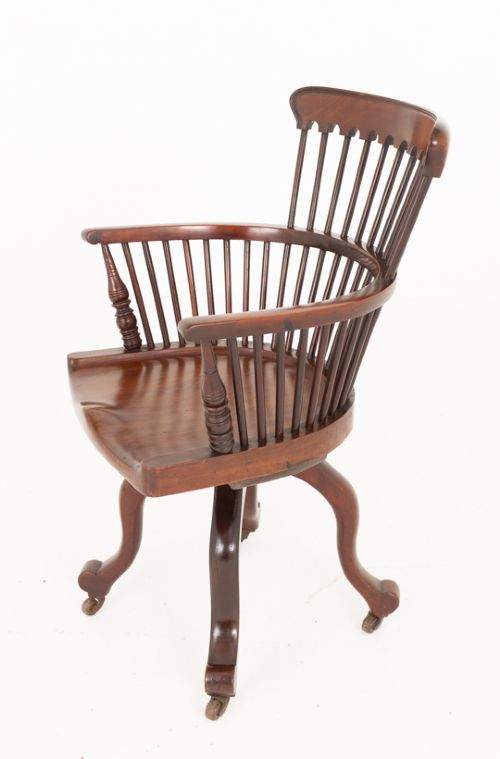
When you search for an antique wooden office chair, you enter a domain where utilitarian purpose meets domestic comfort across the Victorian and Edwardian eras. These seating forms span heavy revolving desk armchairs, sturdy elm captain's chairs, and simple mahogany reading seats designed for long hours of correspondence.
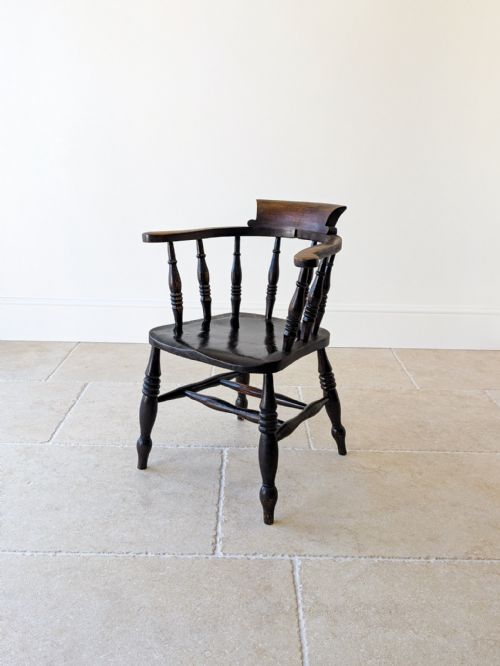
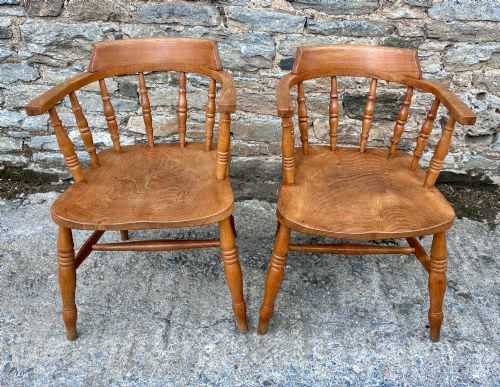
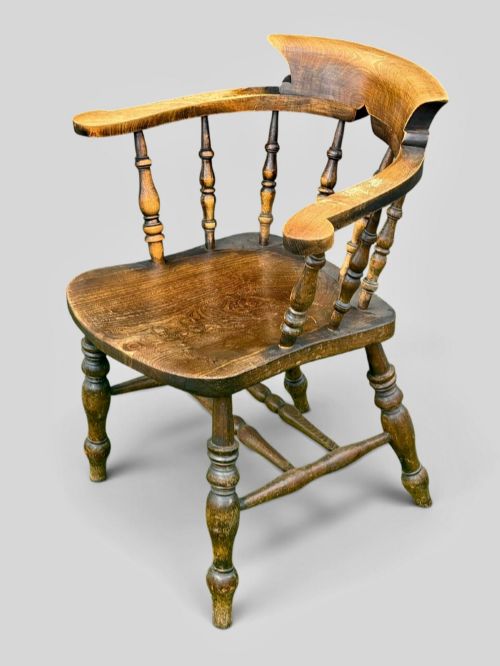
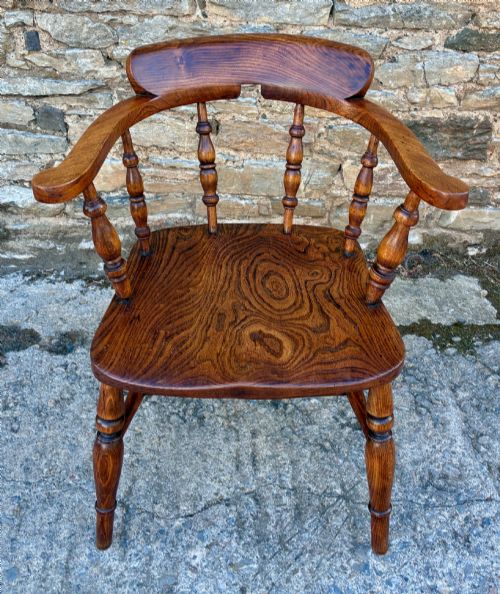
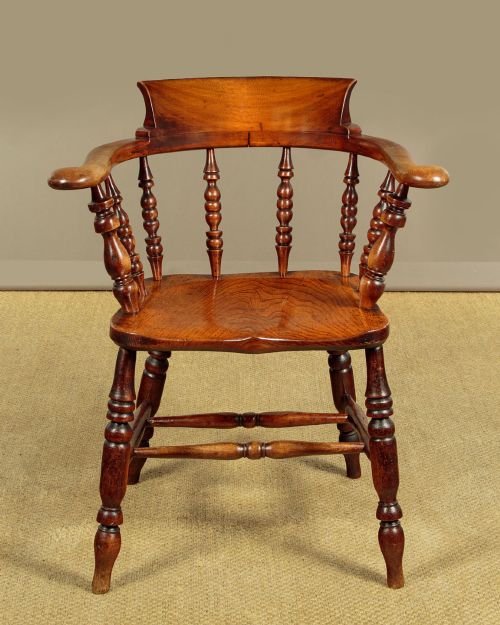
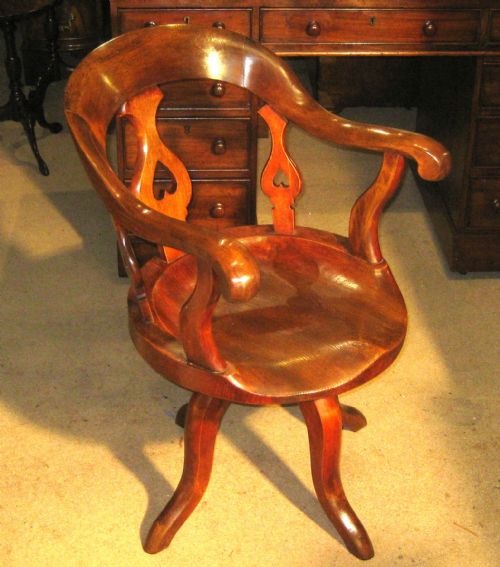
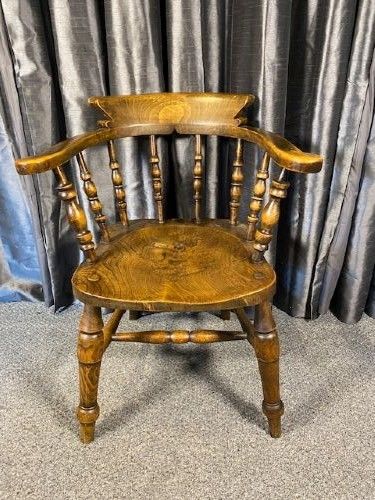
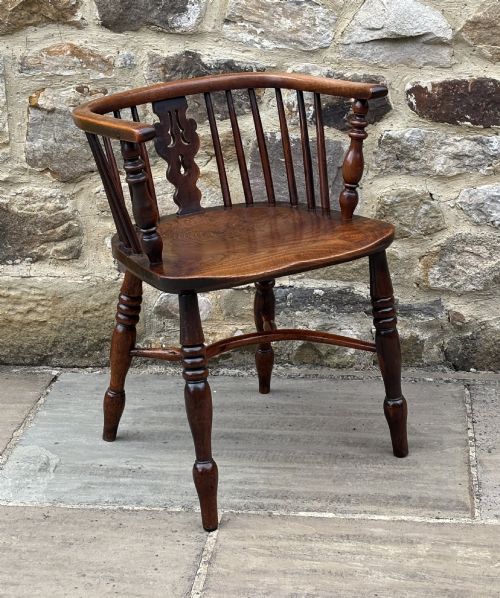
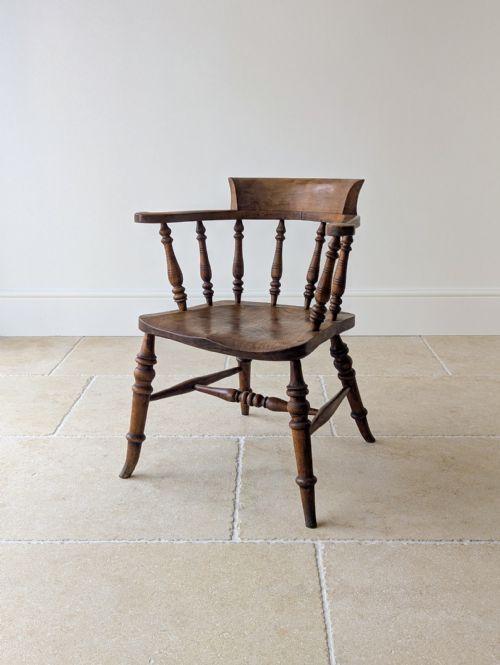
The version you are most likely to meet on this page is the classic captain's chair or smoker's bow, frequently rendered in a combination of elm, beech, and ash. Many examples show the robust Windsor-style spindle backs and bentwood rails typical of late nineteenth-century English workshops.
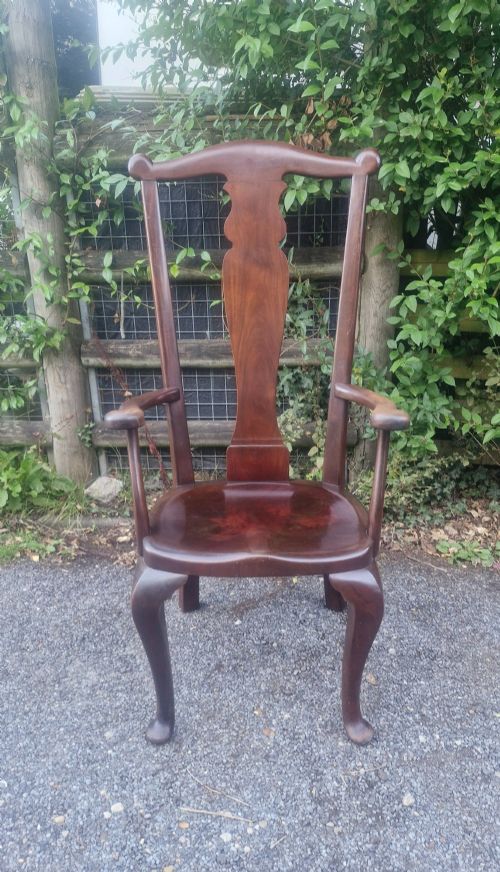
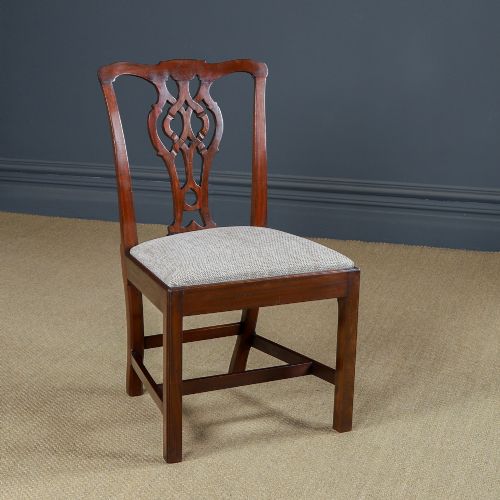
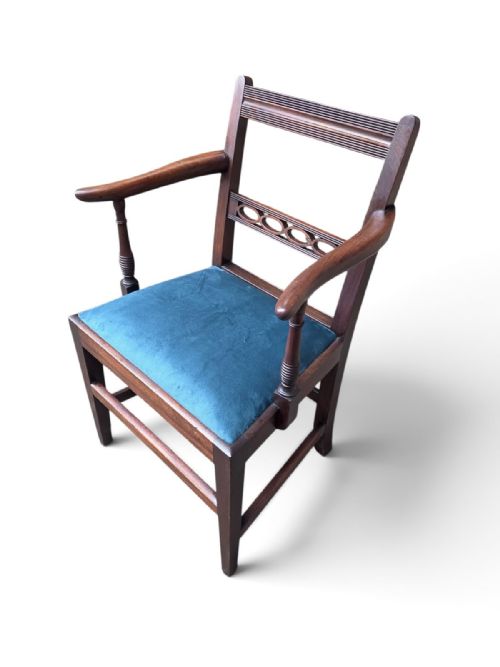
Beyond the standard office swivel models, the selection includes formal mahogany desk chairs influenced by Chippendale and Queen Anne revival styles. These pieces range from walnut revolving desk chairs to solid oak country house armchairs intended for estate libraries.
Materials and construction
Makers relied on dense native hardwoods such as oak, mahogany, walnut, elm, beech, and ash to withstand the daily strain of a working environment. Elm and ash provided the necessary flexibility for steam-bent hoop arms and comfortable saddle seats, while mahogany and walnut offered a refined finish for formal library desks.
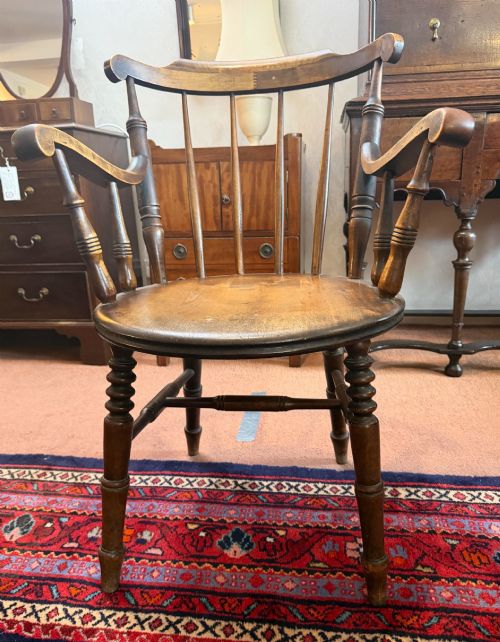
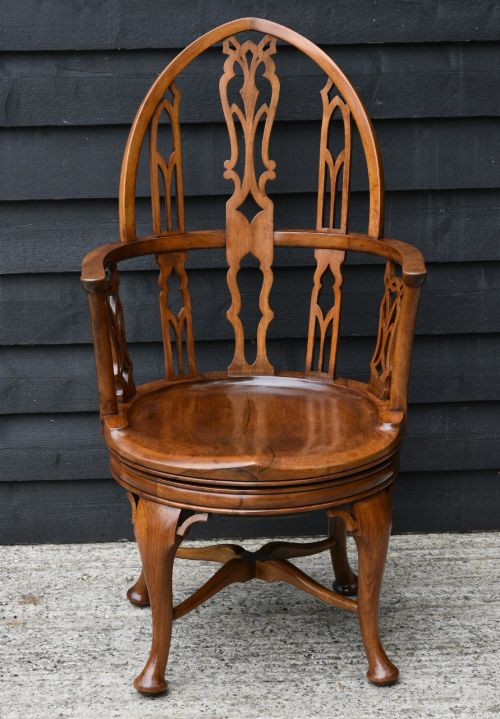
Traditional joinery methods such as mortise and tenon framing, pegging, and specialised iron or brass swivel mechanisms defined the production of these functional seats. Turned spindles and carved wooden spider web backs reveal the cabinetmaker's skill in balancing structural rigidity with ergonomic support.
Antique Wooden Office Chair Retail Price Guide 2026
Typical asking prices for wooden office chair among the pieces listed under this phrase on Sellingantiques today, from the lower quarter to the upper quarter. They describe what is for sale here now, not the wider market.
Several captain's chairs retain the deep indentations left by nineteenth-century clerks who spent decades at their ledgers.
What separates fine examples from standard workshop production
The distinction between ordinary utility seating and superior office chairs lies in the selection of figured timber and the integration of complex mechanical swivels. High-grade models combine burr elm seats or golden mahogany frames with sophisticated tilting iron hardware that moves smoothly.
Proportion and carving depth further divide the range, as master cabinetmakers shaped generous saddle seats and sculpted comfortable arm bows rather than relying on uniform factory turnings. Original patination and intact structural timbers elevate pieces beyond standard utilitarian office inventory.
The Antique Wooden Office Chair Glossary
- Smoker's Bow
- A low-backed Windsor armchair with a continuous bentwood arm rail, commonly found in nineteenth-century offices and homes.
- Captains Chair
- A sturdy wooden armchair featuring a rounded spindle back that fits neatly beneath a desk.
- Revolving Desk Chair
- A seat fitted with a central wooden or iron spindle mechanism allowing 360-degree rotation above a four or five-leg base.
- Bentwood
- Timber shaped by exposure to steam, allowing for strong, sweeping curves in chair backs and armrests.
- Saddle Seat
- A wooden chair seat scooped into a concave contour to provide ergonomic comfort during long periods of sitting.
Antique Wooden Office Chair: Frequently Asked Questions
Are these chairs comfortable for daily computer work?
Many Victorian and Edwardian office chairs feature sculpted saddle seats and supportive curved back rails that accommodate modern seating postures. Their sturdy wooden construction provides a reliable and supportive base for a home study.
However, they lack the adjustable height levers and thick padding found in modern desk chairs. Adding a loose leather or cloth cushion can improve comfort for extended working hours.
What is the difference between a captain's chair and a smoker's bow?
The terms are often used interchangeably in trade descriptions to denote a low, sturdy wooden armchair with a turned spindle back. Technically, a smoker's bow tends to have a slightly lower back and simpler proportions.
Both forms share Windsor-style construction methods and were widely utilised in offices, country houses, and public rooms during the Victorian era.
How should I care for wooden office chair leather?
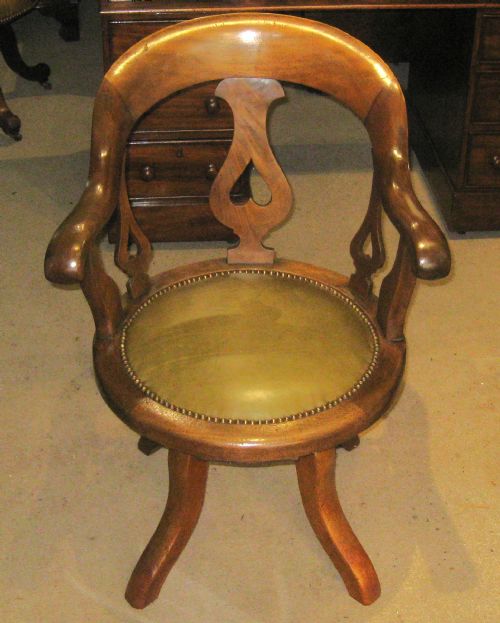
Some desk chairs feature original leather upholstery or padded inserts that require gentle cleaning with a soft, dry cloth. Avoiding harsh chemical cleaners preserves the natural surface.
Applying a specialist leather balsam periodically helps prevent the material from drying out and cracking under normal room conditions.
Can I use these chairs on modern wooden floors?
Most antique office chairs feature four wooden legs or a heavy swivel base without castors, which can rest securely on wooden flooring. Models equipped with original brass or iron castors may require protective cups.
Checking the contact points of the feet ensures the timber or metal does not scratch delicate modern floor finishes during movement.