


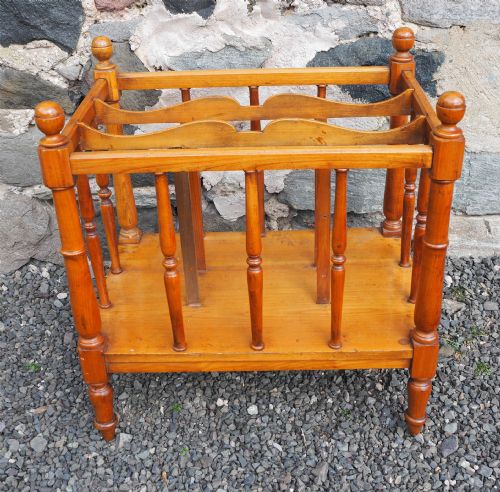

Antique Wooden Newspaper Stand
An antique wooden newspaper stand keeps journals and broadsheets neatly ordered, bringing period grace to a sitting room.
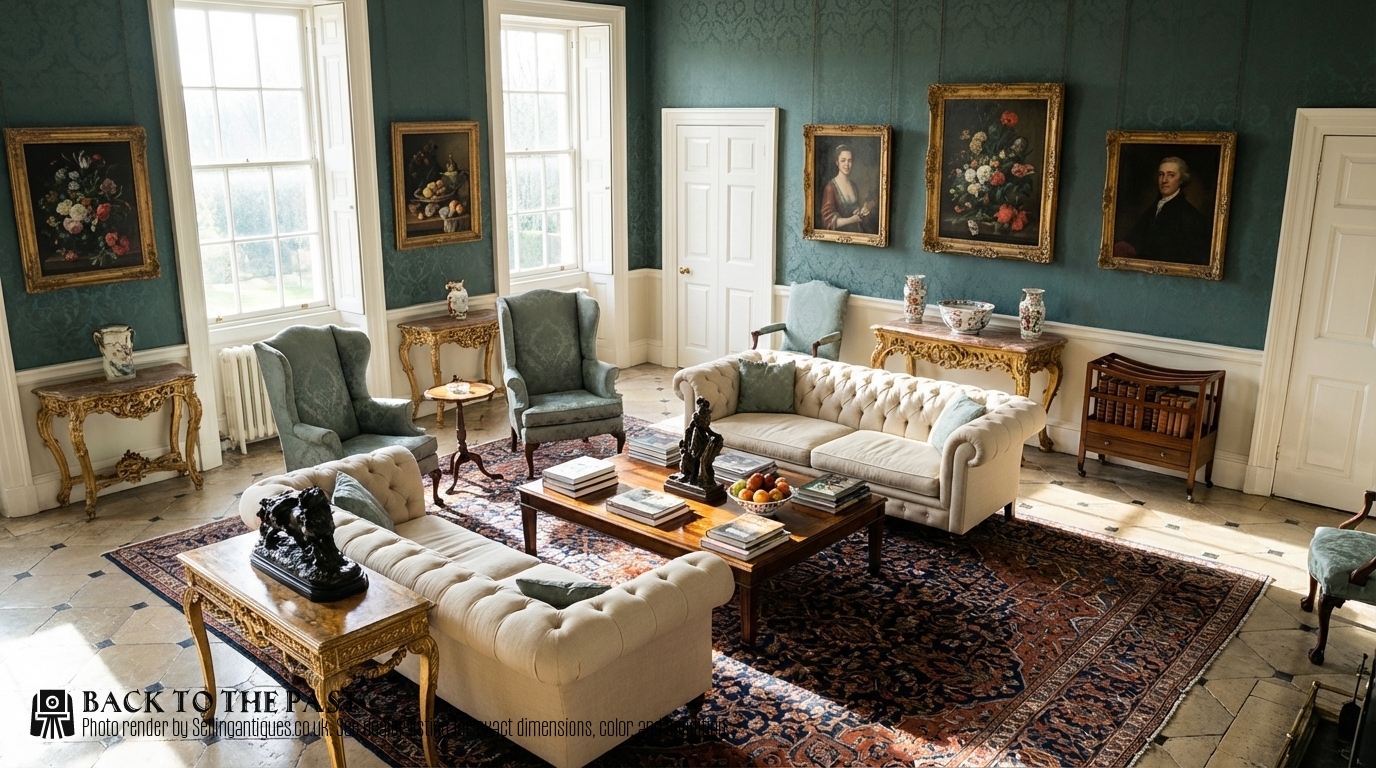
Antique Wooden Newspaper Stand
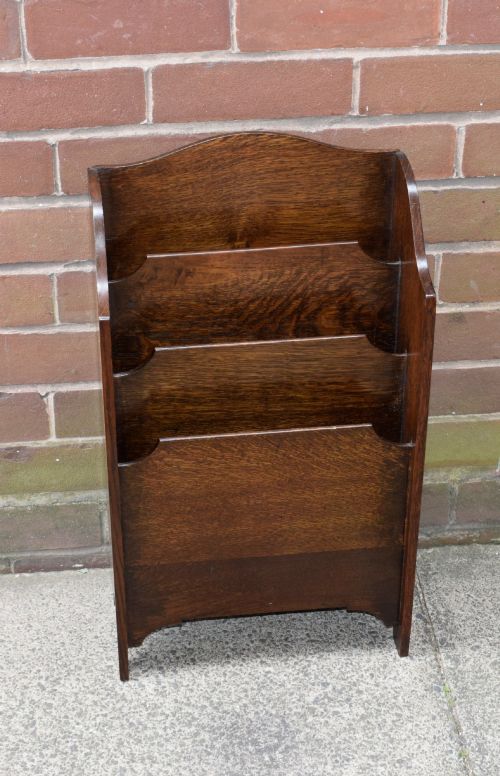
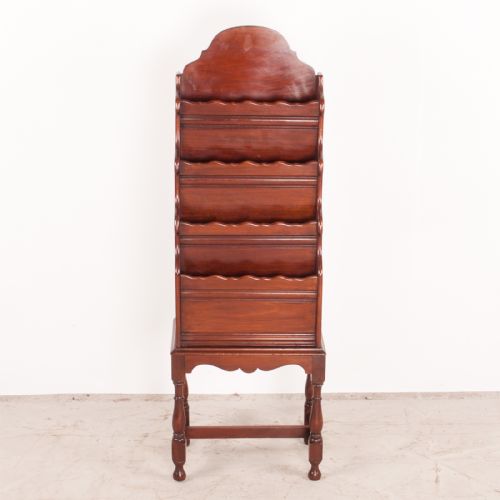
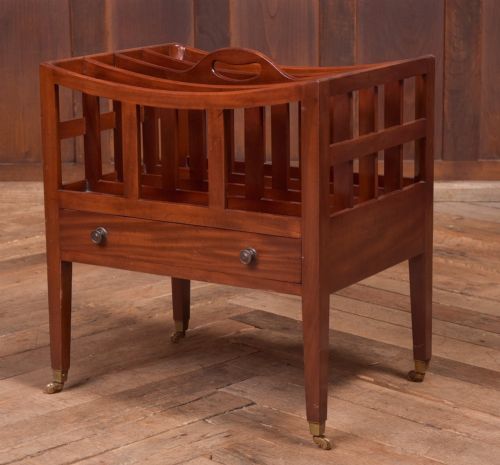
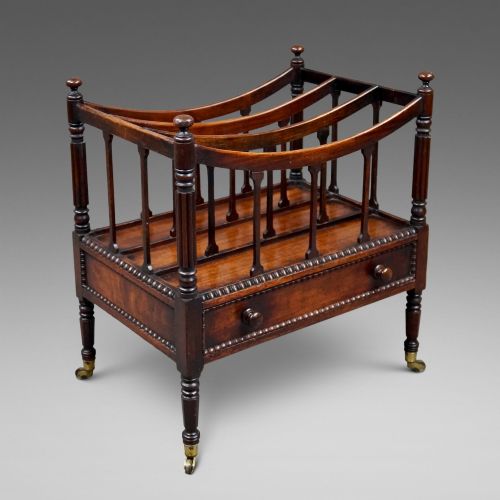
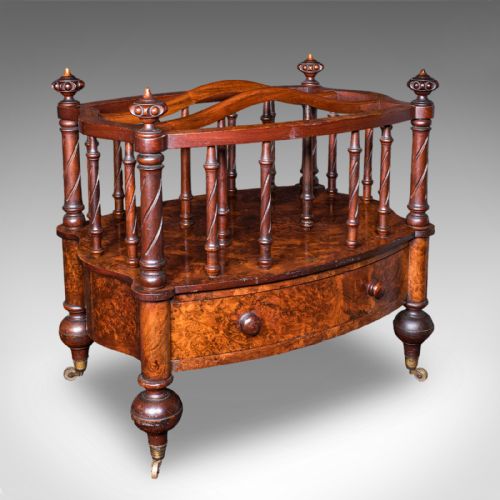
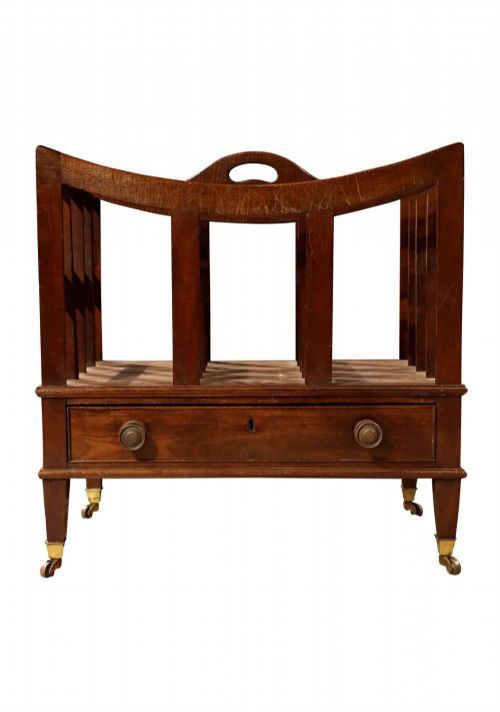
When you search for an antique wooden newspaper stand, you encounter pieces designed to hold periodicals, sheets of music, and folios off the floor. The examples on this page span from the Georgian and Regency eras through the Victorian, Edwardian, and Arts and Crafts periods, reflecting changing domestic habits.
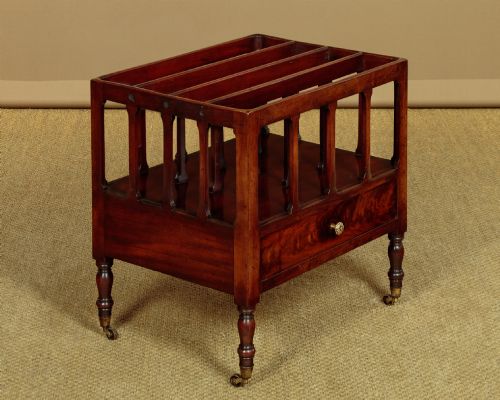
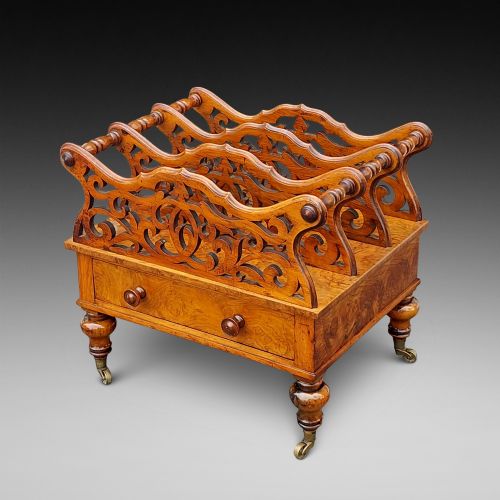
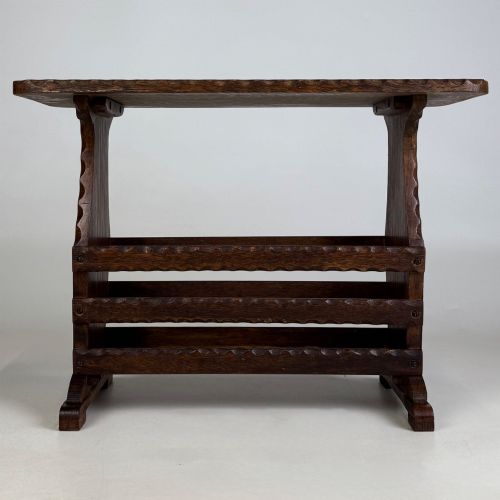
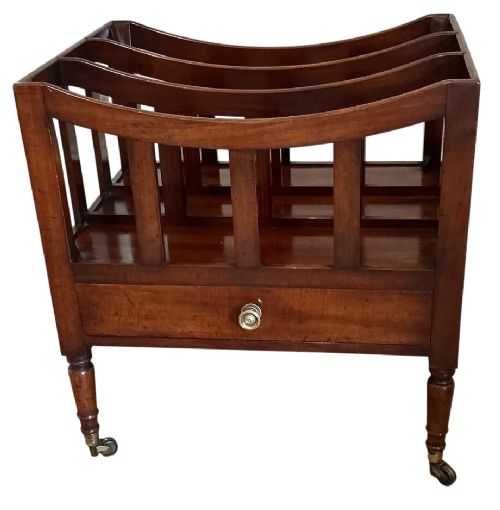
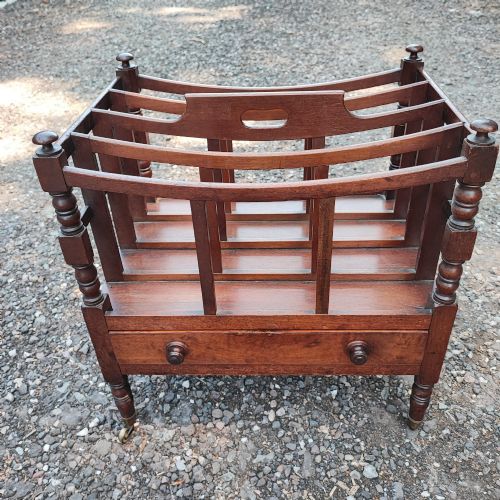
The traditional Canterbury dominates the selections, often featuring carved or pierced divisions above a low drawer and raised on turned legs with castors. You also meet simpler magazine racks and side tables adapted for holding daily reading material.
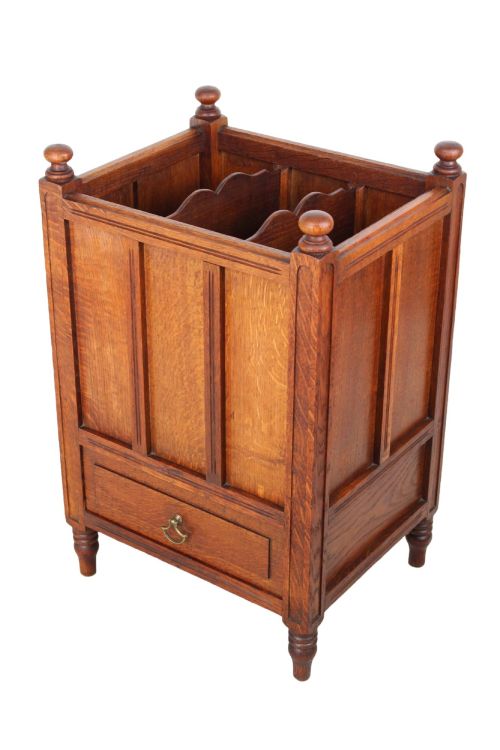
Mahogany and rosewood appear frequently among the earlier pieces, while oak and burr walnut surface across later Victorian and Edwardian examples. These furnishings range from boat-shaped Regency stands to sturdy country house folio units.
How they were made
Cabinetmakers utilised dense hardwoods like mahogany, rosewood, and walnut, selecting timber with rich grain patterns and figuration for primary surfaces. Boxwood and ebony bandings occasionally accent the edges of shelves and drawers.
Construction techniques involve finely joined divisions, often pierced or scrolled, secured to compartment bases and supported by turned legs. Brass castors frequently finish the feet on freestanding pieces, allowing easy movement across carpets.
The selection includes pieces spanning from George III and Regency eras through Victorian, Edwardian, and 1920s designs.
What varies in quality
The distinction between standard examples and superior pieces rests on the choice of timber figure, such as burr walnut or figured mahogany, and the crispness of turning on the legs. Fine specimens display deliberate craftsmanship in pierced fretwork divisions and well-fitted undertier drawers.
Proportion and structural harmony also separate the ordinary from the exceptional, as seen in boat-shaped frames and balanced multi-division layouts that retain their original brass castors and rich surface patination.
Howard and Sons of London·Gillows of Lancaster
The Antique Wooden Newspaper Stand Glossary
- Canterbury
- A low stand with partitions for holding sheet music, newspapers, or magazines, typically featuring a small drawer below. This form originated in the late eighteenth century and remained popular through the Victorian period.
- Folio Stand
- A large freestanding rack designed for holding large books, prints, or newspapers. These pieces often feature adjustable or rigid frames suited to heavy volumes.
- Bandings
- Thin strips of contrasting wood inlaid around the borders of furniture surfaces. They provide decorative framing on tabletops and drawer fronts.
- Castors
- Small wheel attachments fitted to the base of legs to allow smooth movement. Brass versions are common on nineteenth-century stands.
- Pierced scroll divisions
- Partition slats cut through with scrollwork patterns to lighten the visual weight of the compartments. This detail frequently characterises mahogany pieces from the Regency era.
Antique Wooden Newspaper Stand: Frequently Asked Questions
What is the difference between a Canterbury and a magazine rack?
A Canterbury is a traditional compartmentalised stand often featuring a drawer and turned legs with castors, designed originally for sheet music and folios. Magazine racks tend to be simpler later variants focusing purely on holding periodicals.
Canterburys emerge prominently from the Georgian, Regency, and Victorian periods, whereas dedicated magazine racks frequently date to the Edwardian era and the 1920s.
How were these stands used in period homes?
These stands sat beside armchairs or reading desks to keep daily newspapers, journals, and sheet music organised and within reach. They prevented papers from cluttering tabletops.
In larger country houses, sturdier folio stands accommodated oversized prints and newspapers for guests to peruse in the drawing room.
How do I identify a Regency period stand?
Regency pieces often exhibit boat-shaped frames, rich mahogany or rosewood timbers, and elegant turned legs fitted with brass castors. Pierced scroll divisions are also characteristic.
Cabinetmakers of this era focused on clean classical lines paired with functional compartmentalisation.
Can these stands hold modern newspapers?
Most antique stands accommodate modern magazines and folded broadsheets within their wooden divisions. The width and depth vary depending on whether the piece was built for music folios or periodicals.
Measuring the partition width helps ensure your preferred reading materials fit comfortably between the dividers.