



Antique Wooden Lion Figure
These antique wooden lion figure examples bring spirited presence and centuries of craftsmanship into a room.
Antique Wooden Lion Figure
An antique wooden lion figure encompasses carved sculptures, decorative ornaments and folk art figures sourced from various global traditions and periods. Collectors seek these pieces for their expressive carving, historical character and strong decorative presence in an interior.
The selections available range from 17th Century English figures and Mid Georgian giltwood carvings to 19th Century Grand Tour Medici lions and Chinese Buddhist temple guardians. Buyers frequently encounter pairs of Foo dogs, root wood temple carvings and traditional wooden lionesses.
Makers from European workshops and Asian traditions alike utilised native and exotic timbers to capture the power and majesty of these symbolic beasts. Whether styled in Gothic Revival, Qing Dynasty or traditional folk art aesthetics, each piece reflects the artistic conventions of its origin.
Materials and construction
Carvers shaped these figures from a variety of dense timbers, including boxwood, walnut, root wood and general hardwoods suited to detailed sculptural work. Artisans employed hand chisels and gouges to define muscular forms, manes and facial expressions directly from the grain.
Surface treatments enhance the timber forms, featuring applied gesso, traditional gilding, polychrome paintwork and dark lacquer finishes. Certain pieces incorporate integrated plinths or bases carved from the same block or joined securely to support the weight of the sculpture.
Antique Wooden Lion Figure Retail Price Guide 2026
Typical asking prices for wooden lion figure among the pieces listed under this phrase on Sellingantiques today, from the lower quarter to the upper quarter. They describe what is for sale here now, not the wider market.
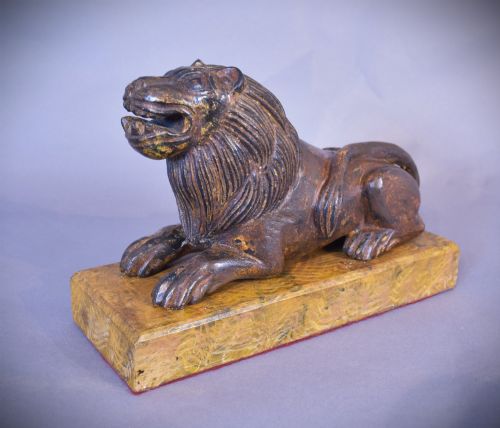
Even fierce temple guardians need a rest, which explains why several of these majestic beasts spend centuries sitting quietly on wooden blocks.
Judging quality and execution
The integrity of the original surface finish, whether aged gilding, polished hardwood or historic paint, significantly impacts the character of the object. Master carvers achieved balanced proportions and dynamic postures that remain convincing from every viewing angle.
Luigi Frullini
The Antique Wooden Lion Figure Glossary
- Giltwood
- Timber that has been coated with a thin layer of gold leaf or gilt paint over a prepared ground. This finish provides a luminous surface that catches candlelight or natural illumination.
- Root wood
- Timber sourced from the root system of a tree, prized for its natural, twisting burls and gnarled contours. Carvers often incorporated these organic shapes directly into the anatomy of mythical figures.
- Medici Lion
- A classic sculptural form modelled after the ancient marble lions guarding the Villa Medici in Rome. European workshops frequently reproduced these regal, crouching beasts in carved wood during the nineteenth century.
- Gothic Revival
- An architectural and decorative style drawing inspiration from medieval forms. Figures produced in this aesthetic often feature medieval heraldic postures and sharp, linear detailing.
Antique Wooden Lion Figure: Frequently Asked Questions
What is a Foo dog?
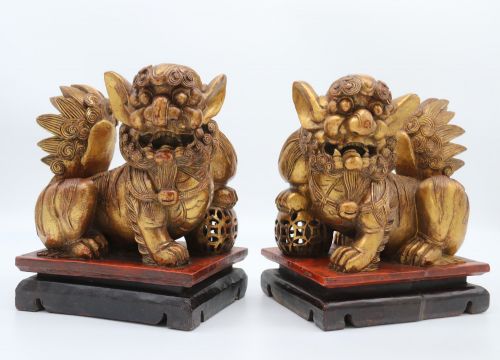
A Foo dog is a traditional guardian figure representing a sacred lion, commonly found in Chinese art and temple architecture. Sculptors carved these mythical protectors with elaborate manes and watchful expressions to guard entrances.
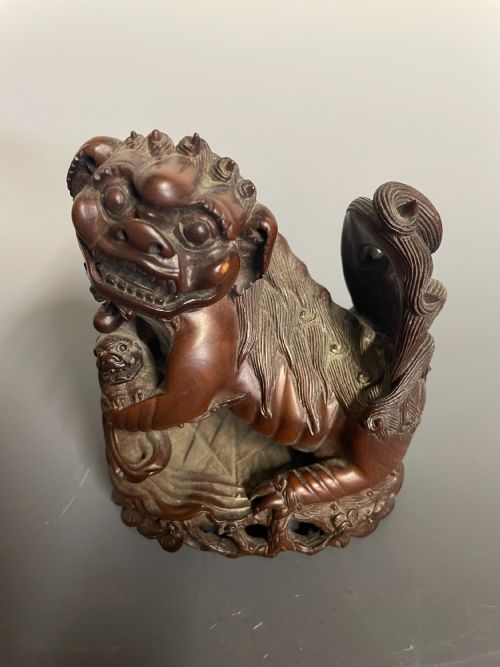
In the marketplace, these figures appear in materials ranging from boxwood to twisted root wood. They serve as decorative ornaments that bring historical Asian artistry into domestic interiors.
Where were Medici lions displayed?
Medici lions originate from a pair of marble sculptures created in classical antiquity and placed at the Villa Medici in Rome. Grand Tour travellers and collectors admired these regal, crouching beasts during their travels across Europe.
Carvers in the nineteenth century produced wooden interpretations of these famous lions for domestic display. Pairs of these figures often stood upon dedicated plinths in libraries or entrance halls.
How do I style these figures?
Antique wooden lion figures suit placement on mantelpieces, sideboards, bookcases or dedicated plinths where their carved details can be appreciated. Pairs look particularly effective flanking a fireplace or anchoring either end of a long console table.
Mixing these sculptural forms with contemporary furnishings adds texture and historical contrast to a room. Placing them away from direct heat sources helps preserve the stability of the antique timber and surface finishes.
How do I date a carving?
Dating a wooden figure involves examining the tool marks, timber characteristics, wear patterns and stylistic conventions specific to periods like the 17th Century or the Georgian era. Master carvers utilised period-specific techniques that leave distinct physical evidence on the underside and interior surfaces.
Comparing the stylistic details, such as the treatment of the mane or the proportions of the plinth, helps align the piece with known eras like the Qing Dynasty or Gothic Revival.