
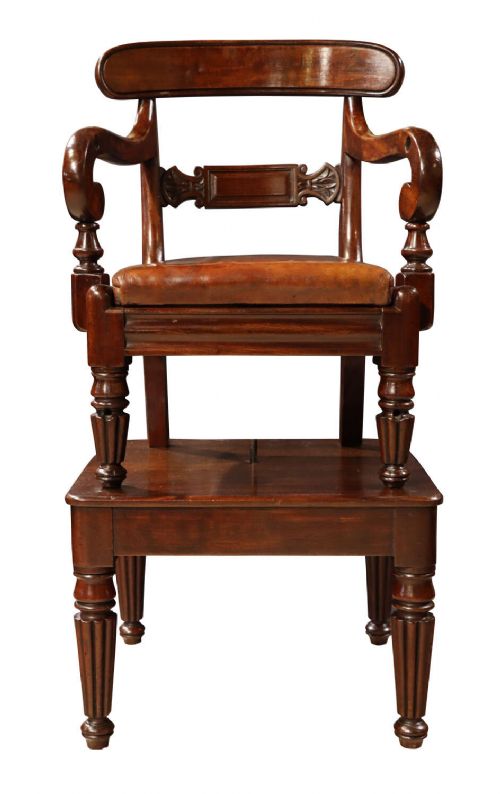


Antique Wooden Highchair
These antique wooden highchair pieces offer practical nursery seating spanning several centuries of domestic craft.
Antique Wooden Highchair
An antique wooden highchair represents centuries of domestic history, designed specifically to raise a young child to table height. These items range from simple vernacular seating to complex metamorphic designs that alter their configuration.
The versions most commonly met on this page span the Georgian, Victorian, and Edwardian eras, alongside various nineteenth-century continental examples. They appear in forms such as hoopback windsor chairs, armchairs fitted to separate stands, and caned tub highchairs.
Makers utilised native hardwoods like elm, ash, and oak alongside imported mahogany to construct these sturdy children's seats. Many pieces incorporate functional elements like leather, cane, fabric, or iron bracing to ensure durability during daily nursery use.

How they were made
Cabinetmakers and country joiners built these highchairs using traditional timber construction methods suited to heavy domestic service. Hardwoods such as mahogany, elm, ash, and beech were shaped into spindles, turned legs, and robust frames.
Many examples combine multiple woods within a single piece, pairing elm seats with ash spindles or beech frames. Metal iron elements occasionally reinforce joints, while cane, leather, or fabric panels form supportive seating surfaces.
Antique Wooden Highchair Retail Price Guide 2026
Typical asking prices for wooden highchair among the pieces listed under this phrase on Sellingantiques today, from the lower quarter to the upper quarter. They describe what is for sale here now, not the wider market.
Some tiny chairs hide clever folding steps so small occupants could climb up unassisted.
What varies in quality
The distinction between standard vernacular pieces and superior examples lies in the sophistication of the timber and the complexity of the design. Elaborate metamorphic models that convert into low chairs demonstrate greater joinery skill than fixed frame designs.
Fine mahogany or finely turned ash and elm frames display careful attention to proportion and finish. The survival of original elements such as stands, caning, and painted decoration elevates the status of a piece considerably.
The Antique Wooden Highchair Glossary
- Metamorphic high chair
- A convertible piece of furniture designed to transform from a highchair into a low chair or rocker. This clever dual-purpose mechanism allowed families to extend the useful lifespan of the seating as the child grew.
- High chair on stand
- A seating unit that separates from its elevated wooden base to form a standard child's armchair. This arrangement provided versatility for households requiring both high and low nursery seating.
- Hoopback windsor
- A chair style featuring a continuous bentwood bow that forms the back and armrests above a solid wooden seat. Turned spindles fill the frame to provide secure back support.
- Tub highchair
- A rounded, enclosed seating design offering curved arm and back rails reminiscent of a deep tub. Caned or upholstered panels often line the interior framework.
- Vernacular furniture
- Objects built by local craftsmen using regional traditions and readily available native timbers rather than following strict metropolitan design patterns. These pieces prioritise functional utility and robust construction.
Antique Wooden Highchair: Frequently Asked Questions
What is a metamorphic high chair?
A metamorphic high chair is a convertible piece of furniture designed to transform from an elevated seat into a low chair or rocking base. This dual-purpose engineering allowed growing children to continue using the same item of furniture as their needs changed.
Craftsmen utilised clever pivoting mechanisms and detachable stands to achieve this transition safely within domestic settings.
How do I identify a Georgian high chair?
Georgian high chairs generally feature classic period characteristics such as mahogany construction, straight or slightly cabriole legs, and understated joinery. Many examples from this era incorporate separate wooden stands or simple architectural back rails.
The use of rich timbers and restrained ornamentation distinguishes these eighteenth and early nineteenth-century pieces from later Victorian designs.
Were these high chairs used daily?
These wooden highchairs served as heavy-use domestic seating in nurseries and dining rooms for generations of children. Their sturdy construction using elm, ash, oak, and mahogany ensured they could withstand the demands of daily family life.
Many surviving examples show the honest wear and patina accumulated from decades of practical household service.
What is a high chair on stand?
A high chair on stand consists of a removable child's armchair that rests securely upon a separate elevated wooden frame. This configuration allowed families to lift the child to table height during meals and lower the seat when needed.
The arrangement demonstrates ingenious historical woodworking aimed at maximising the utility of nursery furniture.