

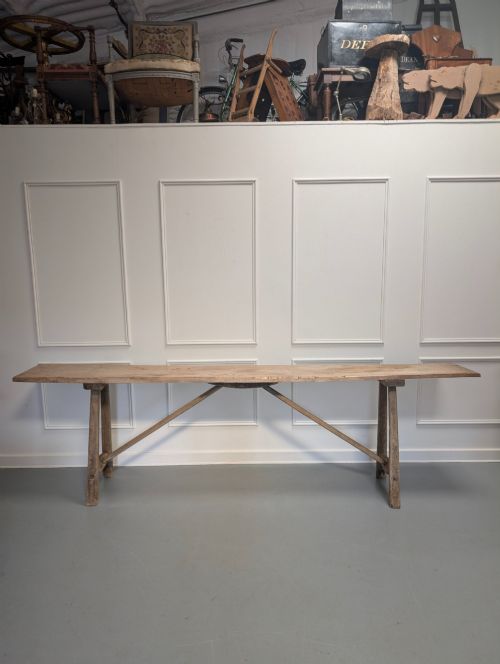
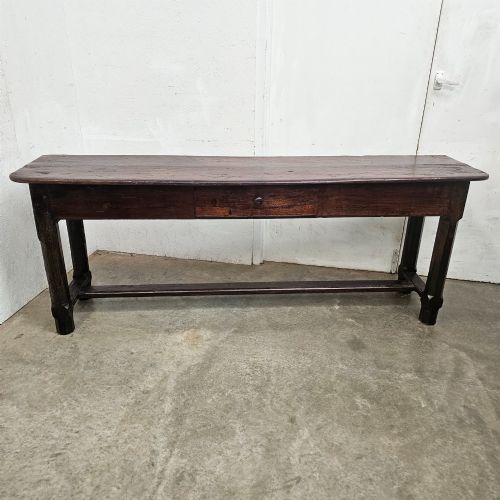
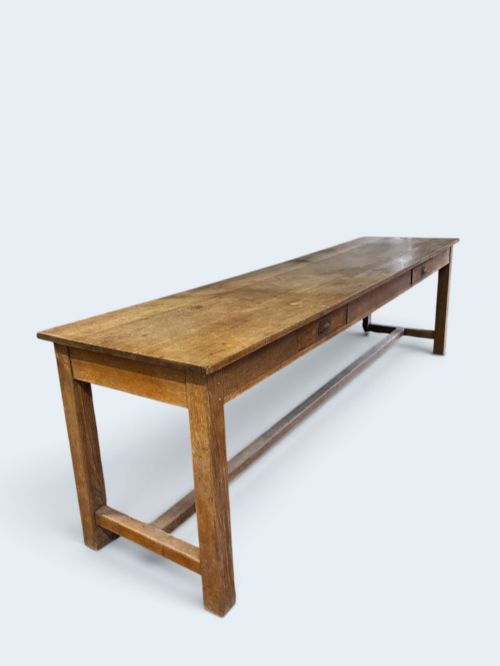
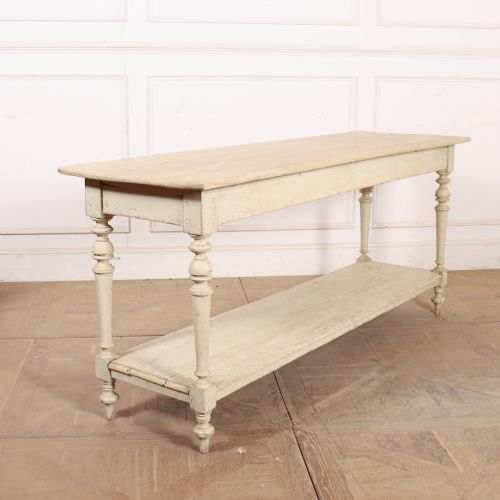


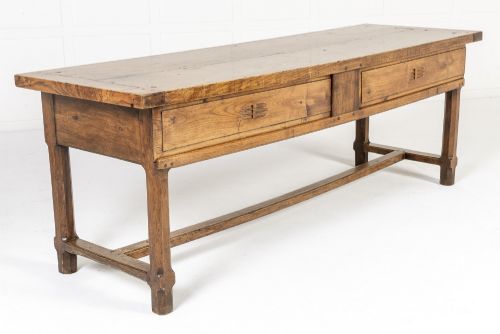
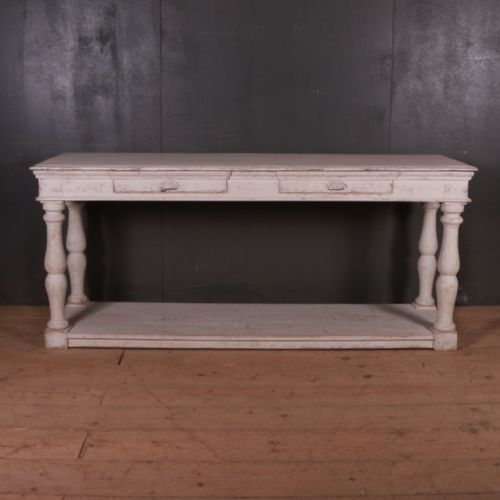


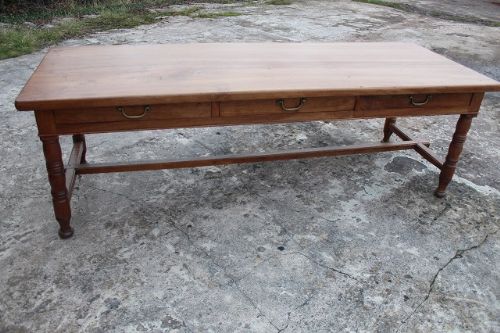


Antique Wooden Draper Table
These antique wooden draper tables offer honest utility and generous proportions, bringing a grounded surface into your home.
Antique Wooden Draper Table
An antique wooden draper table provides an extended surface originally designed for commercial textile display or domestic preparation. These items appear across several centuries, with nineteenth-century examples forming the majority of the current selection.
The category encompasses console tables, serving tables, and preparation tables rooted in rural and provincial traditions. Pieces range from French provincial designs to English country house and Scandinavian country variants.
Makers constructed these sturdy items for daily labour rather than formal drawing rooms. Their long, narrow proportions make them adaptable for modern hallways, kitchens, and living spaces.
How they were made
Carpenters relied on solid oak, pine, and walnut to build these functional surfaces. Timber selection prioritised durability, resulting in heavy boards capable of withstanding constant commercial or domestic use.
Construction techniques involve straightforward joinery suited to heavy-duty tables and trestle supports. Iron and brass hardware occasionally reinforce joints or provide operational support on specific formats.
Surfaces frequently display layers of historic paint or raw timber left to weather naturally through decades of use. Painted wood finishes, particularly in French provincial styles, show age-related craquelure and wear.
Antique Wooden Draper Table Retail Price Guide 2026
Typical asking prices for wooden draper table among the pieces listed under this phrase on Sellingantiques today, from the lower quarter to the upper quarter. They describe what is for sale here now, not the wider market.
Expect faint indigo dye stains on the timber, left behind by yards of fabric measured out centuries ago.
What varies in quality
The integrity of the timber base and the thickness of the top boards dictate the standing of a piece. Tables retaining their original unplaned boards and untreated structural frames command greater appreciation from purists.
Proportions and leg configuration shift between standard utilitarian builds and refined provincial interpretations. Pieces featuring trestle supports or sophisticated console shaping demonstrate higher design ambition than basic work tables.
The Antique Wooden Draper Table Glossary
- Draper table
- A long, narrow utility table historically utilised in cloth merchants' shops for measuring and folding textiles. These surfaces provide exceptional length without excessive depth.
- Trestle table
- A table construction where the top rests on two or more upright supports connected by a horizontal beam. This design maximises legroom along the length of the furniture.
- Preparation table
- A heavy-duty utilitarian surface built for food or material preparation in domestic and commercial settings. They typically feature sturdy timber tops and robust framing.
- Console table
- A wall-mounted or freestanding table designed to stand against a vertical surface. They often feature narrow depths suited to hallways and narrow rooms.
Antique Wooden Draper Table: Frequently Asked Questions
What is an antique wooden draper table?
These are utilitarian surfaces originally used in shops for displaying textiles and fabrics. Their long and narrow dimensions distinguish them from standard dining furniture.
Today, they function well as serving tables, sideboards, or console tables in residential interiors.
How do I style a draper table at home?
Place them in hallways, behind sofas, or along dining room walls to utilise their narrow depth. Their generous length provides ample space for lamps, books, and decorative objects without blocking walkways.
Pair them with rustic seating or keep the surface bare to highlight the aged timber grain and historic paint finishes.
Are these tables suitable for everyday kitchen use?
Their original purpose as preparation and work tables makes them robust enough for modern domestic tasks. Solid oak and pine construction handles daily activity comfortably.
Consider the existing finish on the wood when deciding how heavily to use the surface for food preparation.
How can I tell the period of these tables?
Dating relies upon timber choice, tool marks, and construction methods visible on the underside and frame. Eighteenth-century examples often exhibit hand-sawn boards and pegged joinery.
Nineteenth-century variants frequently incorporate pine or oak with simpler mechanical fixings and painted surfaces.