
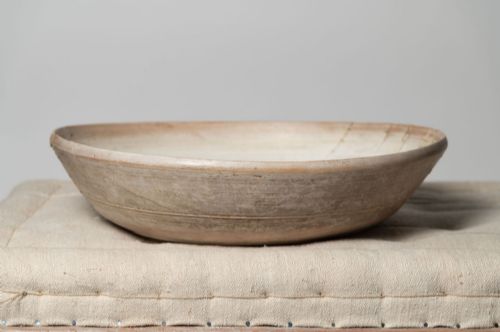
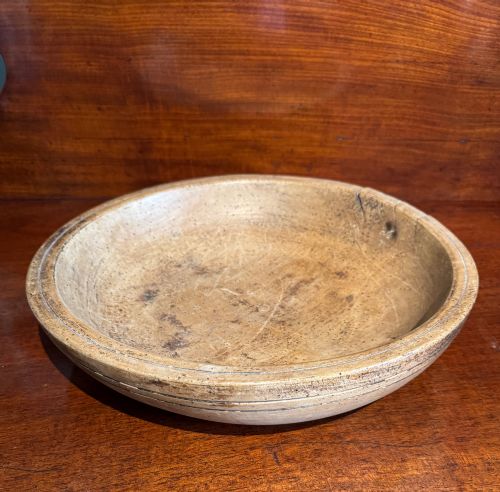
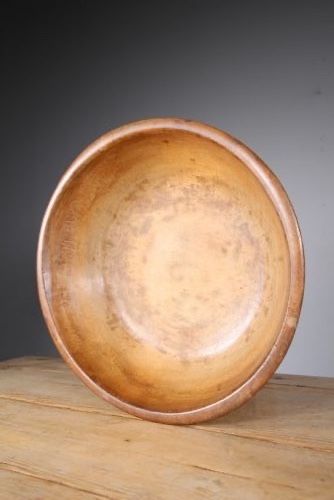
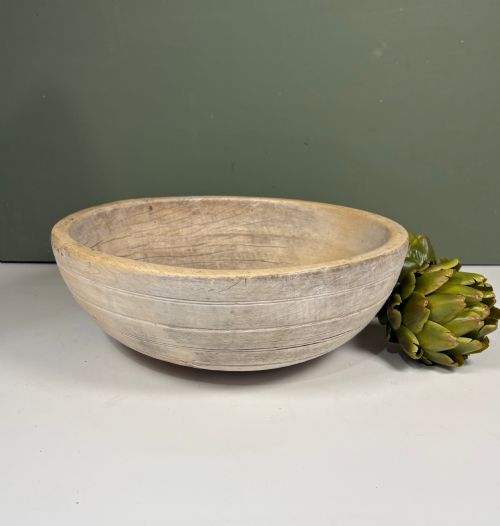


Antique Wooden Dairy Bowl
These antique wooden dairy bowls are solid vernacular vessels shaped for practical use, sought after today for their honest grain and simple presence.
Antique Wooden Dairy Bowl
An antique wooden dairy bowl is a utilitarian vessel created for practical rural tasks, frequently found in forms dating from the nineteenth century. These pieces encompass items originating from English, French, Scandinavian, and Welsh traditions, reflecting local agricultural methods of past generations.
The objects on this page span several specific styles, including rustic farmhouse, provincial, and folk art expressions. Alongside primary bowls, the category includes related treen forms such as scoops, strainers, and ladles.
Materials and construction
Makers relied primarily on sycamore and pine timber to construct these dairy vessels, choosing woods that resisted splitting and imparted no unwanted flavours to food. Woodworkers shaped these pieces using traditional turning and carving techniques suited to creating smooth, functional surfaces.
The construction focuses entirely on utility, resulting in clean lines and unadorned walls that prioritize practical domestic work. Surfaces developed their character through years of physical contact with dairy products and repeated washing.
Some bowls carry the quiet ghost of long-set cream, preserved through a century of diligent scrubbing by dairy hands.
Assessing the quality
Quality in an antique wooden dairy bowl rests in the integrity of the timber and the balance of the turned form. Pieces that retain a warm, honest patina demonstrate superior historic care and natural ageing compared to dry or overly stripped surfaces.
The distinction between standard utensils and finer vernacular pieces lies in the subtlety of the shaping and the depth of the grain figure. Well-preserved tool marks and harmonious proportions elevate an ordinary utilitarian object into a notable example of folk art.
The Antique Wooden Dairy Bowl Glossary
- Treen
- Small handmade wooden domestic objects and utensils. This term covers everything from bowls and spoons to ladles and strainers.
- Patina
- The surface sheen and coloration developed through age, handling, and use. A warm patina indicates decades of domestic interaction.
- Vernacular
- Architecture and objects created by local makers using traditional methods and local materials, without academic design input.
- Sycamore
- A light-coloured hardwood frequently chosen for dairy vessels due to its dense grain and clean appearance. It resists absorbing liquids effectively.
Antique Wooden Dairy Bowl: Frequently Asked Questions
What were dairy bowls used for?
These vessels were utilised in farm dairies for holding milk during the cream-separating process. The wide, open shape allowed cream to rise efficiently to the surface.
After skimming, the bowls served various general domestic purposes in rural kitchens before eventually entering collector markets.
How can I tell the period?
Dating relies on tool marks, timber selection, and the characteristic wear patterns left by nineteenth-century agricultural use. Regional turning styles also offer clues to the era and geographical origin.
Comparing the depth of the patina and surface oxidation helps distinguish nineteenth-century examples from later reproductions.
Are all these bowls English?
The selection includes pieces from various regions, notably English, French, Welsh, and Scandinavian workshops. Each tradition brought slight variations in timber choice and turning profiles.
Welsh and Scandinavian examples often display distinct regional folk art characteristics in their form and utility items.