



Antique Wooden Cutlery Caddies
These antique wooden cutlery caddies are practical domestic items designed to organise and transport knives, forks, and spoons.
Antique Wooden Cutlery Caddies
Antique wooden cutlery caddies serve as portable storage units for dining implements, appearing in various forms from the eighteenth to the early twentieth century. Buyers seeking antique wooden cutlery caddies will encounter functional boxes, partitioned trays, and lidded urns originating from English, Scottish, and Welsh workshops.
The selection on this page leans heavily towards regional vernacular pieces alongside formal dining room accessories. Domestic items such as knife trays, butler carriers, and storage boxes dominate the available forms.
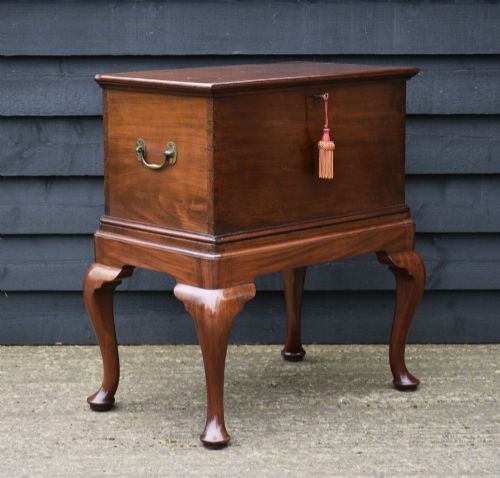
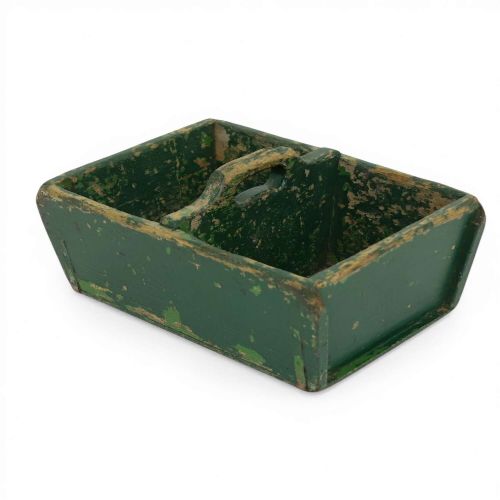
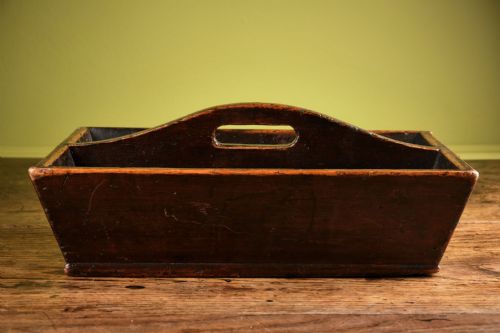
Examples range from utilitarian pine and fruitwood carriers to figured mahogany boxes intended for formal settings. Each piece reflects the domestic routines and dining customs of its period.
How they were made
Cabinet makers and vernacular craftsmen utilised native and imported timbers including mahogany, oak, pine, walnut, and fruitwood. These materials were chosen for their durability and grain, forming sturdy containers capable of withstanding regular domestic handling.
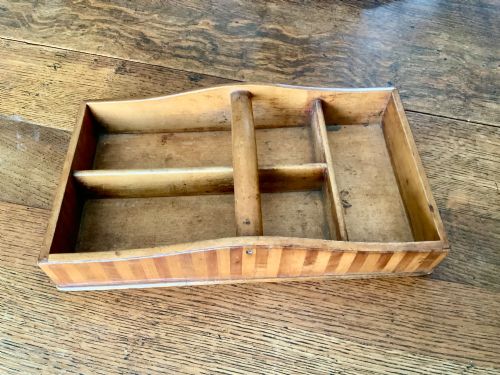
Construction techniques involve dovetail joints, pegged framing, and fitted internal partitions to separate blades and handles. Brass handles, escutcheons, and hinges provide functional reinforcement and lifting support on transportable boxes and carriers.
The listings span from the eighteenth century to the early twentieth century, featuring mahogany, pine, oak, and fruitwood.
What varies in quality
Quality in these pieces depends on the selection of timber, such as figured mahogany or clean pine, and the precision of the joinery. Superior examples display thoughtful proportions, integrated dividers, and original hardware.
Condition and surface finish also separate items, with patinated waxed surfaces or original paint retaining more character than stripped alternatives. The competence of the local artisan or cabinet maker dictates the refinement of the final form.
The Antique Wooden Cutlery Caddies Glossary
- Caddy
- A small box or container originally used for storing tea, which later expanded to describe portable storage boxes for cutlery and bottles. These vessels often feature internal compartments.
- Trug
- A shallow horticultural or domestic basket traditionally made from strips of wood such as ash or willow. In a domestic context, sturdy wooden versions served as carry trays for kitchen and garden tools.
- Serpentine
- A curved furniture shape featuring a convex centre flanked by concave ends, creating an undulating front profile. This contour appears on higher-status storage boxes.
- Vernacular
- Architecture and objects built by local artisans using regional materials and traditional methods rather than following academic architectural styles. These items prioritise utility and local character.
- Escutcheon
- A flat plate of brass or other metal placed around a keyhole to protect the surrounding wood from wear. They frequently double as decorative hardware on boxes and caddies.
Antique Wooden Cutlery Caddies: Frequently Asked Questions
What were antique wooden cutlery caddies used for?
These pieces served to store and transport knives, forks, and spoons between the kitchen, pantry, and dining table. Servants utilised them to clear tables efficiently before silver chests became standard.
In less formal settings, smaller trays held everyday implements close to hand in country kitchens and workshops.
How do I date a wooden cutlery box?
Dating relies on observing timber choices, construction methods, and hardware styles associated with specific periods like the Georgian or Victorian eras. Figured mahogany and serpentine shapes often point to the eighteenth century, while utilitarian pine and oak trays span the nineteenth.
Examining internal tool marks and fastening types helps establish the timeframe of manufacture.
Are these caddies suitable for modern dining tables?
Their original partitioning makes them practical for holding napkins, modern cutlery, or condiments during meals. They provide accessible tabletop storage while adding historic character to a dining room.
Care should be taken to protect antique wood surfaces from moisture and direct heat.
What is the difference between a tray and a caddy?
A tray is typically an open, shallow vessel with raised sides designed for carrying multiple items across a room. A caddy usually incorporates lidded compartments, fixed dividers, or carrying handles suited to specific storage tasks.
Both forms overlap significantly within domestic antique categories.