


Antique Wooden Commode Table
An antique wooden commode table is a functional domestic piece designed for discreet storage or bedside use, bringing period timber character to a room.
Antique Wooden Commode Table
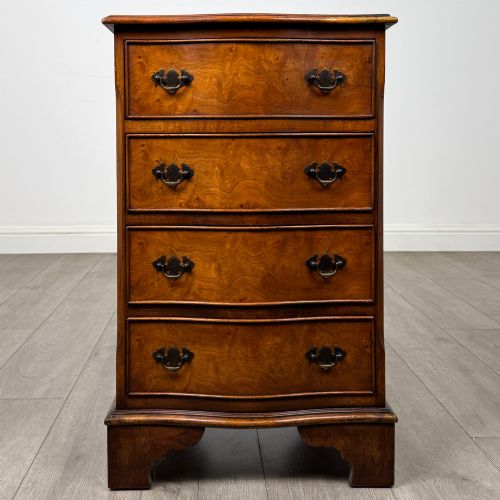
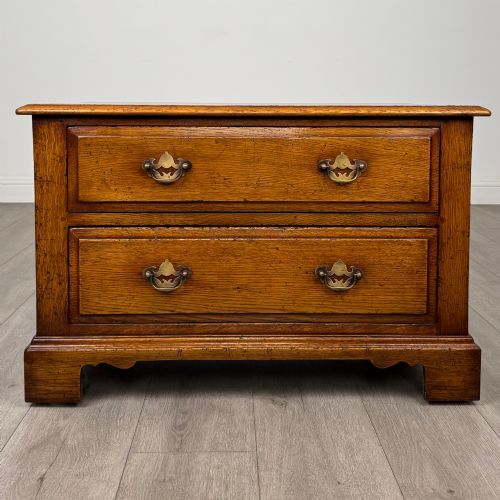
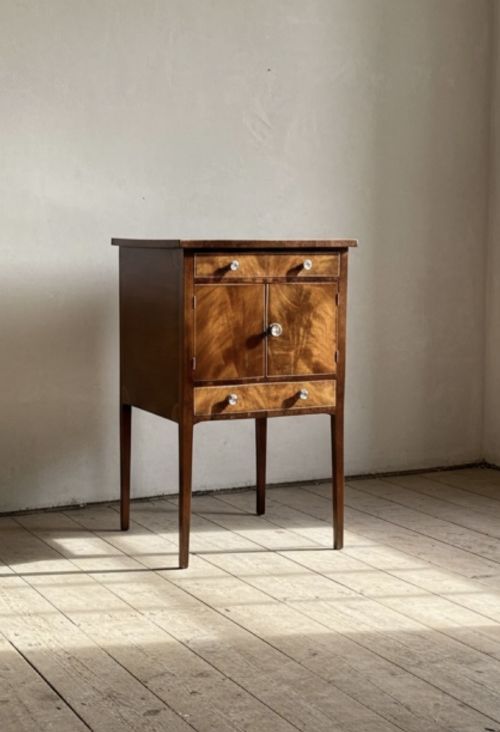
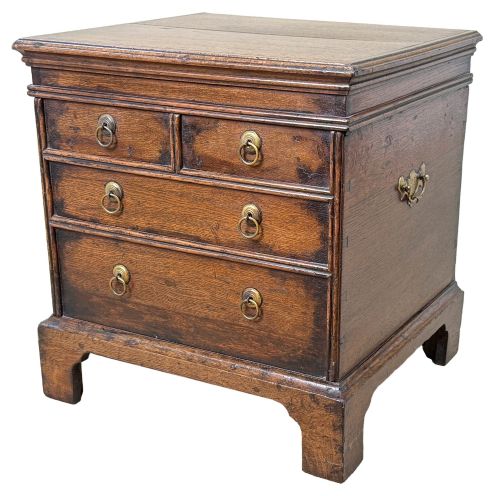
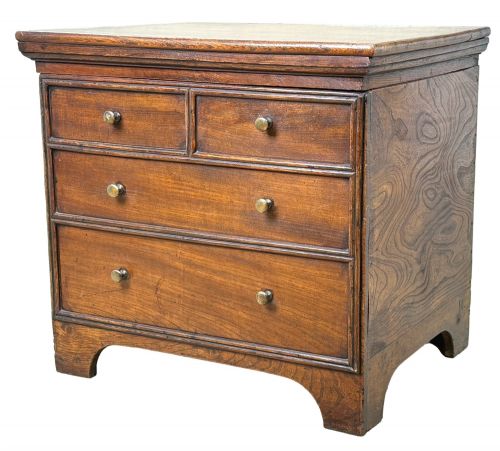
An antique wooden commode table takes several forms across this selection, appearing most frequently as a bedside cabinet, nightstand, or compact chest of drawers. These pieces trace their origins through the Georgian, Regency, and Victorian periods, alongside early twentieth-century interpretations.
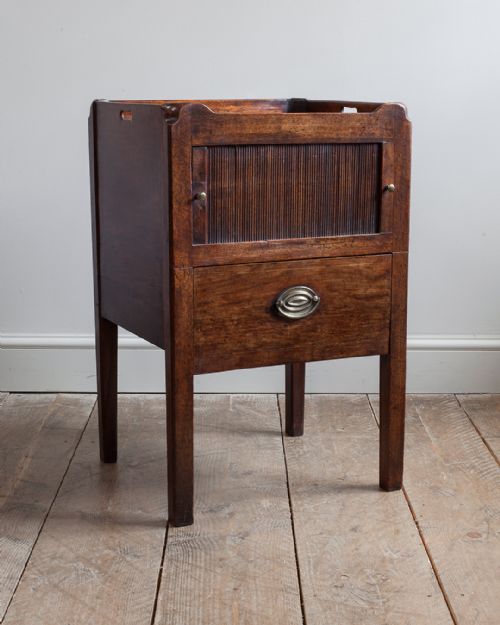
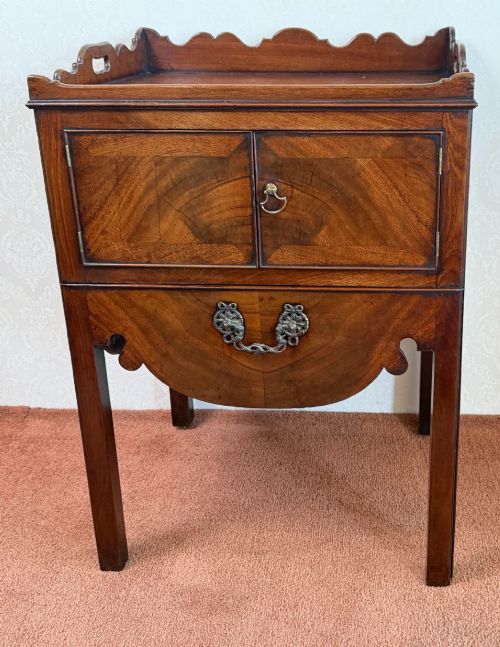
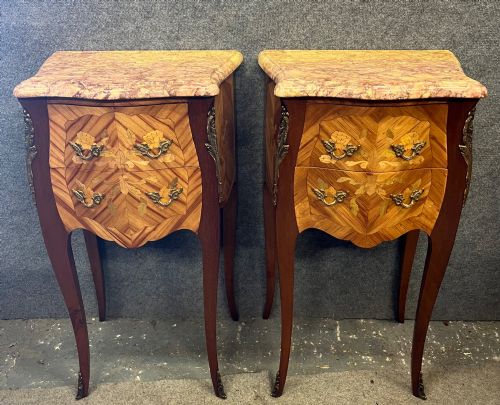
The practical designs range from traditional tray-top cupboards and cylindrical bedside units to close stools disguised as small chests. Walnut, mahogany, oak, and kingwood form the primary bodies, occasionally fitted with marble tops or intricate marquetry inlay.
Buyers will encounter formal English George III styles alongside French provincial and continental variations. Each type retains the compact proportions required for bedside placement or secondary surface space in a traditional interior.
How they were made
Cabinet makers utilised solid hardwoods such as mahogany, oak, and walnut for the primary structural carcases, frequently applying flame mahogany veneer or marquetry decoration to external surfaces. Brass handles, hinges, and occasional gallery rails provided functional contrast to the timber.
Top surfaces on specific pieces incorporate inset marble slabs, whilst tray-top edges were carved or shaped directly from the solid wood to secure items placed upon them. Joinery relied on traditional dovetails and mortise-and-tenon construction to ensure stability across small bedside dimensions.
Some eighteenth-century elm and oak close stools masquerade so convincingly as tiny chests that unsuspecting guests might attempt to store socks inside a chamber pot.
What varies in quality
The standard of timber selection sets the baseline for quality, distinguishing plain boards from richly figured flame mahogany veneer, burr walnut, or detailed marquetry patterns. Finer examples display meticulous grain matching across drawer fronts and cupboard doors.
Execution of secondary details, such as finely turned gallery rails, crisp brass hardware, and integrated marble tops, elevates individual pieces. The refinement of the cabinet joinery and the survival of polished original surfaces determine the standing of each item within its period.
Pietro Ferrario
The Antique Wooden Commode Table Glossary
- Commode table
- A low cabinet or chest designed for bedroom use, historically enclosing a chamber pot or serving as a bedside table. These pieces often feature cupboards or drawers.
- Tray top
- A raised rim around the upper surface of a small table or cabinet, carved from solid timber or assembled to prevent items from sliding off. This feature appears frequently on Georgian nightstands.
- Cylindrical cupboard
- A cabinet with a rounded, circular body enclosing a central storage space, often fitted with a tambour door or curved panel. Examples appear in both Regency and Victorian designs.
- Marquetry
- Decorative veneer work arranged in geometric or pictorial patterns using various coloured woods and organic materials. This technique decorates French and twentieth-century pieces on this page.
- Close stool
- An eighteenth-century box or small chest enclosing a pan or commode seat, styled to resemble a standard piece of bedroom furniture. Elm and oak versions survive from this era.
Antique Wooden Commode Table: Frequently Asked Questions
What is an antique wooden commode table used for?
These pieces function primarily as bedside cabinets, lamp tables, or small storage chests within a bedroom or living space. Their compact dimensions provide a convenient surface alongside a bed or chair while concealing interior shelving.
Historically, certain designs served as close stools to house chamber pots discreetly. Today, modern owners utilise the enclosed cupboards and drawers for general bedside storage.
How do I date a George III commode?
Dating relies on examining timber choices, construction methods, and prevailing stylistic traits associated with the late eighteenth century. George III pieces commonly feature solid mahogany or quality veneers with hand-cut dovetails on the drawer construction.
Characteristic elements include tray tops, bow fronts, and architectural proportions typical of the period between seventeen-hundred and eighteen-twenty. Secondary woods like oak or pine inside the drawers provide further clues to the regional origin and age.
Are marble top bedside cabinets authentic?
Marble tops on nineteenth and twentieth-century bedside cabinets served a practical purpose, offering a durable, heat-resistant surface for washbasins, candles, or night lamps. French and continental cabinet makers utilised marble extensively during the Victorian era and the nineteen-thirties.
Examining the fit between the stone slab and the timber frame confirms whether the top belongs to the original construction. Many period pieces were manufactured specifically to receive these stone inserts.
How do I clean a mahogany commode?
Maintenance requires gentle dusting with a soft, dry cloth to protect the historic polish and timber grain. Avoid modern aerosol polishes and silicone sprays, which build up a film over time and attract dust.
Occasional application of pure beeswax feeds the antique wood and preserves the natural lustre of the finish. Keep the cabinet away from direct heat sources and strong sunlight to prevent the timber or veneer from drying out.