



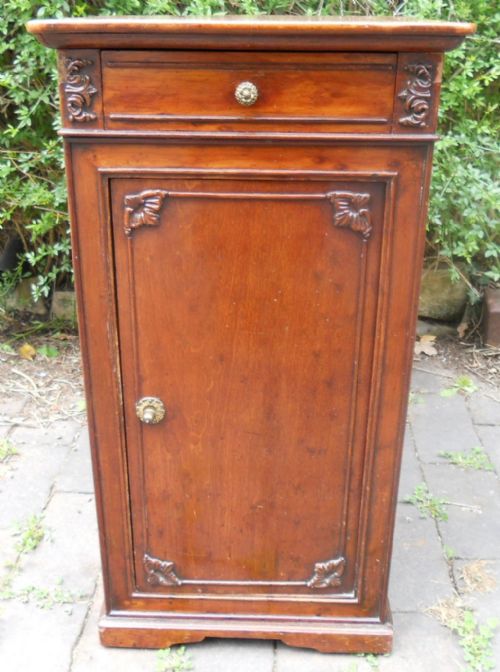
Vintage Mahogany Pot Stand
These vintage mahogany pot stand examples offer practical timber surfaces and plant pedestals rooted in Georgian, Victorian, and Edwardian craftsmanship.
Vintage Mahogany Pot Stand
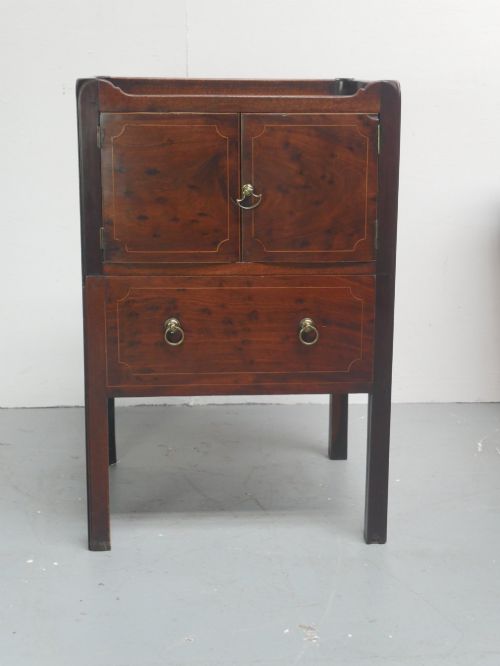
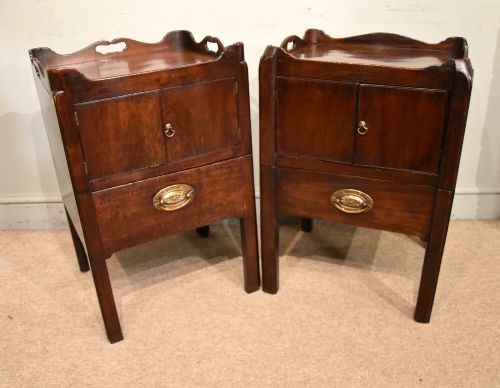
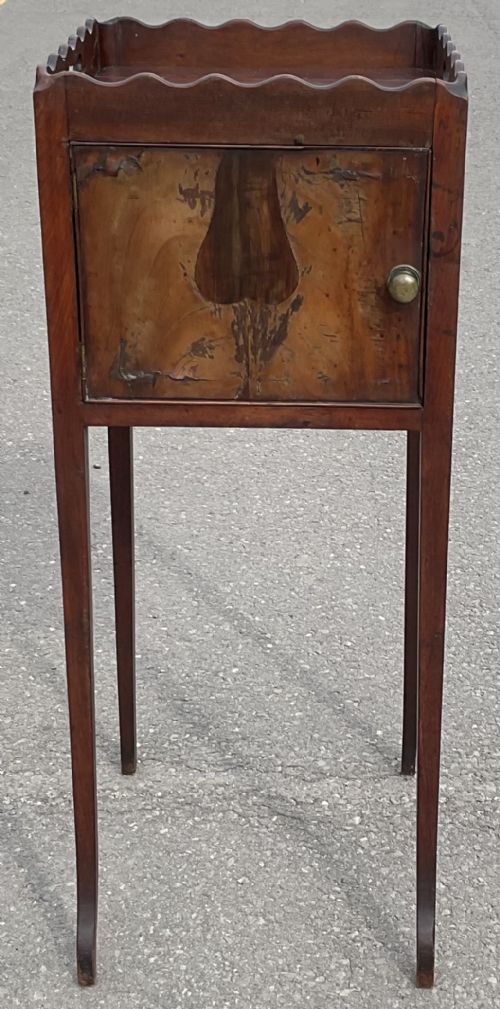
When you search for a vintage mahogany pot stand, you encounter a practical category spanning bedside cabinets, nightstands, and plant pedestals. These pieces originate across the Georgian, Victorian, and Edwardian eras, alongside later pieces up to nineteen ten.
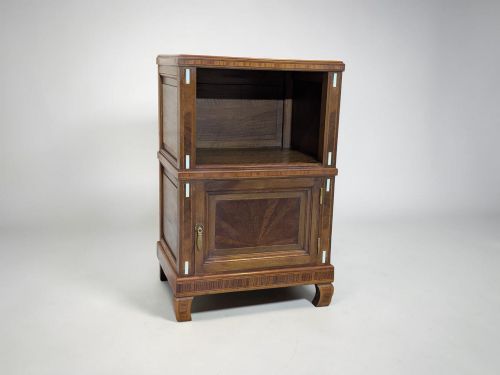
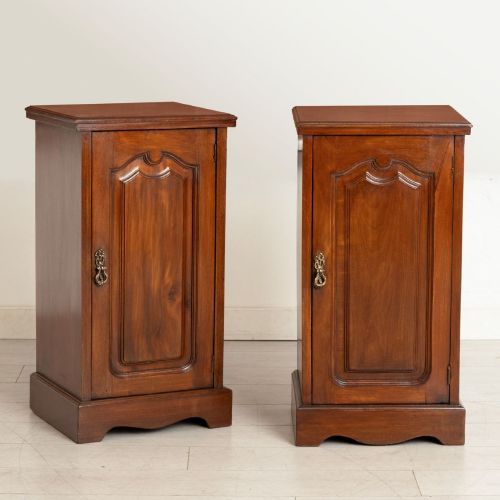
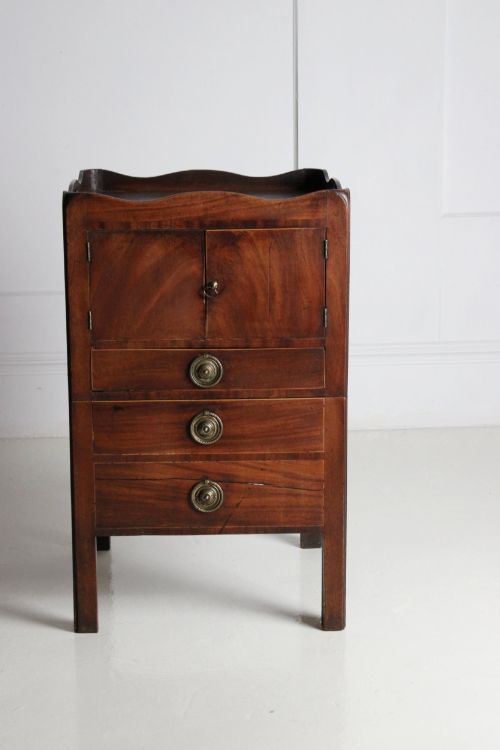
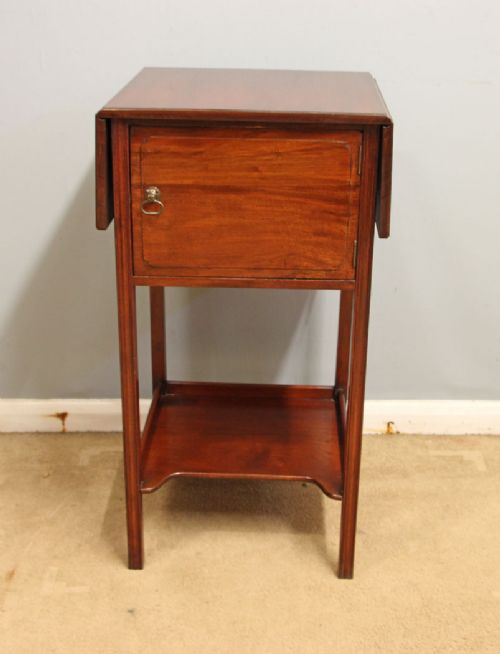
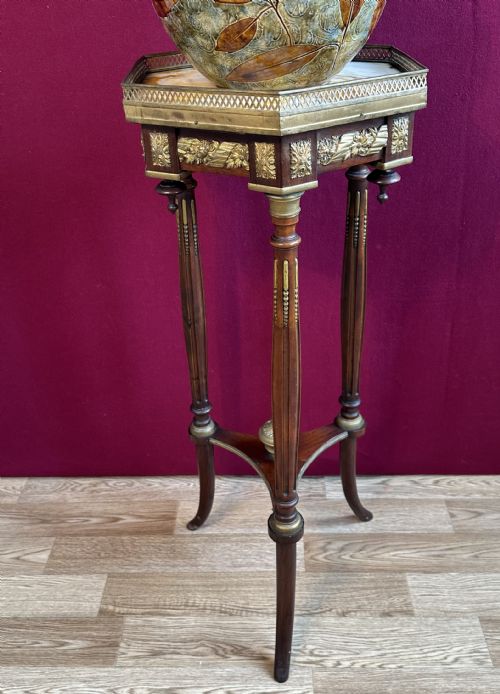
The selections on this page bridge multiple forms, from traditional pot cupboards and tambour bedside tables to marble-topped French side cabinets and jardinière stands. Mahogany forms the primary timber across these varied domestic furnishings.
How they were made
Cabinet makers utilised solid mahogany and exotic hardwoods, frequently shaping timber into pedestal forms and bedside cabinets. Joinery methods relied on traditional drawer construction and stable carcase building.
Surface detailing incorporated brass hardware, marble tops, and boxwood inlay. Some French and Edwardian examples integrated glass or intricate marquetry to enhance the timber grain.
Vintage Mahogany Pot Stand Retail Price Guide 2026
Typical asking prices for vintage mahogany pot stand among the pieces listed under this phrase on Sellingantiques today, from the lower quarter to the upper quarter. They describe what is for sale here now, not the wider market.
Listings span the eighteenth, nineteenth, and twentieth centuries, incorporating Georgian, Victorian, Edwardian, and French Belle Epoque styles.
What varies in quality
Quality depends upon the selection of timber figures and the precision of the boxwood inlay or brass fittings. Cabinet work from the Georgian and Victorian periods demonstrates distinct levels of joinery refinement.
The integrity of integrated marble tops and the crispness of Louis XVI Revival or Art Nouveau stylistic details separate standard utility pieces from finer decorative examples.
The Vintage Mahogany Pot Stand Glossary
- Pot cupboard
- A small bedside cabinet or nightstand originally designed to house a chamber pot. These pieces usually feature a single door enclosing a compact storage space.
- Jardinière
- A decorative stand or container intended to hold plants and flowers. These elevated wooden structures often incorporate waterproof liners or inset trays.
- Tambour
- A flexible shutter door constructed from narrow vertical strips of wood glued to a canvas backing. This mechanism slides smoothly around a curved cabinet corner.
- Inlay
- A decorative technique where contrasting materials such as boxwood are inserted into recesses cut into the mahogany surface. This creates crisp geometric or floral patterns.
- Pedestal
- A structural support column or base that elevates a cabinet or plant stand. These elements provide stability while lifting the main body off the floor.
Vintage Mahogany Pot Stand: Frequently Asked Questions
What is a vintage mahogany pot stand used for today?
These pieces function readily as bedside tables, lamp tables, or small display surfaces in living areas. Their compact proportions make them suitable for placing beside seating or beds.
They also serve their original purpose as plant stands or pedestals for supporting ceramics and decorative bowls.
How do I identify a Georgian piece from a Victorian one?
Georgian and George III pieces generally display simpler, cleaner architectural lines with understated bracket feet or straight legs. They rely heavily on the natural figuring of the mahogany timber.
Victorian and later Edwardian examples often introduce bolder mouldings, richer hardware, or revival styles such as Louis XVI and Art Nouveau.
Are marble tops original to these cabinets?
Marble tops appear frequently on French and continental bedside cabinets dating from the late nineteenth and early twentieth centuries. They provided a durable, water-resistant surface for washing equipment and bedside jugs.
British pieces more commonly feature solid mahogany tops, sometimes edged with raised mouldings.
How should I care for mahogany furniture?
Maintain the timber by dusting regularly with a soft, dry cloth and avoiding silicone-based polishes. Occasional application of quality beeswax feeds the wood and preserves the grain.
Keep these stands away from direct heat sources and strong sunlight to prevent the timber from drying out or fading.