

Antique Wood Wall Console
An antique wood wall console brings sculptural presence and surface utility to an interior, anchored firmly against the plaster.
Antique Wood Wall Console
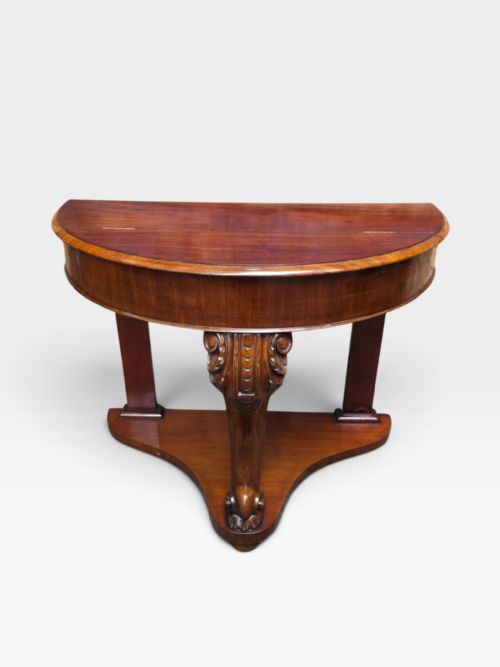
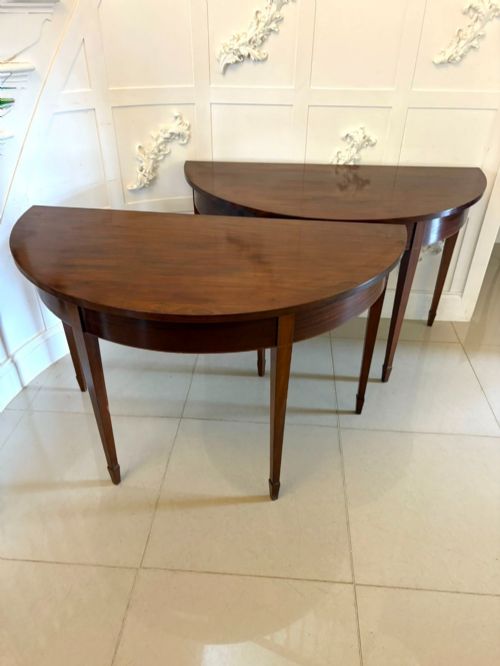
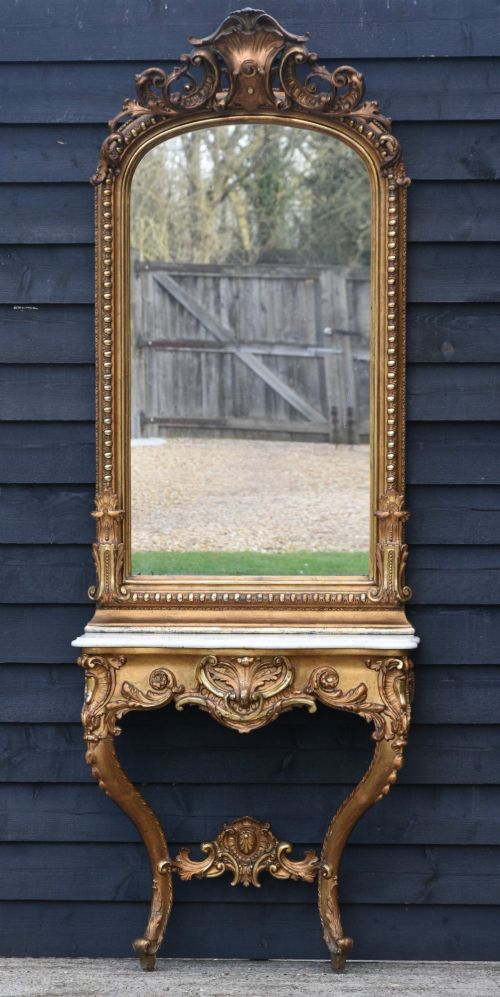
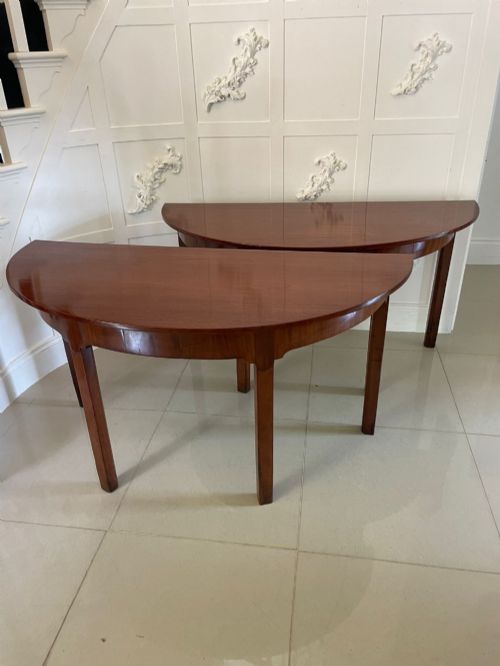
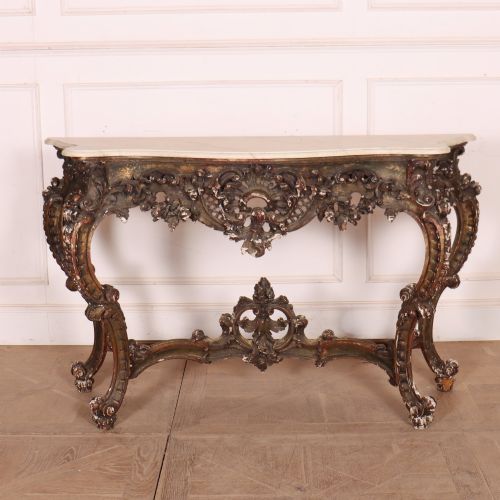
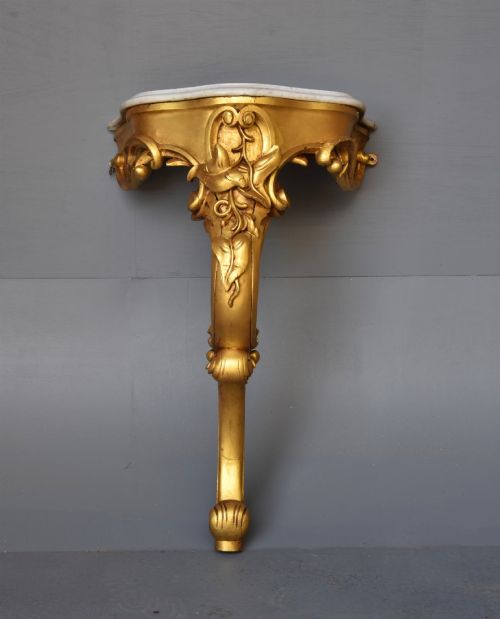
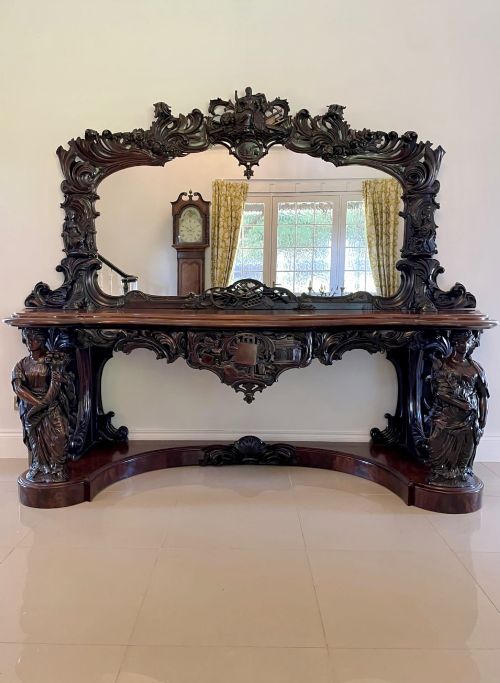
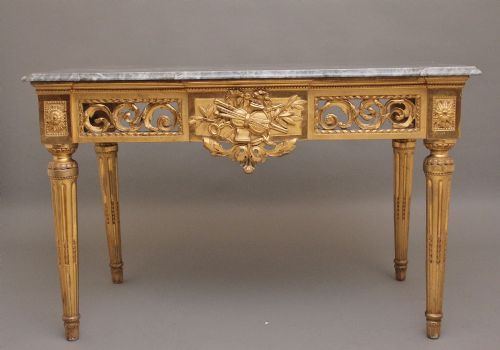
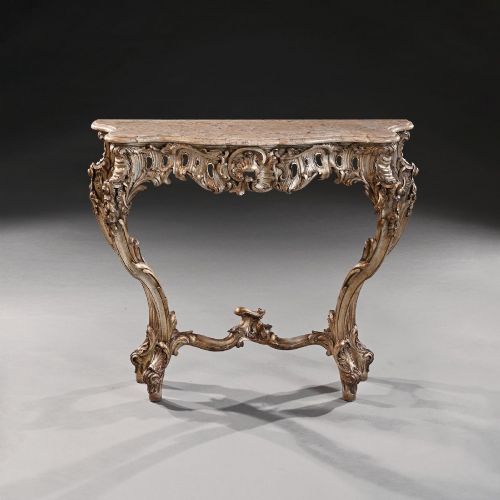
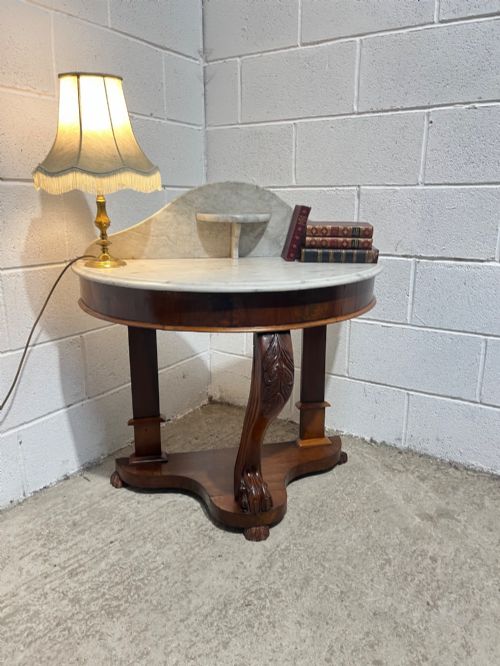
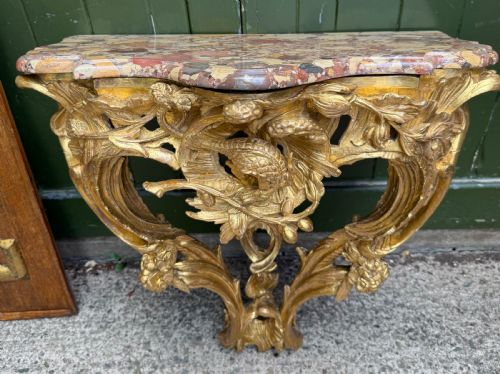
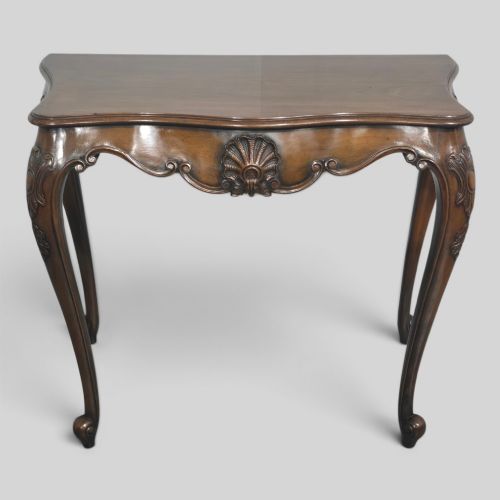
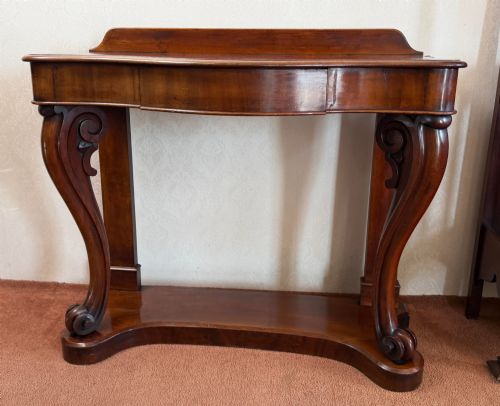
The antique wood wall console encompasses bracket-supported ledges, demi-lune pier tables, and mirror-backed assemblies designed to anchor securely against domestic vertical surfaces. Buyers seeking an antique wood wall console commonly encounter nineteenth-century giltwood pieces with shaped marble surfaces alongside eighteenth-century mahogany examples and smaller carved wooden wall brackets.
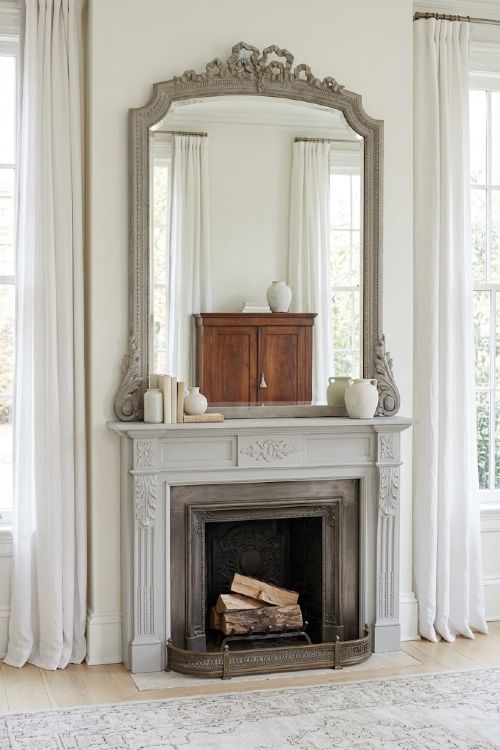
Makers produced these tables across George III, Regency, and Victorian periods, drawing on Italian, French, and English workshops. Forms range from simple semi-circular wall tables resting on console legs to elaborate architectural mirrors fitted with small display ledges.
Materials and Techniques
Construction relies heavily on dense timbers such as mahogany, walnut, and padauk, frequently shaped into serpentine or demi-lune profiles and supported by substantial wall brackets. Giltwood and gesso elements receive layers of gold leaf or silver paint, creating reflective surfaces that catch natural light.
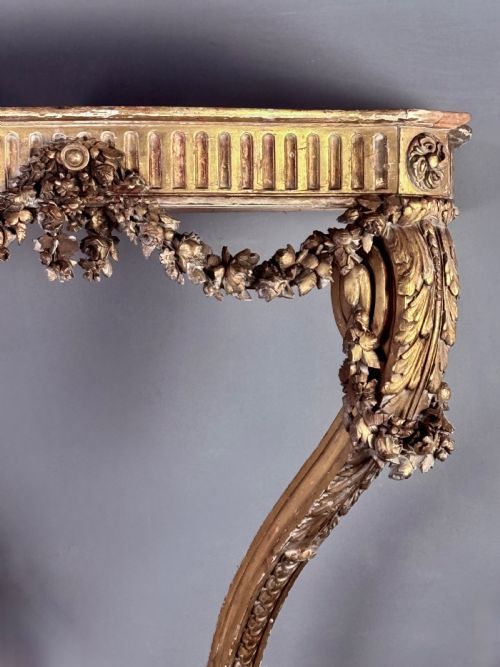
Many examples incorporate heavy figured marble slabs, including breccia and breche d'alep varieties, fitted directly into carved wooden frames. Carving techniques deploy deep relief work, depicting cherubs, lion paws, and neoclassical motifs directly into the timber base.
Several carved wooden cherubs glare downward from wall brackets, apparently keeping a watchful eye on the letters stacked below.
Determining Quality
Quality rests upon the crispness of the hand-carving and the integration between the wooden framework and its heavy stone top. Finer items exhibit balanced proportions, deeply undercut timber details, and original gilding rather than later repainting.
The choice of timber grain also dictates distinction, with highly figured mahogany and properly seasoned walnut elevating domestic pieces into exhibition categories. Structural integrity depends entirely on how securely the wall brackets or console legs transfer weight toward the vertical masonry.
Felix Alfred Ternisien
The Antique Wood Wall Console Glossary
- Demi-lune
- Half-moon shape. This curving profile allows tables to sit flush against a wall while projecting minimal depth into a hallway or reception room.
- Giltwood
- Timber coated with gold leaf. Artisans apply thin sheets of gold over a prepared gesso ground to achieve a bright, reflective finish.
- Console
- A bracket-supported table. These items require wall attachment for physical stability rather than standing entirely on independent legs.
- Gesso
- Plaster-based preparation mixture. Craftsmen apply this substance to wood before gilding to provide a smooth surface for carving details.
Antique Wood Wall Console: Frequently Asked Questions
Where should I place a wall console?
These tables suit hallways, entrance foyers, and living rooms where floor space remains limited. Their shallow profiles allow them to sit beneath wall mirrors or artwork without obstructing interior pathways.
Fixing them securely to wall studs ensures stability, particularly when supporting heavy marble slabs or decorative ceramics.
How do I clean marble tops?
Use a soft, damp cloth with neutral soap to wipe natural stone surfaces gently. Avoid acidic cleaners or vinegar, which etch polished marble finishes over time.
Dry the stone thoroughly after wiping to maintain its natural lustre without damaging the surrounding giltwood frame.
Did these tables always need wall fixing?
Many console forms rely on wall brackets or rear legs fastened directly to masonry for balance. This architectural dependence distinguishes them from freestanding side tables.
Historical dining rooms and halls utilised this design to maximise floor space while displaying heavy porcelain and silver items.
How do I distinguish eighteenth and nineteenth century styles?
Eighteenth-century examples often display restrained neoclassical lines or carved Italian baroque motifs executed in solid mahogany or gilded pine. Nineteenth-century pieces frequently introduce heavier proportions, exuberant revival styling, and extensive use of moulded gesso.
Examining the timber shrinkage and joinery methods inside the framework helps confirm the period of manufacture.