
Antique Wood Storage Server
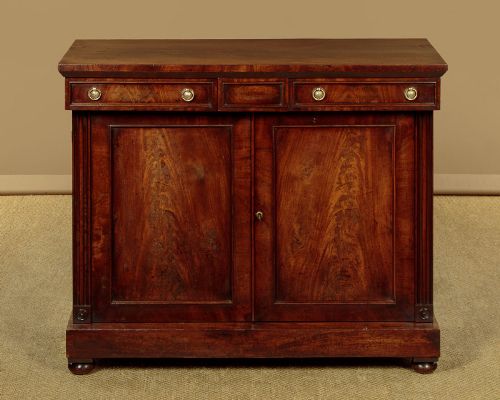
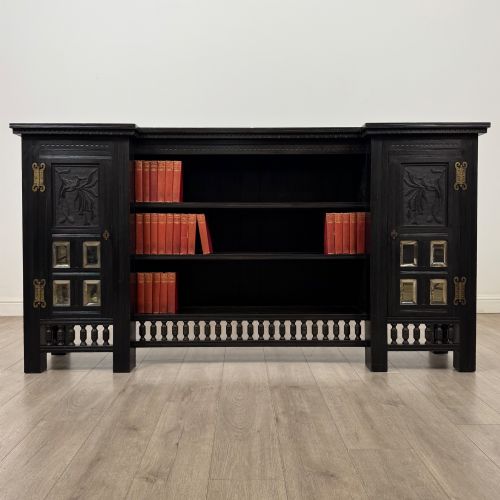
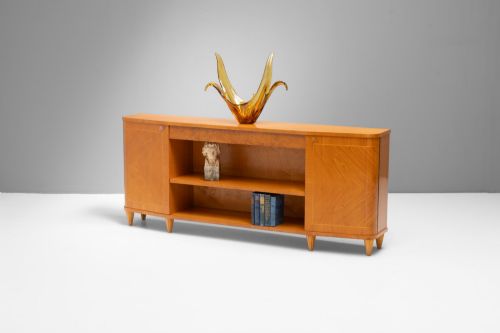
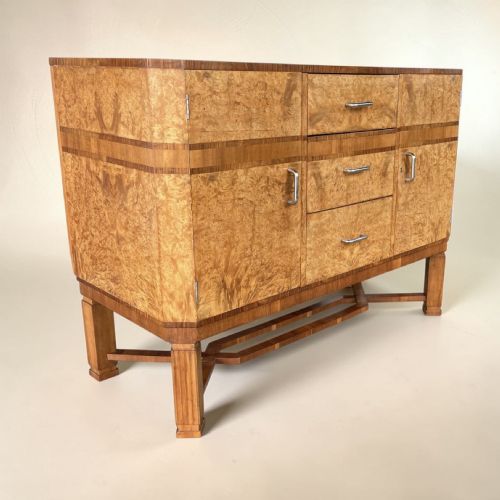
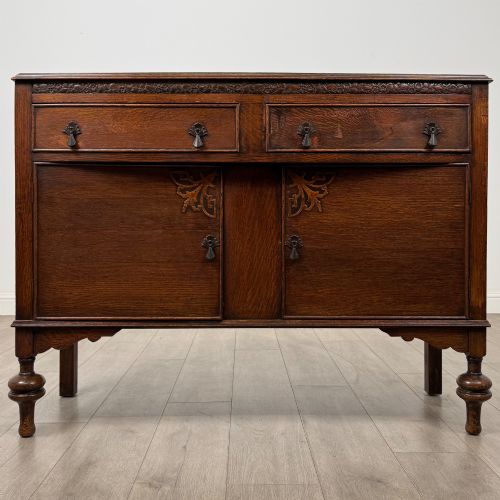
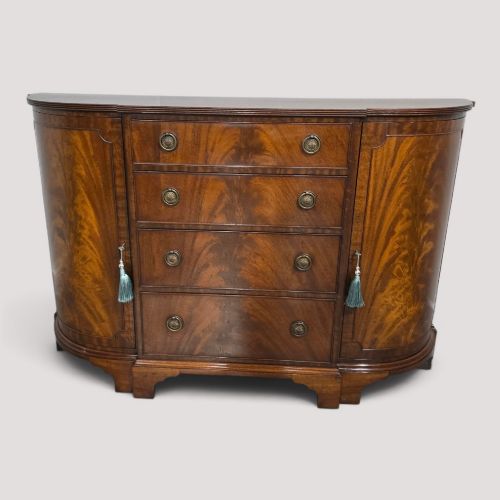
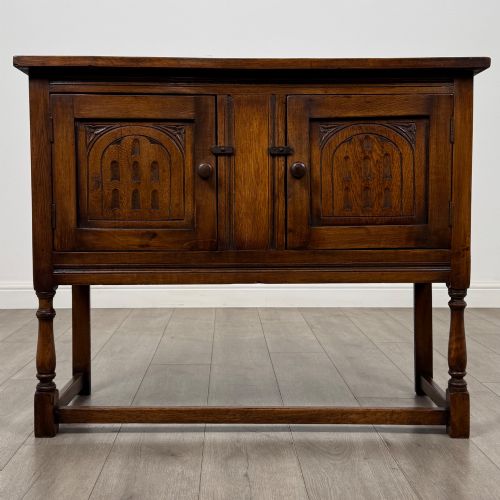
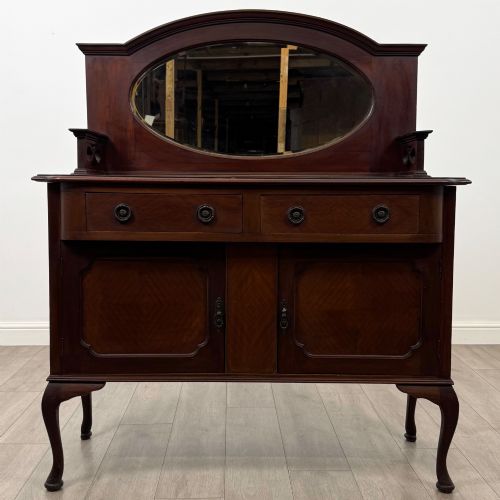
An antique wood storage server holds dining rooms together, offering substantial cupboards and drawers built from mahogany, oak and walnut.
Antique Wood Storage Server
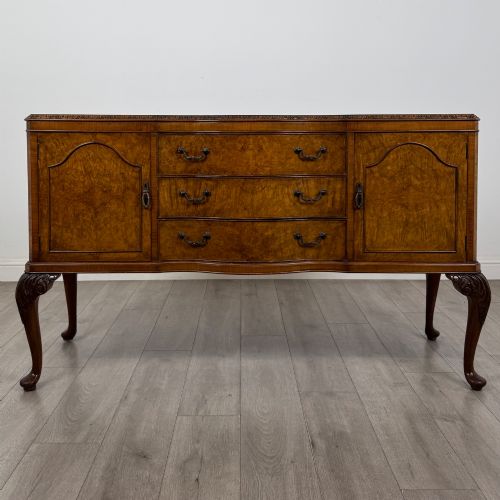
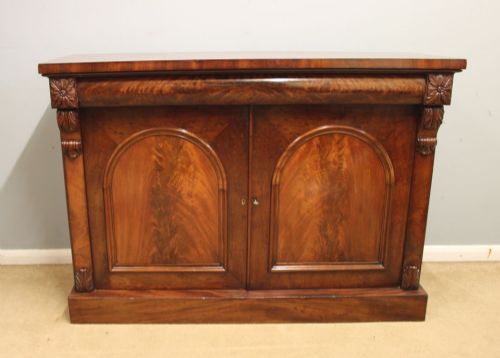
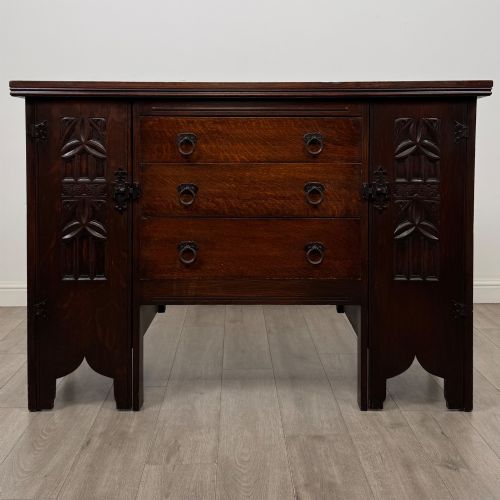
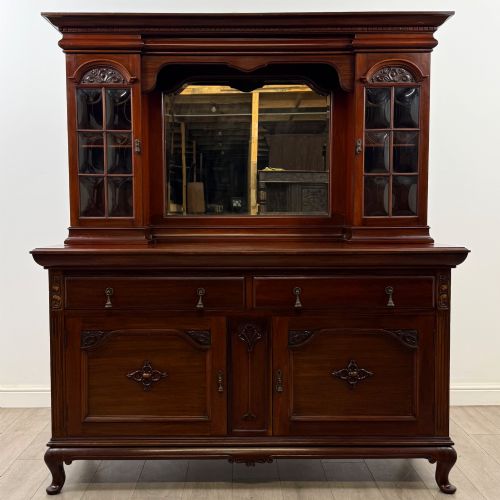
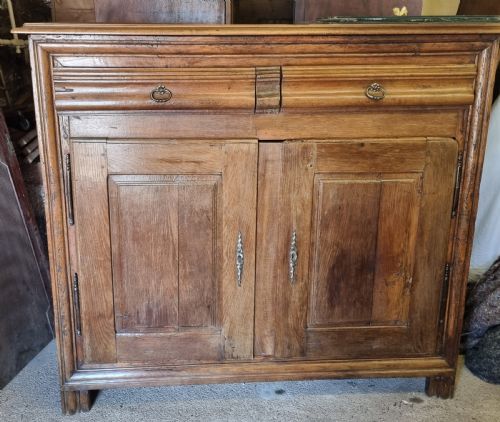
An antique wood storage server encompasses heavy timber sideboards, chiffoniers, cabinets, and dresser bases designed to hold household silver, linen, and dining ware. You will frequently meet Edwardian mahogany pieces and Victorian walnut or pine examples on this page, alongside earlier Georgian oak and French fruitwood designs.
These items serve practical dining and living space storage through enclosed cupboards, drawers, and open surfaces. The forms range from compact bowed front buffets to large tall dresser bases and two-door cupboards originating across the eighteenth, nineteenth, and early twentieth centuries.
Materials and construction methods
Cabinet makers utilised solid hardwoods like oak, mahogany, and walnut, frequently applying flame mahogany veneer, burr elm, and satinwood to primary display surfaces. Secondary timbers provide structural stability within drawers and internal framing.
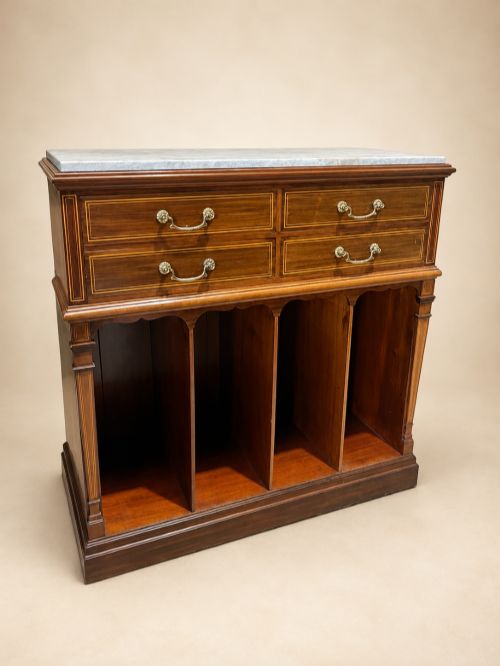
Surface decoration relies on natural grain figures, marquetry inlay, boxwood stringing, and carved detailing rather than applied ornaments. Iron, brass, and glass elements appear in handles, hinges, and cabinet doors.
Listings feature items built from mahogany, oak, walnut, birch, and pine, spanning the Georgian, Victorian, Edwardian, and Art Deco periods.
Evaluating build quality and materials
Quality separates through timber selection, such as figured flame mahogany or burr walnut veneers matched across drawer fronts, compared to plain utility boards. The crispness of carved oak details and inlaid stringing indicates the hand of a skilled cabinet maker.
Structural integrity rests on traditional joinery methods used in the drawers and carcase construction. Original brass hardware, sound marble tops, and intact internal shelving distinguish better preserved items from heavily altered pieces.
The Antique Wood Storage Server Glossary
- Chiffonier
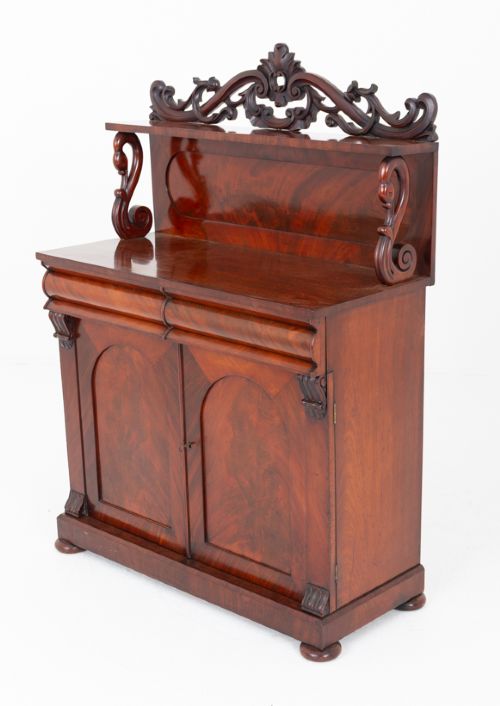
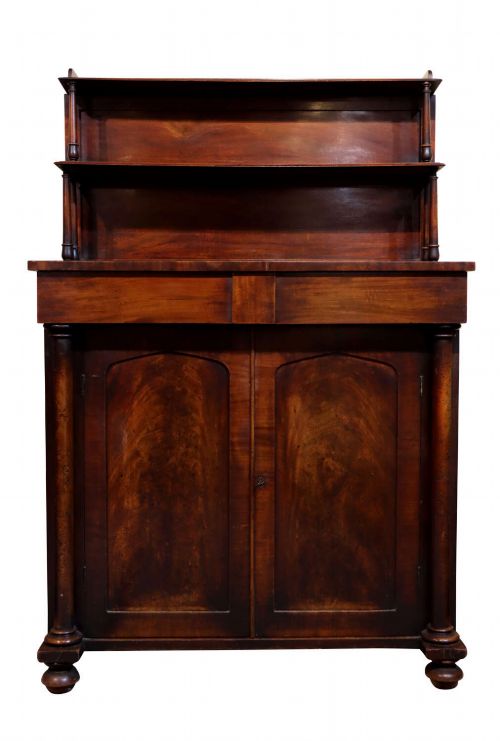
- A compact sideboard or low cabinet featuring enclosed lower cupboards, often topped with a small shelf tier. Victorian examples frequently utilise flame mahogany and burr walnut.
- Dresser base
- A heavy wooden table fitted with rows of drawers and lower cupboards, originating from kitchen and dining environments. Georgian and eighteenth-century examples are commonly built from solid oak or fruitwood.
- Bow front
- A convex curved cabinet or sideboard front that projects outward in a smooth arc. This curved form requires advanced joinery and often displays figured veneers.
- Marquetry
- Decorative patterns formed by fitting contrasting veneer slices into a prepared wood ground. This technique creates floral and geometric designs on cabinet doors and tops.
- Stringing
- Thin inlay lines of contrasting wood, such as boxwood, set flush into the primary timber surface. It outlines drawer fronts and borders on Georgian and Edwardian furniture.
Antique Wood Storage Server: Frequently Asked Questions
Where should I place a wood storage server?
These pieces fit naturally in dining rooms, large hallways, or living spaces where surface display and concealed storage are required.
Ensure you measure the floor space and clearance for opening doors and drawers before positioning against a wall.
How do I clean and maintain antique wood?
Dust surfaces regularly with a soft, dry cloth and nourish the timber periodically with traditional beeswax to protect the finish.
Keep wooden furniture away from direct heat sources and strong sunlight to prevent the grain from drying and splitting.
How can I tell the period of a wooden cabinet?
Look to the timber choices, construction methods of the internal drawers, and stylistic details like Gothic Revival carving or Edwardian marquetry.
Georgian pieces often show heavier oak and mahogany construction, while Edwardian items lean toward lighter satinwood and burr walnut veneers.