



Antique Wine Bottle Storage
Antique wine bottle storage spans everything from Georgian mahogany cellarettes to industrial French bottle cages built to hold dozens of bottles.
Antique Wine Bottle Storage
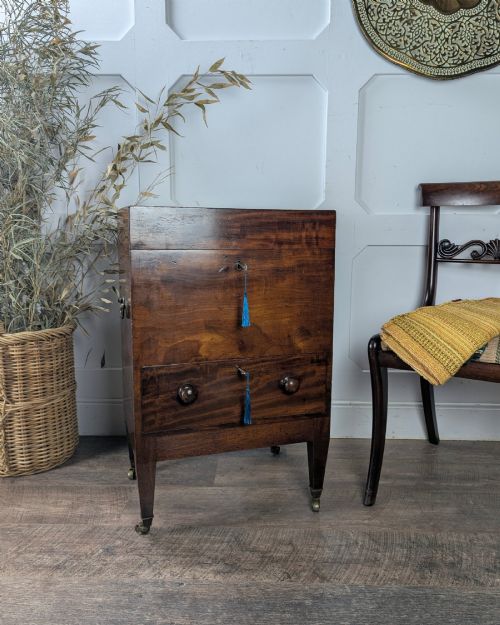
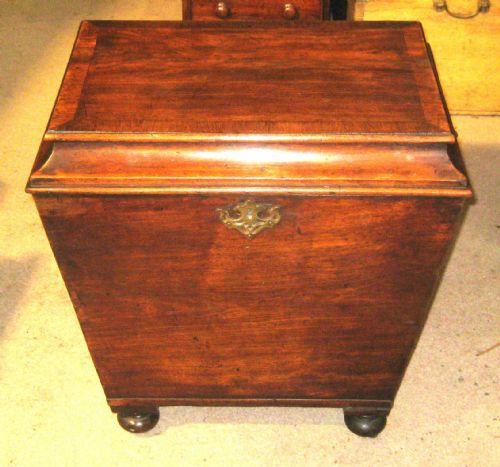
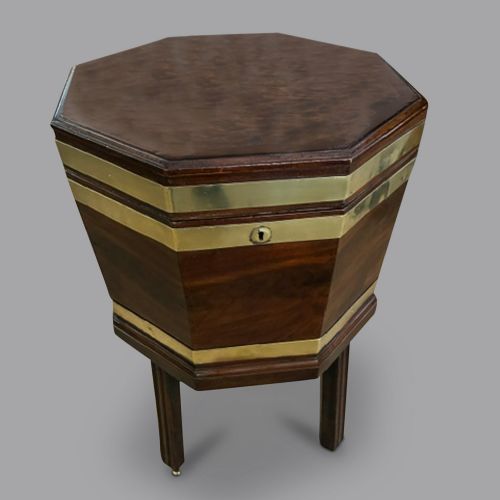
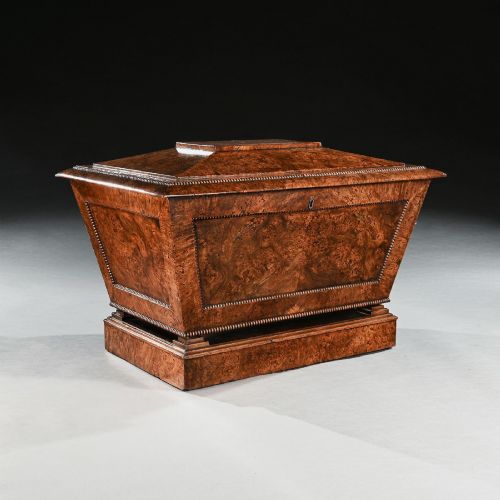
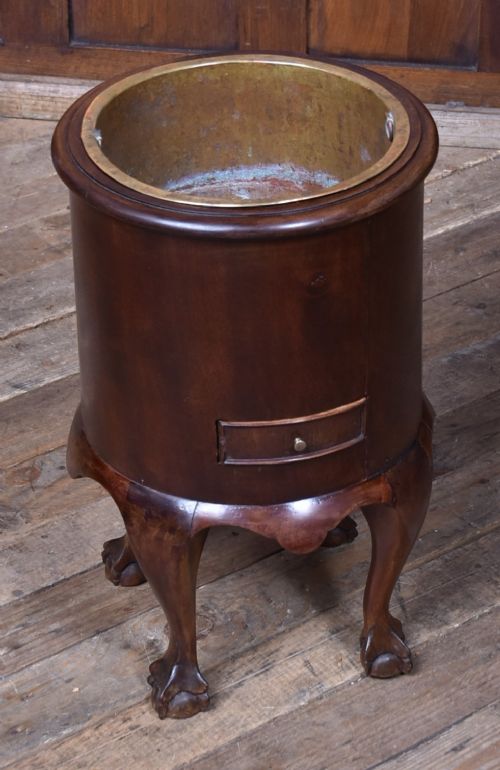
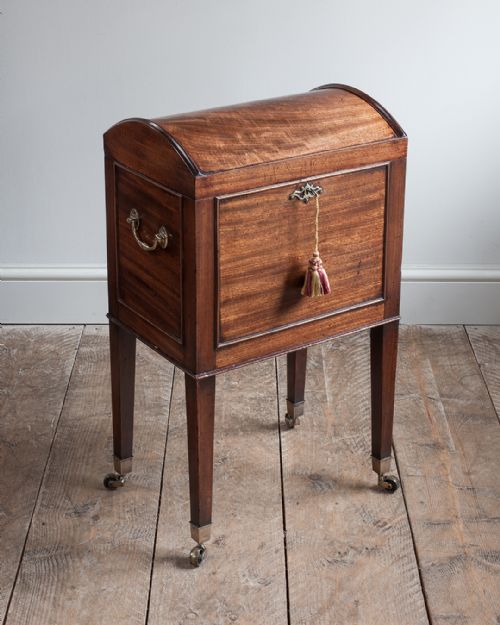
Antique wine bottle storage encompasses dedicated containers and furniture designed to hold and cool wine, appearing most frequently on this page as mahogany wine coolers and cellarettes from the Georgian and Regency periods. These pieces range from grand sarcophagus forms to octagonal chests intended to keep bottles cool and secure in the dining room or cellar.
Buyers will also encounter larger industrial solutions such as lockable French wine cages alongside pine cupboards and brass-bound storage barrels from the Edwardian era. The selection draws heavily on 18th century and 19th century craftsmanship, offering formal dining room vessels alongside utilitarian storage.
The most common formats remain the mahogany cellarette and sarcophagus-shaped wine cooler, often raised on feet or integrated into tables, reflecting the domestic habits of the Georgian and Victorian eras.
Materials and construction methods
Cabinetmakers relied primarily on solid mahogany and walnut, frequently enhancing the exterior with boxwood inlay, ebonised wood details, or dramatic pollard oak veneers. Metal elements such as brass bands, steel frames, and silver plating provided structural strength and security, particularly on industrial cages and barrels.
Joinery techniques ranged from fine cabinet making seen in George III Sheraton pieces to heavy ironwork and wire mesh utilised in French lockable wine cages. Interior linings in traditional coolers were built to hold ice and liquid, using lead or metal containers housed within timber frames.
Some French wine cages are built like small bank vaults, ensuring nobody absconds with the vintage during dinner.
Assessing quality and execution
The distinction between standard storage pieces and exhibition quality examples rests on the choice of timber veneers, such as pollard oak or figured mahogany, and the crispness of carved details like fluted tops. Superior execution is evident in the harmony of proportions, the quality of original brass mounts, and the preservation of interior linings.
Makers working at the highest level incorporated sophisticated internal framing and refined inlay work, distinguishing master cabinetmaker production from utilitarian workshop output.
Gillows of Lancaster and London·Whytock & Reid
The Antique Wine Bottle Storage Glossary
- Cellarette
- A lockable container or cabinet designed to hold wine bottles near the dining table. They were often lined with metal to hold ice.
- Sarcophagus form
- A burial-chest shape popular for Regency and Georgian wine coolers, featuring a tapered body and heavy lid. This design allowed for substantial insulation and visual presence.
- Pollard oak
- Timber taken from trees that have been pollarded, producing a highly figured, mottled grain pattern. It was utilised for decorative veneer on high-end Regency furniture.
- Boxwood inlay
- Contrasting light wood inserted into recesses in a darker wood surface to create geometric or floral patterns. This technique defined many fine Sheraton style pieces.
- Wine cage
- A heavy metal or wire storage enclosure fitted with a lock for cellar security. These French industrial pieces accommodated large quantities of bottles.
Antique Wine Bottle Storage: Frequently Asked Questions
How were antique cellarettes used?
Cellarettes stood in the dining room during formal meals, keeping bottles close at hand for guests and hosts. Servants would load the internal compartments with ice and water to chill the wine before serving.
Many featured locks to protect expensive vintages from household staff. After the meal, the remaining bottles stayed secured inside until the next gathering.
What is the difference between a cellarette and a wine cooler?
The terms are often used interchangeably in antique listings, though cellarettes specifically denote lockable chests or boxes. Wine coolers historically emphasised the chilling function, sometimes taking the form of large decorative basins or tubs.
Both served the same domestic purpose in the dining room during the 18th and 19th centuries. Construction methods and timber choices remained similar across both types.
Can I store modern wine bottles in these?
Many antique cellarettes and coolers accommodate standard modern bottle shapes, though internal dividers in older pieces reflect historical bottle dimensions. Industrial wine cages and racks easily hold standard contemporary bottles in large quantities.
Care should be taken with internal metal linings if storing bottles horizontally for long periods. Using them as decorative display storage preserves the antique fabric.