




Antique Wildlife Sculpture
An antique wildlife sculpture captures natural motion in bronze, wood or silver, offering a tangible link to nineteenth and twentieth century animalier artistry.
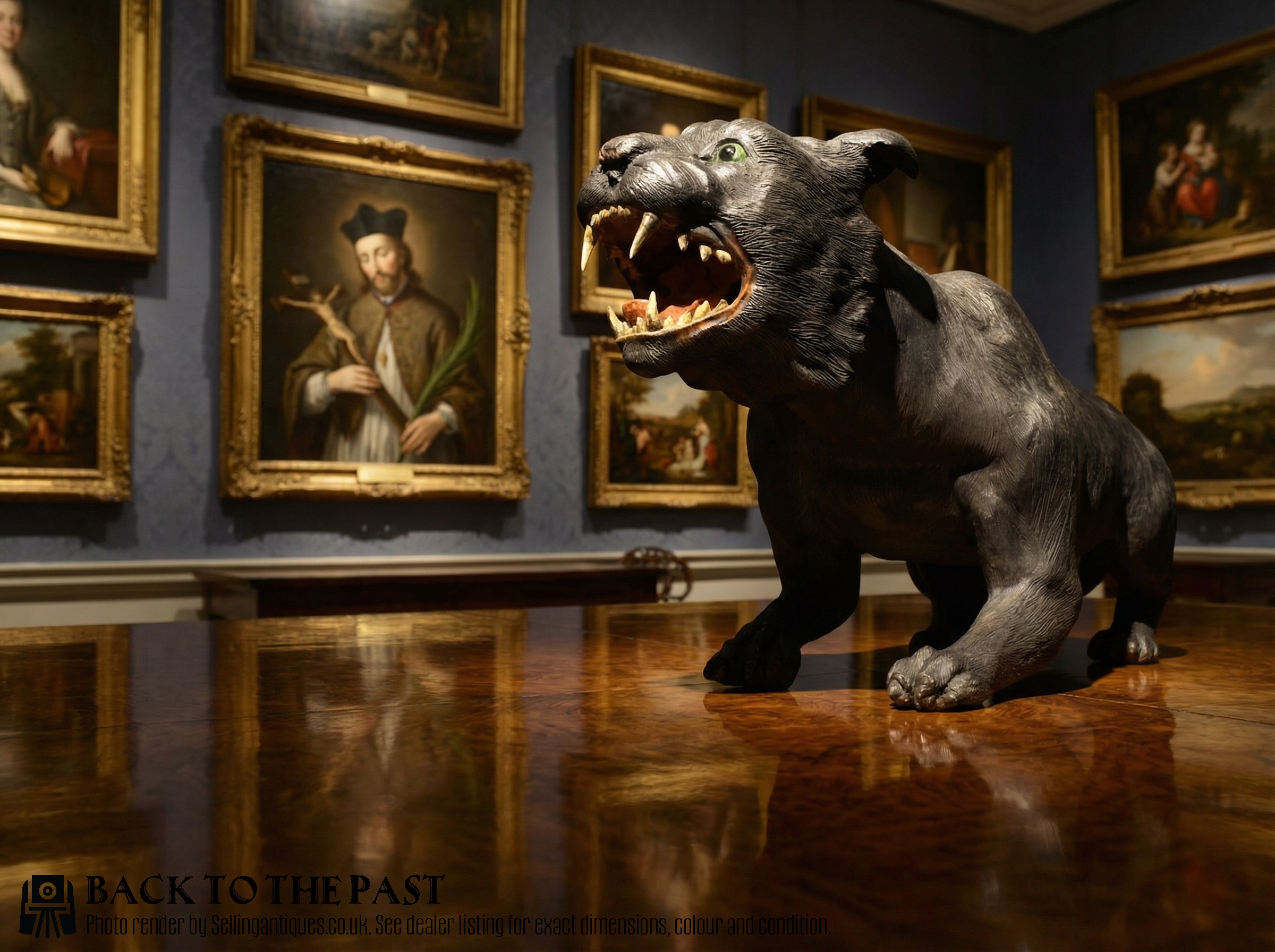
Antique Wildlife Sculpture
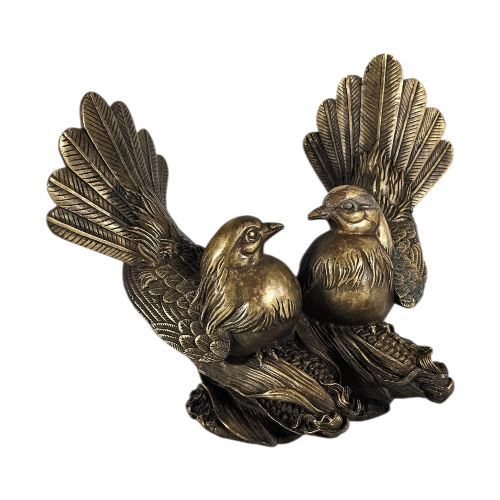
An antique wildlife sculpture encompasses depictions of birds, mammals and marine creatures modelled by European and Asian workshops during the nineteenth and twentieth centuries. These works range from small domestic table figures to substantial mantel groupings cast in metal or carved from timber.
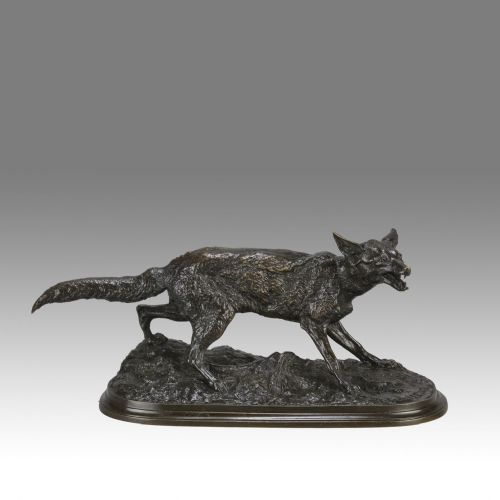
The most prevalent version met on this page is the French animalier bronze, depicting predators and prey in dynamic conflict or repose. Alongside these, buyers frequently encounter Japanese Meiji period bronzes, Austrian cold-painted figures and carved wooden Black Forest studies.
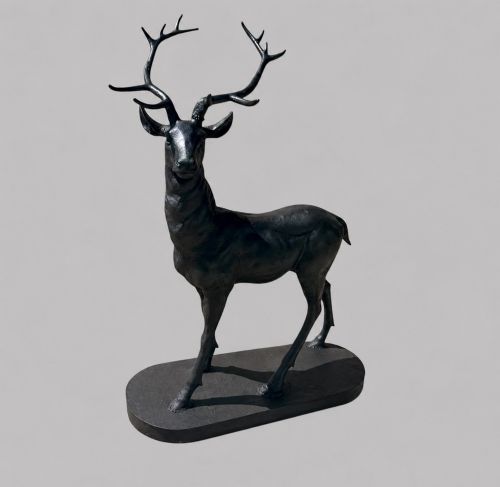
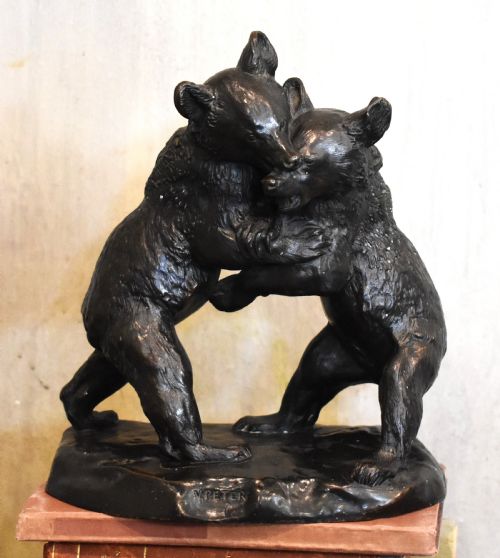
Subjects span common farm and woodland fauna such as stags, foxes and hares, as well as exotic species including elephants, tigers and bears. Each piece reflects the period fascination with naturalism and animal behaviour.
How they were made
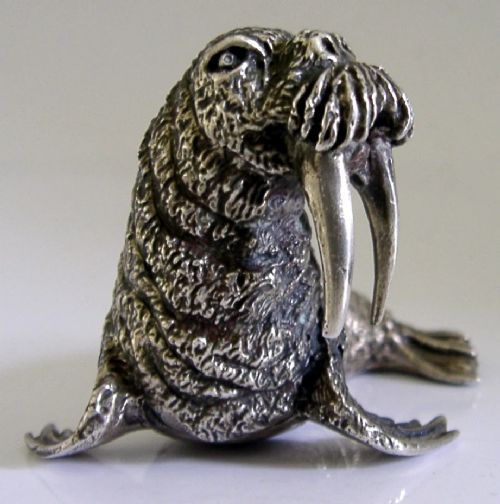
Metals such as bronze were typically cast using the lost-wax method, allowing intricate musculature, fur and plumage to be rendered before receiving dark patination or polychrome cold-painted finishes. Silver was also utilised for smaller creatures, hammered and chased to highlight surface detail.
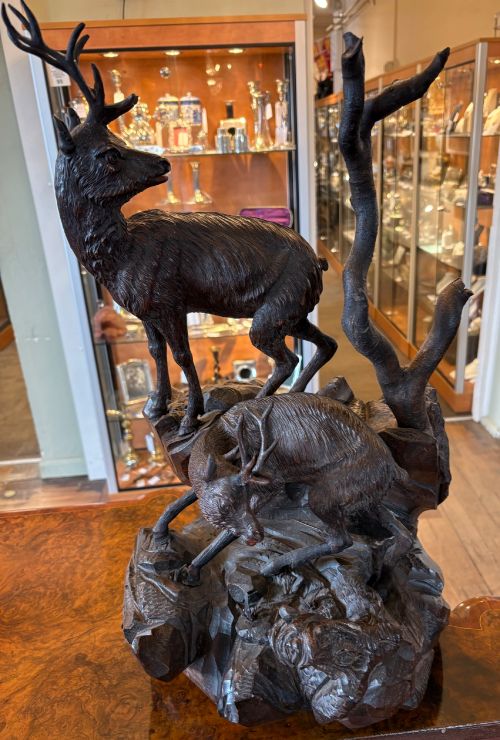
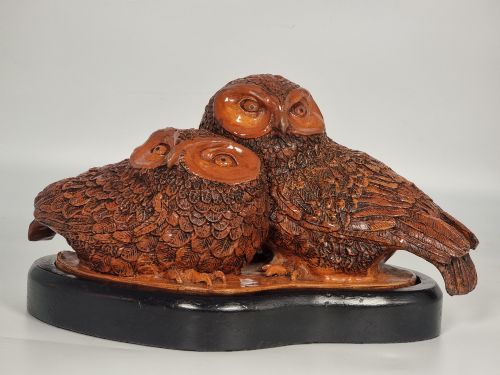
Carved pieces rely on hardwoods, walnut and linden wood, shaped with gouges and chisels to reveal the grain and texture of the subject. Bone inlays occasionally supplement wooden carvings, particularly in African studies of hippopotami.
Foundries such as Barbedienne and Siot oversaw the casting, chasing and patination of French bronzes, ensuring sharp definition. Bases of marble or green onyx frequently support metal figures to provide stability and visual contrast.
Listings span the nineteenth century, 1900, 1920 and 1950, utilising bronze, marble, bone, walnut and hardwood.
What varies in quality
Quality rests upon the fidelity of anatomical observation and the crispness of the chasing work after casting. Superior pieces display fluid musculature and convincing tension in the animal's posture, whereas lesser examples appear stiff and generalized.
The longevity of the surface finish significantly dictates standard, particularly in cold-painted bronzes where original polychrome pigment remains intact without excessive touch-ups. In carved wood, deep, confident tool marks outweigh smooth, sanded surfaces that obscure the sculptor's hand.
P J Mêne·Tsunemitsu·Franz Bergman·Paul-Édouard Delabrièrre·Clovis Masson·Antoine Louis Barye·G.Gardet·Kaniya Kuniharu·Victor Peter·Christophe Fratin·I. Rochard·E.Drouot·Jules Moigniez·Louis Riche·Isidore Bonheur·Alfred Dubucand
The Antique Wildlife Sculpture Glossary
- Animalier
- A nineteenth-century artistic movement dedicated primarily to the faithful depiction of animals. Practitioners focused on capturing realistic anatomy and dynamic behaviour in bronze.
- Cold-painted bronze
- A technique where bronze objects were painted with cold enamel colours rather than fired in a kiln. This method was widely used by Austrian foundries for small decorative animal figures.
- Okimono
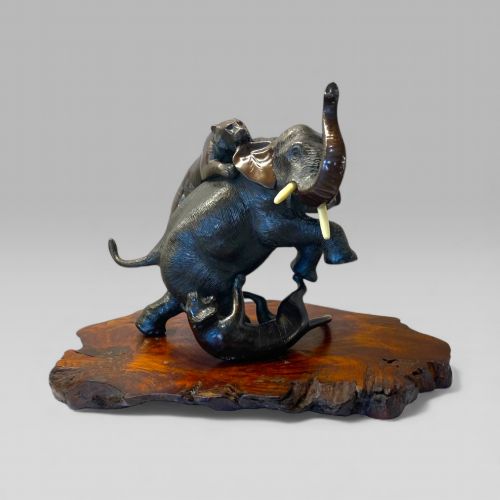
- A Japanese term for a standalone decorative figurine or sculpture, commonly produced during the Meiji period. These frequently depict natural subjects such as elephants and tigers in intricate detail.
- Patina
- The surface coloration and sheen developed naturally over time or applied chemically by the foundry. A dark patina is characteristic of many nineteenth-century animalier bronzes.
- Cire perdue
- The lost-wax casting method that permits complex, undercut forms to be rendered in metal. It ensures that each cast retains the unique nuances of the original model.
Antique Wildlife Sculpture: Frequently Asked Questions
What is an animalier sculpture?
An animalier sculpture is a nineteenth-century artwork focusing on the realistic portrayal of animals, often showing them in motion or combat.
These pieces were produced primarily in France and highlight the period's growing scientific and artistic interest in wildlife.
How do I care for bronze sculptures?
Bronze sculptures require minimal intervention beyond dusting with a soft, dry cloth to protect the patina.
Avoid using commercial metal polishes or cleaning agents, as these can strip the original chemical coloration from the surface.
What is cold-painted bronze?
Cold-painted bronze refers to metal figures decorated with unfired oil or enamel paints. This technique was a speciality of Austrian workshops.
Because the paint was not baked, these surfaces are delicate and vulnerable to moisture or abrasion.
How do I distinguish Meiji bronzes?
Meiji bronzes originate from late nineteenth-century Japan and are distinguished by exceptional naturalism and intricate surface texturing. They often portray exotic fauna such as elephants and tigers in elaborate combat scenes.
Many of these works bear artist signatures or foundry marks on the base or body.