


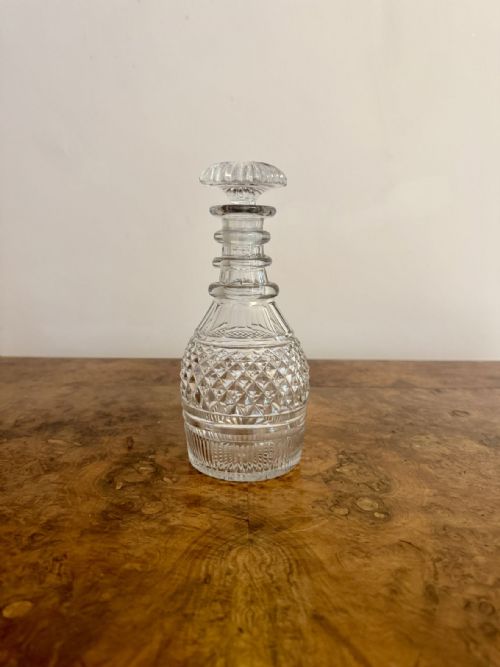
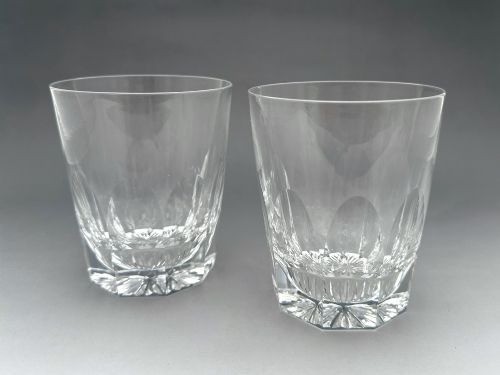
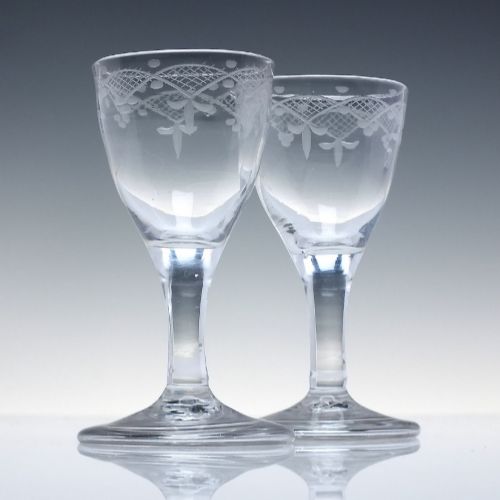
Antique Whiskey Glasses
Antique whiskey glasses bring tactile weight to a pour, offering heavy-cut crystal tumblers, engraved dram glasses and silver-mounted noggins shaped for daily use.
Antique Whiskey Glasses
Antique whiskey glasses encompass small dram glasses with folded feet, robust cut-glass tumblers, and silver-topped noggins designed for single measures. These drinking vessels serve spirits across periods ranging from Georgian times through to the Art Deco era.
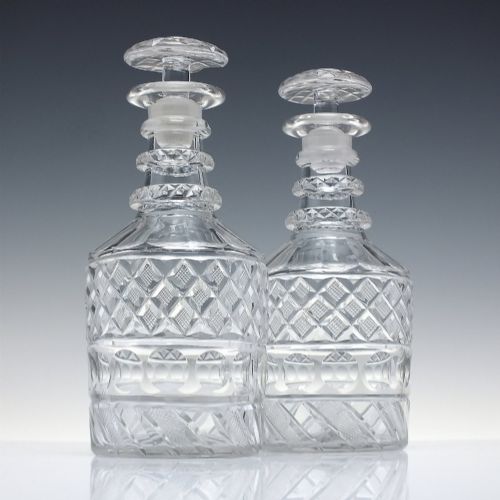
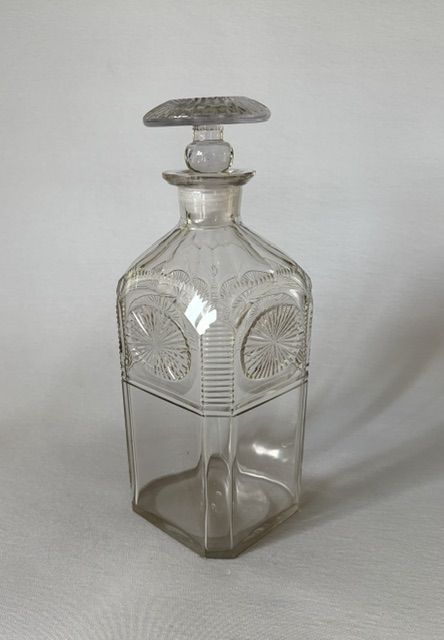
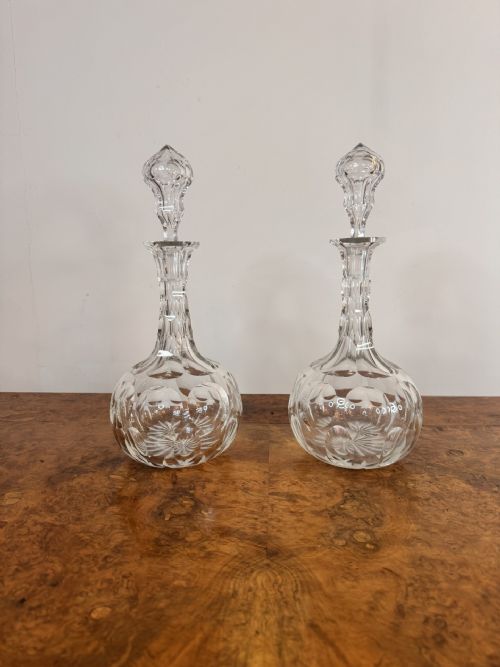
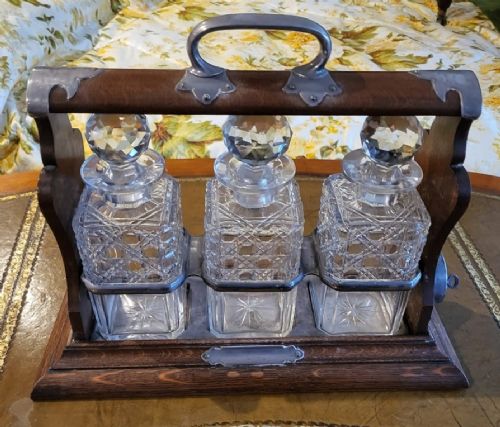
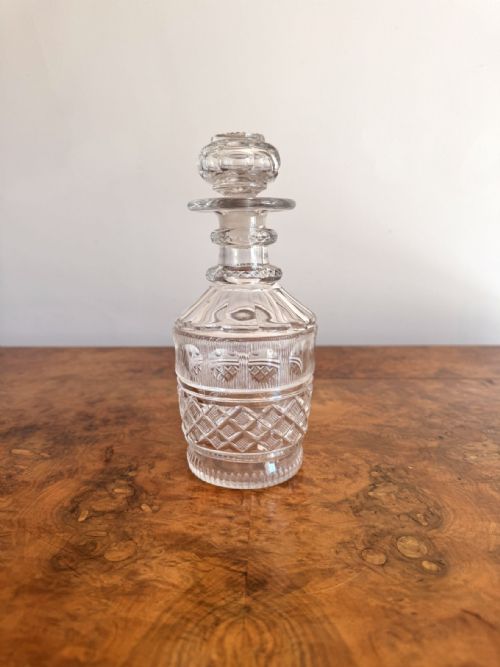
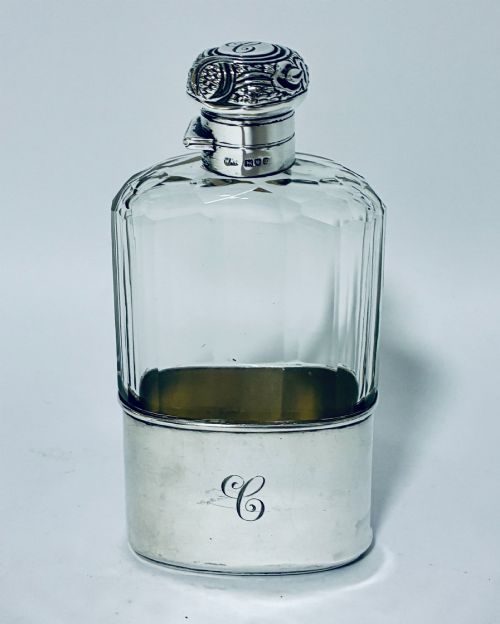
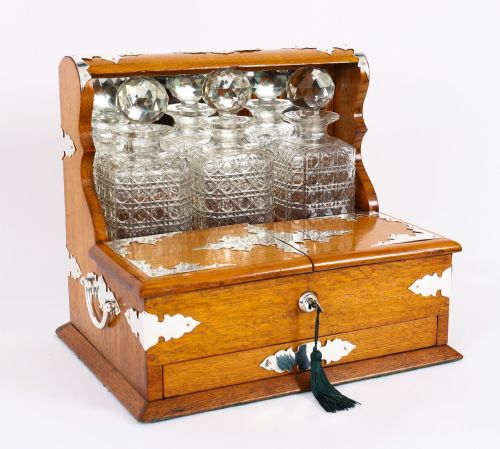
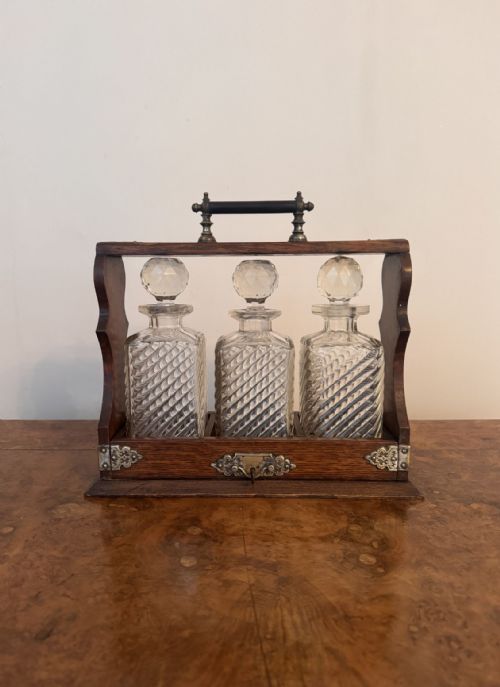
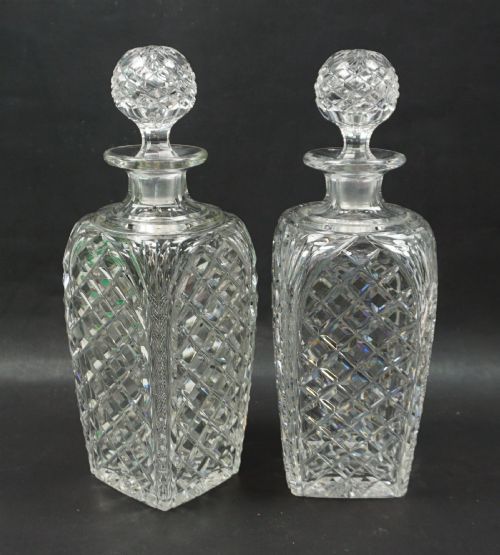
The selections on this page lean heavily towards heavy-cut crystal tumblers and square-section decanters. Oak tantaluses, sterling silver hip flasks, and glass jugs with matching labels also populate the listings alongside the glassware.
How they were made
Glassware relies on lead crystal and plain glass, shaped by blowing into moulds or forming freehand before enduring deep wheel-cutting. This mechanical cutting produces sharp geometric facets that refract light through the spirit.
Mounts and noggins incorporate sterling silver and silver plate, often bearing hallmarks that date the metalwork precisely. Oak, satinwood, and coromandel timbers frame the tantaluses and games compendiums, secured with brass hinges and locks.
Antique Whiskey Glasses Retail Price Guide 2026
Typical asking prices for whiskey glasses among the pieces listed under this phrase on Sellingantiques today, from the lower quarter to the upper quarter. They describe what is for sale here now, not the wider market.
Listings span periods from Georgian times through Victorian, Edwardian, and Art Deco eras, pairing glass drinkware with oak tantaluses and silver hip flasks.
What varies in quality
Quality rests in the crispness of the glass cutting and the weight of the metal mounts. Heavy lead crystal with deep, unblemished faceting sits at the upper end, whereas lighter, plain-blown glass represents simpler domestic wares.
The calibre of the housing hardware separates standard pieces from the finest examples. Solid oak and figured coromandel frames fitted with functioning locks and heavy sterling silver bottle collars demonstrate superior craftsmanship.
Betjemann’s·Asprey London
The Antique Whiskey Glasses Glossary
- Dram glass
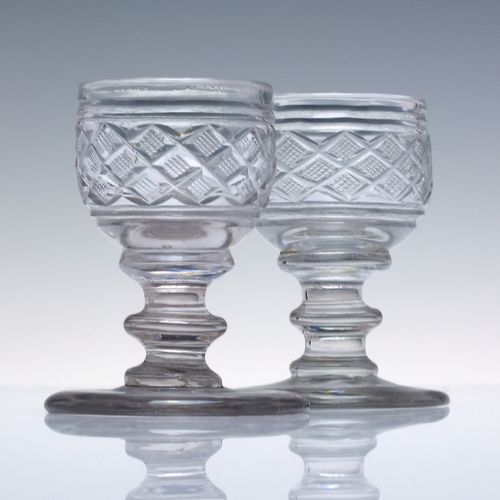
- A small drinking vessel intended for a single measure of spirits. These often feature thick bases and early folded feet.
- Noggin
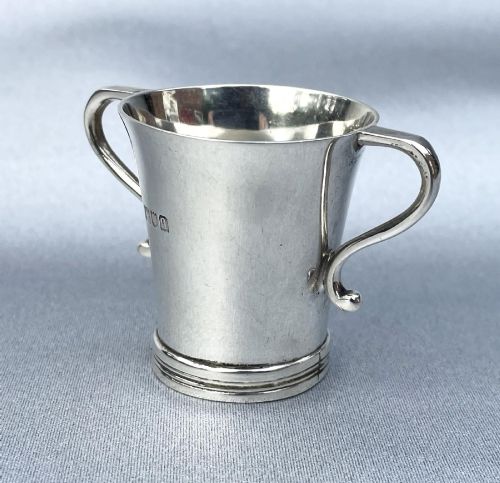
- A small vessel or jug holding a gill of liquor, frequently fitted with a sterling silver collar and a matching label. They sit alongside decanters on barware trays.
- Tantalus
- A locking wooden frame designed to secure decanters of spirits away from unauthorised hands. They typically house three cut crystal bottles within oak or coromandel housings.
- Hip flask
- A curved container designed for carrying liquor on the person, constructed from glass with silver mounts or crocodile-wrapped metal. Many include removable silver cups at the base.
- Lead crystal
- Glass containing metal oxide that increases weight, brilliance, and softness for deep cutting. It forms the heavy, light-refracting body of quality tumblers and decanters.
Antique Whiskey Glasses: Frequently Asked Questions
What is a whiskey noggin?
A whiskey noggin is a small, handled glass jug used for pouring a single measure of spirit. They frequently feature sterling silver mounts and a matching spirit label.
These pieces were common barware accessories in the Edwardian period and the early twentieth century. They allow for controlled pouring at a dining table or desk.
How do I date cut glass tumblers?
Dating cut glass tumblers involves examining the depth of the wheel-cutting, the pontil mark on the base, and the clarity of the metal. Georgian and early Victorian examples often display hand-polished facets and heavier proportions.
Later Edwardian and Art Deco pieces tend to show sharper, more uniform machine cutting. Comparing the style of accompanying decanters or tantaluses also helps narrow the period.
How were dram glasses used?
Dram glasses served historical portions of unmixed spirits such as whiskey or brandy. Their small capacity reflects older drinking customs where liquor was taken in measured quantities.
Examples from the Georgian era often feature folded feet for added stability and hand-engraved details. They suit modern collection displays or careful occasional use.