
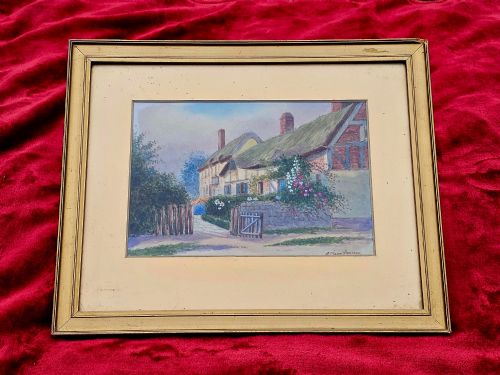
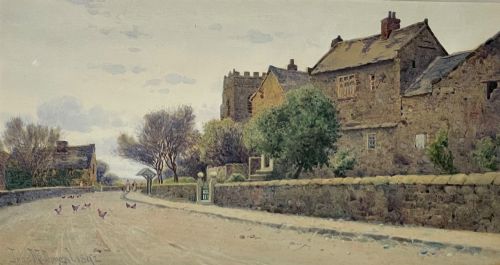
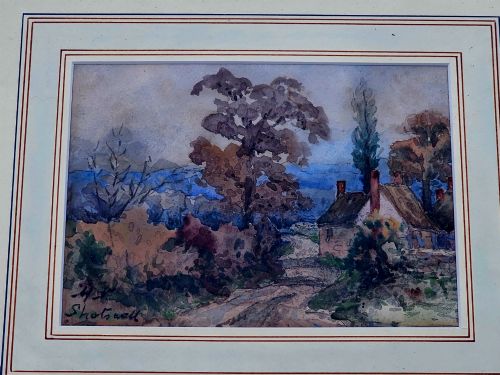
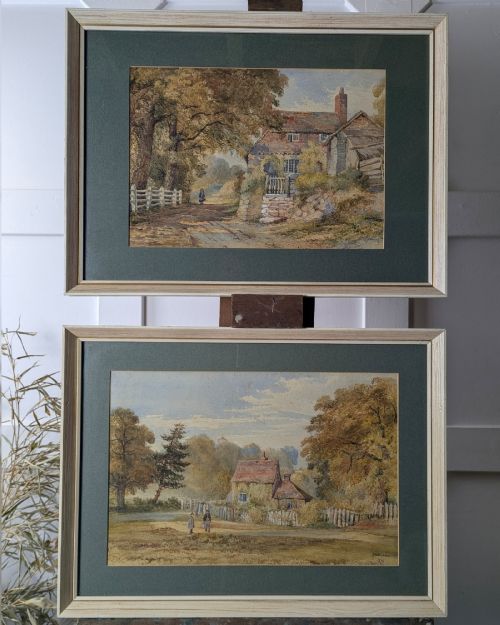
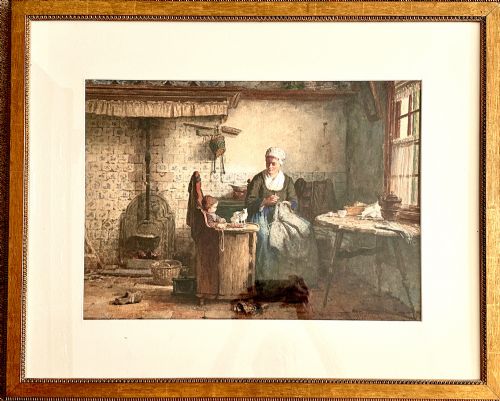
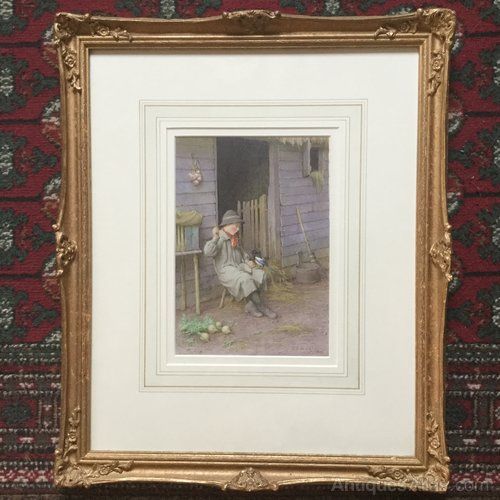


Antique Watercolour Cottage Scene
An antique watercolour cottage scene captures the quiet charm of rural life through delicate pigments on paper.
Antique Watercolour Cottage Scene
An antique watercolour cottage scene brings the pastoral architecture and village life of past centuries into focus through delicate painted works on paper. These pieces range from Georgian beginnings through Victorian sentimentality into early twentieth century depictions of English country gardens and thatched roofs. Buyers encounter framed fine art paintings that record specific localities, from Devon and Yorkshire to Hampshire and the Sussex countryside.
The compositions frequently feature rural workers, farmyard animals, and quiet village streets alongside domestic homesteads. Many works date from the Victorian and Edwardian periods, capturing a romanticised view of agricultural life and rural cottages. Framed under glass, these paintings preserve the fugitive hues of nineteenth and early twentieth century pigments for contemporary walls.
How They Were Made
Artists painted these scenes using watercolour pigment suspended in water, applied directly to absorbent paper sheets. Washed backgrounds created atmospheric skies, while finer brushwork delineated stonework, thatch, and foliage.
Finished works found protection beneath glass within wooden frames, frequently enhanced with gilt wood mouldings to complement the delicate nature of the paper art.
The listings span the Georgian, Victorian, and Edwardian eras, utilising traditional watercolour on paper.
What Varies in Quality
The strength of the composition and the confidence of the brushwork dictate the success of an individual painting. Superior examples demonstrate precise handling of light on cottage walls and naturalistic proportions in figures and animals.
The preservation of the pigment also influences the standing of a piece, as fugitive colours fade when exposed to direct sunlight over decades. Works retaining their original gilt wood frames and clear artist signatures command greater attention from collectors.
A. Marie Parsons·John McDougal·Robert A. Nottingham·Hendrik Valkenberg·Charles Edward Wilson·Arthur Tucker·James Hardy Junior·Helena Maguire·Lilian Stannard·Harry Sylvester Stannard·Henry Charles Fox·Will Anderson·Robert Hollands Walker·Thomas James Lloyd·B. Kaufmann·David Woodlock·Henry Spernon Tozer·Joseph Kirkpatrick·J.V.R. Parsons·Arthur Claude Strachan·Walter Henry Sweet·Jane Utley·Benjamin D. Sigmund·Henry Silkstone Hopwood·David Heward
The Antique Watercolour Cottage Scene Glossary
- Watercolour
- A painting method in which the paints are made of pigments suspended in a water-based solution. This medium allows for translucent washes and delicate tonal gradations on paper.
- Grisaille
- A painting executed entirely in shades of grey or neutral monochrome. This technique often served as a preparatory study or an intentional aesthetic choice in early works.
- Pastoral
- A style of art depicting the rural life of shepherds and country folk in an idealized manner. These scenes emphasise tranquility and harmony between humans and the natural environment.
- Gilt wood
- Wood that has been treated with a thin layer of gold leaf or metallic gilt paint. It frequently appears on the frames surrounding antique works on paper.
Antique Watercolour Cottage Scene: Frequently Asked Questions
How should I hang watercolour paintings?
Keep watercolours away from direct sunlight to prevent the pigments from fading over time. Hanging them on interior walls with stable ambient temperature and humidity protects the delicate paper.
Ensure the frame remains securely sealed against dust and insects while utilising conservation grade mounting materials.
How do I date an antique watercolour?
Examine the paper characteristics, framing methods, and any visible signatures or dates left by the artist. Stylistic clues within the clothing of depicted figures and architectural details also offer chronological markers.
Comparative study with documented works from the same period helps narrow down the precise decade of creation.
What is the difference between Georgian and Victorian watercolours?
Georgian watercolours often display a softer, more topographical approach with restrained palettes used to record country houses and landscapes. Victorian examples tend towards greater narrative detail, brighter pigments, and romantic pastoral themes.
Victorian artists also embraced more varied brush techniques to capture changing atmospheric conditions and textures.
Why are some watercolours painted in monochrome?
Monochrome watercolours, or grisaille works, rely on tonal gradations of a single pigment to create form and shadow. Artists utilised this method for illustrative purposes or to achieve a classical sculptural effect.
These pieces focus attention entirely on composition and light without the distraction of full colour.