

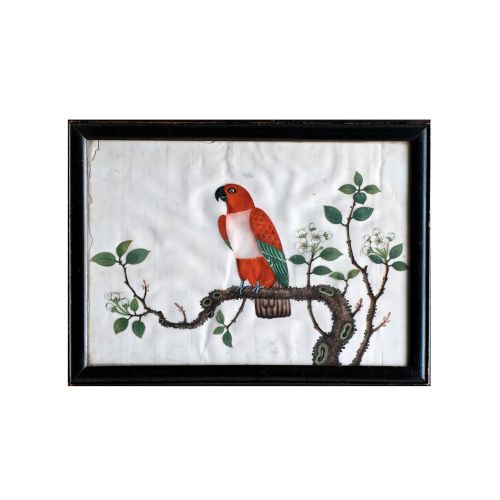
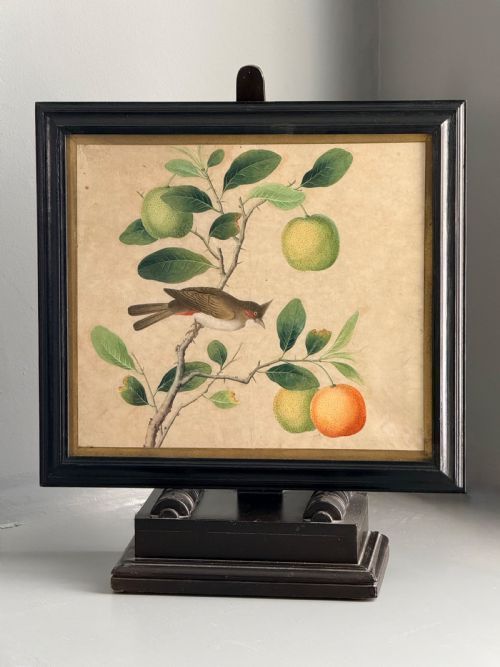
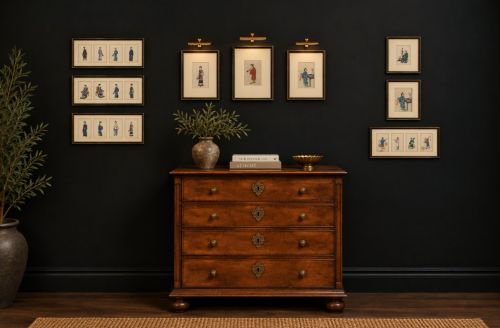
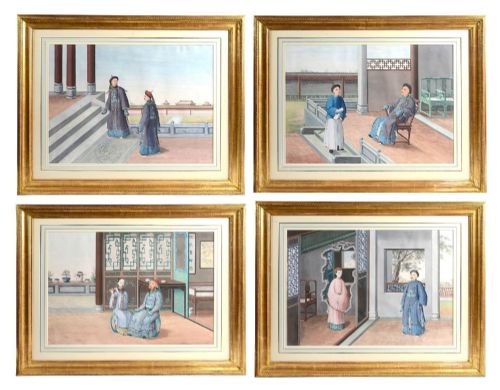


Antique Watercolor on Pith
These antique watercolor on pith paintings capture delicate scenes of Chinese export art on fragile plant material.
Antique Watercolor on Pith
An antique watercolor on pith consists of delicate pigments applied to a porous, spongy substance historically misnamed as rice paper. These works arrive primarily from Chinese export art workshops spanning the eighteenth and nineteenth centuries.
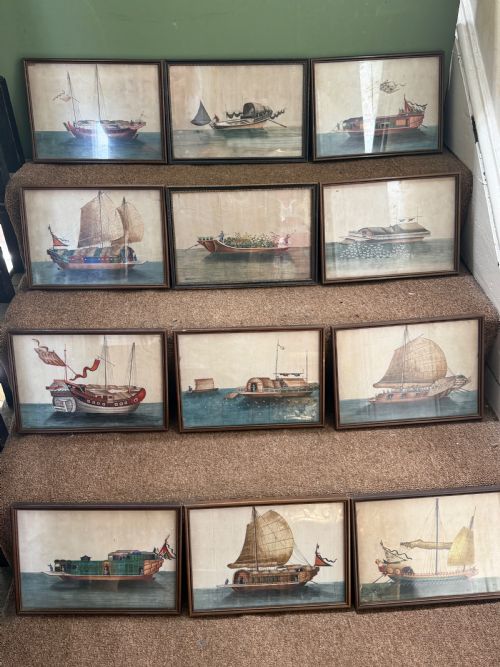
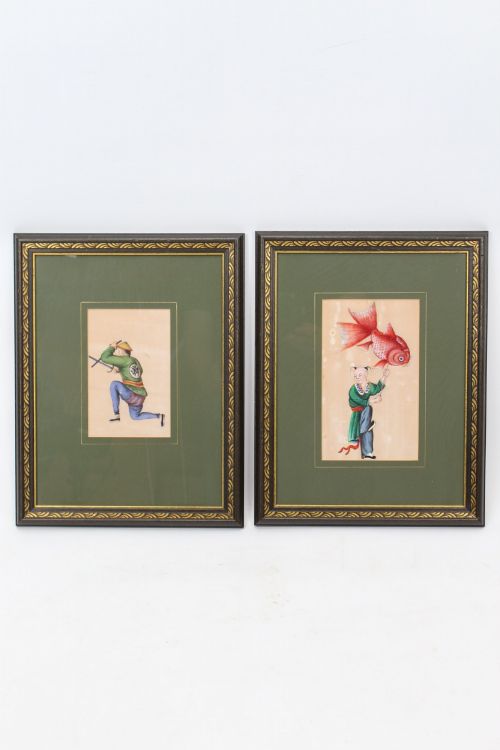
Buyers encounter individual framed paintings alongside large decorative sets depicting junks, butterflies, insects, and figural studies. The material absorbs watercolour and gouache readily, yielding a characteristic luminous surface quality.
Most examples originate from the nineteenth century, particularly the Qing dynasty, though earlier eighteenth century items and Regency period pieces appear. They take the form of framed wall art and mounted watercolours ready for display.
Materials and construction
Artisans sliced the spongy internal pith of the Tetrapanax papyrifer plant into thin sheets to create the painting surface. This organic material accepts water-based pigments like gouache and watercolour with vibrant effect.
Painters used fine ink outlines alongside rich pigments to delineate figures, ships, and natural history subjects. Finished works frequently feature glass and wood framing to protect the fragile support.
Antique Watercolor on Pith Retail Price Guide 2026
Typical asking prices for watercolor on pith among the pieces listed under this phrase on Sellingantiques today, from the lower quarter to the upper quarter. They describe what is for sale here now, not the wider market.
Victorian travellers frequently bought these butterfly paintings home, mistaking the spongy pith support for pressed vegetable parchment.
Assessing quality in pith paintings
The fineness of the brushwork and the preservation of the delicate pith surface determine the standing of each piece. Intricate detail in subjects like ships and insects distinguishes superior works from simpler export pieces.
Completeness within sets heavily influences desirability, as surviving groups of twelve or more paintings offer greater historical coherence. The vibrancy of the gouache pigments against the natural pith ground also signals the skill of the original workshop.
The Antique Watercolor on Pith Glossary
- Pith paper
- A delicate material sliced from the pith of the Tetrapanax papyrifer plant, commonly misidentified as rice paper. It possesses a velvety texture that holds watercolor with high luminosity.
- Gouache
- An opaque water-based medium frequently combined with watercolor on pith paintings. It provides solid areas of bright colour.
- Chinese Export Art
- Goods manufactured in China specifically for Western markets during the Qing dynasty and earlier periods. These works often blend traditional Eastern subjects with Western framing tastes.
- Junk
- A traditional Chinese sailing ship frequently portrayed in nineteenth century export paintings. These vessels appear with characteristic batten sails in maritime scenes.
- Qing Dynasty
- The final imperial dynasty of China, reigning from the seventeenth to the early twentieth century. Many extant export paintings date from the late phase of this period.
Antique Watercolor on Pith: Frequently Asked Questions
What is pith paper made from?
Pith paper is derived from the spongy internal pith of the Tetrapanax papyrifer shrub native to Taiwan and southern China. Artisans carefully sliced this pith into thin sheets.
Despite historical confusion calling the medium rice paper, it contains no rice whatsoever. The resulting surface has a unique velvety texture.
How should I display pith paintings?
These delicate works require professional framing behind glass with UV-protective properties to prevent fading. The fragile pith material degrades easily if exposed to humidity.
Keep framed pieces away from direct sunlight and damp environments to preserve the watercolours. Stable indoor temperatures ensure the longevity of the organic support.
Why are they often found in sets?
Export artists in Canton and other treaty ports produced paintings in matched series for foreign traders. Buyers purchased sets of twelve depicting trades, flora, fauna, or maritime junks.
Complete sets remain particularly desirable because they preserve the original grouping intended for export. Individual leaves also appear on the market as framed wall art.
How do I date an antique pith painting?
Dating relies on costume, subject matter, framing styles, and historical context within the Qing dynasty. Eighteenth century examples show distinct palettes compared to late nineteenth century output.
Most surviving pieces originate from the Regency period through the Edwardian era. Dealer descriptions often link specific lots to the Canton trade era of the early 1800s.