



Antique Water Carafe
An antique water carafe brings practical elegance to the table, uniting period glasswork and metal mounts for everyday service or display.
Antique Water Carafe
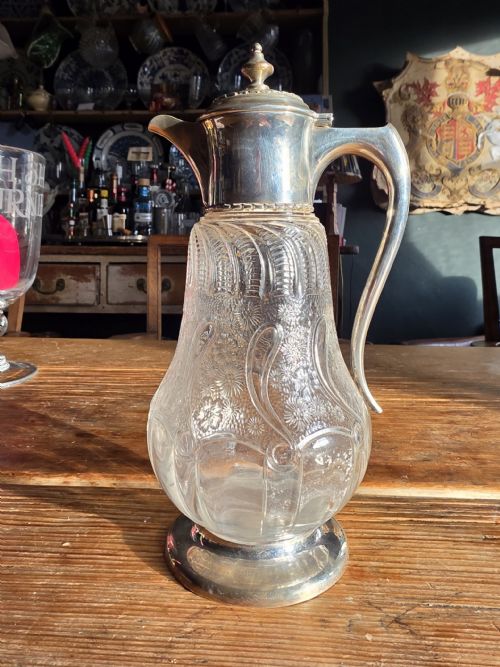
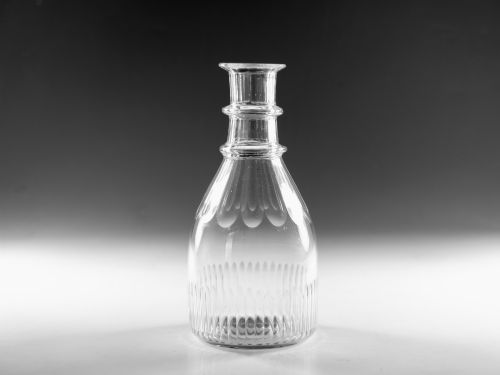
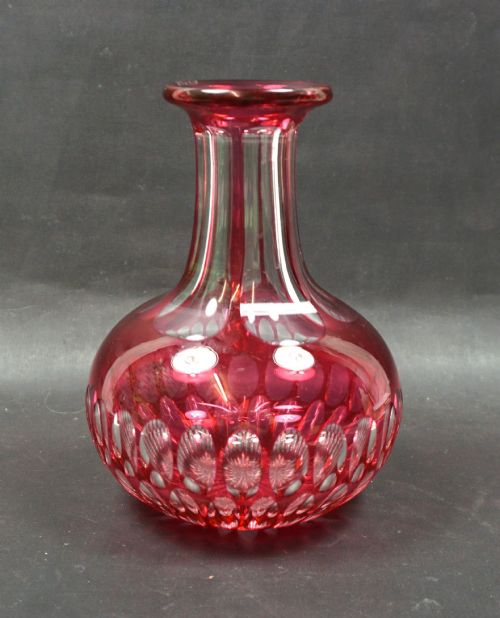
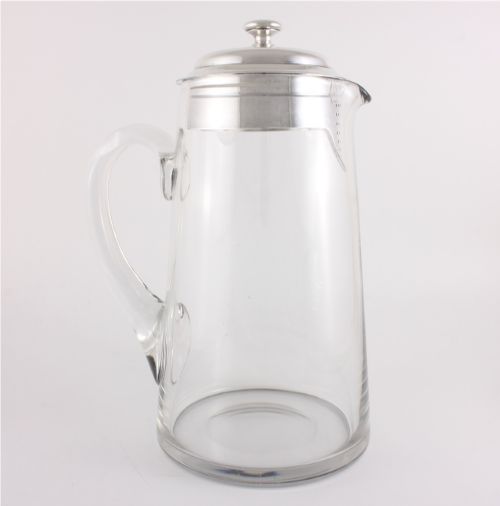
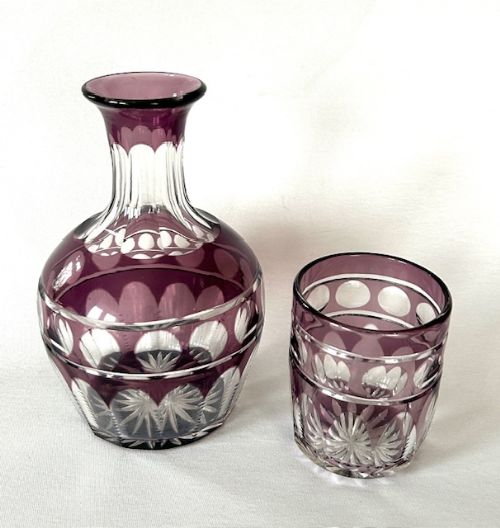
An antique water carafe spans several forms, including ewers, pitchers, and claret jugs, appearing in dining rooms from the late Georgian era through the Edwardian period and into the early twentieth century. Buyers encounter vessels shaped from clear, coloured, or overshot glass, frequently paired with sterling silver or silver-plate mounts.
The selections on this page range from heavy nineteenth-century cut glass jugs to etched Victorian designs and silver-mounted examples. Forms vary from simple ringed decanters to elaborately engraved vessels bearing floral or heraldic motifs.
English production dominates the records, alongside continental pieces such as Austrian glasswork and pieces influenced by Islamic revival styles. Collectors find both utilitarian water jugs and decorative ewers designed for refined table service.
Distinguishing finer examples
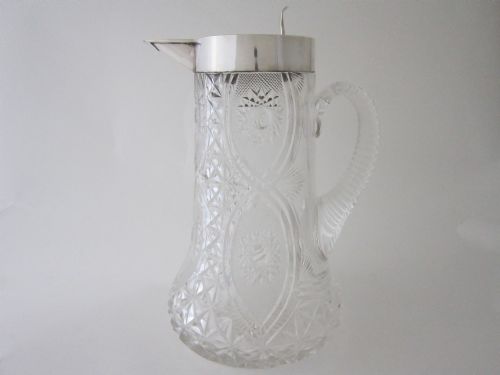
The refinement of the glass cutting and the crispness of wheel engraving set the finer examples apart from standard production. Deeply faceted crystal, balanced proportions, and substantial weight signal superior craftsmanship.
William Comyns·Mappin & Webb·Richardsons·Tiffany·Lobmeyr·H F Fearncombe & Co
The Antique Water Carafe Glossary
- Ewer
- A large jug with a wide spout and handle, traditionally used for holding and pouring water at the table. These vessels often feature decorative glass bodies and metal mounts.
- Overshot glass
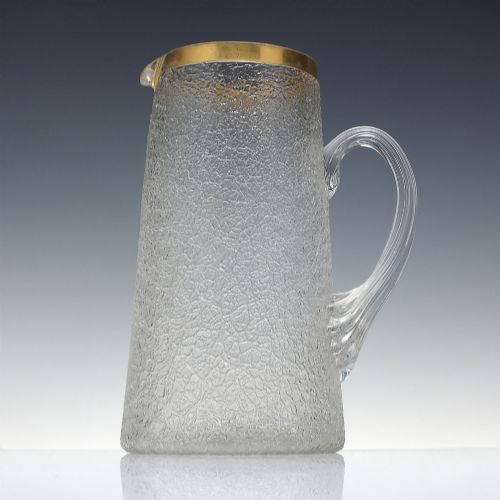
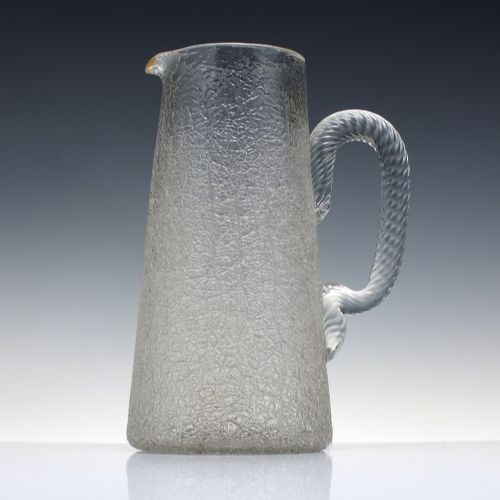
- A nineteenth-century technique where fine glass threads are rolled onto a hot blown vessel to create a textured, frosty surface. This finish is frequently paired with a gilded rim.
- Claret jug
- A specialised pouring vessel designed for serving red wine, typically combining a glass body with a silver-plated or sterling silver handle, collar, and hinged lid.
- Ice tube
- A cylindrical metal or glass chamber inserted into the vessel to chill the contents without diluting them. They appear primarily in nineteenth-century lemonade and water jugs.
- Mary Gregory
- A style of decorative glassware featuring white or tinted enamel silhouettes of children, birds, or foliage against a coloured glass background. Production flourished during the Victorian era.
Antique Water Carafe: Frequently Asked Questions
What is the difference between a carafe and a jug?
A carafe generally refers to a straight-sided or gently tapered glass vessel designed for holding liquids without a handle or spout. A jug includes a handle and a formed pouring lip for easier service.
In antique terminology, these categories often overlap as makers applied various names to similar forms. Both served functional roles on the dining table.
How do I date an antique water carafe?
Dating relies on examining the manufacturing techniques, glass tint, style of cutting, and any associated metal mounts or hallmarks. Victorian and Edwardian pieces often display distinct decorative motifs and maker stamps.
Consulting the design characteristics of periods such as the Regency or Art Deco helps narrow the production window. Silver mounts provide the most precise dating through official assay office marks.
Were these vessels used only for water?
While intended for water, many of these vessels accommodated lemonade, wine, claret, and champagne. The inclusion of ice tubes or specialised pouring spouts points to varied beverage service.
Form often dictated function, with narrower necks utilised for wine and wider mouths suited for iced water or fruit drinks. Owners adapted elegant glass jugs for whatever beverage the occasion required.
How should I clean and care for antique glass?
Hand washing in lukewarm water with mild soap is essential to protect delicate glass surfaces and antique metal mounts. Harsh detergents and modern dishwashers can ruin gilding, enamel work, and silver plate.
Careful drying with a lint-free cloth prevents water spots on clear crystal. Metal components require appropriate polishes kept strictly away from the glass body.