
Antique Watch Chain Necklace
An antique watch chain necklace is a converted pocket watch albert repurposed for the neck, offering substantial links and original hardware that modern jewellery lacks.
Antique Watch Chain Necklace
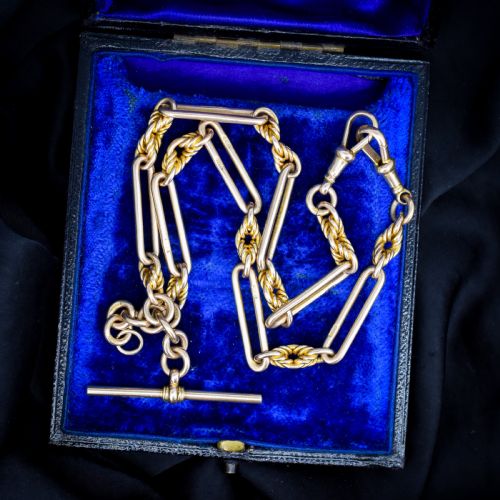
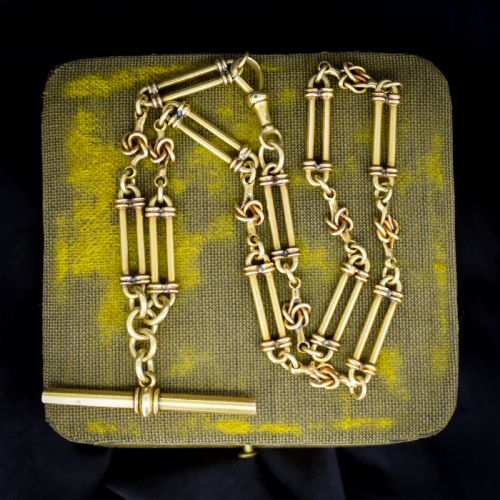
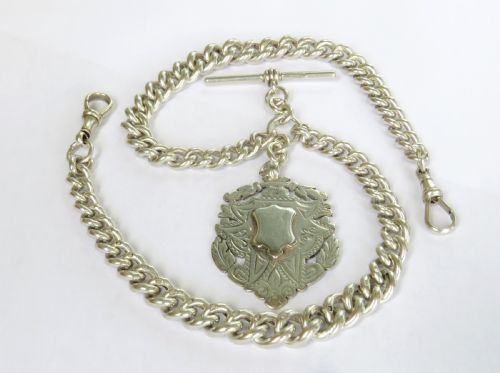
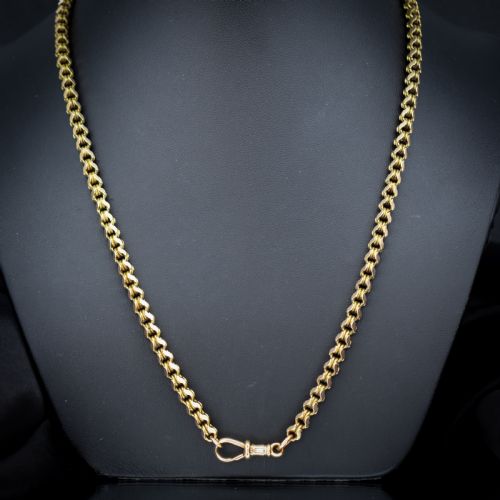
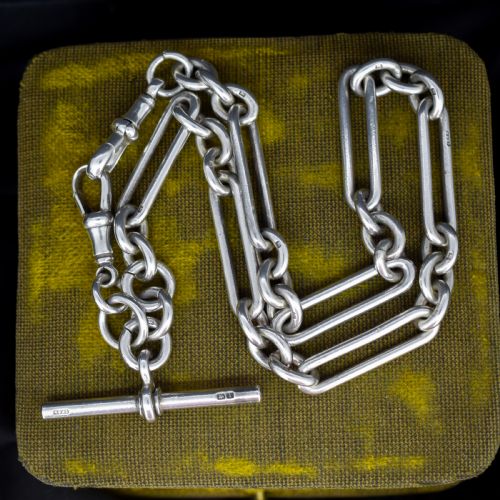
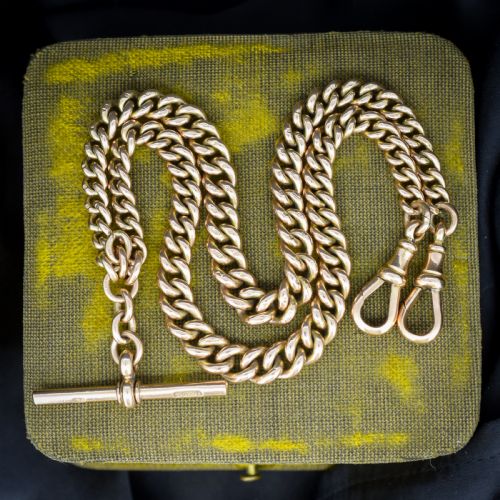
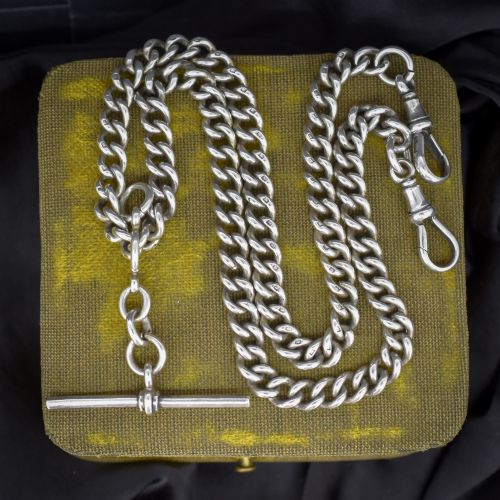
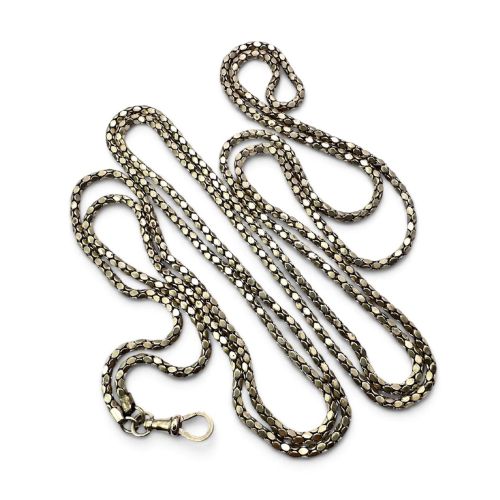
The pieces catalogued under an antique watch chain necklace derive primarily from nineteenth-century and early twentieth-century pocket watch albert chains, adapted for wear around the neck. The selection spans Victorian, Edwardian, and Art Deco periods, encompassing both single and double strand configurations.
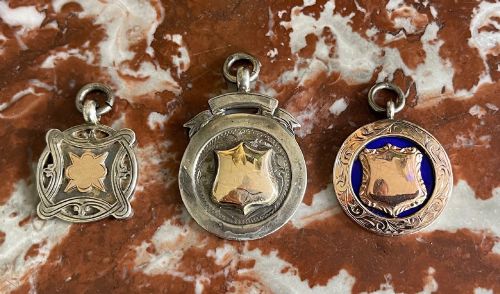
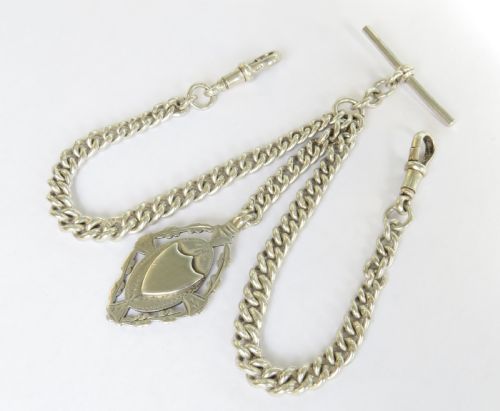
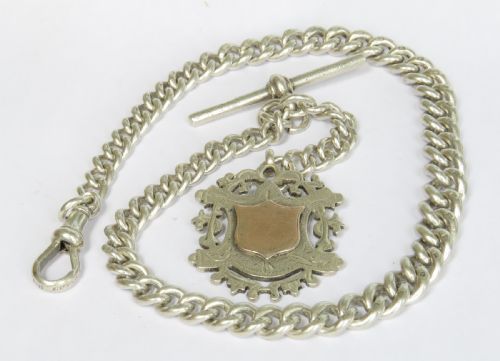
Makers originally fashioned these lengths to secure pocket watches to waistcoats using attached T-bars and dog clips. Surviving examples frequently retain these functional elements, alongside decorative fobs and sliding drops that define their character today.
Metals and construction techniques
Craftsmen built these items in sterling silver and various purities of gold, including nine-carat, fifteen-carat, and eighteen-carat yellow, rose, and white metals. Many pieces display individual hallmarking on every link, indicating rigorous assay office standards from cities such as Birmingham and Chester.
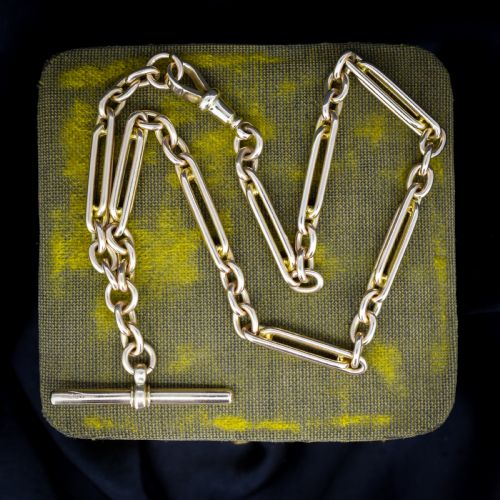
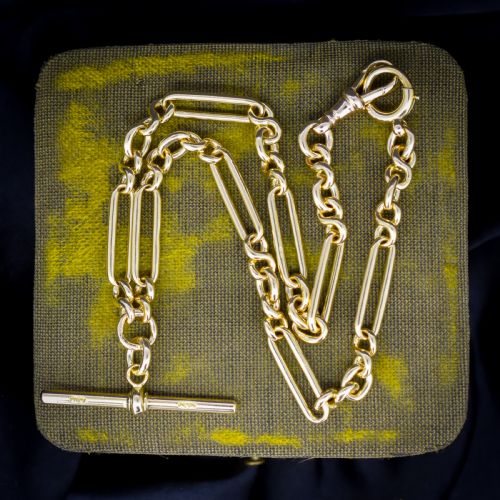
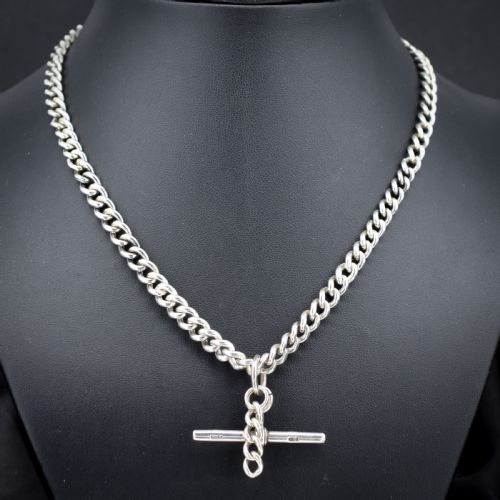
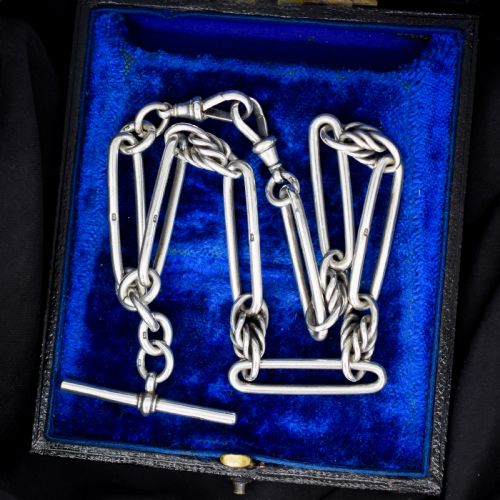
Link construction varies significantly across the period, featuring trombone, curb, oval, paper, and fancy patterns joined by sturdy jump rings. Swivel dog clips and bolt rings provide the fastenings, often accompanied by fixed or detachable T-bars.
Listings feature sterling silver and gold alloys spanning the Victorian, Edwardian, and Art Deco periods, alongside distinct link forms like trombone and curb.
Evaluating proportion and preservation
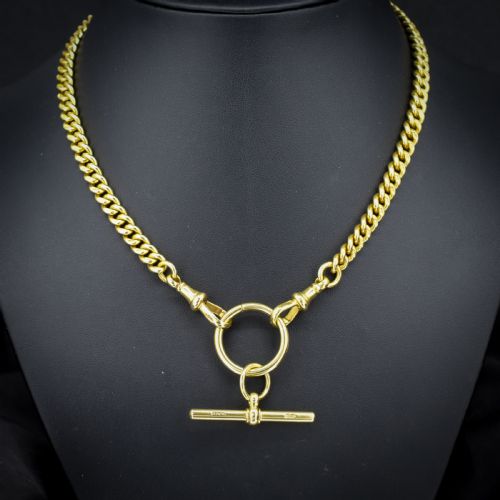
Superior examples maintain a consistent gauge throughout their length or feature a carefully proportioned graduated curb formation where links diminish uniformly toward the ends. The crispness of the original hallmarks stamped on individual links denotes better workshop practices.
Preservation of the original working swivel mechanisms on the dog clips determines the utility of the piece. Chains retaining matching components and unthinned metal links command greater appreciation among collectors.
The Antique Watch Chain Necklace Glossary
- Albert chain
- A heavy chain originally designed to secure a pocket watch to a waistcoat or garment buttonhole. These pieces form the basis of the necklaces seen here.
- Dog clip
- A spring-loaded swivel fastening attached to one or both ends of the chain. This mechanism allowed owners to secure pocket watches and fobs safely.
- T-bar
- A short transverse metal bar attached to the centre of the chain by a short drop link. It anchored the watch in a pocket through the fabric.
- Trombone link
- A specific link shape characterised by elongated rectangular sections interspersed with smaller circular or oval connectors. It is frequently seen in Victorian and Edwardian pieces.
- Longuard
- An extra-long chain designed to be worn doubled or looped around the neck without needing a clasp. These measure considerably longer than standard vest chains.
Antique Watch Chain Necklace: Frequently Asked Questions
How do I wear a pocket watch chain as a necklace?
You simply fasten the dog clip to a jump ring or link at your desired length, allowing the T-bar and any attached fob to hang as a pendant. The original hardware functions naturally as modern jewellery clasps and decorative drops.
Many wearers choose to remove the T-bar if it feels too industrial, while others keep it as an authentic centrepiece for the neckline.
Were these chains originally made for women?
Victorian men primarily wore albert chains across waistcoats to secure pocket watches, but women also adopted long guard chains and shorter lengths for watches and chatelaines. Today, all these configurations are worn universally as necklaces.
The adaptation from menswear to neckwear reflects a long history of repurposing robust utilitarian objects into decorative accessories.
How can I tell the gold purity of an antique chain?
British pieces typically feature hallmarks stamped onto the links, indicating the exact gold standard such as nine, fifteen, or eighteen carats. You will often find marks on nearly every individual link in fine Edwardian examples.
Unmarked pieces rely on professional testing or visual assessment of the colour, which ranges from pale yellow to rich rose depending on the alloy composition.