


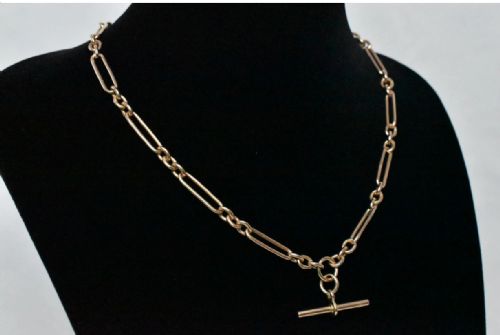


Rose Gold T Bar
A rose gold t bar secures a pocket watch chain or dangles from a link bracelet, bringing a warm coppery glow to Victorian and Edwardian jewellery.
Rose Gold T Bar
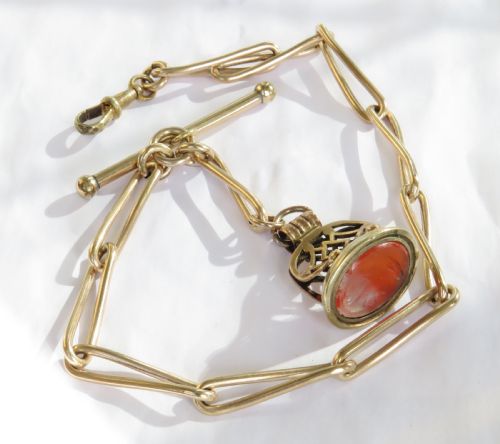
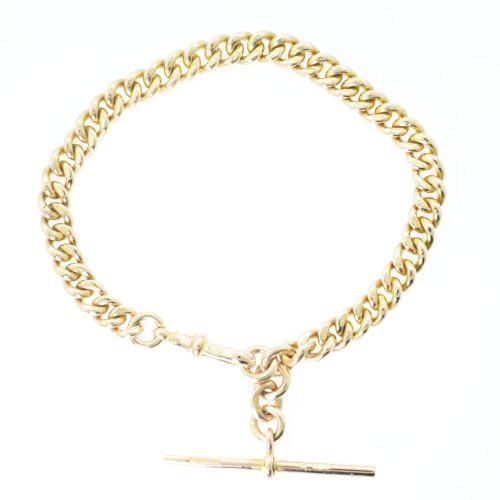
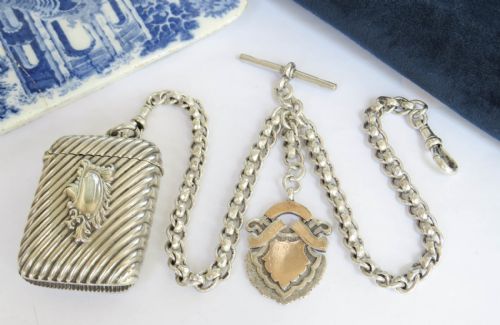
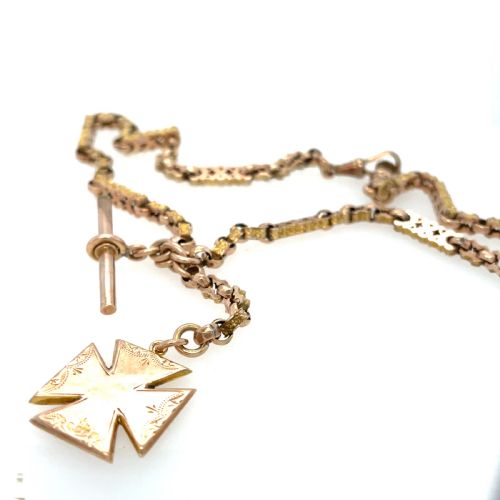
A rose gold t bar primarily forms the terminal piece on antique pocket watch chains, historically designed to slip through a waistcoat buttonhole while the chain secured the timepiece in a pocket. These bars frequently appear today attached to substantial albert chains, bracelets, and necklaces originating from the Victorian, Edwardian, and 1920s periods.
Beyond watch chains, the term encompasses bar brooches and gate link bracelets that incorporate distinct bar elements or feature a drop t bar fastening. The surviving examples span solid nine-carat and fifteen-carat rose gold, alongside rolled gold alternatives from the early twentieth century.
Buyers seeking this phrase encounter versatile hybrid pieces that transition easily from traditional pocket watch attachments to contemporary neckwear and wrist adornments. The form remains tied to British assay office standards, particularly from Birmingham and Chester during the nineteenth and twentieth centuries.
Materials and Construction
Craftsmen built these pieces predominantly in nine-carat rose gold, achieving the characteristic warm hue through a higher proportion of copper alloyed with gold. Heavier examples utilise hollow or solid curb, trombone, and paperclip links that provide structural strength for daily wear.
Surface decoration relies on hand engraving, engine turning, and applied millegrain detailing, particularly on the fob pendants and bar brooches accompanying the chains. Gemstone settings incorporate seed pearls, turquoise, opals, and rose-cut diamonds secured in star settings or bezel mounts.
The archive shows a strong presence of Birmingham and Chester assay offices on chain links and bar brooches alike.
Factors of Quality
Quality rests upon the structural integrity of the individual links and the original crispness of any engraved hallmarks or decorative chasing. Substantial weight and solid link construction distinguish superior watch chains from lighter or rolled gold variants.
The presence of matching maker marks, clear town assay stamps on both the t bar and the associated dog clips, and original dog clips that spring firmly elevate a piece above standard utilitarian items.
The Rose Gold T Bar Glossary
- Albert Chain
- A pocket watch chain designed to be worn across a waistcoat or attached to a garment, named after Prince Albert. These chains often feature a t bar at one end and one or two dog clips at the other.
- T-Bar
- A short horizontal metal bar attached to the centre of a watch chain, used to anchor the chain through a buttonhole. It functions as both a secure toggle and a decorative pendant.
- Dog Clip
- A small spring-loaded swivel clasp attached to watch chains and bracelets for securing pocket watches, fobs, or charms. They allow the attached items to rotate freely without twisting the metal links.
- Assay Mark
- An official stamp struck into precious metal to indicate its purity and the testing office. British pieces commonly show marks for specific cities such as Birmingham or Chester alongside the gold carat stamp.
- Bar Brooch
- A pin featuring a linear metal bar as the primary structural element, frequently embellished with gemstones or central motifs. They gained immense popularity during the Victorian and Edwardian eras.
Rose Gold T Bar: Frequently Asked Questions
What is a rose gold t bar used for?
The bar acts as a toggle that slips through a waistcoat buttonhole to secure a pocket watch chain safely in place. In modern styling, it often serves as a decorative drop fastening on necklaces and bracelets.
Historically, it kept expensive timepieces from dropping to the ground while allowing the wearer to unhook the watch easily when needed.
How do I wear a pocket watch chain today?
Many people wear these chains as necklaces by fastening the dog clip directly to the t bar or to an intermediate link. They also wrap shorter chains around the wrist to create multi-strand bracelets.
The substantial weight of antique links makes them versatile enough to support modern pendants or charm attachments.
How can I tell the period of a chain?
Victorian and Edwardian chains typically display distinct link formations like curb, trombone, or paperclip patterns alongside full hallmarks. Later pieces from the 1920s and 1930s often incorporate lighter constructions or rolled gold materials.
Examining the clasp mechanisms and any accompanying fob medals helps narrow down the exact decade of manufacture.
Is rose gold different from yellow gold?
Rose gold contains a higher percentage of copper alloyed with gold, which creates a distinct pinkish or coppery tint. Yellow gold utilises a balanced mix of silver and copper alloys.
This reddish hue became particularly fashionable during the Victorian period and experienced a strong revival during the Edwardian era.