



Vintage Swivel Clasp Chain
A vintage swivel clasp chain provides a secure and practical fastening while serving as a wearable piece of history.
Vintage Swivel Clasp Chain
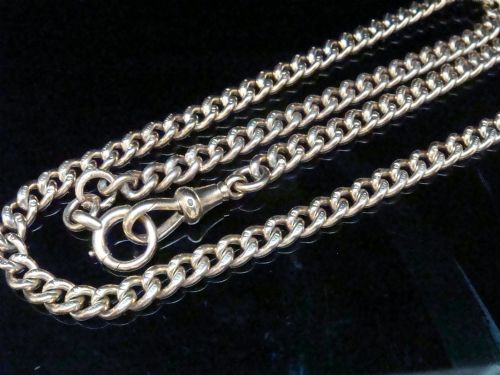
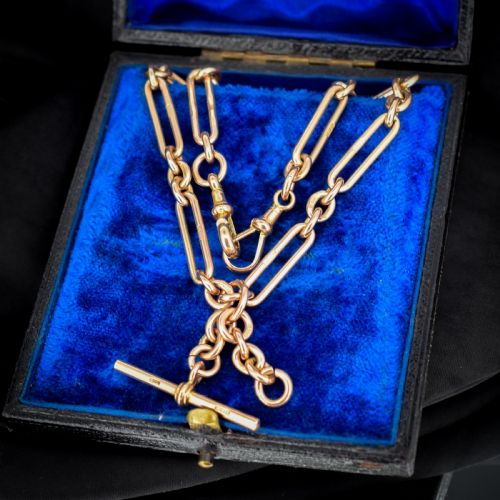
When you search for a vintage swivel clasp chain, you encounter a variety of forms including traditional watch chains, Albert chains, longuards, and robust bracelets. These items date from periods such as the Victorian and Edwardian eras, as well as the early twentieth century.
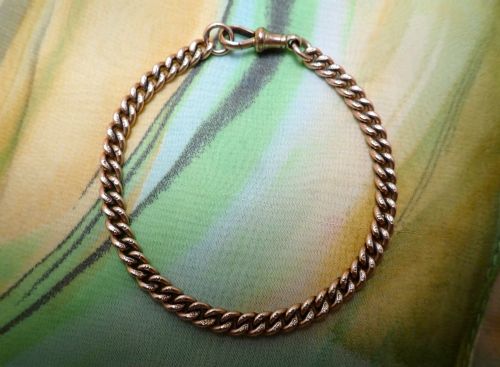
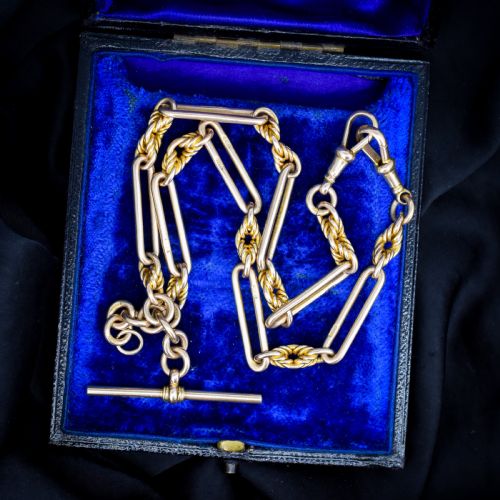
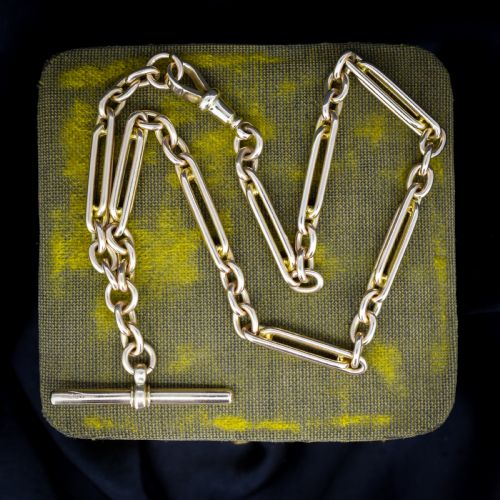
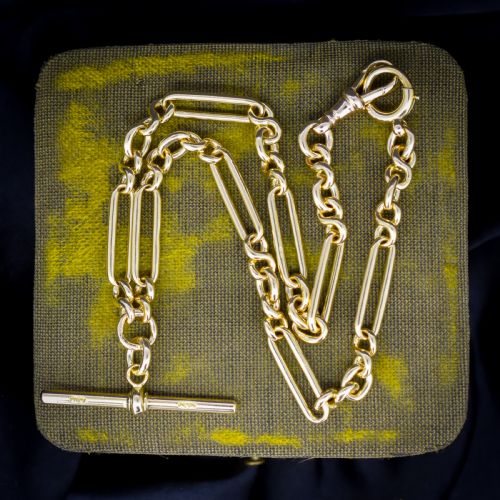
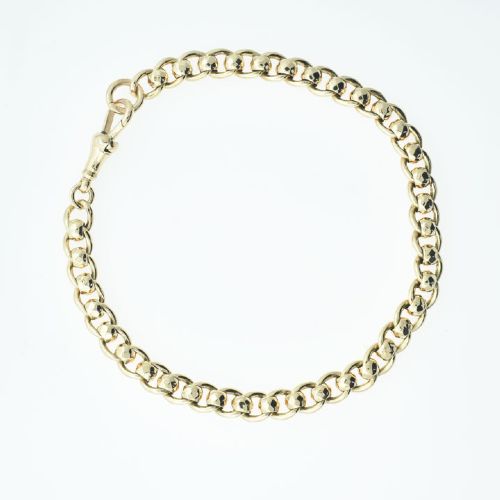
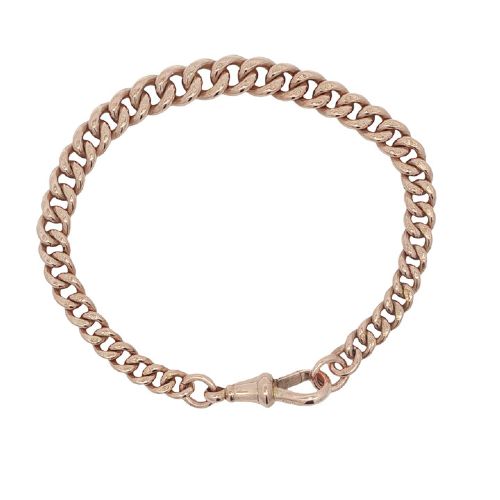
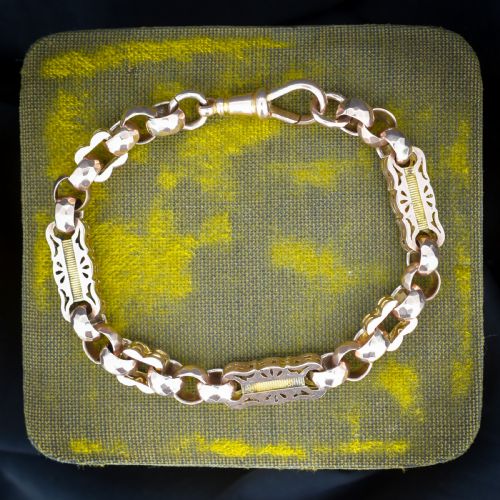
The most common versions on this page are configured as necklaces or bracelets utilising heavy gold or silver links. Many incorporate specific link patterns such as trombone, curb, rollerball, or fancy stars and bars.
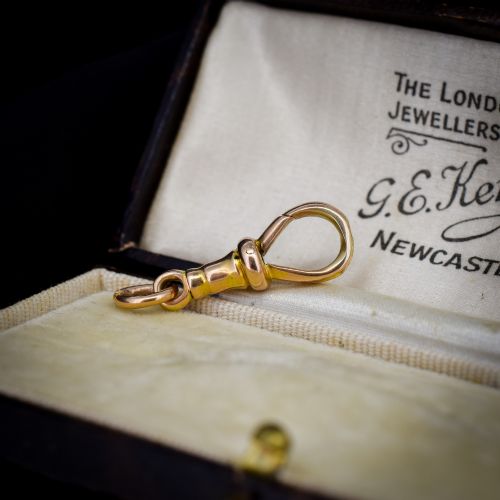
Originating from an era of practical pocket watches and fob attachments, these pieces now function primarily as standalone necklaces or charm bracelets. Their defining mechanical feature remains the pivoting spring clip used to secure the piece.
How they were made
The construction relies on precious metals such as sterling silver and various carats of gold, including nine carat rose gold, nine carat yellow gold, eighteen carat yellow gold, and rolled gold. Individual links are shaped and joined to form flexible strands.
Goldsmiths and silversmiths utilised manual joining techniques, often incorporating hallmarks on individual links to guarantee purity. Functional elements like dog clips and spring-loaded swivel mechanisms were integrated directly into the design of the chain.
Listings feature items spanning the nineteenth century, Victorian era, Edwardian period, and the 1920s, fashioned in sterling silver and gold.
What varies in quality
Quality in a vintage swivel clasp chain depends heavily on the robustness of the metal weight and the integrity of the individual links. Pieces featuring hallmarked components on every link represent superior manufacturing standards.
The precision of the mechanical swivel clasp and the tightness of the link connections determine the overall durability of the item. Heavier gram weights and solid constructions distinguish the higher end of the range from lighter rolled gold alternatives.
The Vintage Swivel Clasp Chain Glossary
- Albert chain
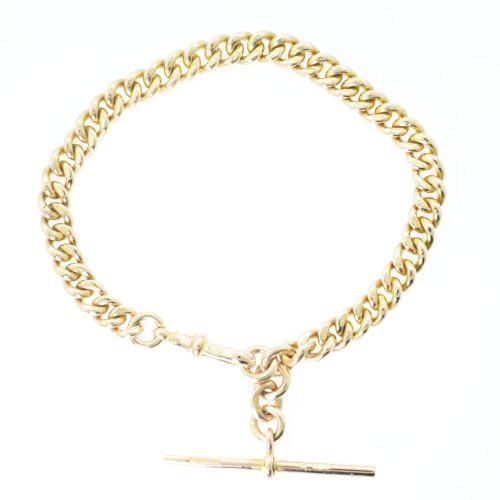
- A type of watch chain traditionally used to secure a pocket watch to a waistcoator garment. These frequently feature a T-bar at one end and a swivel clasp at the other.
- Dog clip
- A spring-loaded fastener with a pivoting gate, commonly utilised as a swivel clasp on watch chains and charm bracelets. It allows for quick attachment and detachment of pendants.
- Trombone link
- A distinct geometric link style shaped like a trombone slide, often seen in nineteenth and early twentieth century watch chains. These links alternate with smaller connecting rings.
- Rollerball
- A rounded, cylindrical link design found on certain antique bracelets and chains. This construction creates a smooth, tactile profile along the length of the piece.
- Longuard
- An extra-long watch chain designed to be worn doubled around the neck. They typically terminate in a swivel clasp for holding pocket watches or lockets.
Vintage Swivel Clasp Chain: Frequently Asked Questions
What is an Albert chain?
An Albert chain is a specific style of pocket watch chain designed during the nineteenth century. It usually includes a central T-bar and a swivel clasp.
Today, these chains are commonly worn around the neck or wrapped as bracelets.
How do you wear a watch chain as a necklace?
Watch chains are easily adapted into necklaces by fastening the swivel clasp directly to a link or an attached jump ring. Their substantial length allows them to sit comfortably around the collarbone.
Many pieces also accommodate charms or pendants via the original dog clip.
What metal types are used?
The pieces utilise various forms of precious metal, predominantly sterling silver and gold. Gold items appear in differing carats and shades, including rose gold and yellow gold.
Rolled gold is also present among the selections.
How are periods identified?
Periods are identified through stylistic cues, hallmarks, and manufacturing techniques associated with Victorian, Edwardian, and early twentieth-century makers. Assay office marks often provide precise dating details.
Link geometries and fastener designs further help assign items to specific decades.