


Antique Watch Box
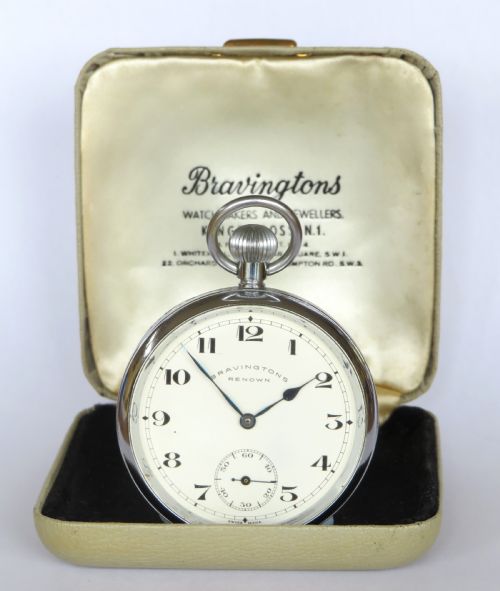
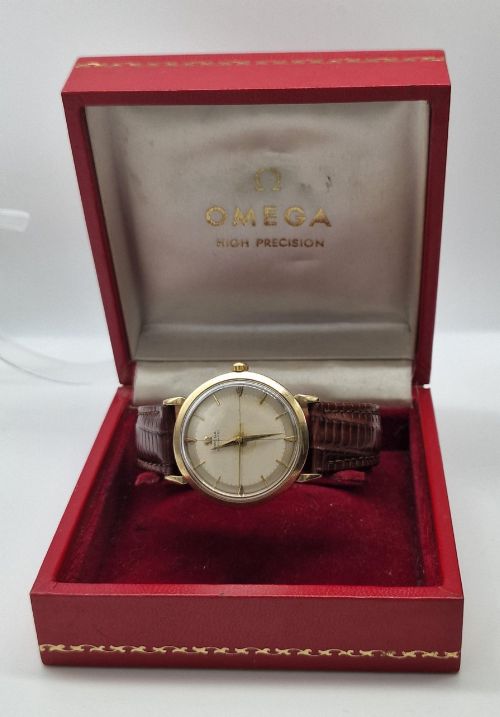
An antique watch box keeps timepieces secure, housing pocket watches, marine chronometers and wristwatches in fitted interiors.
Antique Watch Box
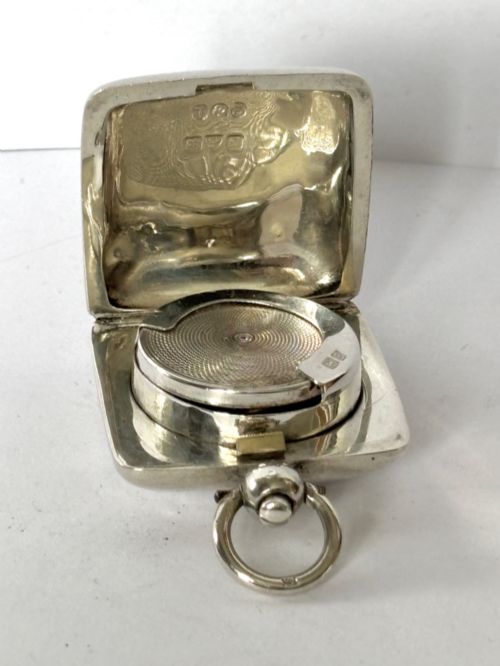
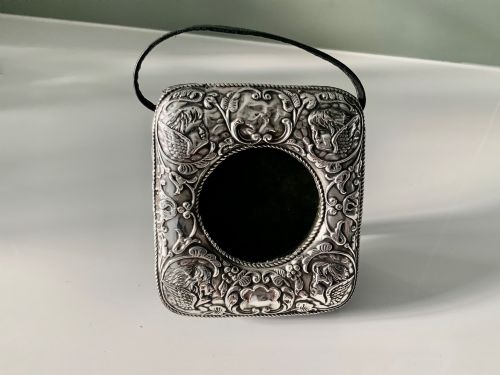
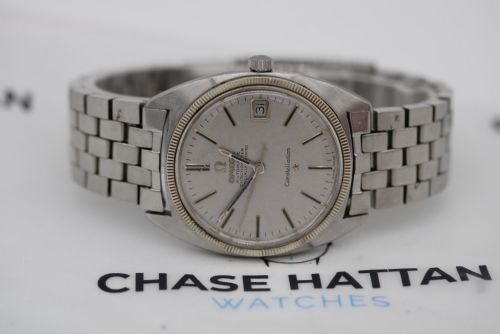
When you search for an antique watch box, you find containers designed to protect delicate timepieces, travelling clocks and chronometers. These items range from specialised watchmaker storage chests to fitted leather cases intended for pocket watches.
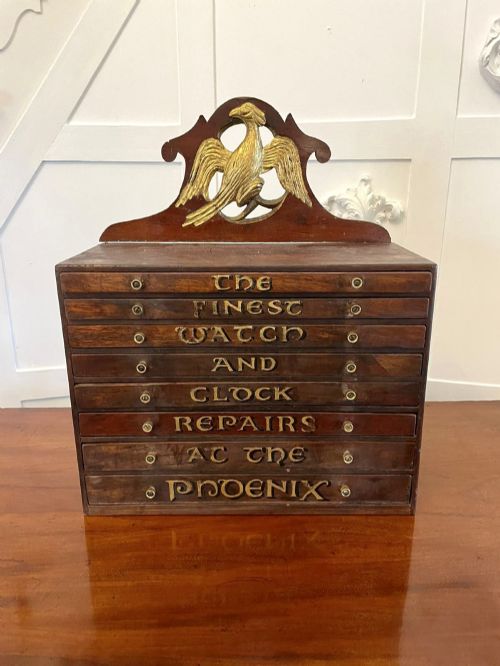
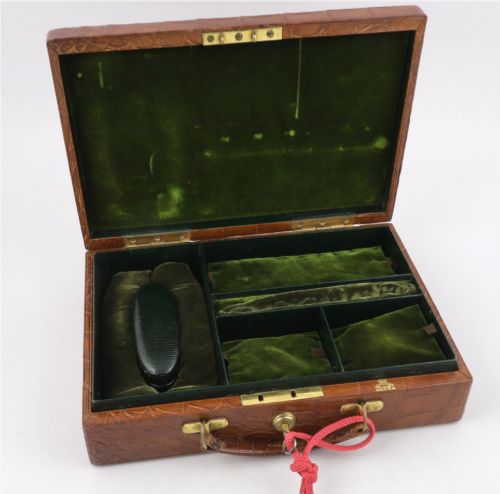
The pieces listed here include Victorian mahogany boxes, Edwardian croc leather cases, and specialised watchmaker storage units made from wood. Many survive alongside the original timepieces they were made to protect, though others appear as standalone vessels.
Origins span British workshops, French glass and wood containers, and marine environments where chronometers required sturdy housing. You encounter both simple utilitarian watchmaker boxes and decorative boudoir pieces lined with velvet.
How they were made
Cabinet makers utilised solid hardwoods like mahogany, oak, rosewood, and boxwood to construct the outer shells of these boxes. Brass hinges, locks, and corner mounts provided structural reinforcement and secure closures for travel.
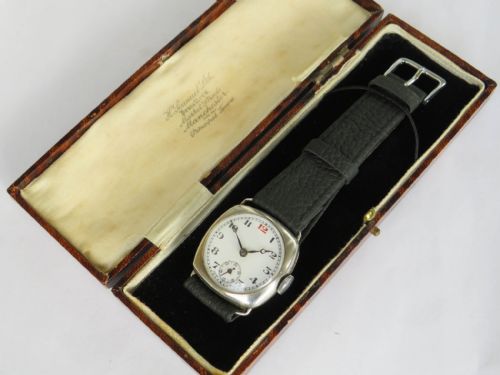
Interiors typically featured linings of soft velvet or silk to prevent scratches to gold, silver, and gunmetal watch cases. Specialised watchmaker boxes often incorporated tiny turned compartments, drawers, and glass or agate oil pots for miniature components.
Antique Watch Box Retail Price Guide 2026
Typical asking prices for watch box among the pieces listed under this phrase on Sellingantiques today, from the lower quarter to the upper quarter. They describe what is for sale here now, not the wider market.
A tiny turned boxwood pot designed to hold watchmaker's oil keeps microscopic machinery lubricated over the centuries.
What varies in quality
The distinction between standard utility storage and superior examples rests on the joinery, timber selection, and original hardware. Finer boxes display dovetail joints, carefully matched wood grain, and heavy cast brass fittings rather than stamped sheet metal.
Condition of the interior velvet lining and the integrity of the original locking mechanism significantly influence desirability. Pieces retaining fitted internal partitions designed specifically for pocket watches, chains, or winding keys represent the higher tier of survival.
Aaron Lufkin Dennison·Crisford & Norris·Negretti & Zambra·Thomas Mercer·Litherland Davies Of Liverpool
The Antique Watch Box Glossary
- Pocket watch
- A timepiece designed to fit in a waistcoat pocket, usually attached to a chain or albert. They frequently required dedicated storage boxes when not being worn.
- Marine chronometer
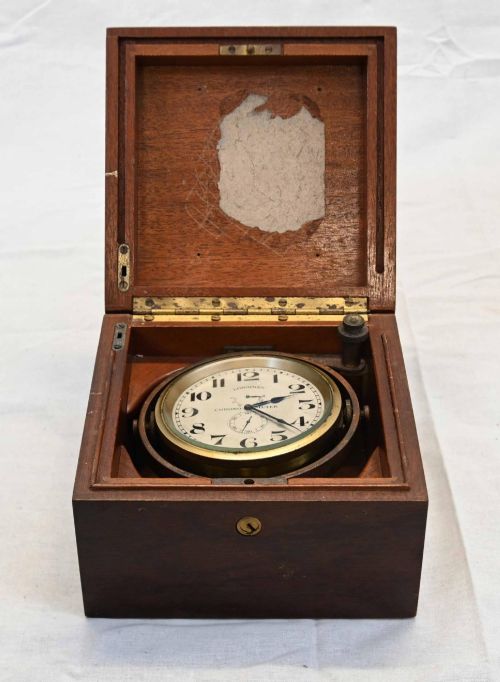
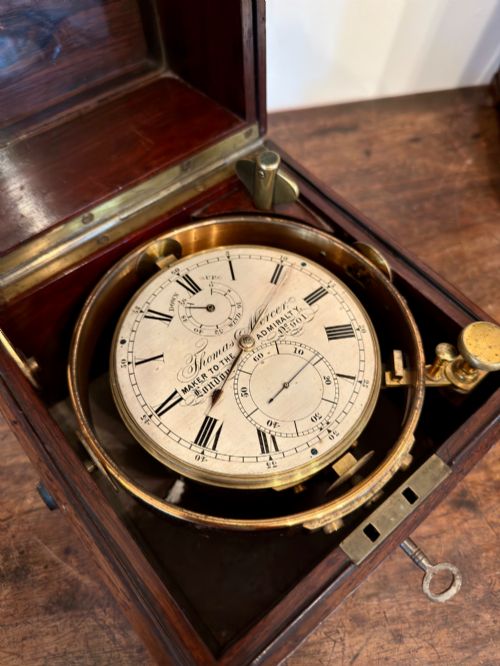
- A highly accurate portable timekeeper used for navigation at sea, housed in specialised gimbaled wooden boxes. These items ensured longitude could be calculated accurately on board vessels.
- Treen
- Small handmade wooden domestic objects turned on a lathe, such as watchmaker boxes and oil pots. Collectors prize these for their tactile surfaces and honest utilitarian origins.
- Guilloche
- A decorative engine-turned engraving technique applied to metal surfaces, often seen beneath translucent enamel on watch cases and travel clock stands. This pattern creates repeating geometric waves that catch the light.
- Vesta
- A small pocket container used for holding matches, frequently found alongside watch chains and fob accessories in period collections.
Antique Watch Box: Frequently Asked Questions
What fits inside an antique watch box?
These receptacles accommodate pocket watches, wristwatches, marine chronometers, and small related accessories like watch chains and keys. Many containers feature fitted internal slots specifically contoured to hold round watch cases safely.
Some larger examples serve as multi-compartment watchmaker chests containing tiny drawers and miniature oil pots for repair tools and spare components.
How do I date an antique watch box?
Dating relies on timber types, construction methods, hardware styles, and any accompanying hallmarks on fitted silver components or associated watches. Victorian pieces often use solid mahogany or oak with heavy brass mounts, while Edwardian versions frequently feature leather or crocodile skin coverings.
Inscriptions, maker plaques, and stamped registration marks inside the lid also help narrow down the exact decade of manufacture.
Were these boxes made for travel?
Many examples, particularly those covered in leather or sturdy hardwoods, were built for portability during travel. Fitted interiors kept pocket watches from shifting or sustaining damage while on the move.
Other larger specimens, such as watchmaker chests and marine chronometers, were intended for static workbench use or secure mounting inside ship cabins.
How should I clean the interior lining?
Delicate velvet and silk linings require very gentle dry brushing with a soft artist brush to remove dust and debris. Avoid using water or liquid cleaning solutions, as moisture can weaken old adhesives and ruin historic fabrics.
Leave stubborn marks undisturbed to preserve the authentic patina and structural integrity of the delicate vintage interior.