


Antique Washstand Pitcher
An antique washstand pitcher delivers the weight of nineteenth-century ceramic utility straight to a modern bedroom or bathroom.
Antique Washstand Pitcher
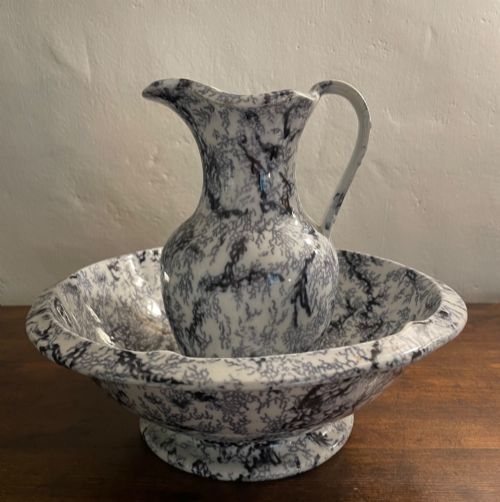
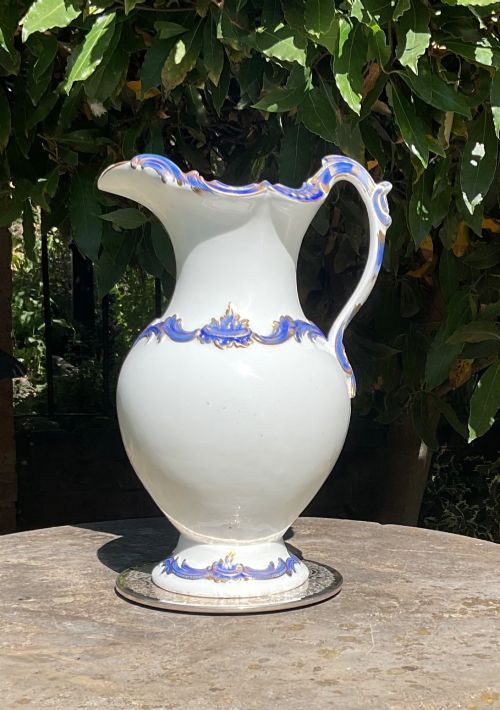
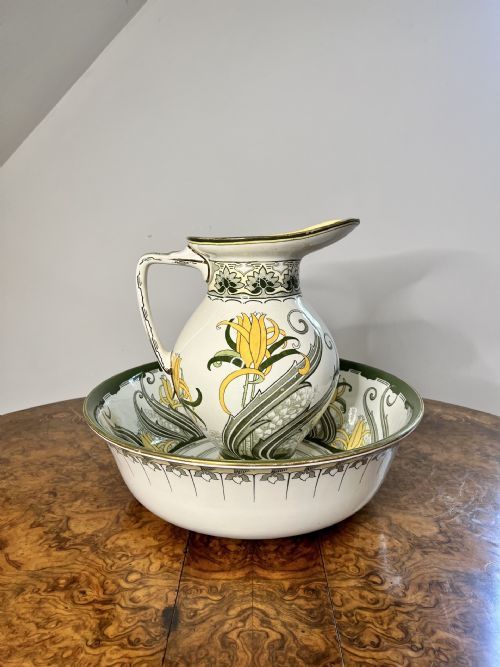
An antique washstand pitcher is a utilitarian ceramic vessel designed to hold washing water before indoor plumbing reached every bedroom. These pieces appear most frequently as part of larger washstand sets, jug and basin sets, or bathroom sets spanning the nineteenth century into the Edwardian era.
The forms range from large porcelain water jugs and octagonal basins down to miniature sets and footbath jugs. Makers produced these vessels to sit upon dedicated wooden wash or shaving stands alongside matching basins.
Examples on this page draw from periods including the Regency era, the Victorian decades, and the Edwardian years. Buyers encounter both plain utility earthenware and highly decorated ceramic statements.
How they were made
Potters shaped these vessels using earthenware, ironstone, and porcelain bodies, applying liquid glaze to seal the porous clay. Ironstone offered a heavier, more resilient structure suitable for daily washing duties, whilst porcelain permitted finer walls and smoother surfaces.
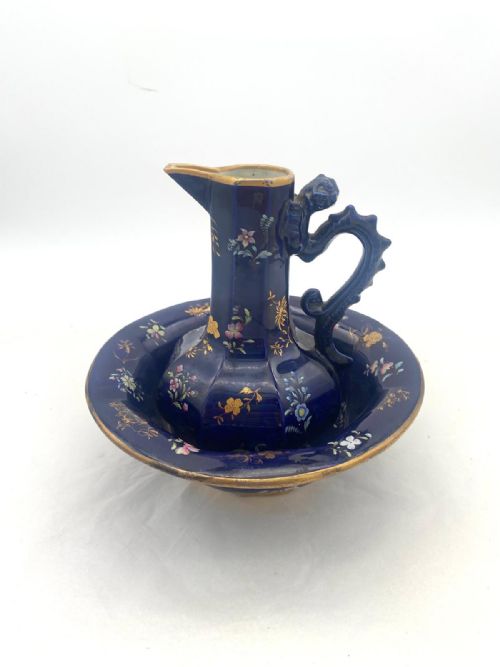
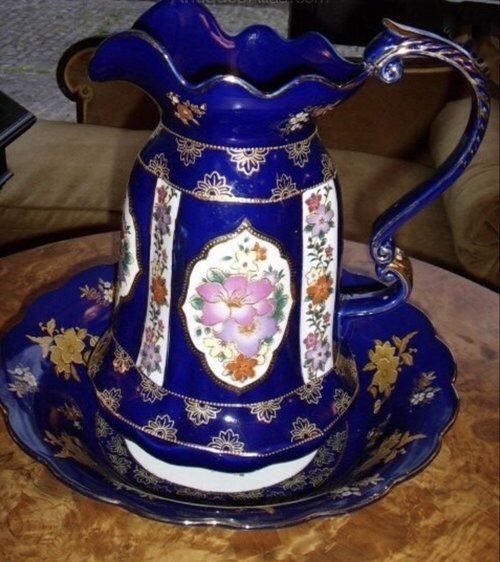
Makers decorated the surfaces using transfer printing, hand painting, and cobalt blue glaze, occasionally adding gilt or gold leaf highlights. Certain vessels received specific stylistic treatments such as flow blue transfer or Chinoiserie motifs before firing in kilns.
Listings feature periods spanning from the Regency era through Victorian and Edwardian times, utilising earthenware, ironstone, and porcelain.
What varies in quality
Quality rests upon the crispness of the transfer print, the depth of the glaze, and the refinement of the ceramic body itself. Thinner porcelain requires greater technical skill to fire successfully than thick earthenware.
The distinction between standard utility ware and top-tier pieces lies in the hand-finished details, such as gold leaf application, complex moulded octagonal forms, and the cohesive completeness of a matching basin set.
Doulton Burslem·Masons Ironstone·Minton·Shelley·Mark Jones and Sons
The Antique Washstand Pitcher Glossary
- Ironstone
- A heavy, durable type of earthenware patented in the nineteenth century. It resists chipping better than standard pottery and forms many large jugs.
- Flow blue
- A cobalt blue transfer printing technique where the colour intentionally bled slightly into the glaze during firing. This created a soft, hazy outline around the printed pattern.
- Transfer printing
- A method of applying detailed designs to ceramics using a paper or tissue transfer from an engraved copper plate. It allowed complex pictorial scenes to be repeated consistently.
- Chinoiserie
- A decorative style reflecting European interpretations of Chinese artistic traditions. It appears on ceramic sets through characteristic landscape and architectural motifs.
- Basin
- The large bowl paired with a pitcher to hold water for washing. Surviving together with the matching jug, it forms a complete set.
Antique Washstand Pitcher: Frequently Asked Questions
What is an antique washstand pitcher used for today?
These pitchers serve primarily as decorative items, holding dried flowers, utensils, or standing alone as sculptural ceramic objects.
Their substantial size and historic patterns allow them to function as striking focal points in hallways, bathrooms, or living spaces.
How do I clean an antique ceramic pitcher?
Wash the vessel gently using warm water and a mild, non-abrasive soap with a soft cloth. Avoid harsh scrubbing brushes that can scratch the aged glaze or rub away gilt highlights.
Take care around old hairline cracks or crazing, as soaking can drive moisture deep into the porous earthenware body beneath.
Did these pitchers always come with a matching basin?
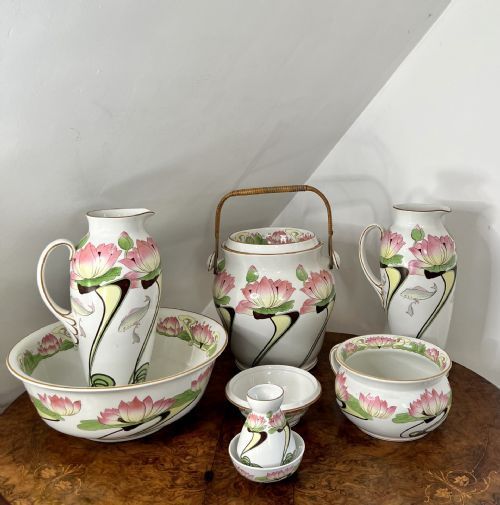
They were originally manufactured as companion pieces to large basins as part of a complete washstand setup. Over time, many basins suffered breakage, leaving pitchers to survive independently in collections.
Finding a complete set with both matching jug and basin remains a notable discovery for buyers.
How can I tell a Victorian pitcher from an Edwardian one?
Victorian pieces often display heavier ironstone bodies, deeper cobalt blue transfers, or elaborate aesthetic movement designs. Edwardian examples frequently lean towards lighter porcelain, softer floral patterns, and brighter white glazes.
Stylistic shifts reflect changing domestic tastes from the mid-nineteenth century into the early twentieth century.