


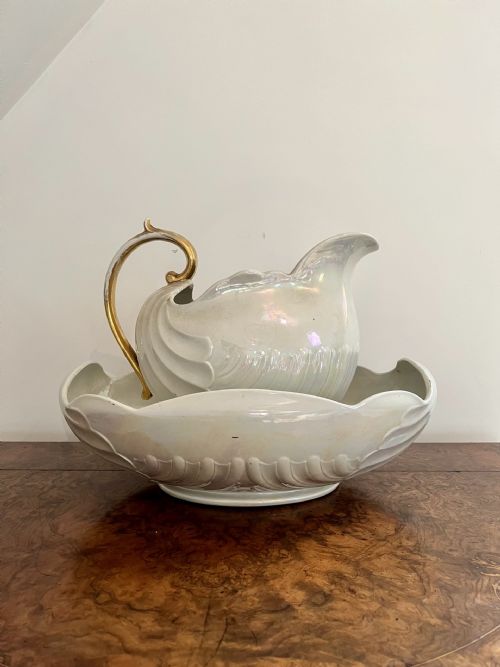


Porcelain Pitcher and Basin
A porcelain pitcher and basin set brings complete ceramic washware into a room, offering functional utility paired with decorative period charm.
Porcelain Pitcher and Basin
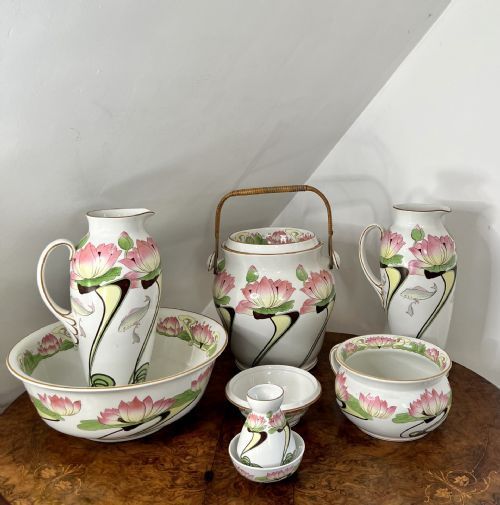
When you search for a porcelain pitcher and basin, you examine complete washware sets intended for domestic sanitation before indoor plumbing became universal. These items generally comprise a large jug or pitcher paired with a matching deep bowl, occasionally accompanied by smaller matching vessels.
The selections available on this page span from the Victorian and Edwardian eras into the early twentieth century. Most examples date from the nineteenth century up through the nineteen-thirties, reflecting traditional English craftsmanship and stylistic shifts from heavy Victorian ornamentation to lighter Edwardian designs.
Materials and Manufacture
Potters shaped these vessels using earthenware, ironstone, and porcelain, applying liquid glazes to create smooth, impermeable surfaces suitable for holding water. Ironstone provided a heavier, highly durable body, while finer porcelain yielded lighter, more delicate forms.
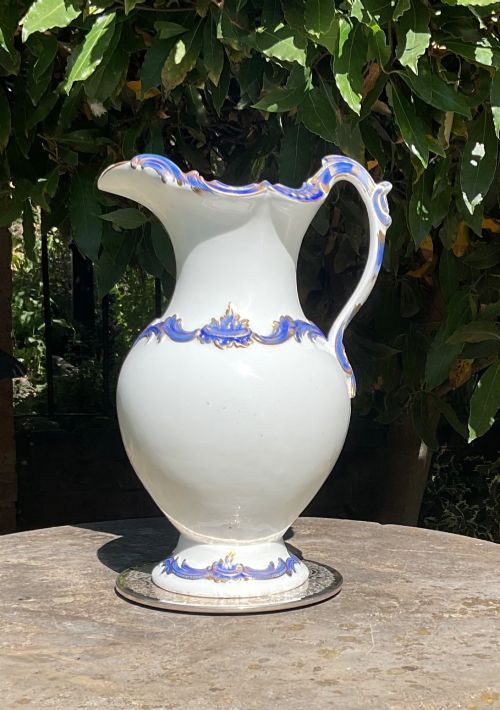
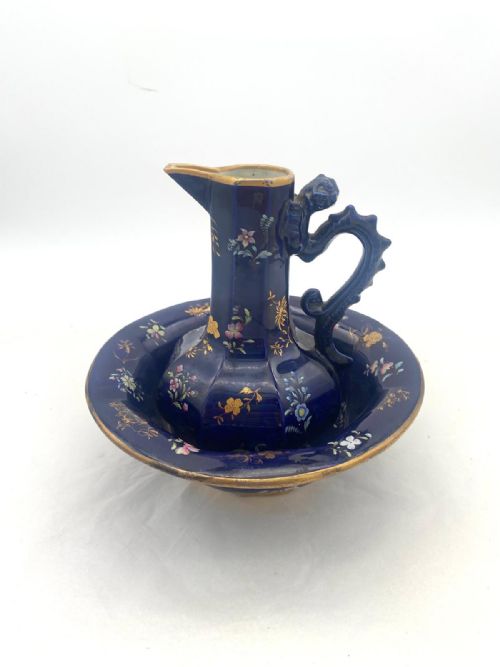
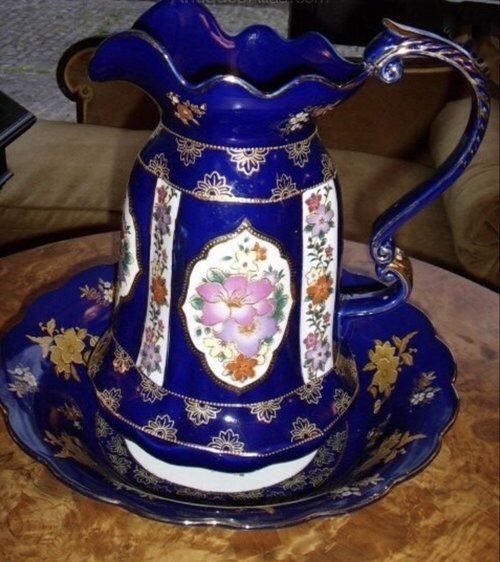
Decoration involved hand painting, cobalt blue glaze, enamel work, and the application of gold leaf or gilt details. Floral motifs and transfer printing defined the surface ornamentation across Victorian and Edwardian examples.
Some nineteenth-century makers included tiny miniature wash sets, perfect for dolls or meticulous salesmen to demonstrate their craft.
Factors That Distinguish Quality
Quality rests upon the crispness of the moulding and the finesse of the surface decoration, whether hand-painted flora or intricate cobalt blue glaze. Superior sets maintain precise alignment between the pitcher spout and the basin rim.
The preservation of delicate gilt accents and gold leaf without rubbing elevates the standing of a piece. Comprehensive sets that include multiple matching auxiliary vessels demonstrate higher production ambition than standalone jugs.
Masons Ironstone·Doulton Burslem·Royal Worcester·Shelley
The Porcelain Pitcher and Basin Glossary
- Ironstone
- A heavy, durable type of earthenware patented in the nineteenth century. It offered greater strength than standard pottery while retaining a fine white ceramic body.
- Gilt
- A thin layer of gold applied to the ceramic surface for decoration. It is often found highlighting handles, rims, and floral motifs.
- Washware
- Ceramic vessels designed specifically for personal washing and hygiene. These collections typically include large pitchers, basins, and slop buckets.
- Colbalt blue
- A deep blue metallic oxide pigment used under the glaze to create rich, durable patterns. It remained stable at high kiln temperatures.
- Chinoiserie
- A decorative style reflecting European interpretations of Chinese artistic traditions. It frequently appears in motifs on nineteenth-century ceramic sets.
Porcelain Pitcher and Basin: Frequently Asked Questions
What is a porcelain pitcher and basin used for?
These sets served as the primary washing station in bedrooms before running water and indoor plumbing became standard in homes. Users poured water from the pitcher into the basin for morning ablutions.
Today, collectors use them as decorative focal points in bathrooms, hallways, or bedrooms, often displaying dried flowers or utilising them for storage.
How do I date a wash set?
Dating relies on stylistic clues, ceramic body composition, and maker marks stamped on the underside of the base. Victorian sets often display heavier forms and ornate floral transfers, while Edwardian examples lean towards lighter aesthetics.
Materials also offer guidance, as heavier ironstone bodies dominate mid-nineteenth-century production, whereas finer porcelain gains prominence in later Edwardian and nineteen-thirties pieces.
Are these sets waterproof?
Most pieces retain their glazed ceramic integrity and can hold water safely for display or light functional use. However, historical glaze micro-fissures can sometimes develop over decades.
It is wise to test sets with cold water gently before filling them fully, ensuring no hidden hairline fractures allow moisture to seep through the ceramic body.
How do I display a basin and pitcher safely?
Displaying these sets requires a sturdy surface capable of supporting the combined weight of the heavy ceramic basin and pitcher. Placing the pitcher securely inside the basin prevents accidental tipping.
Keep them away from high-traffic household edges where dusting or movement might cause accidental knocks against the delicate handles or gilt rims.