



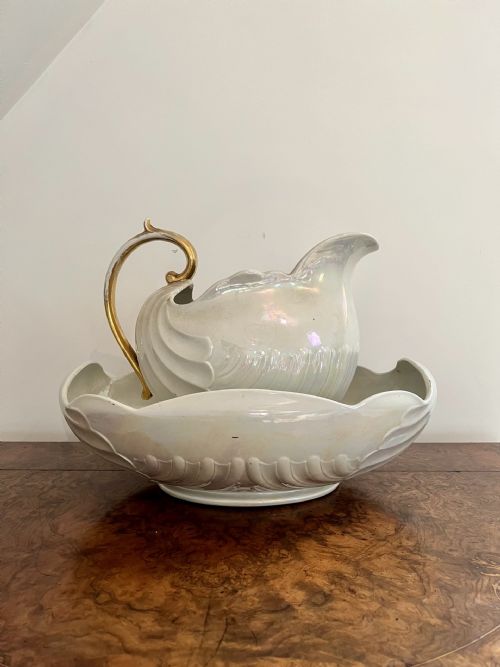
Vintage Porcelain Washstand Set
A vintage porcelain washstand set brings practical nineteenth and twentieth century washing vessels into modern interiors as decorative statements.
Vintage Porcelain Washstand Set
A vintage porcelain washstand set comprises matching jugs and basins designed for personal hygiene before plumbed bathrooms became standard. These groupings span nineteenth-century Victorian and Edwardian periods up to the early twentieth century.
Most examples encountered here take the form of a large wash pitcher accompanied by a matching deep basin. Makers produced these sets in earthenware, ceramic, ironstone, and glazed ceramic.
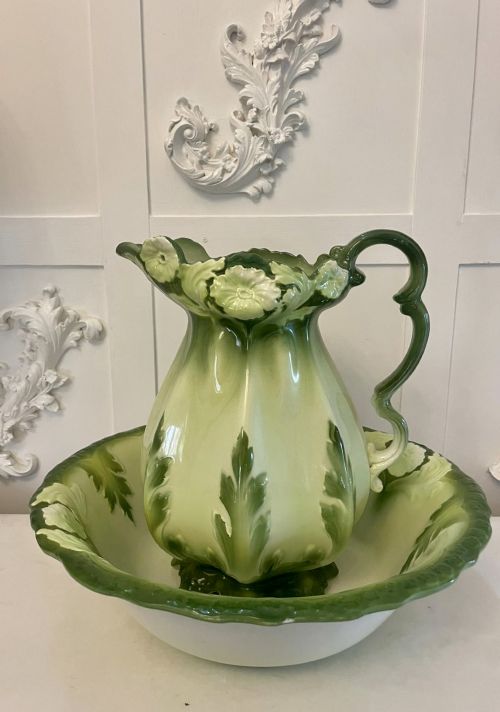
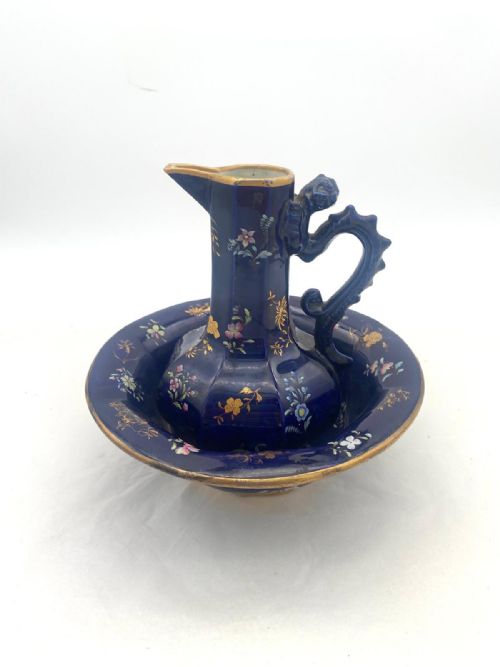
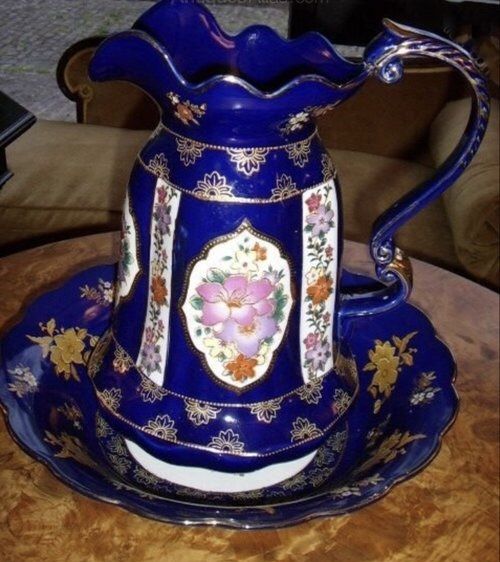
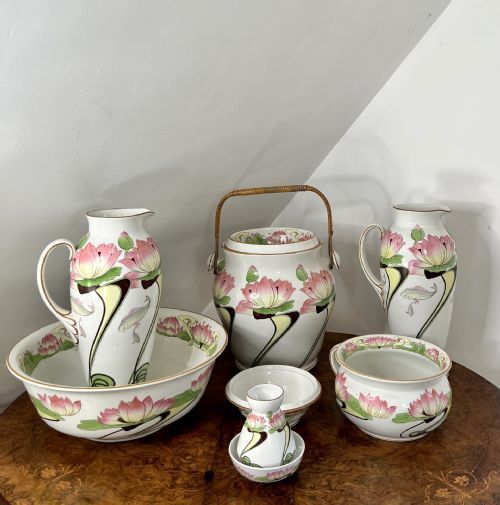
Stylistic influences range from classic Victorian and Edwardian aesthetics to Regency, Art Nouveau, and Victorian Chinoiserie. Cobalt blue glaze and floral patterns frequently appear across the listed items.
Materials and production methods
Potters shaped these vessels from ceramic bodies including ironstone and earthenware, finishing surfaces with durable glaze coatings. Cobalt glaze often provides the deep blue coloration seen on floral decorated pieces.
Certain ornamental sets incorporate gold leaf details to highlight moulded contours and patterns. Artisans fired these pieces to achieve impervious surfaces capable of holding water daily.
Vintage Porcelain Washstand Set Retail Price Guide 2026
Typical asking prices for vintage porcelain washstand set among the pieces listed under this phrase on Sellingantiques today, from the lower quarter to the upper quarter. They describe what is for sale here now, not the wider market.
Some Edwardian jugs still bear the faint scent of old lavender soap after more than a century of retirement.
Judging quality and craftsmanship
Quality rests upon the crispness of the moulding and the depth of the glaze application. Pieces from established makers display finer ceramic bodies and more controlled transfer printing or hand-painted details.
Design complexity distinguishes standard utilitarian washware from high-end decorative sets. Octagonal forms and specialised motifs like Chinoiserie demonstrate greater ambition from the pottery.
Masons Ironstone·Doulton Burslem·Shelley
The Vintage Porcelain Washstand Set Glossary
- Washstand set
- A matching group of sanitary vessels comprising a jug and a large bowl. These items sat on wooden washstands in bedrooms before indoor plumbing.
- Ironstone
- A dense, durable type of earthenware patented in the nineteenth century. It resists chipping better than soft paste porcelain while offering a smooth white surface for glazes.
- Cobalt glaze
- A metallic oxide colourant producing a deep, rich blue shade under high temperatures. It remains stable during firing, making it ideal for intricate underglaze painted patterns.
- Chinoiserie
- A European artistic style reflecting Chinese aesthetic traditions. This decorative approach appears on Victorian ceramics through orientalist motifs and landscapes.
Vintage Porcelain Washstand Set: Frequently Asked Questions
How were washstand sets used originally?
These sets provided the primary means for washing hands and face in domestic bedrooms before running water was installed. Water was poured from the jug into the bowl for morning routines.
Servants filled the pitchers from kitchen boilers or cold water taps. The large basin caught the used water, which was then emptied down slop sinks.
Where can I display a wash set today?
Complete sets make striking floor displays next to a fireplace or in a generous corner. The basin can hold dried florals or decorative items while the jug stands beside it.
Smaller rooms can accommodate the jug on a shelf while the bowl rests flat on a sturdy table surface. Keeping the pair together preserves the visual impact of the matching glaze.
How do I distinguish Edwardian from Victorian sets?
Victorian sets often feature heavier proportions, robust ironstone bodies, and deep cobalt blue or Chinoiserie decorations. Maker marks and registration numbers from this era follow nineteenth-century formatting conventions.
Edwardian sets frequently exhibit lighter pastel tones, softer floral compositions, and influences from Art Nouveau styling. The ceramic bodies tend toward thinner walled earthenware and refined porcelain.
Are these sets safe for daily use?
Historic ceramics feature glazes containing materials that do not meet modern food safety standards. They serve best as decorative display items rather than functional tableware.
Thermal shock from hot water can also imperil nineteenth-century glaze integrity. Gentle cleaning with mild soap and soft cloths preserves the original surface finish.