



Antique Wash Drawing Landscape
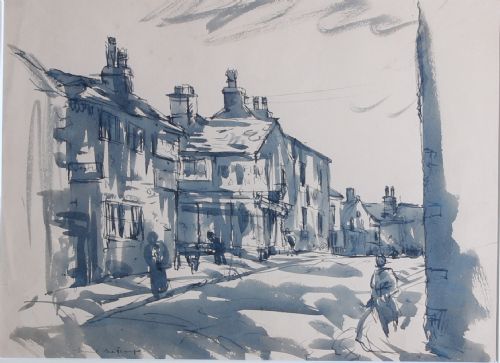
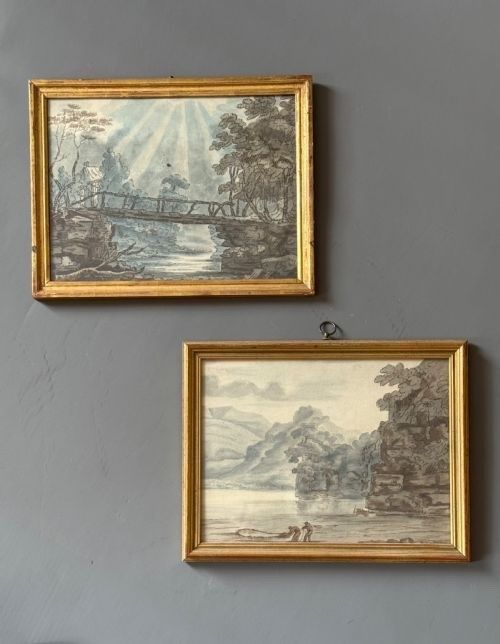
These antique wash drawing landscape pieces capture natural and urban scenery through ink and wash on paper.
Antique Wash Drawing Landscape
An antique wash drawing landscape is a work on paper utilising ink, watercolour, and wash to depict natural scenery, townscapes, and topographical views. When searching this phrase, buyers encounter original artwork spanning the eighteenth, nineteenth, and early twentieth centuries.
The selection includes framed artwork and paintings produced by British and European artists working in pastoral, Georgian, and modern styles. Subjects range from English lake district scenes and Yorkshire views to French lakes and Swiss lakeside studies.
Most pieces on this page originate from the Georgian and nineteenth-century periods, alongside examples from the nineteen-thirties and nineteen-forties. These original creations appear in mediums such as pen and ink, sepia wash, and pencil drawings.
How they were made
Artists created these works on paper using ink, wash, and watercolour applied with brushes and pens. Monochrome washes in sepia or grey established shadow and depth, sometimes supplemented by pencil or pen lines.
Finished works were typically mounted behind glass and housed within wooden frames, occasionally featuring gilt wood or gold leaf decoration. The combination of paper support and fluid drawing media required precise hand control from the maker.
Antique Wash Drawing Landscape Retail Price Guide 2026
Typical asking prices for wash drawing landscape among the pieces listed under this phrase on Sellingantiques today, from the lower quarter to the upper quarter. They describe what is for sale here now, not the wider market.
Cows, farmers, timber carts, and ancient olive trees share the same ink-stained paper universe.
What varies in quality
The distinction between standard works and superior examples lies in the expressiveness of the brushwork and the precision of the ink line. Skilled draughtsmanship captures light, distance, and atmospheric depth with economy of mark.
Material preservation also influences the piece, including the stability of the paper and the retention of tone in the ink and wash. Attribution to a recorded artist or a well-documented topographical subject elevates the historical interest of the work.
Edward Dayes·Amos Green·Fred Lawson·Peter Tillemans·Thomas Rowlandson·Thomas Monro·Thomas Lound
The Antique Wash Drawing Landscape Glossary
- Wash
- A technique where diluted ink, watercolour, or sepia pigment is applied across paper to create smooth areas of tone and shadow.
- Topography
- The detailed depiction of specific geographical locations, towns, or buildings in art.
- Staithe
- A landing stage or wharf by a river or canal, frequently featured in nineteenth-century British landscape drawings.
- Sepia
- A brown pigment derived from the ink sac of the cuttlefish, widely used for monochromatic wash drawings.
- Pastoral
- A style of art that idealises rural life and natural countryside scenery.
Antique Wash Drawing Landscape: Frequently Asked Questions
What is a wash drawing?
A wash drawing is a work on paper where an artist applies diluted ink or watercolour to build tonal depth and shadow.
This technique is often combined with pencil or pen line work to define topographical details and landscape forms.
How are these landscapes framed?
These works on paper are typically protected behind glass within wooden frames.
Some examples feature period frames ornamented with gilt wood or gold leaf.
What periods do these pieces date from?
The available selection spans from the eighteenth century through the Georgian and Victorian eras up to the nineteen-forties.
Earlier pieces often feature pen and ink with sepia wash, while twentieth-century examples include two-coloured ink line drawings.
Where do these landscape drawings originate?
The listings include works by British and European artists depicting scenes from England, France, and Switzerland.
Subjects range from local townscapes and rivers to broader mountain panoramas and lake views.