



Antique Warming Pan
An antique warming pan brings solid metal and turned wood from past centuries straight to the hearth, offering tangible history for daily display.
Antique Warming Pan
An antique warming pan is a traditional fireside piece designed to heat beds or warm liquids, appearing in forms ranging from full-sized bed heaters to small brandy warmers.
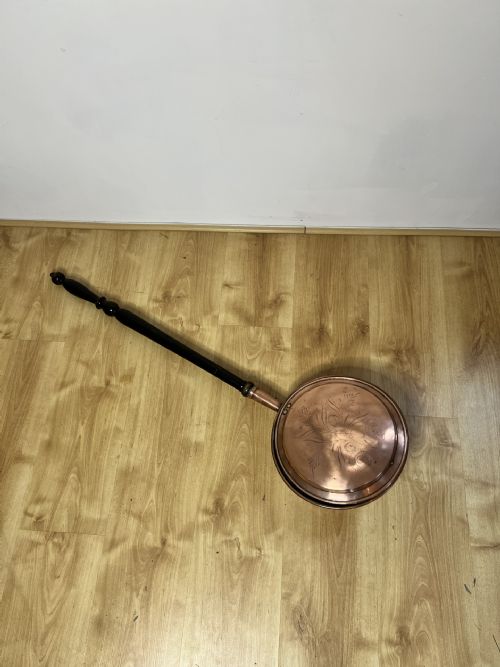
The versions most commonly met on this page are Georgian and Victorian copper or brass bed warming pans with long wooden handles, alongside smaller silver or copper brandy warmers.
Makers and craftsmen shaped these metal vessels across the eighteenth and nineteenth centuries, producing functional household items that now serve as decorative objects.
How they were made
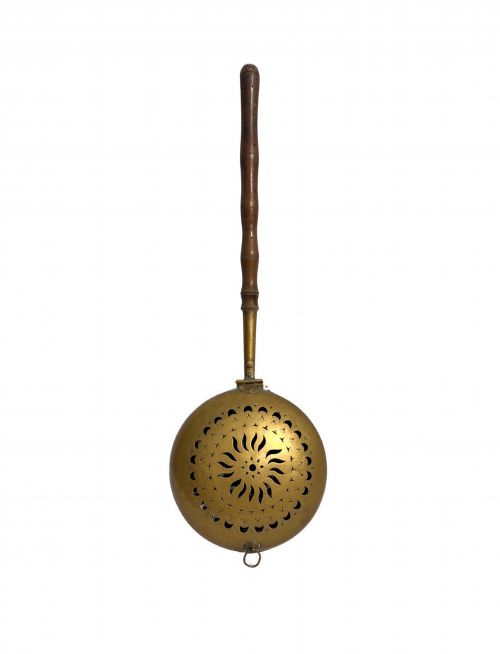
Smiths hammered sheet copper and cast brass to form the shallow pans and lids, often decorating the brass covers with hand-engraved or punched geometric and floral designs.
Turned wood handles in oak, walnut, or other timbers were attached via iron or brass mounts, providing a long reach for safety while holding hot coals.
Antique Warming Pan Retail Price Guide 2026
Typical asking prices for warming pan among the pieces listed under this phrase on Sellingantiques today, from the lower quarter to the upper quarter. They describe what is for sale here now, not the wider market.
Materials across these listings span copper, brass, silver plate, sterling silver, oak, and walnut.
What varies in quality
The depth of hand-engraving on the brass lid and the crispness of the hammered copper body separate standard utility pieces from finer examples.
The integrity of the original turned wooden handle and the quality of the metal joints determine the overall balance and preservation of the object.
Dan Holy·William Hutton and Sons
The Antique Warming Pan Glossary
- Bed warming pan
- A long-handled metal pan filled with hot coals and slid between bedsheets to warm the mattress before sleep. These typically feature a hinged, pierced lid to let heat escape safely.
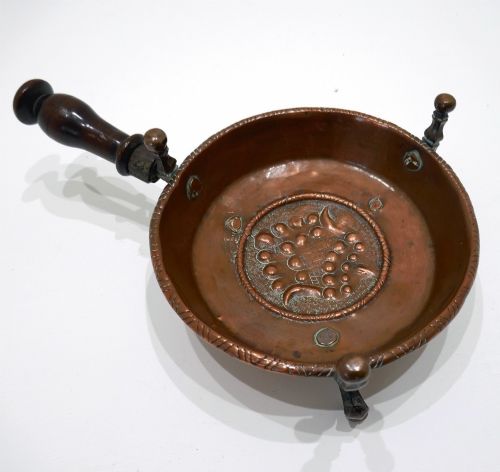
- Brandy warmer
- A small vessel with a short handle used for heating spirits or liquids near the fire. They appear in copper and miniature silver toy forms.
- Old Sheffield plate
- A composite material made by fusing a thin layer of silver to a thicker copper base, common in eighteenth and nineteenth-century tableware and serving dishes.
- Bain marie
- A heated water bath used in cooking to warm food gently or keep it warm. These metal containers sit on tables or stoves.
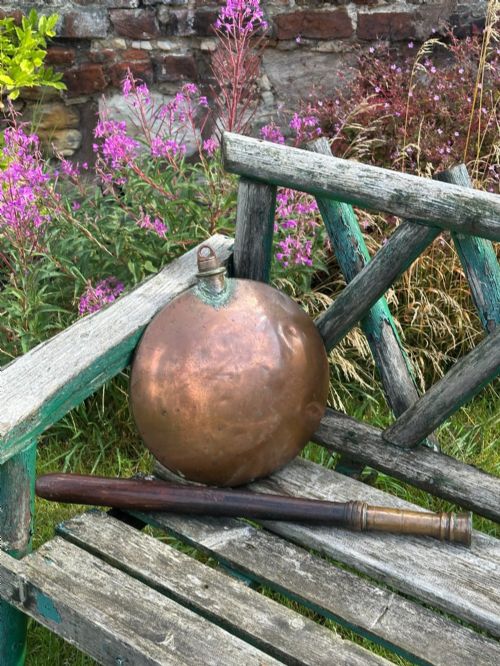
- Moon-shaped flask
- An unusual variant of a warming flask formed in a curved, crescent shape with a detachable wooden handle for fireside use.
Antique Warming Pan: Frequently Asked Questions
How did people use a warming pan?
A warming pan was filled with hot embers from the hearth, and the lid was securely closed. The user then swept the pan back and forth between the bedsheets to warm the mattress before nightfall.
The long wooden handle kept the user safely away from the heat and allowed the pan to reach across large beds without scorching the linen.
How do I clean antique copper and brass?
Dust the metal surfaces gently with a dry cloth to remove surface grit. Avoid harsh chemical polishes that strip away the aged patina accumulated over centuries.
Leaving a natural finish preserves the historic character of the metal rather than making it look artificially bright.
Where should I display my warming pan?
These pieces look best mounted near a fireplace, hung flat against a wall using a sturdy bracket, or stood upright in a traditional hearth setting. Their long handles make them natural focal points in a room.
Ensure the wall fixings can take the weight of the metal pan and wooden handle securely.
How do I tell an 18th-century pan from a later one?
Eighteenth-century examples often feature hand-beaten copper bodies with deep, hand-engraved brass lids showing floral or geometric motifs. The iron fixings and turned wood handles show distinct hand-tool marks.
Nineteenth and twentieth-century versions tend to have more uniform machine-rolled sheet metal and simpler stamped rather than engraved decoration.