




Antique Wardrobe Suite
An antique wardrobe suite delivers matched elegance to a bedroom, combining large hanging storage with coordinating dressing pieces.
Antique Wardrobe Suite
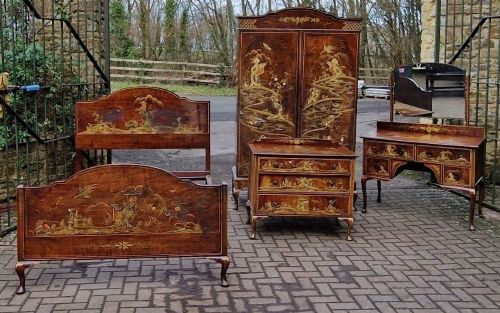
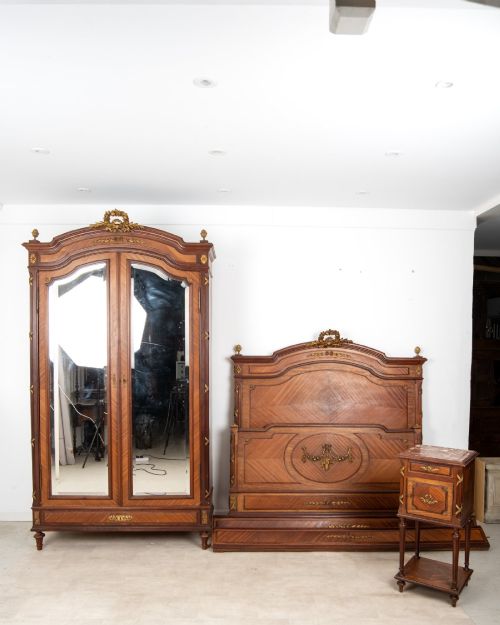
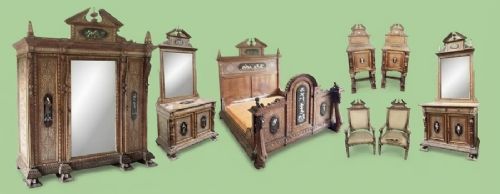
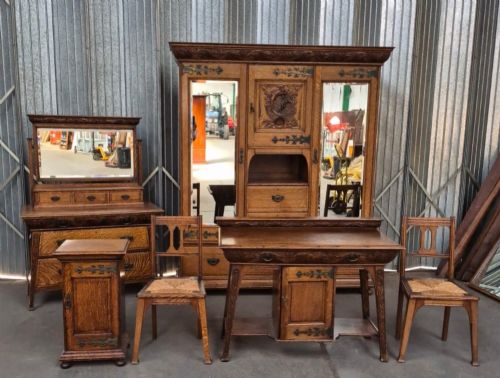
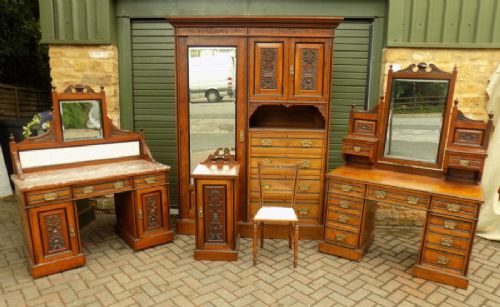
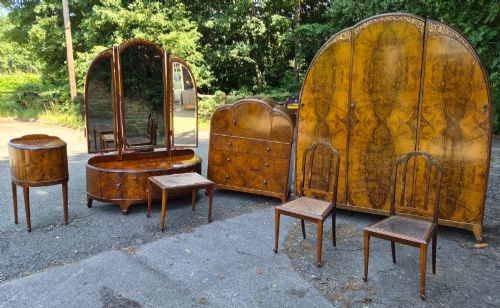
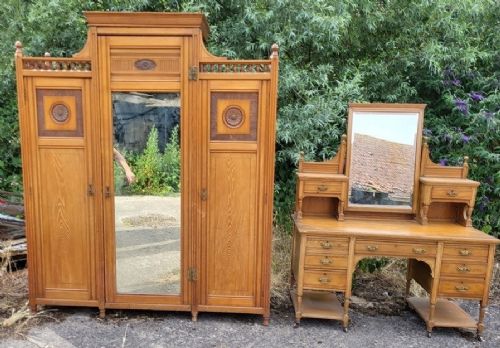
An antique wardrobe suite provides a complete bedroom furnishing scheme, bringing together a large wardrobe with matching items such as dressing tables, bedside cabinets and beds. These collections span the Victorian, Edwardian and Art Deco eras, alongside revival periods like French Louis XVI and Empire styles.
Materials and construction methods
Cabinet makers utilised solid timbers and applied veneers, often selecting burr walnut, figured birch, oak and mahogany to create striking grain patterns on large wardrobe doors and drawer fronts. Marquetry inlay, brass hardware, bevelled glass mirrors and marble tops frequently completed the construction of these substantial bedroom pieces.
Traditional joinery techniques governed the assembly of carcases, panelled doors and drawers, ensuring structural stability across heavy wardrobes and matching pedestal dressing tables. Surface finishes relied on hand-applied polish, wax or ebonisation to highlight the natural qualities of the selected timber.
Antique Wardrobe Suite Retail Price Guide 2026
Typical asking prices for wardrobe suite among the pieces listed under this phrase on Sellingantiques today, from the lower quarter to the upper quarter. They describe what is for sale here now, not the wider market.
Listings for this phrase feature pieces spanning from the eighteen-eighties through to the nineteen-thirties, covering Victorian, Edwardian, Arts and Crafts, and Art Deco styles.
Defining factors of quality
The standard of an antique wardrobe suite depends upon the selection of timber veneers, the precision of marquetry inlay and the sophistication of the carved or moulded detailing. Sets featuring rarer woods like satinwood or burr walnut, or those bearing the mark of notable makers, represent the finer end of the scale.
Cohesion across the multi-piece suite dictates its overall success, where matching grain patterns, original brass or ormolu mounts, and intact bevelled glass or marble elements maintain the integrity of the original design.
Waring & Gillows·Shapland & Petter·Lamb of Manchester·Heals·B Cohen & Sons
The Antique Wardrobe Suite Glossary
- Compactum
- A large wardrobe featuring multiple internal compartments, drawers, and hanging space designed to hold a complete gentleman's or lady's attire. This versatile storage form often serves as the anchor piece in an antique bedroom suite.
- Marquetry
- The art of applying decorative pieces of veneer to a structure to form intricate geometrical patterns or pictorial designs. Makers utilised contrasting woods to enrich the visual depth of wardrobe doors and drawer fronts.
- Breakfront
- A cabinet design where the central section projects forward from the flanking outer wings. This architectural arrangement adds depth and shadow play to large wardrobes.
- Ormolu
- Gilded bronze ornamentation applied to furniture for decorative effect. This technique appears frequently on French revival pieces from the nineteenth century.
- Ebonisation
- A chemical or staining process applied to timber to imitate the dark, dense appearance of ebony. Victorian cabinet makers used this finish to create high-contrast surfaces alongside marquetry inlay.
Antique Wardrobe Suite: Frequently Asked Questions
What pieces comprise a standard antique wardrobe suite?
An antique wardrobe suite typically centres around a large wardrobe accompanied by a dressing table and washstand or bedside cabinet. Larger sets may also include matching beds, chest of drawers and chairs.
Buyers should examine the specific piece count in each listing to understand the exact configuration offered by the dealer.
How do I fit a large antique wardrobe into a modern home?
Many large wardrobes and compactums from the Victorian and Edwardian periods were constructed with knockdown carcases or removable cornice and plinth sections. This modular design assists with transport and room placement.
Checking internal ceiling heights and stairwell clearances before delivery ensures the large pieces of the suite will reach their intended bedroom location.
How can I tell Art Deco suites from Victorian sets?
Art Deco wardrobe suites from the nineteen-twenties and thirties favour streamlined geometric forms, symmetrical burr walnut veneers and minimal ornamentation. In contrast, Victorian sets display heavier mouldings, carved details, rich ebonisation or elaborate marquetry.
The use of limed oak and stylised geometric marquetry points distinctively toward the later twentieth-century modernist transition.
How should I care for polished wood surfaces on a suite?
Maintaining the finish on these furniture pieces requires dusting with a soft cloth and avoiding silicone-based polishes that build up over time. Natural beeswax applied sparingly helps nourish antique wood surfaces.
Keeping the suite away from direct sunlight and radiators prevents the solid timbers and delicate veneers from drying out or splitting.