
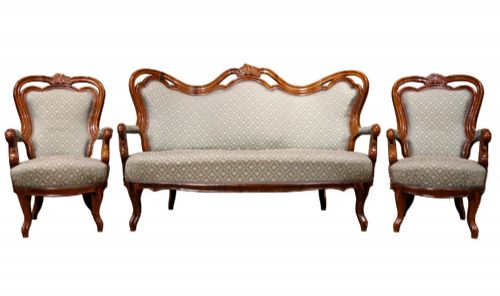


Antique Walnut Suite
An antique walnut suite brings matching elegance to a room, spanning formal Victorian salons to streamlined Art Deco dining spaces.
Antique Walnut Suite
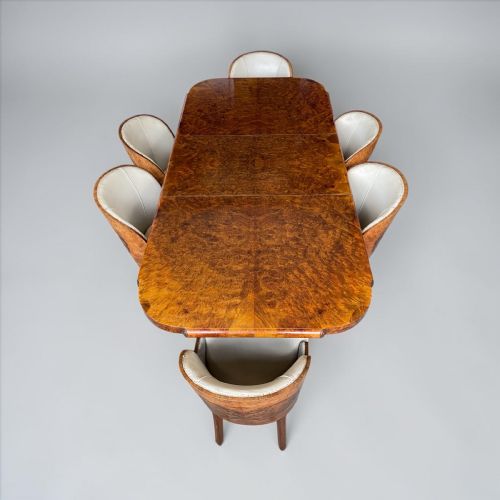
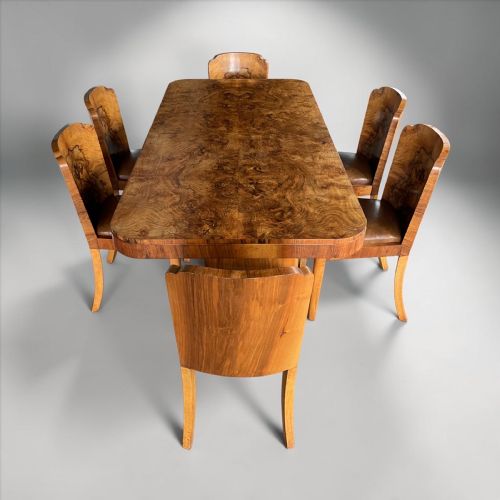
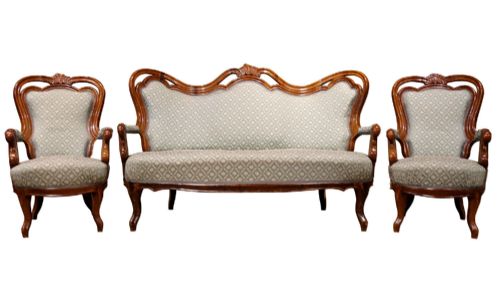
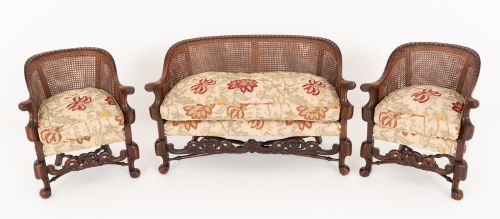
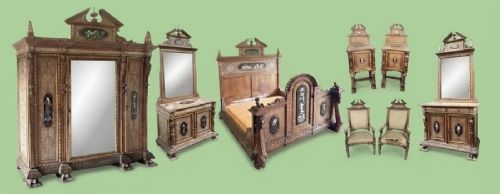
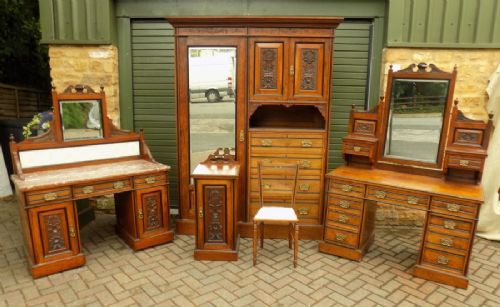
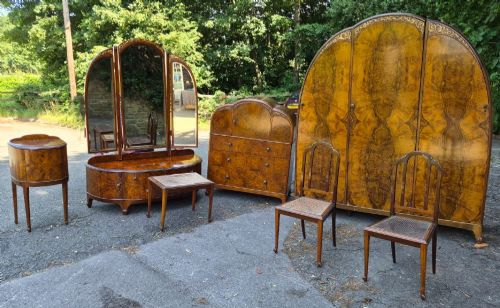
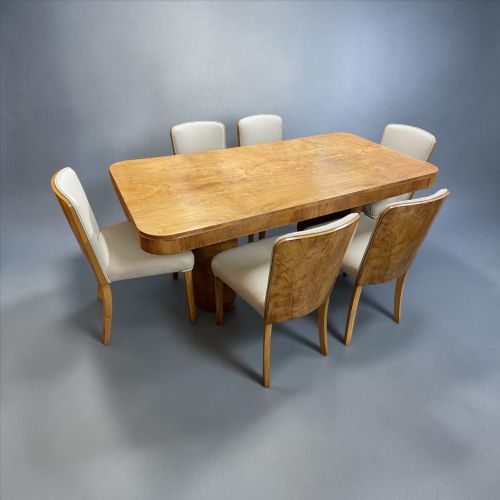
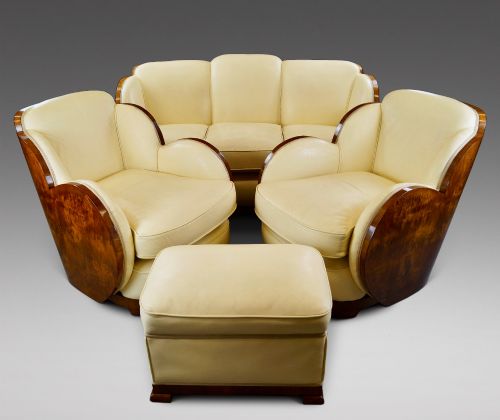
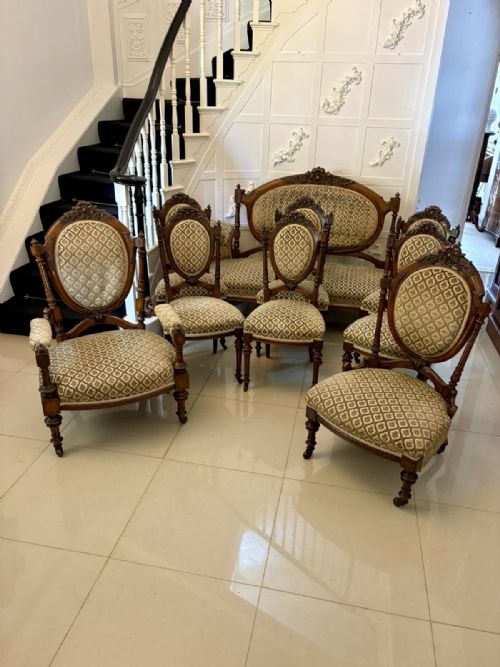
An antique walnut suite consists of coordinated groupings of furniture designed for specific rooms, including salons, bedrooms, and dining spaces. These assemblages range from compact three-piece parlour settings comprising a settee and a pair of armchairs to extensive dining and bedroom suites containing tables, chairs, wardrobes, and bedside cabinets.
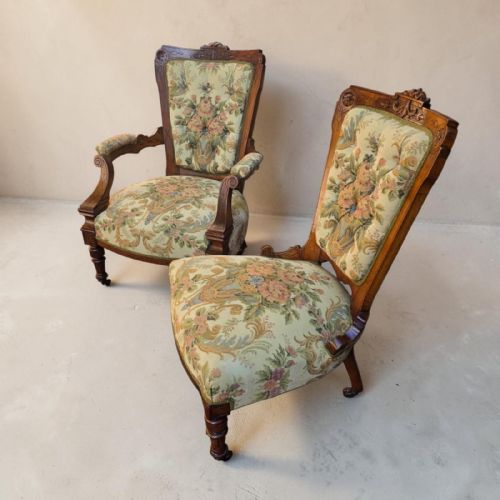
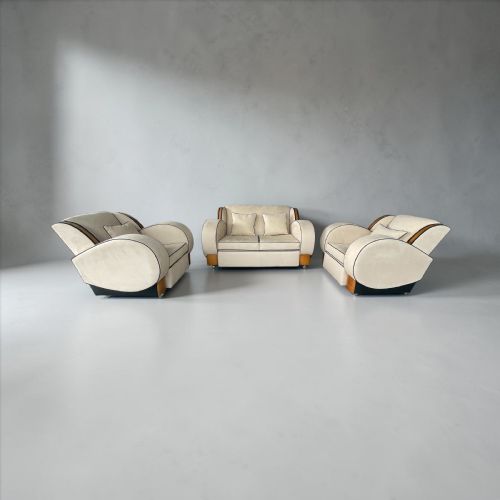
The selections encountered on this page encompass various periods, predominantly stretching from the nineteenth century through the Edwardian era into the Art Deco period of the 1930s. Styles span from revivalist interpretations like Queen Anne, Louis XV, and Empire to streamlined modernism.
Buyers seeking an antique walnut suite will find configurations tailored to domestic life, whether for seating guests in a drawing room or furnishing a complete sleeping chamber.
Materials and construction techniques
Craftsmen utilised solid walnut and burr walnut veneers, applying figured sections to prominent surfaces such as wardrobe doors, tabletops, and headboards to highlight the natural grain patterns.
Upholstered elements incorporate traditional fabrics, leather, velvet, and textiles, often paired with cane panels in bergere seating arrangements. Secondary materials such as brass fittings, marble tops on bedside cabinets, and marquetry detailing complement the primary timber.
Some Art Deco suites sport cloud-shaped silhouettes that make even a serious bedroom look ready to float away.
Distinctions in quality and execution
The calibre of an antique walnut suite depends upon the depth of the carving, the symmetry and richness of the burr walnut figuring, and the integrity of the original matching components. Sets originating from known workshops or exhibition-grade commissions demonstrate superior joinery and material selection compared to standard commercial outputs.
Cohesion across the ensemble defines the higher tier, where matching grain patterns, consistent patination, and unified upholstery unite the separate pieces into a harmonious interior scheme.
Maurice Adams·Waring & Gillows·Frank Taylor & Co.·Harry and Lou Epstein·Epstein·Lamb of Manchester·Shoolbred·Gillow·M. P. Davis Furniture of London·Warring & Gillow
The Antique Walnut Suite Glossary
- Burr walnut
- A specialised timber cut from the wart-like growths on walnut trees, yielding intricate, swirling grain patterns highly prized for cabinet fronts.
- Bergere
- An enclosed upholstered armchair or sofa with wooden frames, frequently featuring cane sides or backs.
- Compactum
- A multi-functional wardrobe combining hanging space with internal drawers, shelves, and shoe compartments.
- Marquetry
- Decorative veneer work arranged in pictorial or geometric patterns using various woods applied to furniture surfaces.
- Salon suite
- A matched set of reception room seating, typically comprising a small settee alongside companion armchairs.
Antique Walnut Suite: Frequently Asked Questions
How do I care for antique walnut furniture?
Maintain walnut surfaces by dusting regularly with a soft, dry cloth and avoiding placement near direct heat sources or strong sunlight, which can dry out the timber and fade the finish.
Apply high-quality beeswax sparingly when the wood appears dry, buffing gently to preserve the natural lustre of the grain without building up heavy residues.
What rooms suit an antique walnut suite?
These matched sets adapt well to both period and contemporary interiors, providing immediate functional coherence to bedrooms, formal dining rooms, and sitting areas.
Larger configurations can anchor a principal bedroom or dining space, while smaller three-piece salon settings fit comfortably into studies or drawing rooms.
How can I identify Art Deco walnut suites?
Art Deco suites, frequently emerging from the 1920s and 1930s, display geometric silhouettes, cloud-shaped forms, and bold black walnut or burr walnut veneers without traditional revivalist ornamentation.
They often incorporate contrasting materials like leather upholstery and are associated with specific makers such as Epstein and Maurice Adams.
What is the difference between Victorian and Edwardian suites?
Victorian walnut suites generally feature heavier proportions, elaborate hand-carved ornamentation, and deep button upholstery in styles reflecting Rococo or Renaissance revivals.
Edwardian examples tend to introduce lighter forms, including Chinoiserie decoration, satinwood stringing, and airy cane bergere construction.