

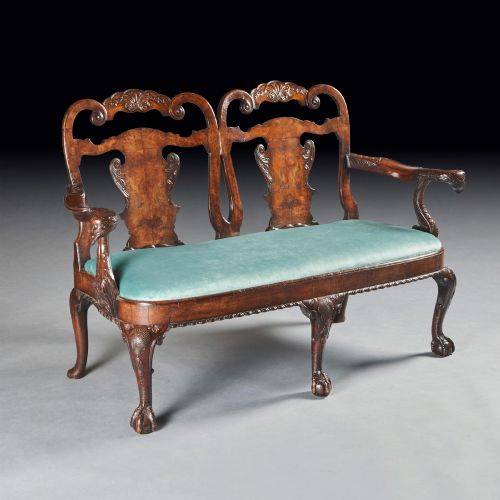


Antique Walnut Loveseat
An antique walnut loveseat offers compact two-seater seating carved from rich timber, bringing period character and warm grain directly into a modern sitting room.
Antique Walnut Loveseat
An antique walnut loveseat represents a compact two-seater sofa built from walnut timber, appearing across styles from the eighteenth century to the twentieth century. These pieces encompass forms described variously as settees, small sofas, and canapés designed for intimate seating.
The selection here draws heavily on Victorian productions alongside revival pieces referencing Queen Anne and French Louis styles. Makers utilised walnut frames to support upholstered seats, cane panels, and textile coverings tailored for polite drawing rooms.
How they were made
Frames rely upon solid walnut timbers, sometimes bleached or intricately carved with Rococo curves and traditional joinery. Artisans shaped structural supports through turning or hand-carving to achieve substantial weight and stable proportions.
Upholstery relies upon traditional textiles, fabric, velvet, and leather fixed across sprung or padded seat decks. Caning appears on select panels, woven meticulously through drilled holes in the walnut framing.
Antique Walnut Loveseat Retail Price Guide 2026
Typical asking prices for walnut loveseat among the pieces listed under this phrase on Sellingantiques today, from the lower quarter to the upper quarter. They describe what is for sale here now, not the wider market.
Materials documented across the inventory include solid walnut, cane panels, leather, and various textile upholstery fabrics.
What varies in quality
The refinement of the carving separates standard joinery from superior cabinet work, particularly where flourishes articulate the crest rail and arms. Crisp detail in floral or scroll motifs indicates skilled hand execution rather than mechanical shaping.
The choice of timber grain and the integrity of the underlying frame construction define the overall calibre. High-grade examples maintain tight joints and rich figuring in the walnut veneer or solid timber surfaces.
The Antique Walnut Loveseat Glossary
- Canapé
- A traditional French settee or small sofa featuring an upholstered back and seat within an exposed wooden frame. These pieces often exhibit carved rails and cabriole legs.
- Cabriole leg
- A furniture leg that curves outward at the knee and tapers inward toward the foot, mimicking animal limbs. This form frequently appears on revival pieces referencing earlier eras.
- Cane
- Strips of rattan or bamboo woven into an open mesh pattern to form backrests or seat panels. This technique lightens the visual weight of heavy wooden furniture.
- Crest rail
- The uppermost horizontal member of a chair or settee back. Carvers frequently decorated this area with shells, scrolls, or floral motifs.
Antique Walnut Loveseat: Frequently Asked Questions
How do I clean the walnut frame?
Maintain the polished timber by wiping surfaces gently with a soft, dry cloth to remove dust. Avoid harsh chemical sprays that can strip the historic finish.
Nourish dry wood periodically using a traditional beeswax polish applied sparingly and buffed thoroughly with a clean cloth.
Can these small sofas fit modern rooms?
These compact two-seater settees suit smaller spaces, bedroom seating, or narrow hallways where standard sofas prove too bulky. Their modest proportions offer functional seating without dominating a room.
Measure available floor space carefully, accounting for the outward curve of cabriole legs and open arms before positioning the piece.
What is the difference between a settee and a sofa?
Historical terminology often blurs these definitions, though settees traditionally feature exposed wooden frames and lighter proportions than fully upholstered sofas. Both terms describe multi-person seating used in formal parlours.
Examining the proportion of exposed timber versus upholstered surface helps distinguish between these overlapping historical categories.
How do I identify the period of a walnut settee?
Dating relies upon stylistic cues, such as Queen Anne cabriole legs, Victorian button upholstery, or Arts and Crafts simplicity. Construction methods visible beneath the frame also offer clues to the era of manufacture.
Compare the secondary timbers and joinery techniques against known historical timelines to narrow down the probable decade of creation.