
Antique Walnut High Chair
An antique walnut high chair brings substantial dark timber and historic seating design directly into domestic interiors.
Antique Walnut High Chair
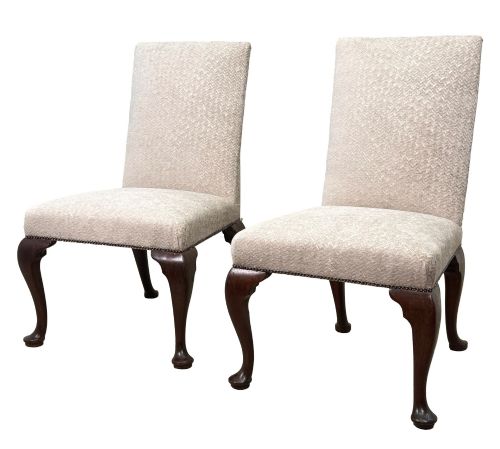
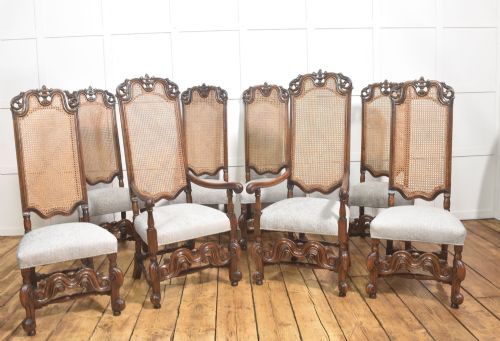
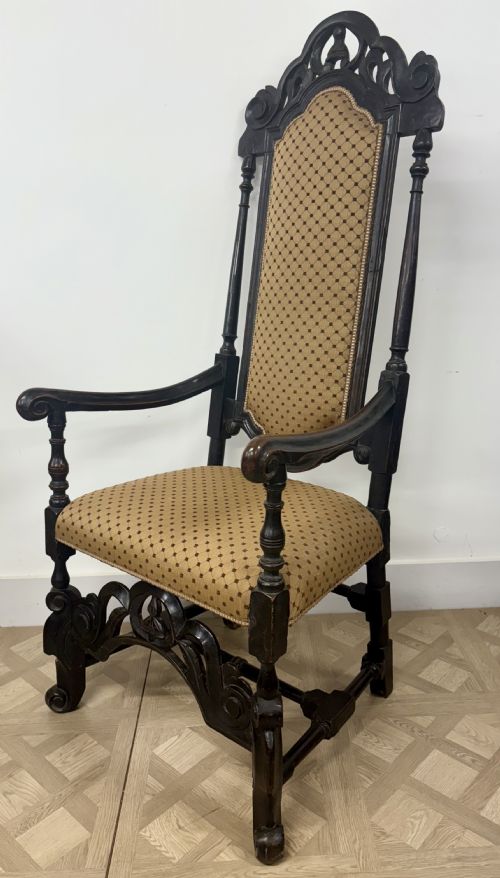
An antique walnut high chair encompasses elevated seating formats, ranging from diminutive child's examples to imposing high-back dining chairs produced across several centuries. The selections span seventeenth-century origins through to Victorian revivals, incorporating stylistic influences from Carolean, Baroque, and Queen Anne periods.
Most examples appearing in current inventories lean toward nineteenth-century interpretations or earlier high-back dining suites utilising rich timber frames. These pieces frequently integrate elaborate carved elements, turned supports, and upholstered panels rather than simple utilitarian forms.
Materials and construction methods
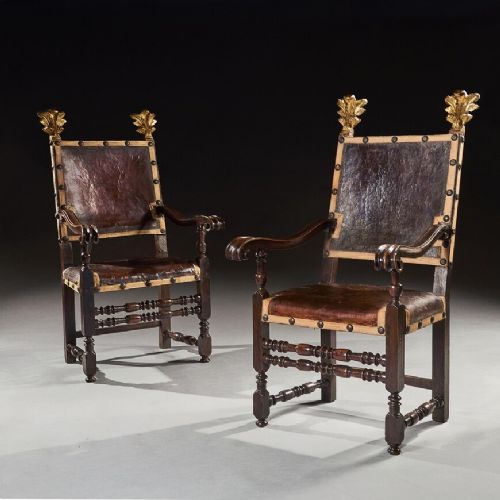
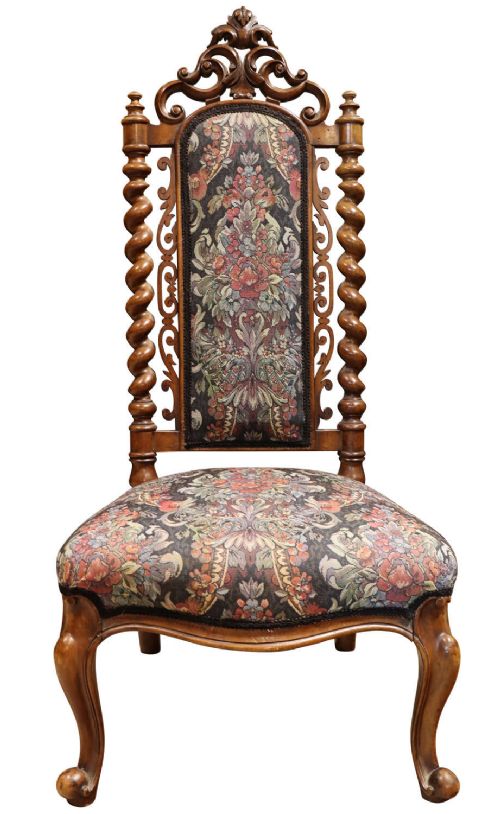
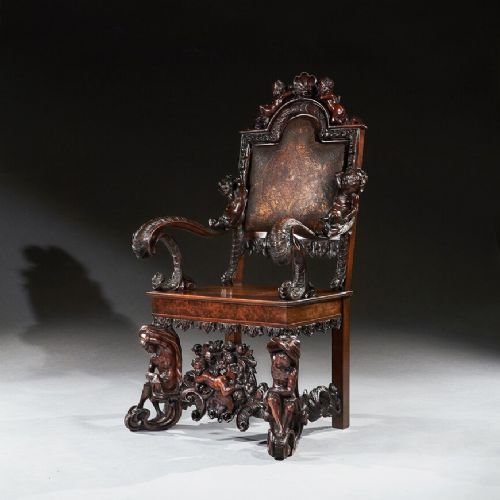
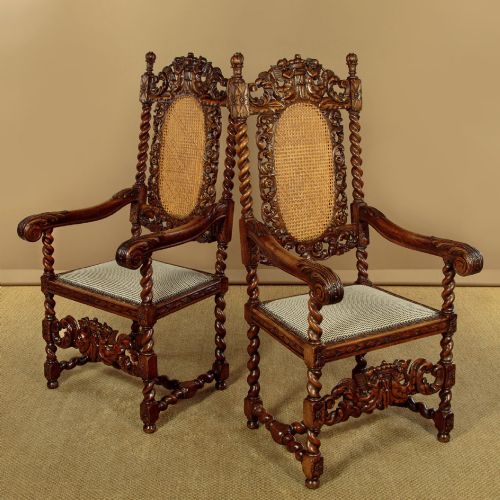
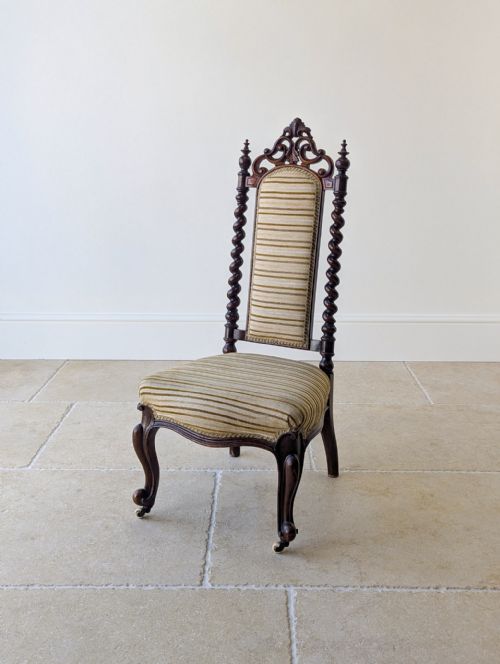
Makers utilised dense walnut timber for structural frames, frequently embellishing surfaces with deep relief carving, parcel-gilding, or barley twist turnings. The underlying woodwork relies on traditional joinery methods to support upright proportions and high-backed profiles.
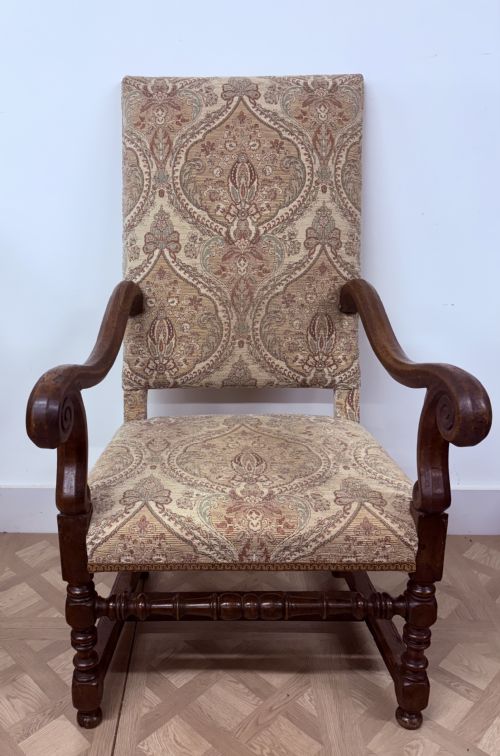
Upholstery techniques incorporate period textiles such as leather, velvet, tapestry, needlework, and cane work secured with brass detailing. These materials are integrated directly into the wooden framework to provide structured seating support.
Current selections span seventeenth-century origins through to Victorian revivals, incorporating walnut, cane, leather, and tapestry materials.
Factors distinguishing quality grades
Quality differences emerge through the crispness of timber carving, the selection of figured walnut veneers, and the integrity of original frame construction. Superior pieces display harmonious proportions and meticulous attention to structural detail across turned supports and high crest rails.
The refinement of secondary materials, including embossed leather, hand-woven cane, or period textile covers, elevates individual examples. Artisanal execution in stylistic revivals determines whether a piece achieves standard commercial utility or exhibition status.
Howard And Sons·Andrea Brustolon·Daniel Marot
The Antique Walnut High Chair Glossary
- Barley twist
- A turned wooden furniture element resembling a spiralling rope, frequently utilised on legs and stretchers of seventeenth and nineteenth-century seating.
- Parcel-gilt
- A decorative technique where specific carved portions of a walnut frame receive a thin application of gold leaf while the remaining timber stays exposed.
- Caning
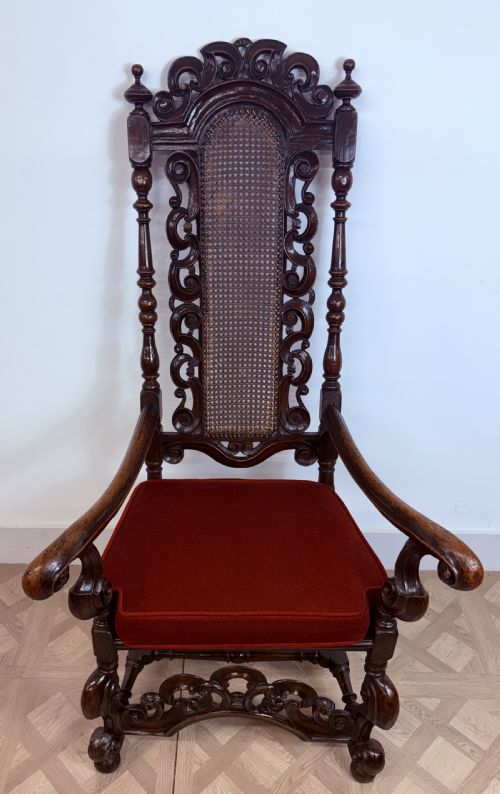
- A woven lattice pattern created from split rattan or cane strips, commonly inserted into the backs and seats of historic chairs for lightweight rigidity.
- Fauteuil
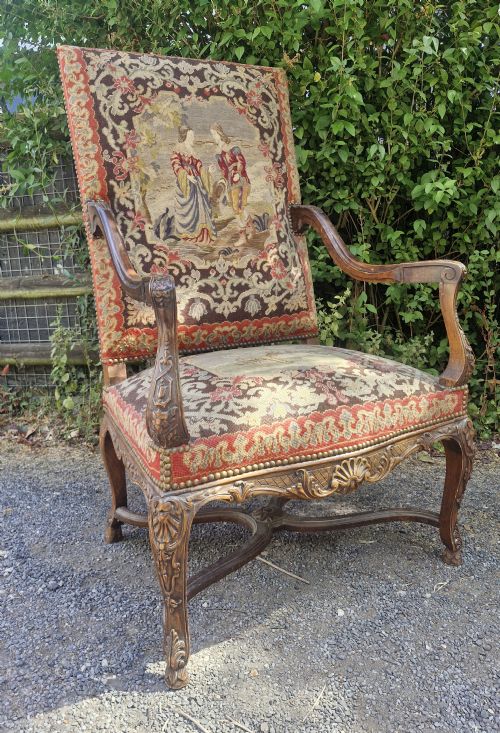
- An open-armed French upholstered armchair featuring exposed wooden framing around the backrest and arm supports.
- Wing armchair
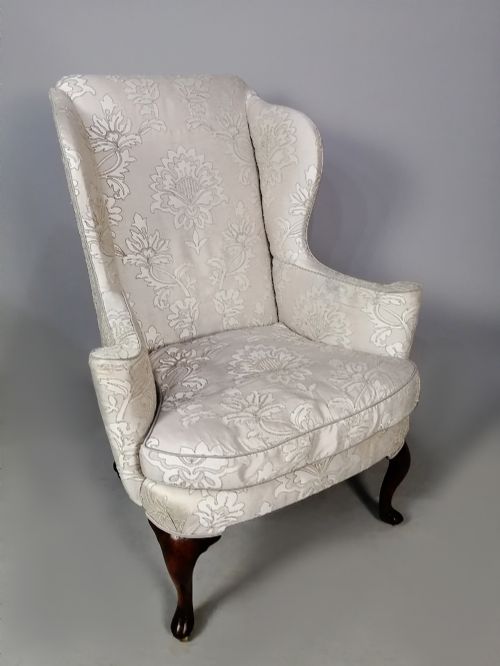
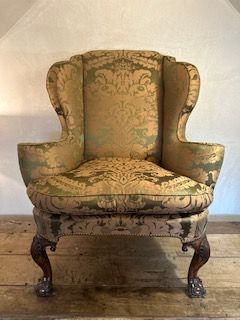
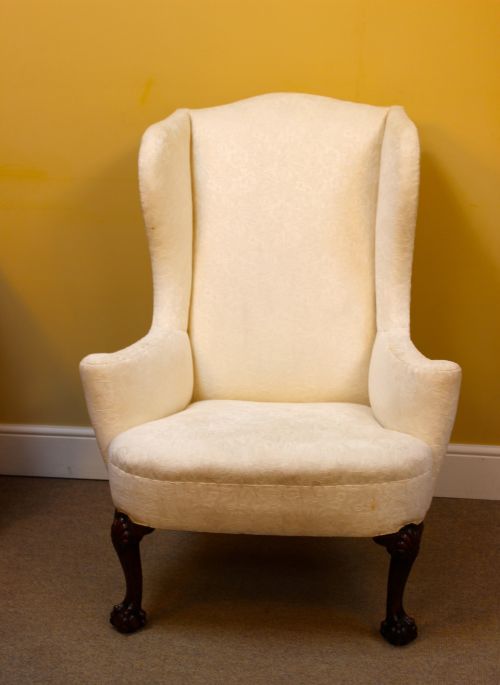
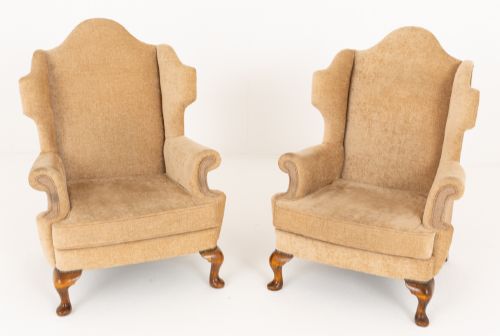
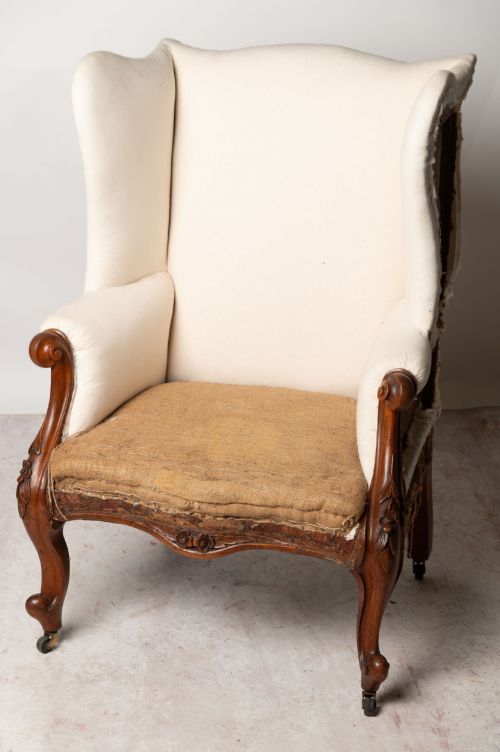
- A high-backed seat featuring upholstered side panels designed to shield the occupant from drafts and retain fireplace heat.
Antique Walnut High Chair: Frequently Asked Questions
How do I date an antique walnut high chair?
Dating relies on observing structural joinery, the style of turning on legs and stretchers, and the specific profile of the carved crest rail. Seventeenth-century forms show distinct linear austerity compared to nineteenth-century revival interpretations.
Secondary indicators include the type of upholstery foundation, wood patination, and tool marks left by historical workshops during assembly.
Were these chairs used for children?
The term covers both elevated dining seats intended for adults and dedicated child's seating fitted with safety bars or high platforms. Reviewing overall dimensions clarifies whether a piece served a domestic child's nursery or formal dining duties.
Victorian nursery pieces often feature smaller proportions combined with sturdy footrests and protective side enclosures.
How should I care for walnut and cane?
Walnut timber benefits from occasional application of microcrystalline wax to nourish the grain and protect historic patination from dry environments. Avoid placing wooden furniture near direct heat sources to prevent timber splitting.
Caned panels require gentle dusting and occasional light moisture to maintain flexibility in the woven rattan fibres.
What defines the Carolean style?
Carolean furniture reflects the decorative tastes of the reign of Charles II, characterised by lavishly carved scrollwork, crown motifs, and cane panels. Walnut became the favoured timber during this era for its ability to hold intricate carved detail.
Later Victorian revivals replicated these specific flourishes, employing heavy frames and elaborate pierced splats.