



Edwardian Balloon Back Seat
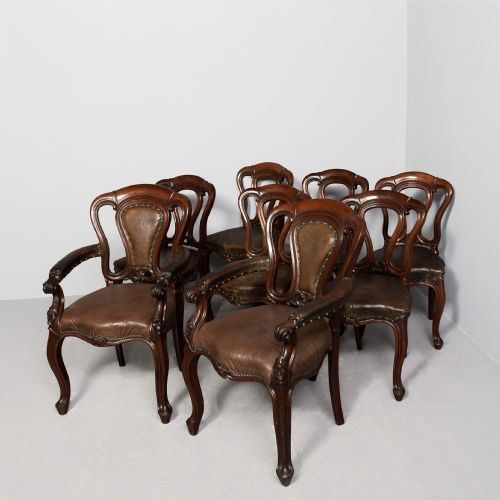
These edwardian balloon back seat designs combine sturdy timber frames with shapely profiles, offering both reliable daily seating and classic period presence.
Edwardian Balloon Back Seat
The evidence shows pieces spanning multiple eras, from the 1850s and 1860s through the 1890s, alongside Victorian and Edwardian style classifications. While some examples appear as single items or pairs, larger sets of four, six, eight, or ten chairs also feature in the listings.
How they were made
Makers utilised solid timbers such as mahogany, walnut, and rosewood to construct the frames, frequently employing carved details to enrich the woodwork. Brass fittings sometimes appear as part of the structural or decorative elements.
Upholstery, fabric, and leather form the padded surfaces on many of these seats, providing the necessary comfort for dining and parlour use.
Edwardian Balloon Back Seat Retail Price Guide 2026
Typical asking prices for edwardian balloon back seat among the pieces listed under this phrase on Sellingantiques today, from the lower quarter to the upper quarter. They describe what is for sale here now, not the wider market.
The collection includes a high chair, proving that even Victorian toddlers required proper posture during family meals.
What varies in quality
The refinement of the carved woodwork and the choice of timber grades distinguish finer examples from standard production. Dense rosewood and finely figured walnut or mahogany elevate the visual weight of a chair.
The scale of surviving sets, particularly matched groups of six or ten dining chairs, reflects the original commission and impacts desirability among collectors seeking uniformity.
Blyth & Sons
The Edwardian Balloon Back Seat Glossary
- Balloon back
- A chair back shaped in a continuous curved oval resembling a balloon. This silhouette defined much of nineteenth-century seating design.
- Hall chair
- A rigid wooden seat intended for entrance halls rather than prolonged lounging. These often feature solid carved wood without upholstered pads.
- Open arm chair
- A seating form featuring supportive side arms that remain unpadded or partially upholstered. They provide an upright posture suitable for studies and drawing rooms.
- Rosewood
- A dense, heavily figured timber prized for its rich grain and dark colour. It was frequently utilised in high-status mid-nineteenth-century furniture.
Edwardian Balloon Back Seat: Frequently Asked Questions
What is an edwardian balloon back seat?
These are wooden chairs featuring an oval or curved backrest shape popularised during the Victorian and Edwardian eras. They served various household functions from dining to parlour seating.
The listings show forms ranging from single nursing chairs and open armchairs to large sets of dining chairs made from mahogany, walnut, and rosewood.
How do I date these chairs?
Dating relies on stylistic clues, timber choice, and construction methods recorded across the mid-nineteenth century up to the Edwardian period. Earlier pieces often utilise rosewood or heavy mahogany.
Later Edwardian examples from the 1890s show subtle shifts in carving motifs and proportion compared to mid-Victorian pieces from the 1850s and 1860s.
Are these chairs suitable for daily use?
Many of these pieces were built as robust dining or side chairs intended for regular domestic activity. Sturdy timber frames provide the necessary physical support.
Upholstered sections and leather pads can be maintained or renewed over time to ensure comfort during everyday seating.
What woods were used for these seats?
Makers constructed these frames using traditional hardwoods including mahogany, walnut, and rosewood. Each timber offers distinct grain patterns and structural durability.
Some variations incorporate brass components or carved elements to accent the primary wood surface.