
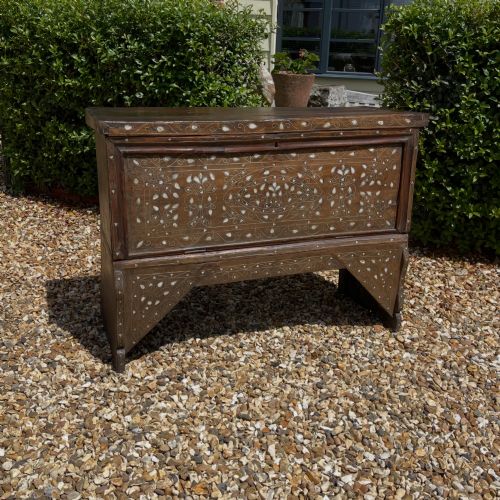
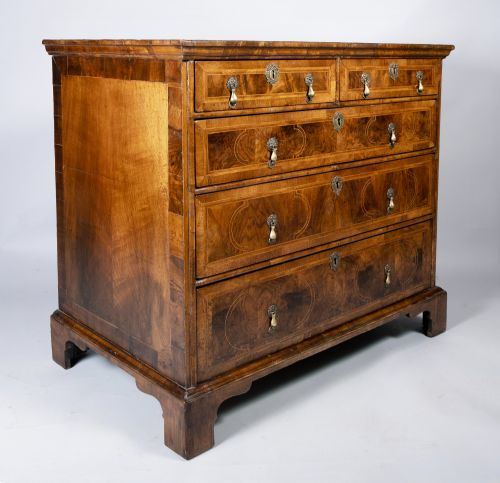
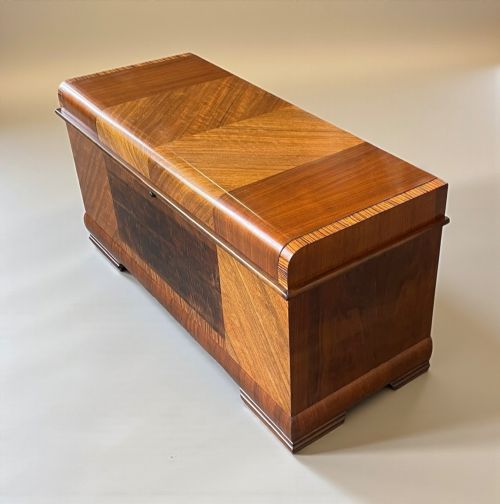


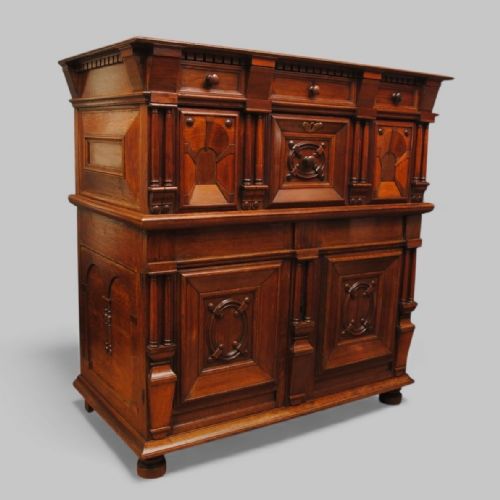
Antique Walnut Coffer Chest
An antique walnut coffer chest brings solid timber grain and centuries of storage history directly into a modern room.
Antique Walnut Coffer Chest
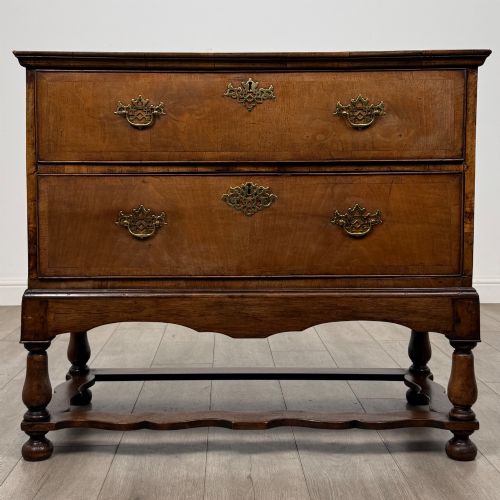
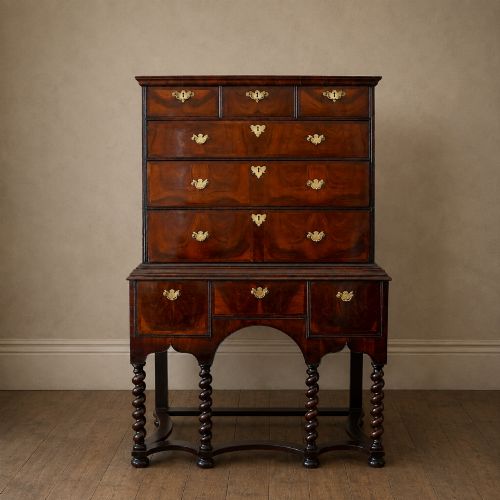
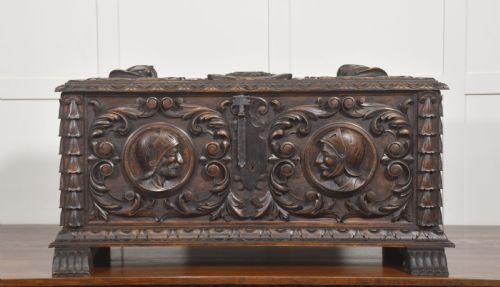
An antique walnut coffer chest is a sturdy timber receptacle designed for secure storage, domestic utility, and transport. These pieces range from seventeenth-century paneled coffers to eighteenth-century chests on stand and later provincial blanket trunks.
Makers utilised native and continental hardwoods, pairing walnut with secondary timbers like oak and fruitwood, while incorporating brass hardware, iron mounts, and bone inlay for reinforcement and decoration.
How they were made
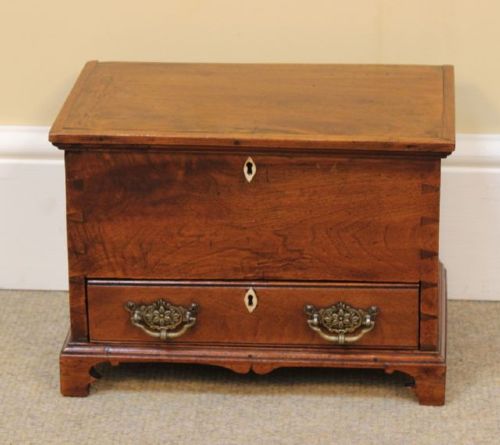
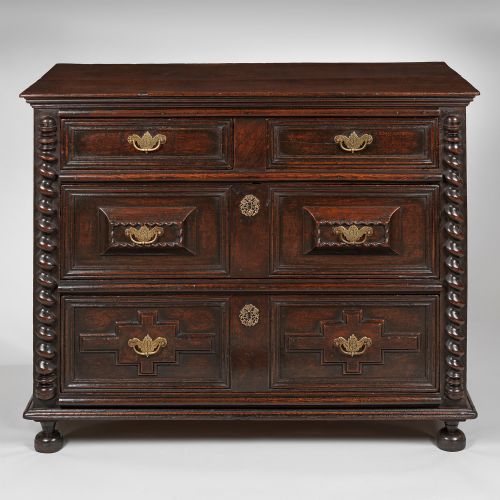
Joiners constructed these pieces using solid walnut, burr walnut, and fruitwood planks, often framed around internal secondary timbers such as oak. Construction methods relied on pegged mortise and tenon joints, dovetailing for drawer boxes, and heavy iron bindings or brass hardware to secure corners and lids.
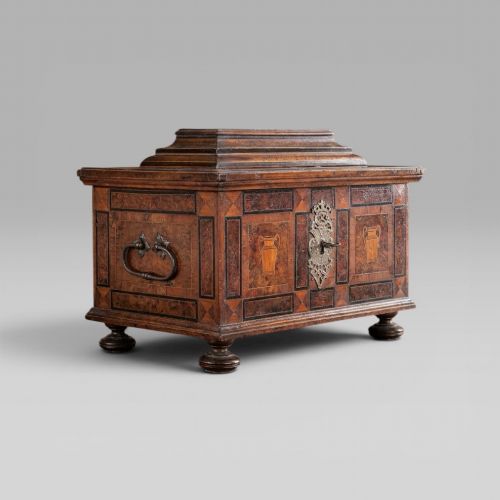
Decorative surfaces gained texture through geometric mouldings, figural medallions, marquetry, and inlaid bone, mother-of-pearl, or ebony. Lift-up lids on coffers and trunks featured robust hinges, while commodes and chests of drawers utilised graduated pull handles.
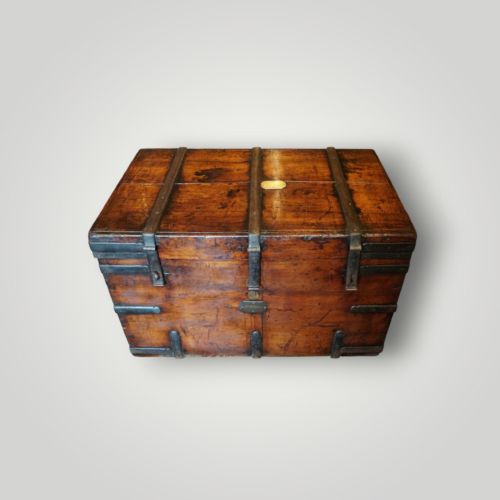
Sir Randolph Isham Routh clearly needed secure transport for his belongings; his iron-bound trunk survived the Waterloo campaign intact.
What varies in quality
The quality of an antique walnut coffer chest rests upon the choice of timber, particularly the selection of figured burr walnut veneers and the integrity of the underlying solid boards. Superior examples exhibit precise geometric parquetry, tight dovetail joinery, and original brass or iron hardware that remains synchronous with the period.
Proportion and decorative restraint dictate the upper tier of pieces, where carved figural medallions, bone inlay, or well-executed stands elevate the form beyond simple utilitarian storage. Lesser examples show mismatched grain replacement, secondary timber repairs, or later hardware replacements that alter the historical balance of the piece.
The Antique Walnut Coffer Chest Glossary
- Coffer
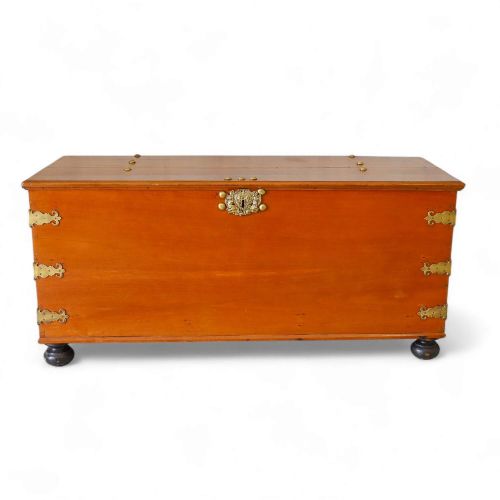
- A heavy timber chest traditionally used for storing valuables, linen, or documents. These pieces usually feature a hinged lid and solid board construction.
- Burr walnut
- A highly figured timber harvested from the wart-like growths on walnut trees. Cabinetmakers sliced this wood into decorative veneers for drawer fronts and lid panels.
- Dough bin
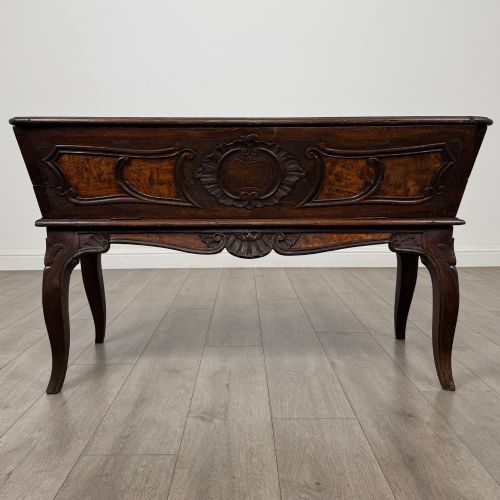
- A specialised wooden trough or chest utilised for proving bread dough, often fitted with a lift-top lid and mounted on a frame.
- Marquetry
- The art of applying decorative veneer pieces in geometric or pictorial patterns onto a solid timber carcase.
- Chest on stand
- A two-part form consisting of a main chest of drawers resting upon a low supporting table base with legs.
Antique Walnut Coffer Chest: Frequently Asked Questions
What is an antique walnut coffer chest used for?
These pieces served primarily for the secure storage of household linens, family documents, clothing, and valuables.
Today, they function as heavy storage furniture that doubles as display surfaces or coffee tables in living spaces.
How do I identify seventeenth-century walnut furniture?
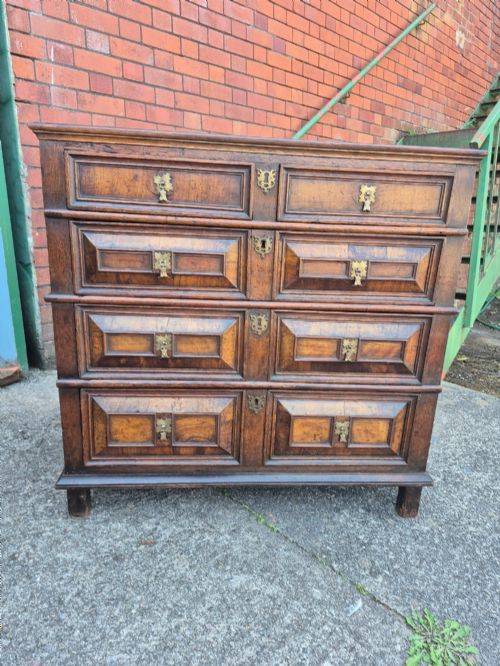
Seventeenth-century pieces typically display heavy geometric paneling, pegged mortise and tenon joinery, and a combination of walnut and oak.
Surface decoration often relies on raised mouldings and plain timber grains rather than elaborate marquetry veneers.
What is the difference between a coffer and a chest?
A coffer strictly refers to a trunk with a hinged lid meant for safekeeping possessions, often bound in iron or heavy timber.
Chest can also describe drawer configurations or commodes designed for vertical storage rather than top-loading access.
Where were these walnut chests made?
Production spans English workshops, continental European centres including France, Italy, and Germany, as well as colonial regions.
Local timber availability and regional joinery traditions shaped the distinct styles found across these geographic origins.