

Antique Walnut Balloon Back
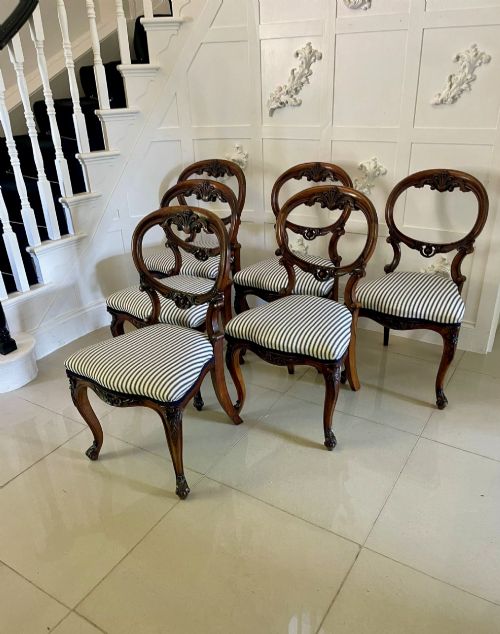
Antique walnut balloon back seating brings fluid Victorian craftsmanship into domestic spaces, prized for its curved profile and rich timber tone.
Antique Walnut Balloon Back
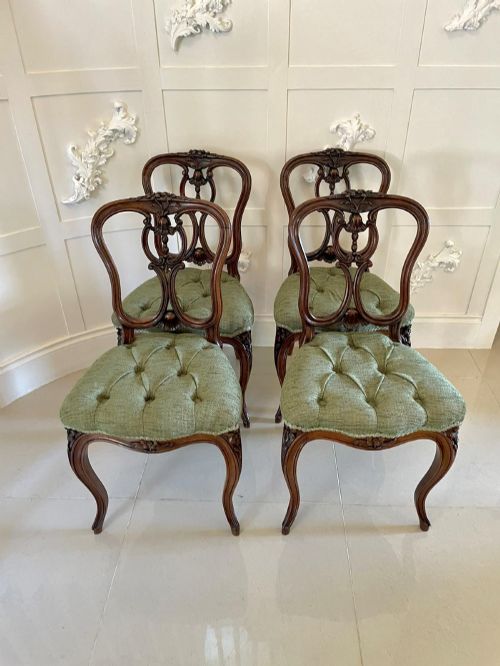
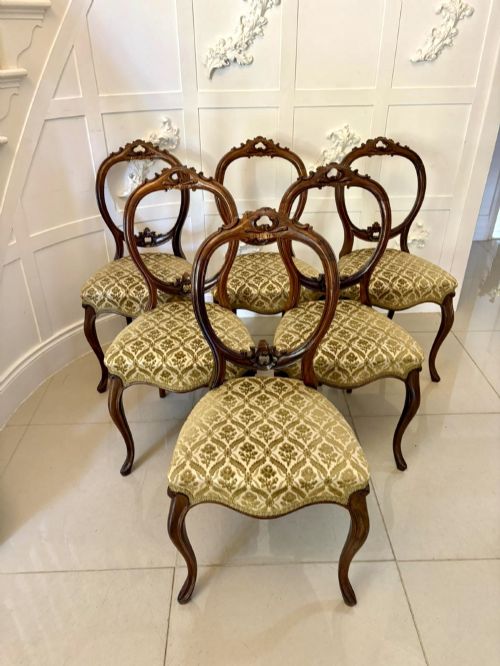
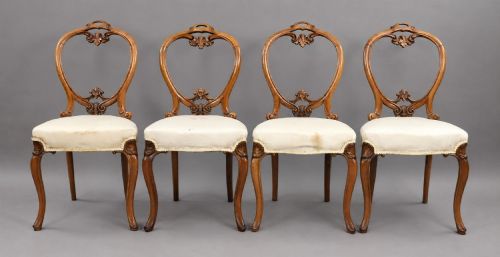
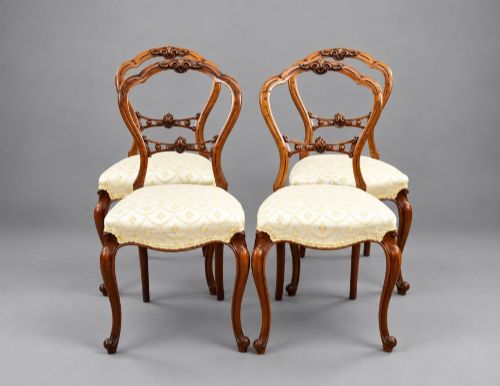
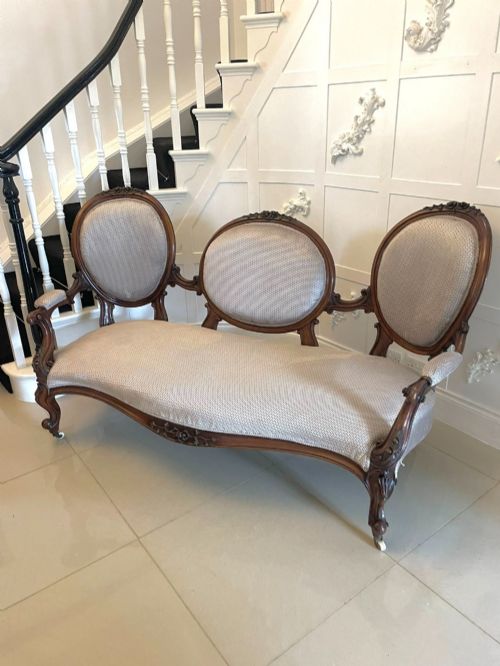
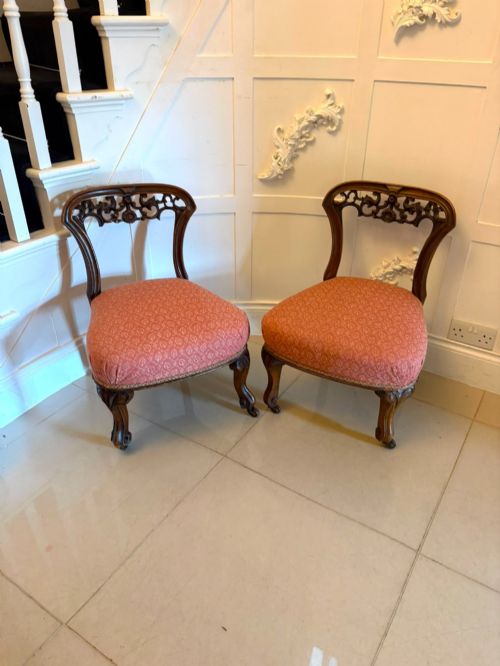
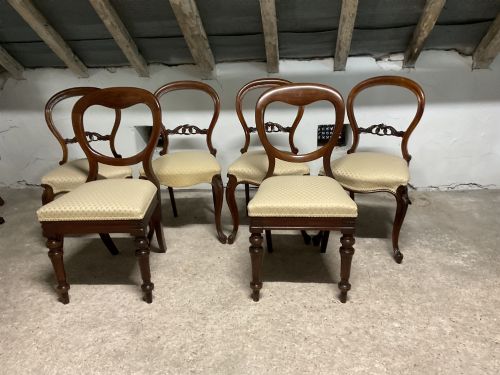
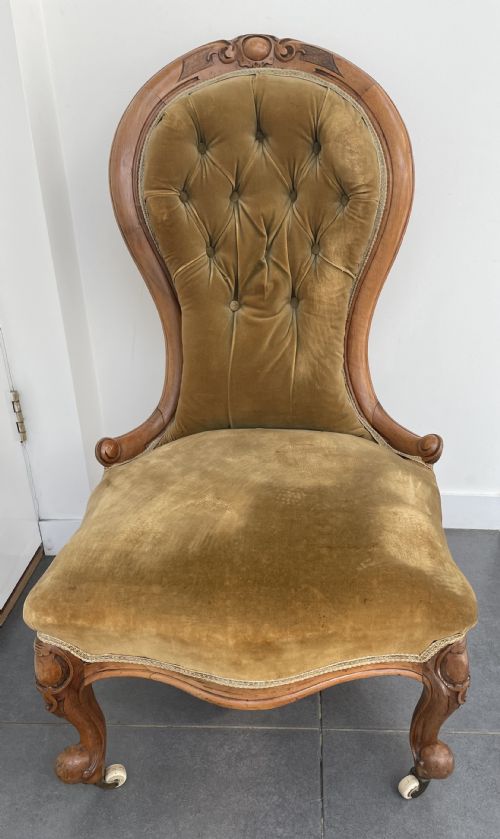
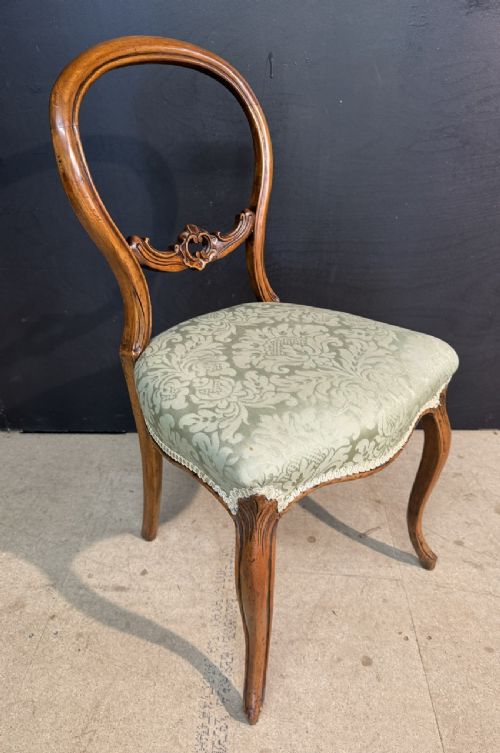
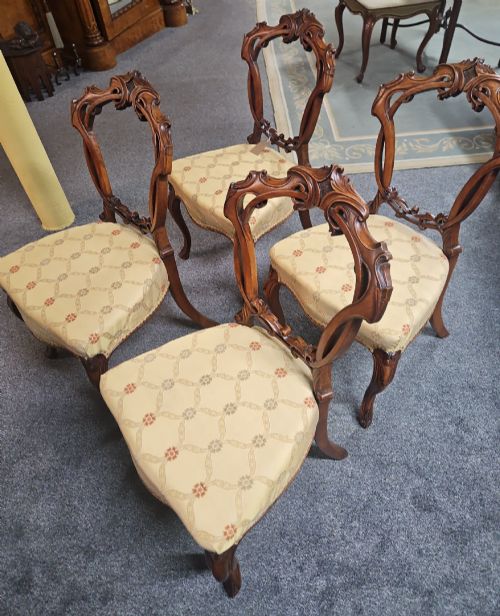
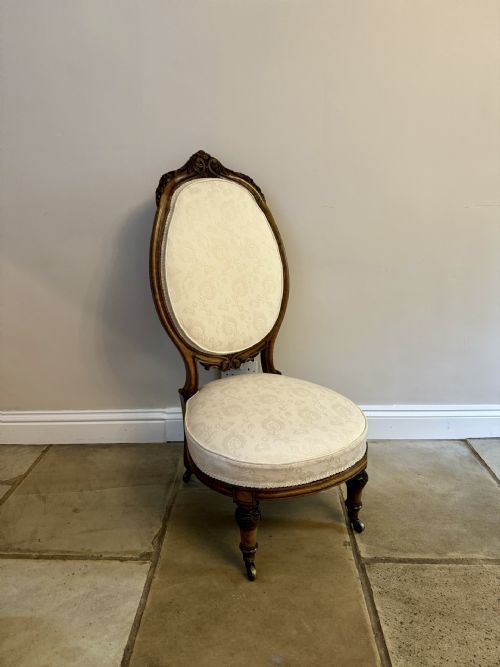
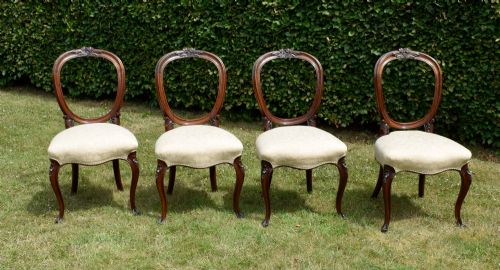
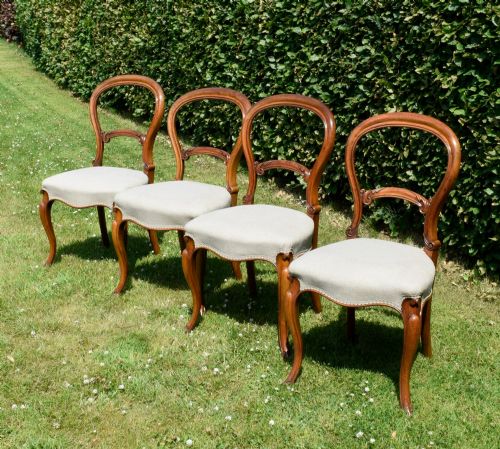
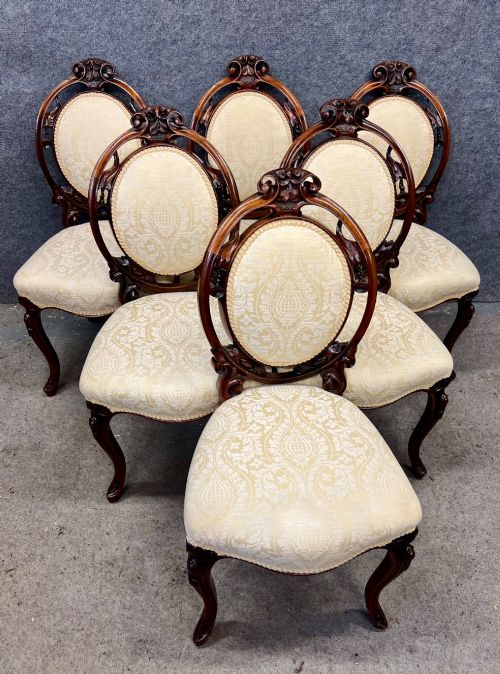
An antique walnut balloon back chair is defined by its continuous, oval-shaped backrest loop that resembles the silhouette of a balloon, predominantly dating from the Victorian era between eighteen fifty and eighteen ninety. These seating forms appear primarily as dining chairs, side chairs, and occasional chairs, alongside larger salon suites and settees.
The material palette centres on solid walnut timbers, frequently paired with varied upholstery fabrics, velvet, and textile coverings, often supported by cabriole legs and brass castors. Buyers encounter individual pieces, pairs, and matched sets ranging from four to eight chairs, alongside larger salon groupings.
Origins span English Victorian workshops and occasional French influences, including Rococo Revival and Louis XVI Revival styling cues. The design relies on the natural elasticity and warmth of walnut to form graceful, curved back splats without snapping under pressure.
Materials and construction methods
Makers utilised dense walnut timber, chosen for its tensile strength and deep grain patterns, which allowed craftsmen to steam-bend and carve slender, continuous loop backrests. This timber supported intricate relief carvings along the top rail and pierced splats without compromising the structural integrity of the frame.
Upholstery methods involved traditional stuffing materials secured over webbed bases, finished with textiles, velvet, or needlepoint tapestry. Joinery relied on precise mortise and tenon joints, reinforced where necessary to withstand the outward pressure exerted by the curved backrest.
Some nineteenth-century makers hid handwritten signatures beneath the drop-in seats, leaving quiet messages for future restorers to discover.
Distinctions in construction and finish
Quality rests in the fluidity of the timber carving and the continuity of the grain around the curved balloon loop, where superior examples display crisp detailing without clumsy repairs or filled splits. The thickness of the timber stock and the depth of the carved motifs differentiate standard utility seating from refined salon pieces.
Frame rigidity dictates longevity, as lower-tier examples loosen at the joints through decades of use, whereas better items retain tight framing and balanced proportions on their cabriole legs.
Blyth & Sons·John Manuel & Son
The Antique Walnut Balloon Back Glossary
- Balloon back
- A chair back shaped in a continuous oval loop resembling a floating balloon, characteristic of mid-nineteenth-century seating design. This curved frame distributes back support evenly across the lumbar region.
- Cabriole leg
- A furniture leg that curves outward in a convex arc and tapers inward in a concave arc, ending in a pad or scroll foot. This leg style appeared frequently on mid-Victorian seating.
- Pierced splat
- The central wooden upright within a chair back pierced with negative space to form decorative scrollwork or foliage patterns. It lightens the visual weight of the timber frame.
- Salon suite
- A matching set of upholstered seating comprising a set sofa, armchairs, and side chairs intended for formal entertaining. These suites shared uniform carved walnut frames and textile coverings.
Antique Walnut Balloon Back: Frequently Asked Questions
What periods do these chairs come from?
These seating forms originate primarily from the Victorian period, spanning the mid-to-late nineteenth century around eighteen fifty to eighteen ninety, with occasional Edwardian examples.
Craftsmen during this era favored walnut for its rich grain and suitability for curved joinery, producing distinct stylistic revivals across English and French workshops.
How were balloon back chairs used originally?
They served primarily as formal dining chairs, occasional seating in drawing rooms, and desk or vanity chairs within domestic Victorian interiors.
Larger matching sets functioned around dining tables, while individual armchairs and side chairs populated parlours and bedrooms as part of coordinated salon suites.
How do I care for antique walnut wood?
Maintain the timber by keeping pieces away from direct heat sources and sudden humidity shifts that cause wood to dry and split.
Apply a microcrystalline wax periodically to nourish the surface and gently clean accumulated dust with a soft, dry cloth.
Are replacement fabrics appropriate for these seats?
Contemporary or traditional replacement upholstery is standard practice, as original nineteenth-century textiles rarely survive intact through decades of domestic use.
Upholstering frames in velvet, damask, or woven textiles respects the historical character of the furniture while ensuring practical modern utility.