

Antique Wall Lamps
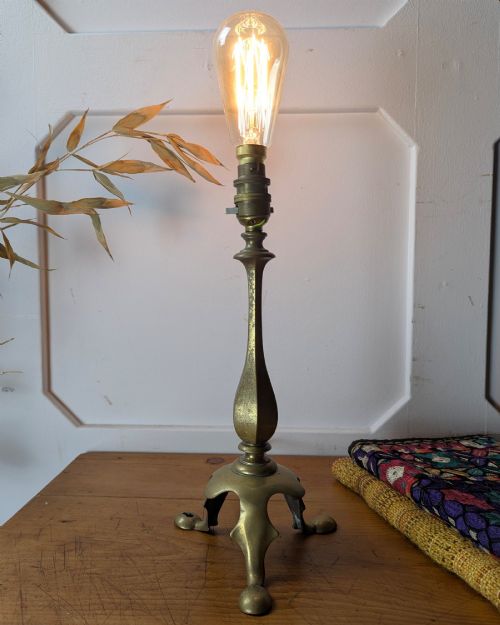
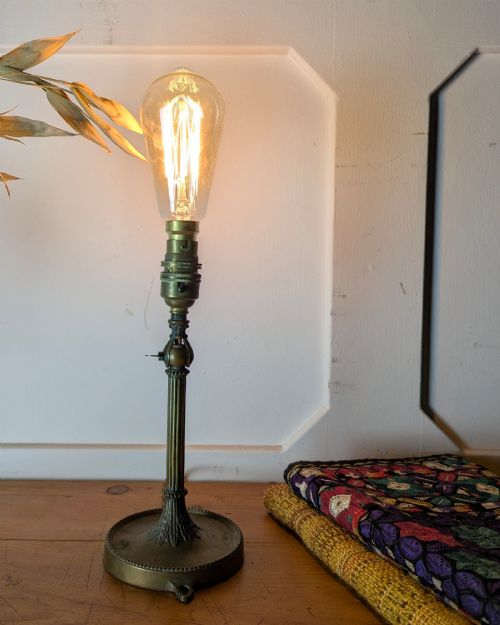
These antique wall lamps bring period illumination and tactile metalwork to a room, ranging from simple brass brackets to ornate French sconces.
Antique Wall Lamps
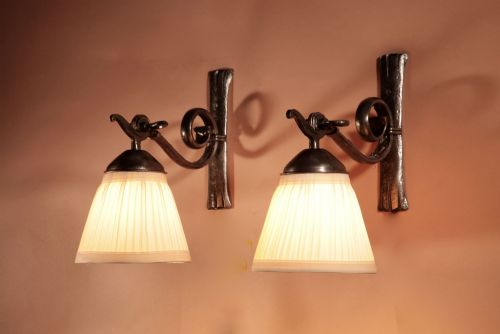
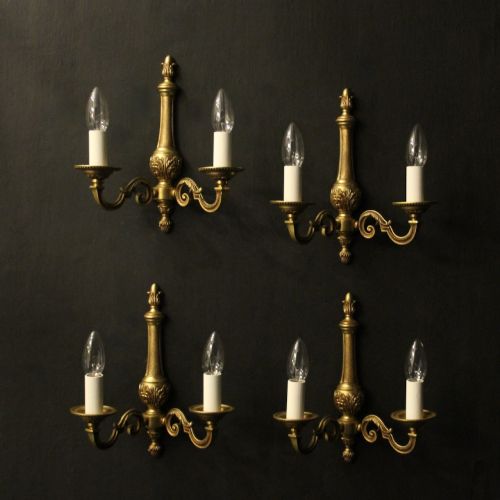
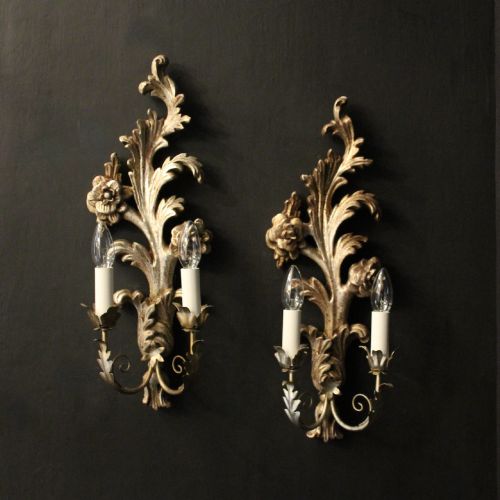
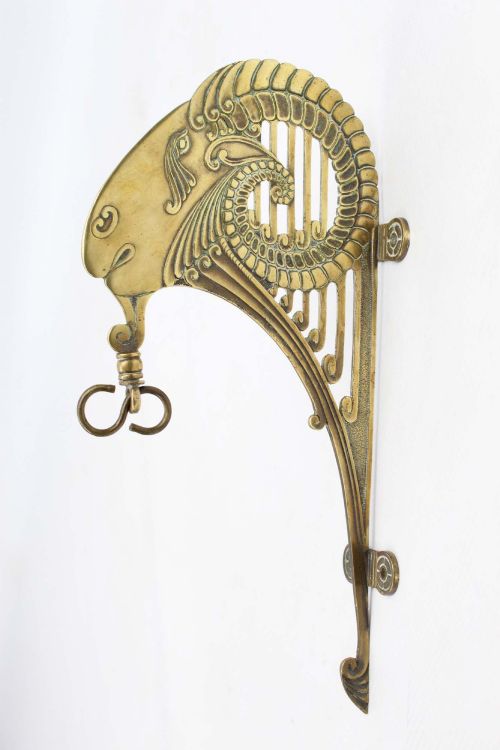
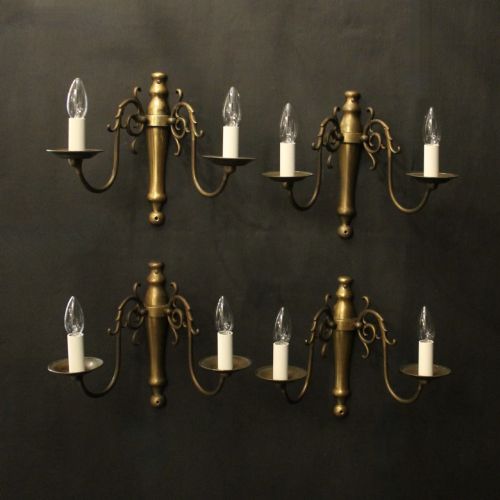
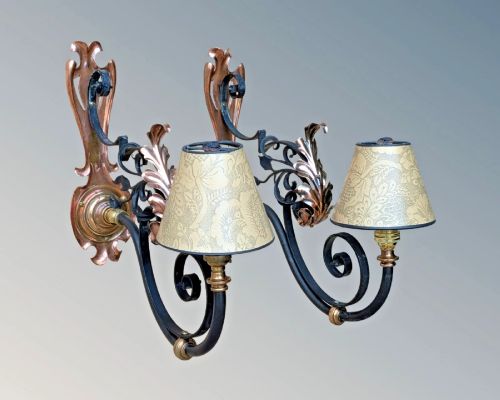
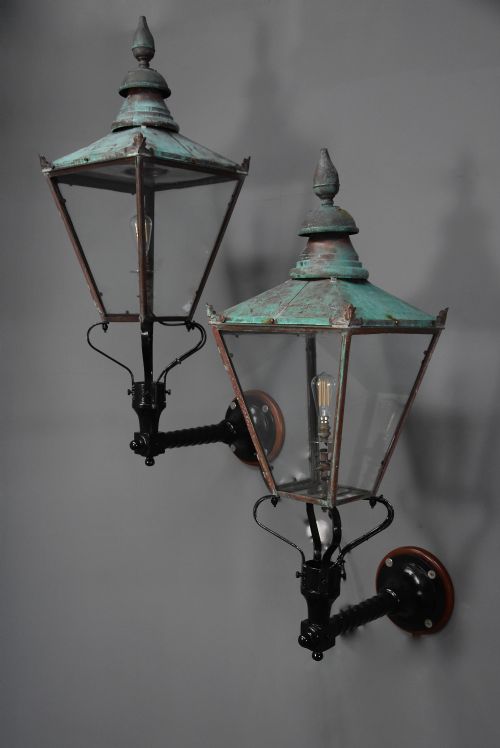
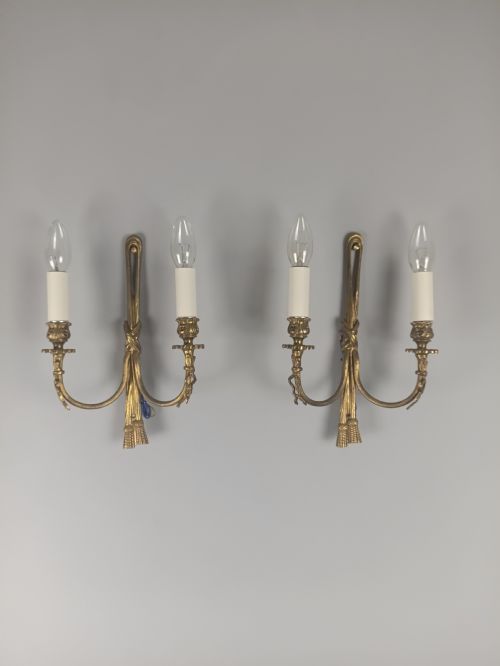
When searching for antique wall lamps, collectors encounter a diverse group of fixtures designed to mount directly onto vertical surfaces for interior and exterior illumination. The selection spans utilitarian carriage lamps and outdoor lanterns in copper and iron alongside decorative twin and triple arm wall lights in gilded brass and bronze.
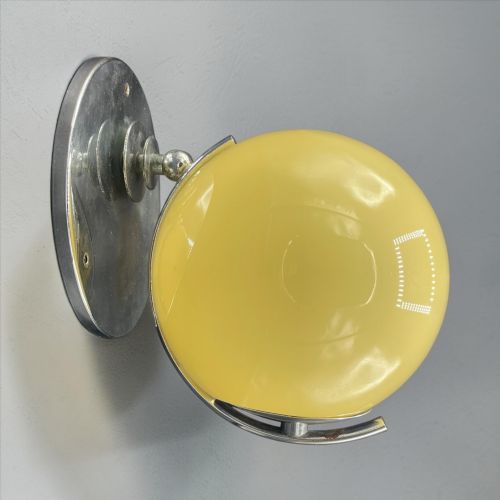
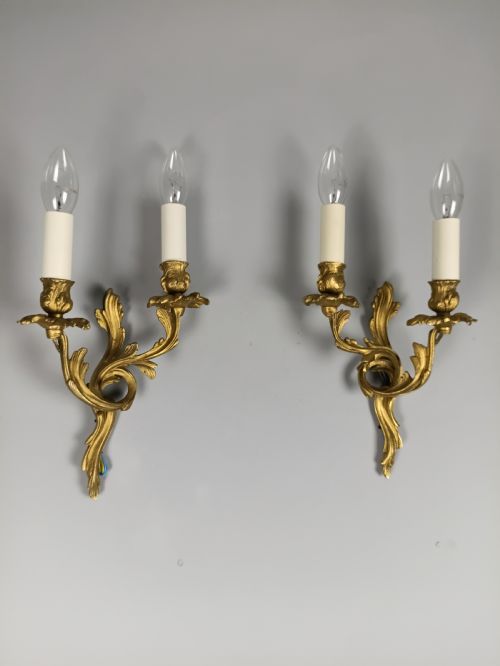
The most common examples on this page date from the Victorian, Edwardian, and Art Deco periods, with French Rococo and Arts and Crafts styles appearing frequently. Forms range from simple single-light brackets to substantial multi-branch sconces and converted oil or gas lamps.
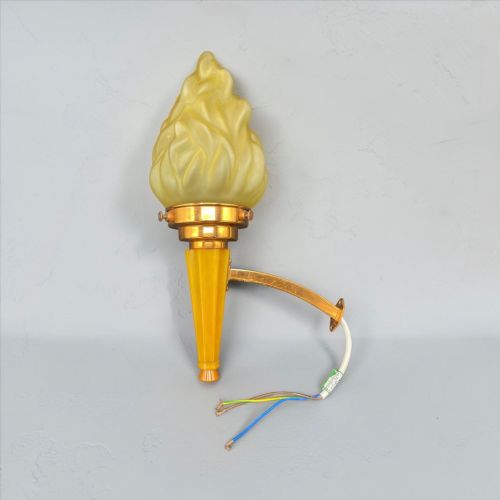
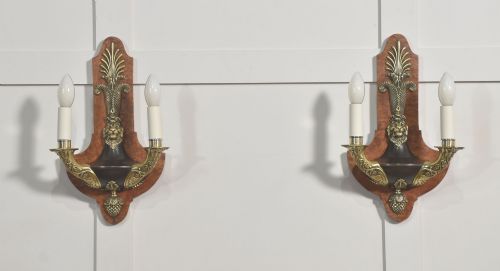
Makers and designers worked across various idioms, producing everything from strict neo-classical or Empire style torch forms to fluid Art Nouveau curves and geometric Art Deco skyscraper glass panels.
How they were made
Metals form the structural backbone of these fixtures, with brass, copper, and cast iron dominating the construction alongside gilded bronze, ormolu, and wrought iron. Artisans cast, hammered, and spun these metals into intricate brackets, arms, and backplates, often applying silver gilt or gold leaf to wooden elements like Florentine giltwood.
Glass components vary widely, incorporating frosted glass, cut crystal, and moulded cloud-shaped or skyscraper shades, sometimes paired with ceramic elements like Delft pottery. Many outdoor lanterns and indoor carriage lamps utilise thick bevelled glass panes held securely within metal frames.
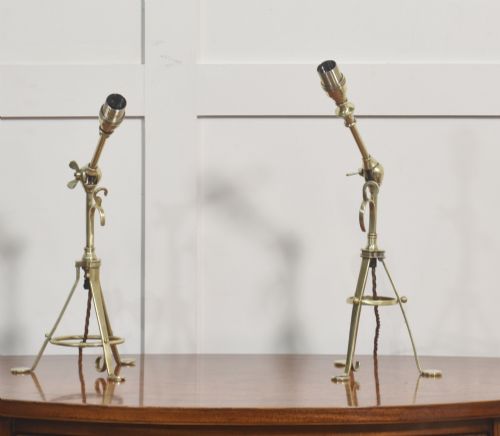
The selection includes specialised forms such as adjustable Pullman lamps, carriage lanterns, and multi-armed French Rococo sconces.
What varies in quality
Quality rests heavily upon the crispness of the casting and the depth of the chased or engraved detail on bronze and brass mounts. Superior pieces display hand-finished chasing that sharpens the contours of acanthus leaves, ribbons, or cherubs, whereas lesser examples rely on flat, unadorned surfaces.
The integrity of the construction distinguishes standard production from finer workshop output, particularly in the weight of the metal and the secure articulation of adjustable arms. Original components, such as signed glass shades or matching backplates, elevate a fixture above married sets assembled from mismatched parts.
W.A.S. Benson·GLC·Dugué·F. & C. Osler
The Antique Wall Lamps Glossary
- Ormolu
- Gilded bronze, typically produced by applying a mercury and gold amalgam to a bronze base and heating it. This technique creates a durable, golden finish seen on neo-classical wall lights.
- Sconce
- A wall-mounted lighting fixture designed to hold candles or electric bulbs, often featuring a decorative backplate that reflects the light into the room.
- Repoussé
- A metalworking technique where the artisan hammers the metal from the reverse side to form a raised design in relief. It appears frequently on brass and copper backplates.
- Carriage lamp
- A sturdy outdoor or vehicular light made with glass panels and metal housing, designed to withstand weather and movement. Many survive converted for domestic wall mounting.
- Chasing
- The complementary metalwork process of refining cast or repoussé designs from the front using small punches and hammers. This adds fine texture and sharpens details on bronze fixtures.
Antique Wall Lamps: Frequently Asked Questions
How do I date an antique wall lamp?
Dating relies on stylistic clues, manufacturing techniques, and materials characteristic of specific eras such as Victorian, Edwardian, or Art Deco. Examining the screw threads, mounting brackets, and wiring access points also reveals the period of manufacture.
Makers' marks or stamps on the metal backplate can provide precise attribution, though many older fixtures remain unsigned. Comparing the decorative motifs, such as Rococo scrolls or geometric skyscraper lines, helps place the piece within a broader stylistic timeline.
Were these wall lamps converted from oil or gas?
Many older wall lights and lanterns began their lives functioning on oil or gas before being adapted for electricity. Evidence of this conversion often appears in the form of old burner assemblies, weighted oil reservoirs, or gas keys retained within the design.
Collectors frequently value these converted pieces for their historical character and the robust weight of their original metal construction. Rewiring allows them to function safely in modern settings while retaining their authentic period mechanisms.
Can antique wall lamps be used outdoors?
Certain types, particularly copper street lanterns, carriage lamps, and porch lanterns, were originally built to withstand exterior conditions. These robust fixtures feature heavy metal frames and weather-sealed glass panes suited for sheltered outdoor placement.
Indoor sconces and gilded bronze wall lights lack this weather resistance and should remain inside away from moisture. Checking the original purpose of the lantern ensures proper placement and longevity.
How do I clean and maintain brass wall lights?
Maintenance involves gentle dusting with a soft, dry cloth to prevent the accumulation of grime on intricate metalwork and glass shades. Avoid harsh chemical polishes that can strip away the aged patina valued by collectors.
For fixtures with delicate gilding or silver leaf, professional handling prevents accidental damage to fragile surfaces. Ensuring the electrical wiring meets modern safety standards is essential for fixtures in daily use.