
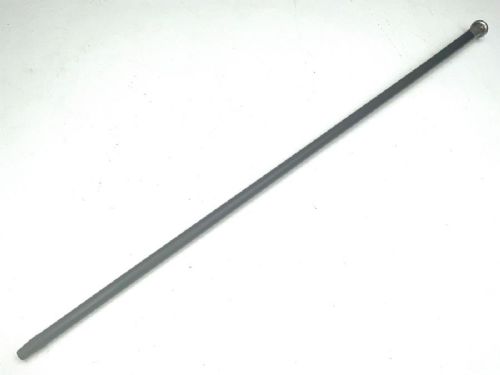
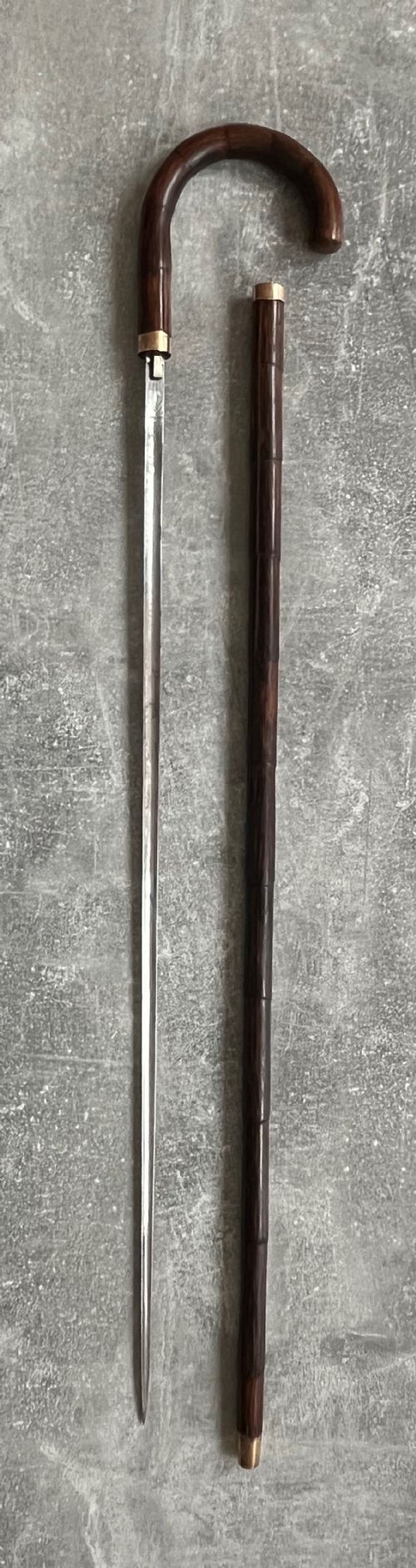
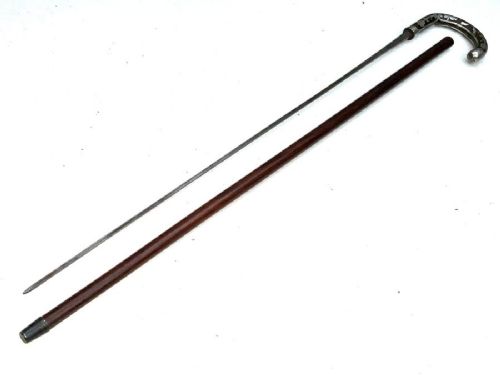
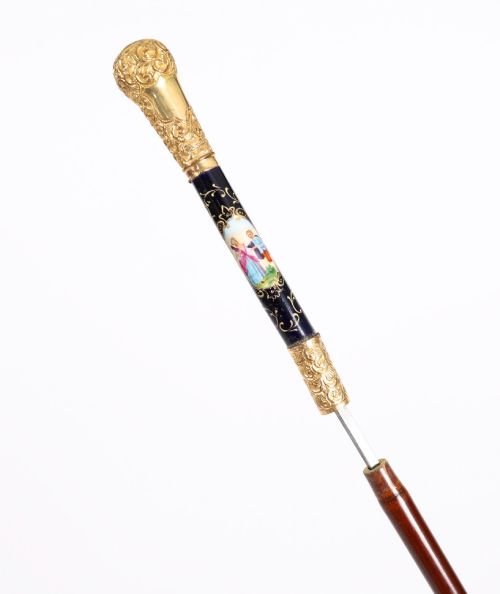
Antique Walking Sword
An antique walking sword combines the everyday support of a cane with a concealed steel blade, offering gentlemen of past centuries a discreet means of self-defence.
Antique Walking Sword
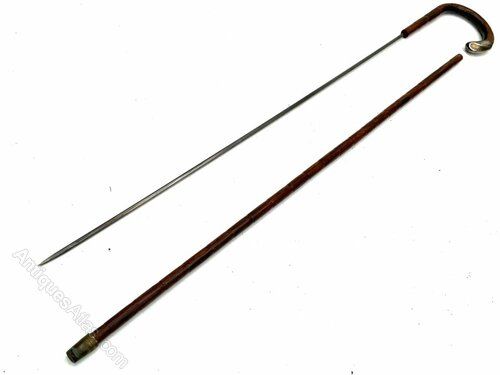
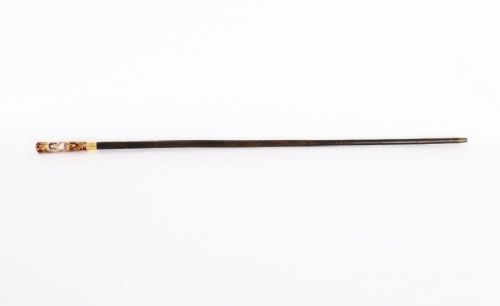
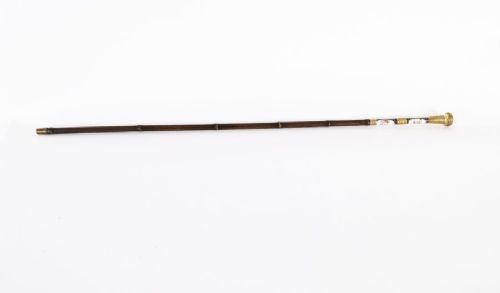
An antique walking sword is a disguised edged weapon housed within a traditional wooden or bamboo shaft, designed to appear as an ordinary gentleman's accessory. These pieces span the Victorian, Edwardian, and early twentieth-century periods, emerging from British, French, German, and Japanese workshops.
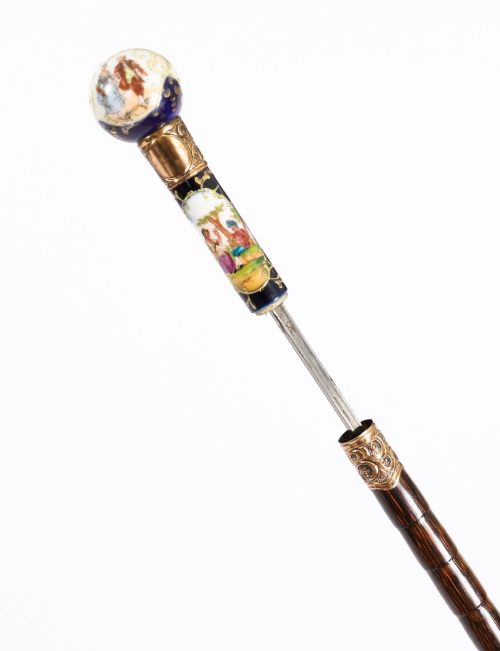
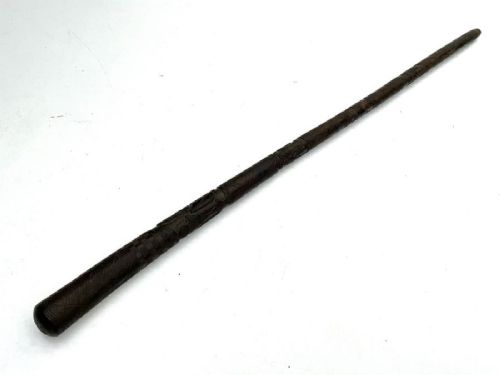
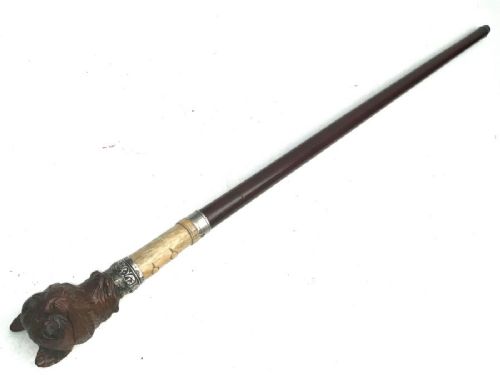
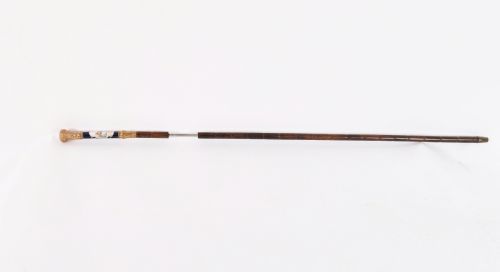
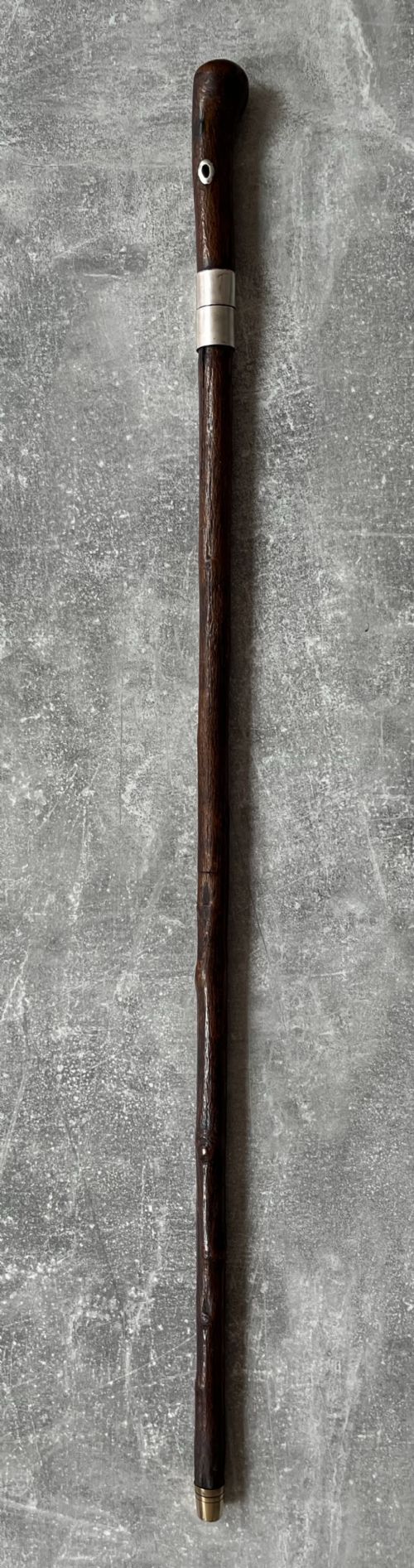
The versions most commonly met on this page include malacca, bamboo, cherrywood, and ebonised shafts fitted with silver, gold-plated, horn, porcelain, or novelty handles. They take the form of standard walking canes, swagger sticks, and specific military or masonic officers' equipment.
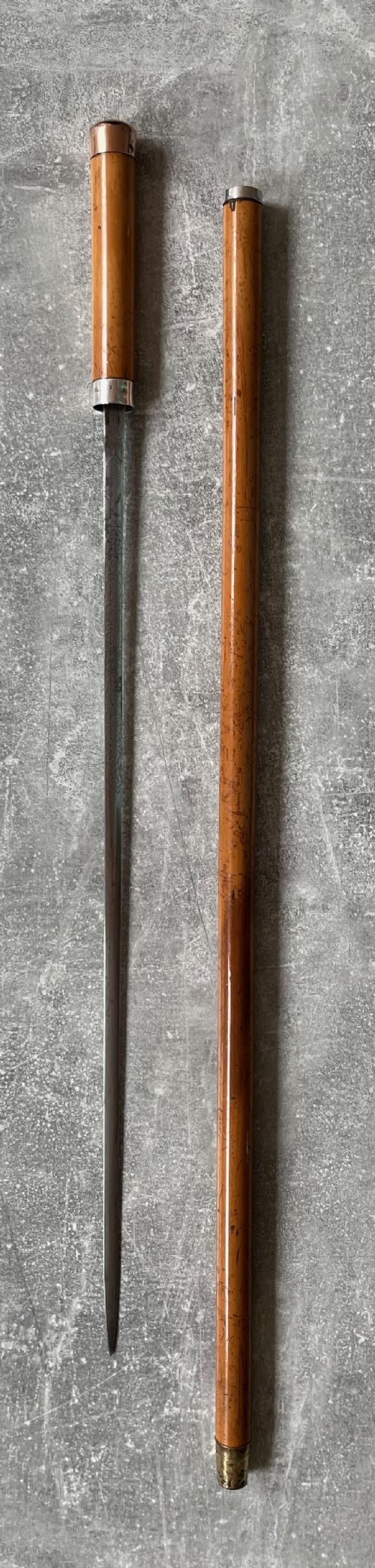
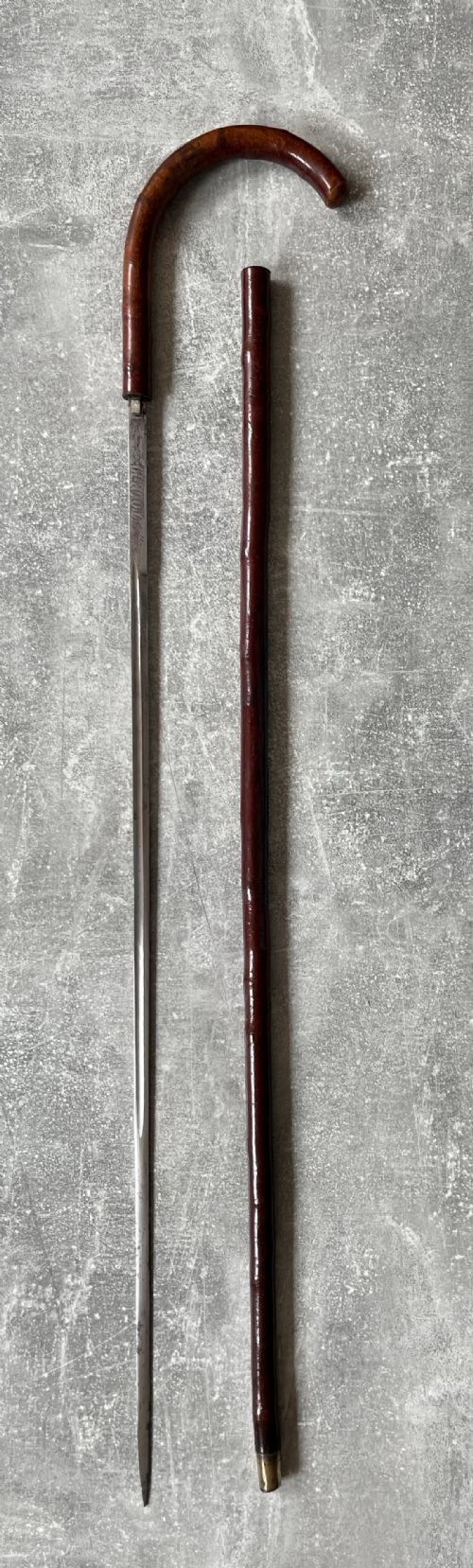
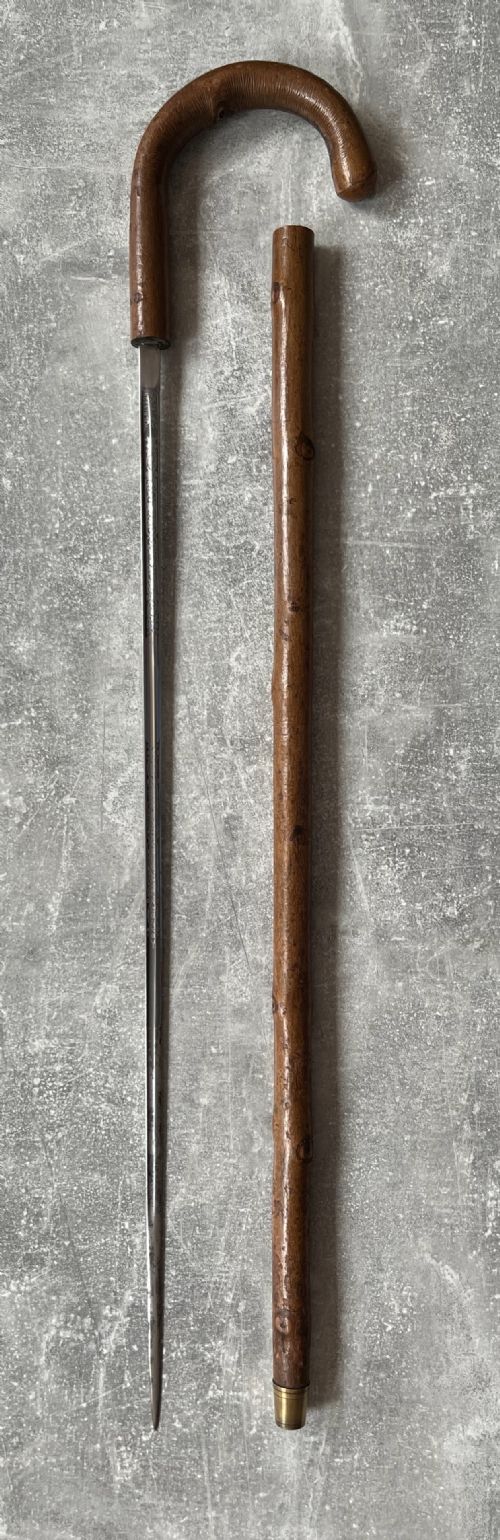
Many examples conceal finely etched Toledo blades or maker-marked steel within the shaft, secured by button releases or screw threads. Collectors encounter everything from plain utilitarian hazel wood sticks to ornate French porcelain-mounted pieces.
How they were made
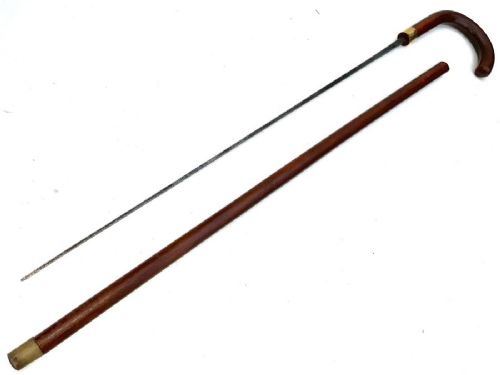
The shafts rely on carefully selected natural materials such as malacca cane, bamboo, partridge wood, and blackthorn, often steam-bent or shaped to form crook or hammer-head handles. Metal collars in silver, brass, and gold plate reinforce the junction where the handle meets the shaft.
Blades are forged from quality steel, frequently featuring Toledo origins or manufacturer signatures from makers such as Wilkinson, and fit precisely into a designated wooden channel inside the cane. Mechanical latches, button releases, and threaded collars secure the blade safely within the housing during everyday walking use.
Listings feature items spanning the Victorian, Edwardian, and early twentieth-century periods, constructed from malacca, bamboo, steel, and porcelain.
What varies in quality
The standard of an antique walking sword depends heavily on the integration of the hidden mechanism and the fidelity of the disguise. Superior pieces feature seamless joins where the handle meets the shaft, concealing the weapon entirely until the release is engaged.
Materials and artistic embellishment elevate certain pieces far above standard utility items. Hand-etched steel blades, hallmarked silver mounts, or painted Sevres porcelain sections indicate high-status commissions intended for wealthy patrons rather than standard military issue.
Brigg·Wilkinson
The Antique Walking Sword Glossary
- Swagger stick
- A short cane carried by military officers as a symbol of authority rather than for physical support. These occasionally housed concealed blades or instruments.
- Toledo blade
- A steel blade forged in the Spanish city of Toledo, renowned historically for flexibility and temper. Such blades are frequently found signed in these listings.
- Malacca
- A type of rattan cane featuring distinctive brown markings and nodes, prized for flexibility and strength. It forms the shaft of many superior Victorian walking sticks.
- Ebonised wood
- Timber treated with a dark stain and polish to imitate genuine ebony. This material provides a formal, uniform appearance on nineteenth-century shafts.
- Ormolu
- Gilt bronze applied as a decorative mount or handle detail. It appears on finer Edwardian examples alongside bamboo and silver.
Antique Walking Sword: Frequently Asked Questions
What is an antique walking sword?
An antique walking sword is a functional walking cane that conceals a steel blade inside its wooden or bamboo shaft. They were used primarily by gentlemen in the nineteenth and early twentieth centuries for personal protection.
These pieces range from plain utilitarian timber sticks to highly decorative accessories featuring porcelain handles, silver mounts, and etched blades.
How do you release the hidden blade?
Most concealed blades are secured inside the shaft by a simple mechanical latch, a push-button release, or a threaded screw collar. Operating the release allows the user to slide the steel blade out smoothly from the wooden housing.
The engineering ensures the blade remains firmly locked in place while the cane is being used for walking.
How do I date an antique walking sword?
Dating relies on stylistic clues, hallmarked silver mounts, specific wood types, and associated military or civilian contexts. Victorian and Edwardian examples often display distinct design motifs from their respective decades.
Makers' stamps on the steel blade or precious metal hallmarks provide precise chronological markers for pieces produced in London and other European centres.
Were these used by the military?
Yes, many military officers and regiments utilised specialised swagger sticks and walking swords as part of their daily attire. Examples from the Victorian and Edwardian eras often reflect specific battalion connections or military service.
Officers favoured these discreet weapons for both ceremonial use and field preparation during the nineteenth and early twentieth centuries.