
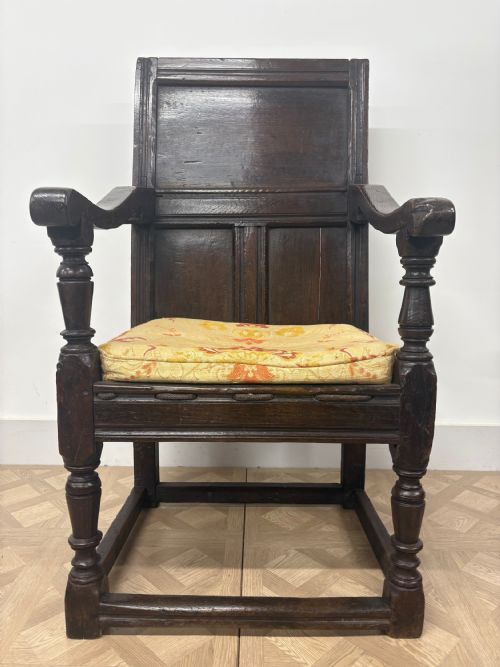
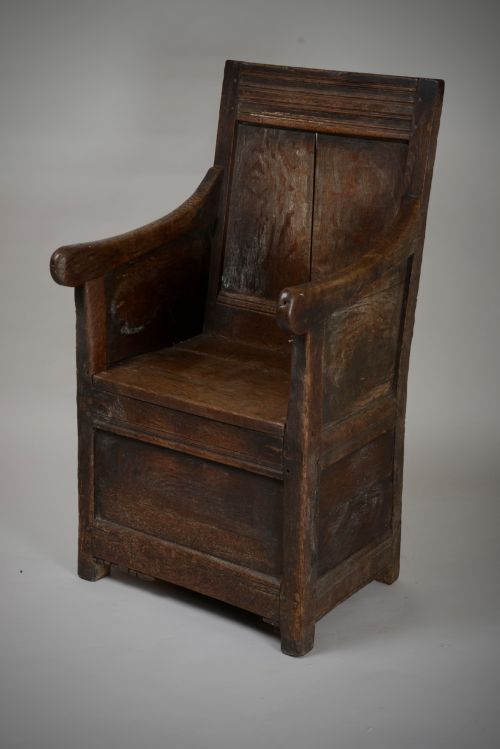
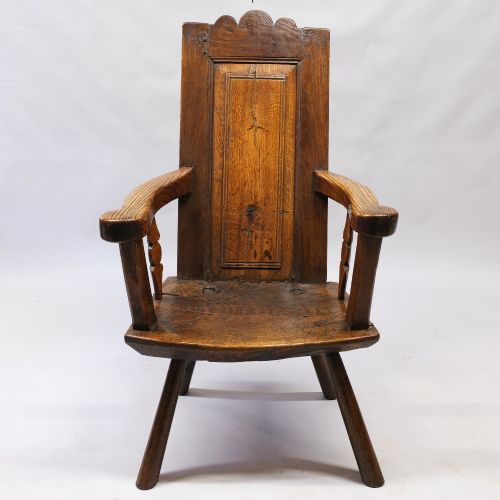
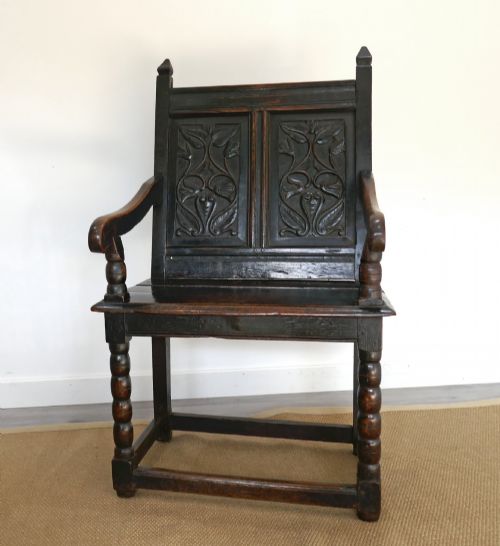
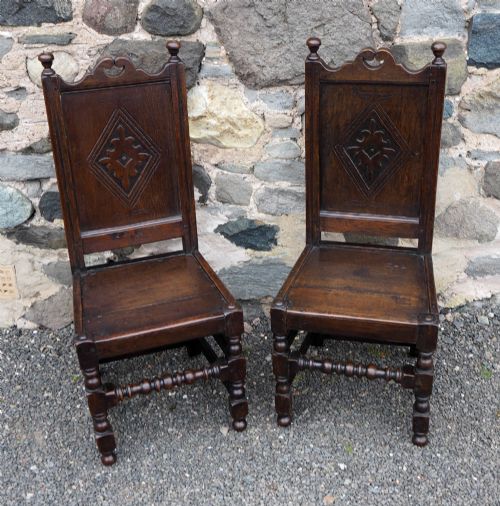


Antique Wainscot Seating
Antique wainscot seating comprises heavy timber armchairs and settles built to anchor early domestic rooms.
Antique Wainscot Seating
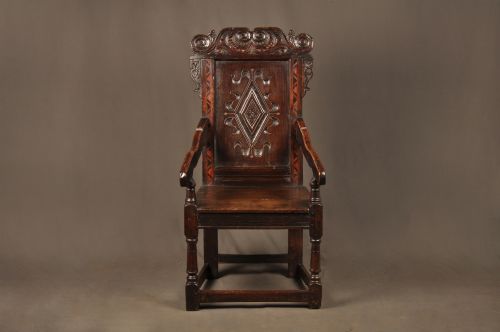
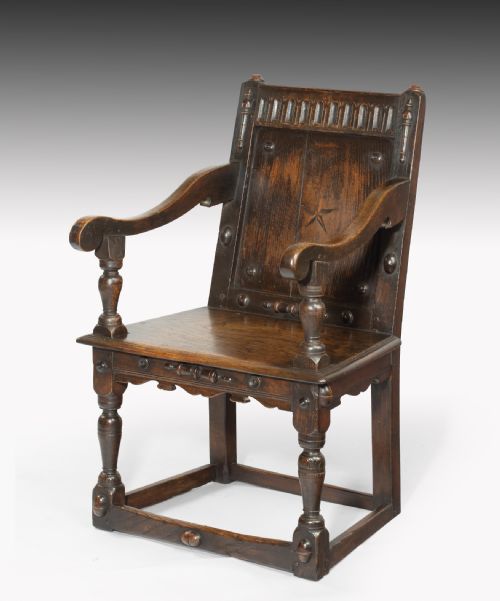
Antique wainscot seating forms a distinct group of heavy wooden chairs and settles originating primarily from the seventeenth century and earlier periods. These robust seats utilise solid timber construction, featuring high panelled backs designed to block cold drafts in early domestic interiors.
Buyers browsing this selection will most frequently encounter seventeenth-century oak armchairs and regional variants. Pieces emerge from locations such as Lancashire, Cheshire, Yorkshire, and Wales, alongside later revivals from the nineteenth and twentieth centuries.
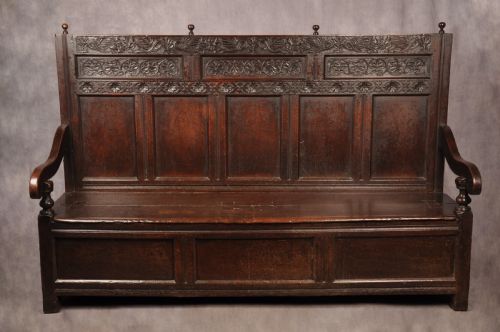
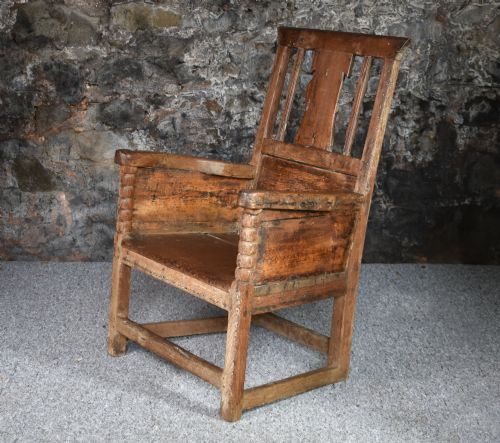
The category encompasses armchairs, side chairs, hall chairs, and box settles. Regional vernacular pieces demonstrate local joinery traditions, including panel-backed Windsor forms and crofter chairs.
How they were made
Carpenters constructed antique wainscot seating predominantly from solid oak, utilising frame-and-panel techniques to accommodate seasonal wood movement. Secondary timbers such as elm, pine, and yew appear in specific regional panels and structural components.
Joinery relied on mortise and tenon joints secured with wooden pegs rather than metal fasteners. Carvers embellished the heavy wooden panels and crest rails with geometric patterns, foliage, and arcading using traditional hand chisels.
Materials recorded across the selection include solid oak, elm, pine, textile, and yew-wood panels.
What varies in quality
Quality in antique wainscot seating rests on the integrity of the original timber and the depth of regional character. Chairs retaining their original boards, substantial proportions, and unaltered structural joinery command greater attention from discerning collectors.
The sophistication of the carved ornament and the crispness of the panel mouldings distinguish standard regional pieces from exceptional master examples. Heavy replacement of lower legs or major structural panels alters the historical standing of the chair.
The Antique Wainscot Seating Glossary
- Wainscot
- A wooden panelled construction method originally applied to wall linings and subsequently adapted for heavy chairs. This terminology denotes seating built with solid wooden panels rather than turned spindles.
- Settle
- A wooden bench featuring a high panelled back, solid armrests, and an enclosed base often containing a storage box. These items stood near hearths to deflect drafts in early homes.
- Vernacular
- Objects designed by local craftsmen following regional traditions rather than metropolitan academic styles. Such furniture utilises locally available woods like oak, elm, and yew.
- Box chair
- An early form of seating featuring a solid enclosed base beneath the seat, functioning as storage or providing extra protection from floor drafts. They precede open-framed armchairs in domestic evolution.
- Crest rail
- The horizontal member forming the uppermost boundary of a chair back, frequently carved with dates, initials, or geometric motifs. This component receives decorative focus in seventeenth-century pieces.
Antique Wainscot Seating: Frequently Asked Questions
What is wainscot seating?
Wainscot seating describes heavy wooden armchairs and settles constructed with solid timber panels. These chairs originated when wood was costly and panel construction provided sturdy, draft-resistant furniture for important household members.
Most surviving examples date from the seventeenth century, constructed primarily in oak with regional variations across England and Wales.
How do I identify a seventeenth century piece?
Seventeenth-century pieces display joined frame-and-panel construction secured with wooden trunnels or pegs. The timber shows deep patination, tool marks from hand working, and structural wear consistent with early domestic use.
Later nineteenth-century revival pieces often copy these forms but typically use machine-sawn timber and lack the accumulated surface wear of genuine period items.
Where were these chairs used?
These chairs originally occupied the primary rooms of manor houses, farmhouses, and merchant dwellings. The high panelled back protected the occupant from cold drafts in unheated halls.
Owners placed them near the hearth or at the head of the dining table as a sign of authority for the head of the household.
Are these chairs comfortable?
Antique wainscot seating offers a firm, upright posture reflecting the domestic habits of early periods. They were built for durability and status rather than lounging, featuring rigid wooden backs and solid seats.
Many owners use them today in halls, studies, or as accent pieces rather than primary sitting chairs.
What woods were used?
Oak is the predominant timber found in antique wainscot seating due to its strength and availability in early British forests. Carpenters occasionally incorporated secondary woods like elm, pine, and yew for specific panels or structural repairs.
Regional makers utilised whatever strong native hardwoods grew locally in areas like Wales and the North Country.