


Antique Village Landscape Art
Antique village landscape art captures rural settlements and country life through oil and watercolour, offering a tangible window into past local communities.
Antique Village Landscape Art
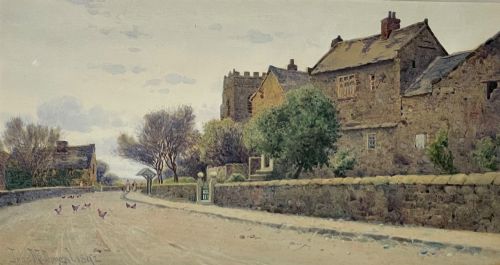
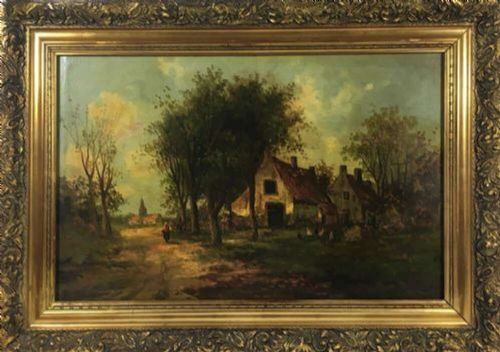
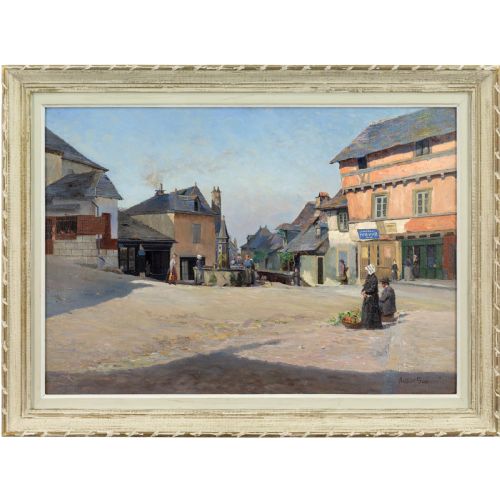
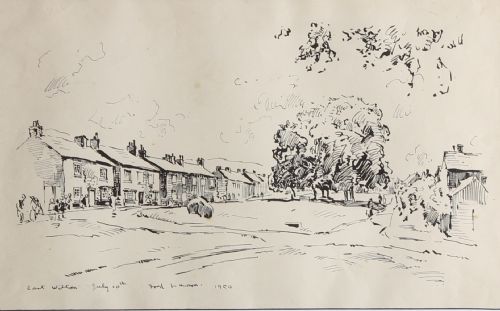
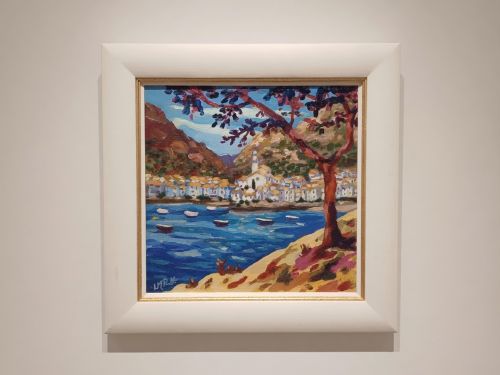
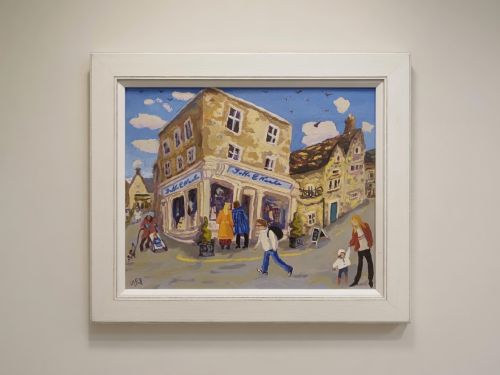
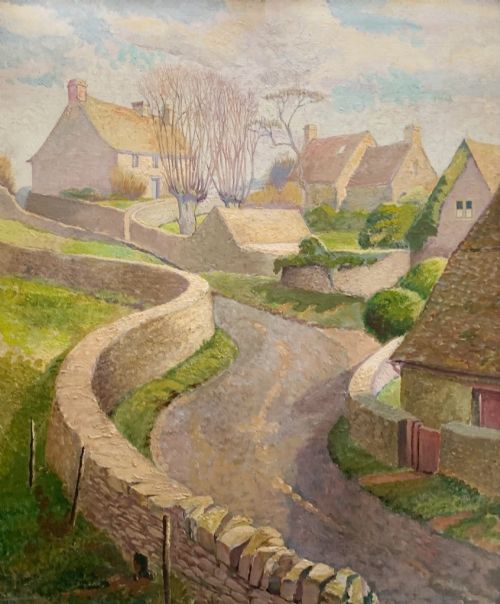
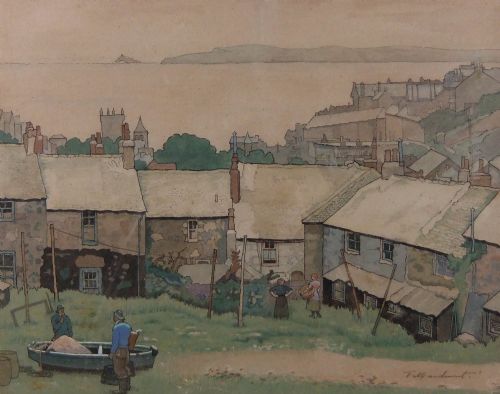
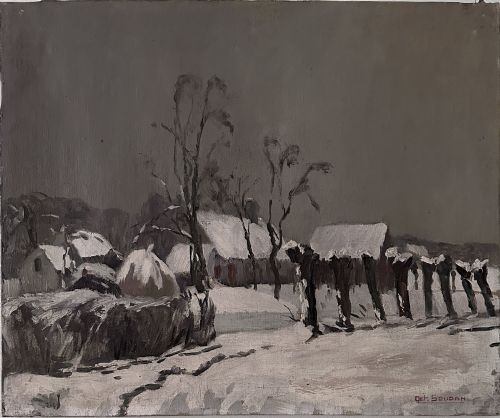
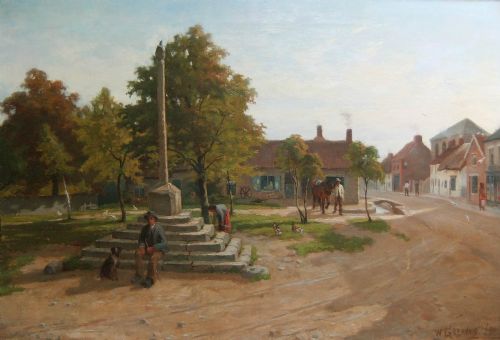
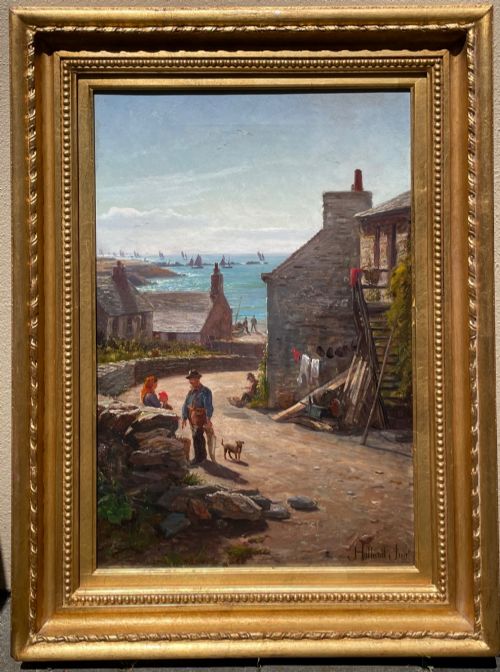
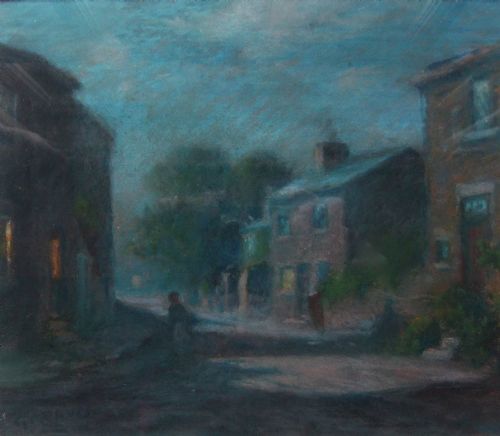
Antique village landscape art encompasses fine art paintings and watercolours depicting rural settlements, country lanes, and coastal hamlets. These works range from intimate depictions of specific British and European villages to broader topographical scenes capturing bygone ways of life.
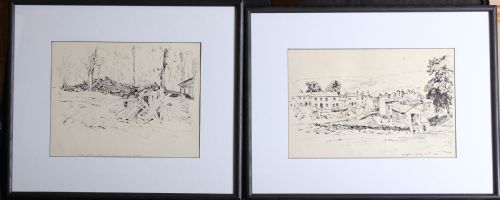
Collectors frequently encounter works originating from the Victorian period through to the mid twentieth century, with styles spanning British Impressionism, the Staithes School, and the Barbizon School. Common formats include framed watercolours on paper, oil on canvas, and pastels housed within period wooden and gesso frames.
How They Were Made
Artists typically worked with oil paint on canvas or panel, or applied watercolour and gouache to paper, utilising brushes to build up tone and detail. Many of these works were produced 'en plein air' to capture natural light and atmospheric weather conditions in rural settings.
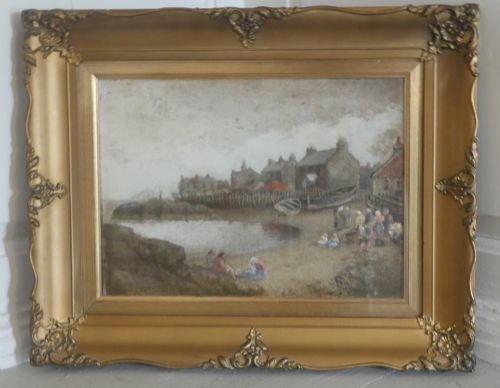
Finished paintings were commonly secured within timber frames, often embellished with moulded gesso detailing and gilt finishes to protect and complement the artwork.
Several watercolours preserve the damp atmosphere of northern fishing villages so vividly you can almost smell the salt air.
What Varies in Quality
Quality rests upon the artist's ability to handle light, perspective, and atmospheric depth within the composition, distinguishing accomplished plein air execution from stiff topographical record-making. The sensitivity of the brushwork and the harmony of the palette determine the overall visual impact of the piece.
The preservation of the paper or canvas, along with the integrity of the original frame, contributes significantly to the standing of the work. Superior examples demonstrate secure pigment adherence and minimal intervention over time.
John McDougal·Edward Mills·Arthur Gué·Thomas Maidment·Paul-Élie Gernez·William Greaves·John Holland·Gaston Cornil·George Turland Goosey·Fred Lawson·Arthur Tucker·David Teniers II·M. C. Hider·Charles Vickers·James Watson·George Gregory·Frederick G. Coulridge·John Smith Atherton·John Edward Bale·Robert Hollands Walker·Joseph W. Milliken·Frank Wood·Frederick Mayor·Percy Brooke·Jacob Van Der Does II
The Antique Village Landscape Art Glossary
- Watercolour
- A painting method in which the paints are made of pigments suspended in a water-based solution. It is traditionally applied to paper to achieve translucent layers of colour.
- Oil on Canvas
- A technique utilising pigments bound in a drying oil applied to stretched fabric. This medium allows for rich texture and deep colour saturation.
- Gesso
- A paint mixture consisting of a neutral binder mixed with chalk, gypsum, or pigment. It is used to prepare wood or canvas surfaces and to create moulded frame ornamentation.
- Barbizon School
- A French art movement forming part of an art trend towards realism in landscape painting. Painters of this circle favoured direct observation of nature.
- Staithes School
- A group of northern English artists influenced by French Impressionism who painted coastal scenes and village life. Their works often highlight local fishing communities and outdoor light.
Antique Village Landscape Art: Frequently Asked Questions
How do I date an antique village painting?
Dating relies on stylistic clues, framing methods, and artist biographical records documented in the listing title or signature. Costume, architecture, and painting medium also provide reliable chronological markers.
Parks, clothing styles, and agricultural tools depicted in the composition often narrow the decade of creation when compared against historical records.
Where were these landscape artworks displayed?
Historically, these paintings hung in domestic reception rooms, parlours, and country houses as decorative records of familiar countryside or travel destinations. They served to bring elements of rural life and topography into urban or domestic interiors.
Today, they suit traditional and eclectic interiors alike, frequently displayed in living spaces or studies where lighting can be controlled.
What is the difference between oil and watercolour paintings here?
Oil paintings feature thick pigments on canvas or panel, offering rich textures and deep tones that tolerate varied environmental conditions well. Watercolours utilise paper supports, presenting lighter translucent washes that require protective glass framing.
Watercolours capture delicate atmospheric effects, whereas oils provide robust surface textures suited to heavier impasto application.
How should I care for antique works on paper?
Works on paper, such as watercolours and pastels, require placement away from direct sunlight to prevent fading of sensitive pigments. Maintaining stable indoor humidity prevents paper degradation and mould growth.
Framing with acid-free mounts and conservation-grade glass helps preserve the structural integrity of the paper over time.