

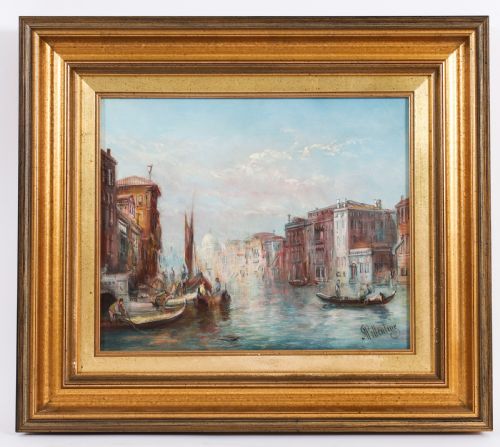
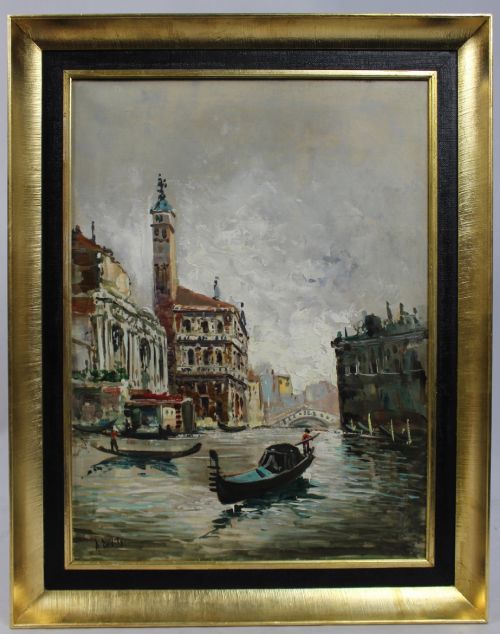
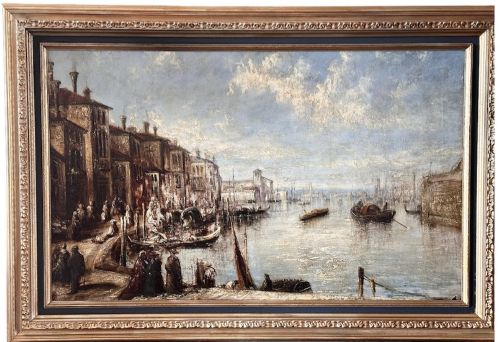
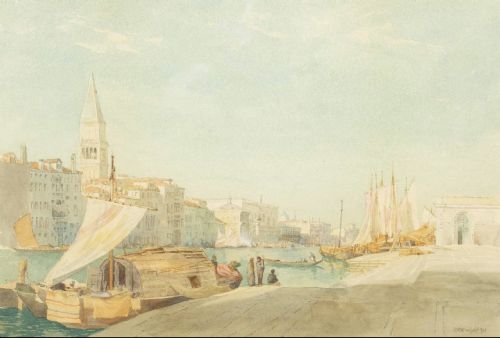



Antique Venice Painting
When you search for an antique venice painting, you step into 19th-century waterways and sunlit lagoons captured by Victorian and Edwardian artists.
Antique Venice Painting
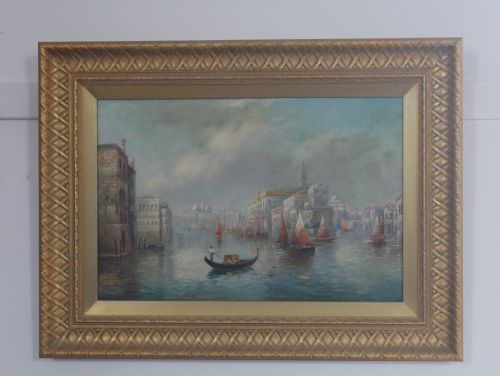
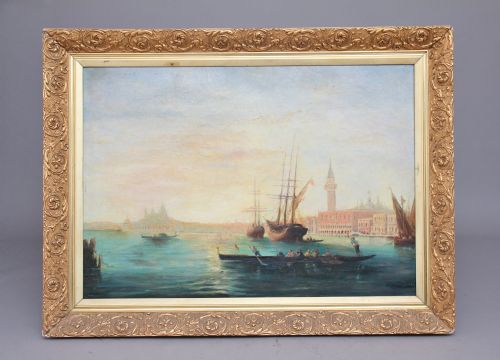
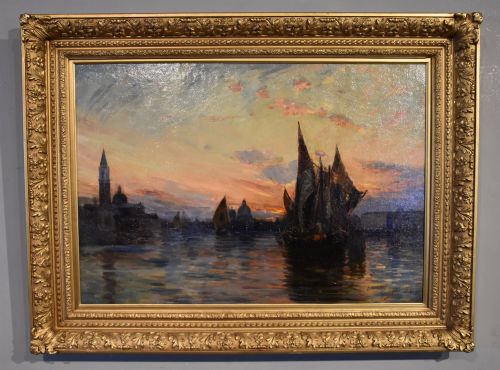
An antique venice painting captures the historic architecture, canals, and lagoon life of the floating city through the eyes of British and continental artists.
The selections on this page span the nineteenth century into the early twentieth century, taking the form of oil paintings on canvas and panel alongside detailed watercolours on paper.
Subjects centre on iconic landmarks such as the Grand Canal, the Doge's Palace, the Rialto, and the Santa Maria della Salute, alongside quiet scenes of gondoliers and distant islands.
Materials and Technique
Artists relied primarily on oil paint applied to stretched canvas or board to build rich atmospheric textures and luminosity in their depictions of Venetian light.
Watercolour on paper served as an alternate medium for capturing translucent lagoon mists and swift impressions of daily activity on the water.
Many surviving works retain their original giltwood or gilded wood frames, which complement the tonal warmth of the pigments.
Media across these pieces include oil paint, watercolour, pastel, gouache, and ink on canvas, board, and paper.
What Separates Examples
Quality rests upon the artist's command of light and atmospheric perspective, distinguishing atmospheric topographical interpretations from stiff records of architecture.
The brushwork in superior examples demonstrates confidence and fluidity, particularly in the handling of reflections on the water and the hazy expanse of the Venetian sky.
Condition of both the pigment layer and the period framing preserves the integrity of the piece without obscuring the original hand of the painter.
Alfred Pollentine·Francis Moltino·Claude Jousset·Antonietta Brandeis·Antoine Bouvard Senior·Hercules Brabazon Brabazon
The Antique Venice Painting Glossary
- Giltwood
- Wood carved and coated with a thin layer of gold leaf or metallic powder. This material frequently frames nineteenth-century fine art.
- Watercolour
- A paint consisting of water-soluble pigments used on paper supports. Artists utilised this medium for its translucent qualities.
- Impressionism
- An art style characterised by relatively small, thin, yet visible brush strokes and an open composition. This approach appears in several continental and British works on this page.
- Canvas
- Closely woven fabric used as a support for oil painting. It is stretched over a wooden frame before the artist applies the ground and pigments.
- Gouache
- An opaque watercolour paint mixed with a white pigment to create denser colour. It often appears alongside pastel and ink in mixed media lagoon views.
Antique Venice Painting: Frequently Asked Questions
How do I identify a 19th-century Venetian painting?
Look closely at the costume of the figures, the specific architectural details of the palazzos, and the framing materials typical of the Victorian era. Signature styles and period pigments also offer clear indicators of the date.
Examine the back of the canvas or paper support for old dealer labels, inscriptions, or artist signatures that anchor the piece in its historical context.
Where should I hang a framed oil painting?
Select an interior wall away from direct sunlight, dampness, and extreme temperature fluctuations to protect both the canvas and the giltwood frame.
Ensure the hanging hardware is securely fixed to support the weight of the frame and keep the artwork at a comfortable eye level.
What is the difference between oil and watercolour views?
Oil paintings on canvas offer heavier texture, deeper colour saturation, and a robust surface that suited grand interpretations of the Grand Canal.
Watercolours on paper provide a lighter, more translucent impression of light on the lagoon, often preserved under glass within a historic mount.
How do I care for antique watercolours?
Keep watercolours away from direct light to prevent the fugitive pigments from fading over time. Maintain stable humidity levels in the room.
Consult a professional paper conservator if the paper develops foxing spots or requires cleaning within its original mount and frame.