




Antique Venice Landscape
When you search for antique venice landscape, you find atmospheric watercolours and oil paintings capturing the canals, palazzos, and lagoons of the city.
Antique Venice Landscape
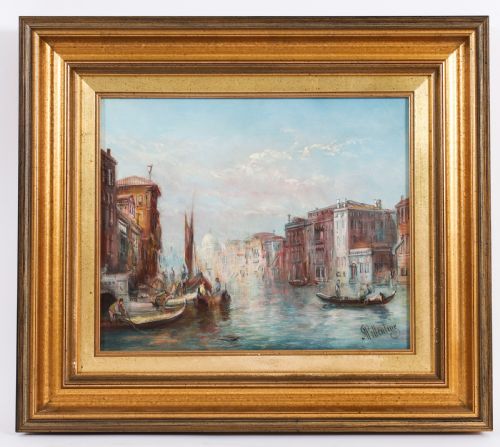
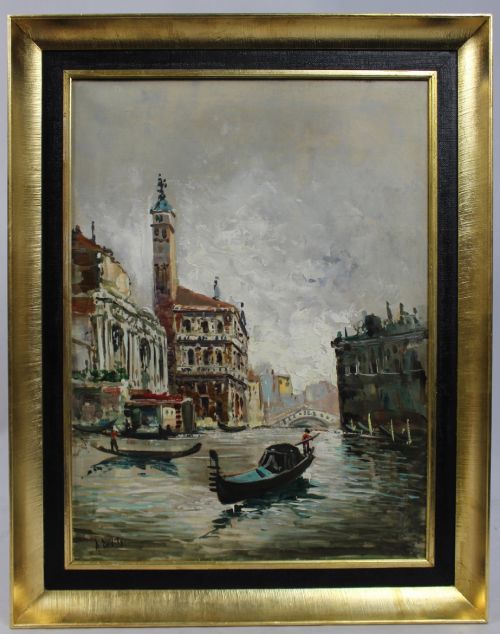
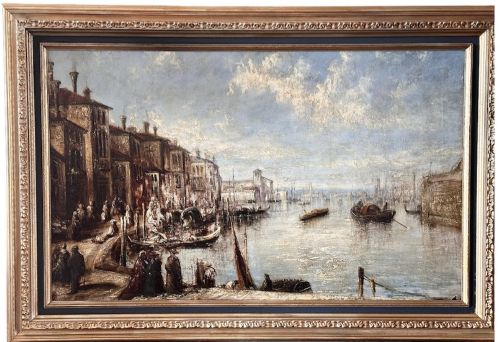
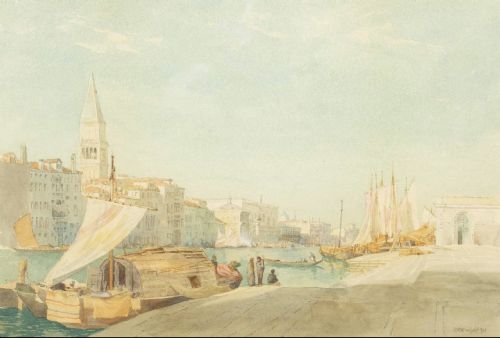
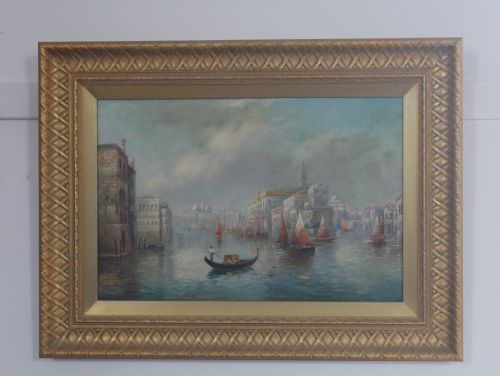
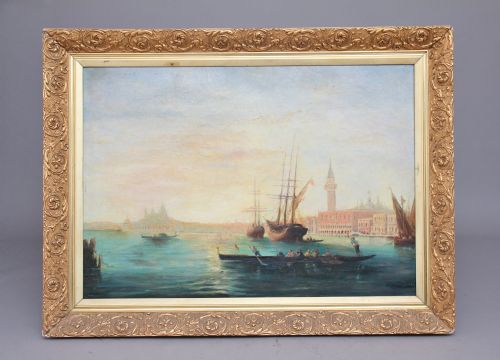
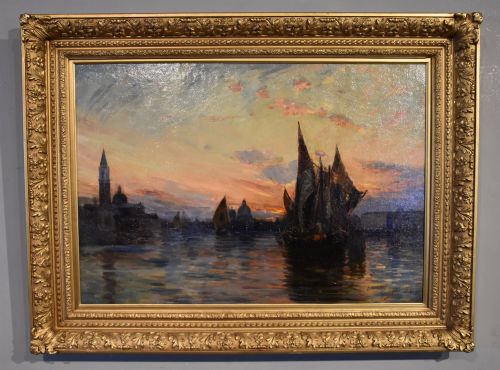
An antique venice landscape depicts iconic Venetian scenes such as the Grand Canal, the Doge's Palace, Santa Maria della Salute, and the surrounding lagoon. These works capture the distinct light, architecture, and daily life of the city through the eyes of visiting and resident artists.
The selections span the nineteenth and early twentieth centuries, encompassing Victorian, Edwardian, and Impressionist interpretations. Works range from detailed architectural townscapes to looser, atmospheric treatments of water and sky.
Common subjects include gondolas navigating narrow canals, merchant vessels, and expansive views across the Venetian basin. Buyers encounter both intimate watercolours on paper and larger oil paintings on canvas.
How they were made
Artists captured these subjects primarily using oil paint on canvas or board, alongside watercolour and gouache applied to paper. Oil paintings often utilise thick, textured brushwork to render the shimmering reflections on the water, while watercolours rely on fluid washes of pigment to convey the luminosity of the Venetian sky.
The listings feature works from the nineteenth and early twentieth centuries, executed in oil on canvas, watercolour, and gouache.
What varies in quality
Quality rests in the artist's ability to render the characteristic light and atmosphere of the lagoon rather than mere architectural precision. Superior examples demonstrate a confident handling of perspective and fluid brushwork that brings movement to the water and sky.
The choice of medium and the preservation of the pigments also influence the character of the piece. Works that retain their original colour vibrancy without excessive fading or discolouration offer a stronger visual impact.
Alfred Pollentine·Francis Moltino·Jane Vivian·Antonietta Brandeis·Antoine Bouvard Senior·Clara Montalba·Hercules Brabazon Brabazon
The Antique Venice Landscape Glossary
- Grand Canal
- The main waterway of Venice, lined with historic palazzos, which frequently serves as the central subject in these paintings.
- Lagoon
- The enclosed bay of the Adriatic Sea in which Venice sits, providing artists with broad expanses of water and distinct atmospheric light.
- Giltwood
- Wood that has been treated with gold leaf or a gold-coloured finish, commonly used for framing antique paintings.
- Gouache
- An opaque water-based paint that allows for dense highlights and solid colour applications, often combined with watercolour in Venetian scenes.
- Impressionism
- A nineteenth-century painting style characterised by relatively small, thin, yet visible brush strokes and an emphasis on accurate depiction of light.
Antique Venice Landscape: Frequently Asked Questions
What subjects appear most often?
Paintings frequently feature the Grand Canal, the Doge's Palace, and the church of Santa Maria della Salute. Artists also recorded quieter lagoon views and gondoliers working on smaller canals.
These landmarks provided recognizable backdrops that appealed to travellers and collectors during the Victorian and Edwardian eras.
How do watercolours differ from oils?
Watercolour paintings use transparent pigments on paper to create luminous, delicate effects, often capturing the transient morning light. Oil paintings on canvas employ heavier layers of pigment, allowing for richer textures and deeper tonal contrasts.
Both mediums were widely used by artists working in Venice during the nineteenth and early twentieth centuries.
Are these paintings contemporary to the scenes?
Most works date from the nineteenth and early twentieth centuries, reflecting Venice as it appeared during the height of the Grand Tour and the British Impressionist period. Artists travelled to the city to paint en plein air or gathered reference sketches to complete in their studios.
Consequently, the views record historical architecture and maritime traffic of those specific decades.
How should I display a framed painting?
Paintings on canvas or paper require stable indoor humidity away from direct sunlight to protect the pigments and any original giltwood frames. Proper placement ensures the delicate brushwork and paper supports remain preserved over time.
Allowing adequate wall space lets the framing and the scale of the townscape be appreciated fully.