
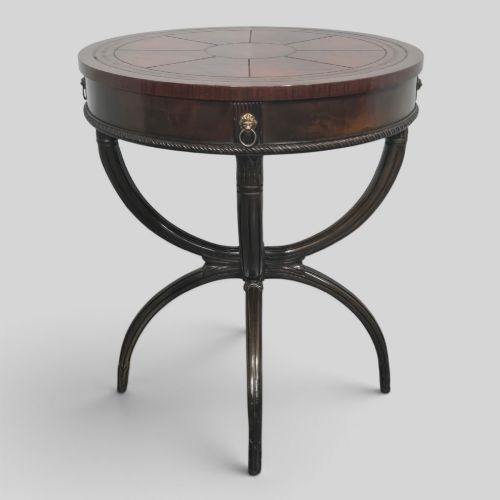


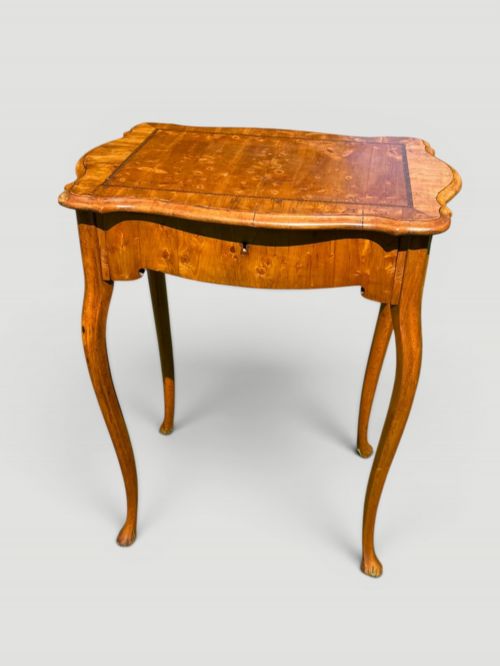


Antique Veneered Lamp Table
An antique veneered lamp table brings rich wood figures and compact surfaces into a room, serving as a versatile place for illumination.
Antique Veneered Lamp Table
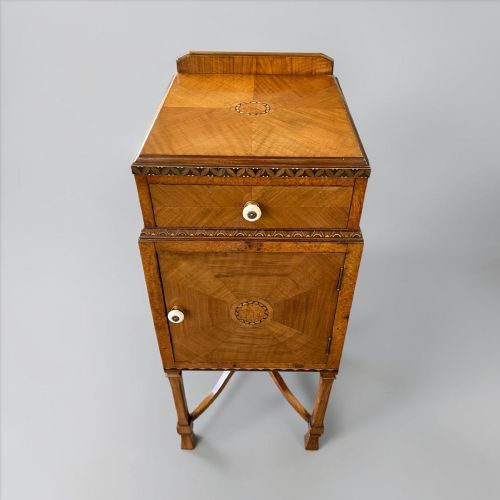
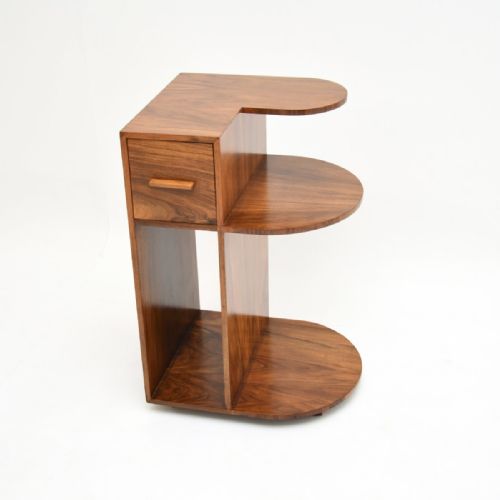
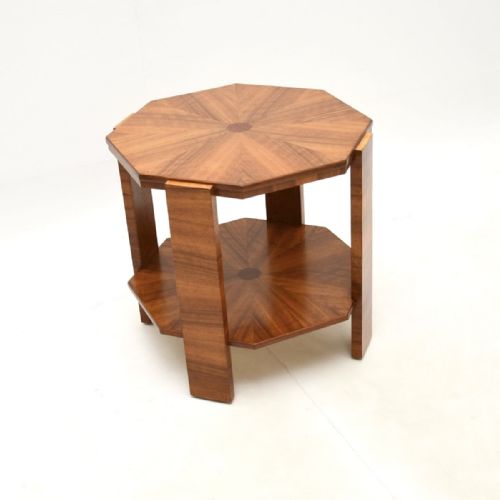
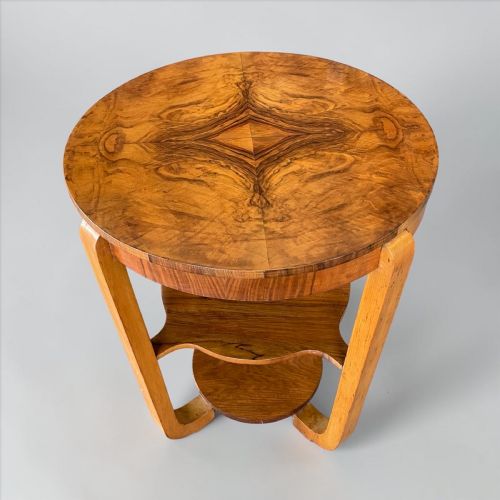
An antique veneered lamp table appears across several periods from the nineteenth century through the Art Deco era of nineteen-thirty, taking forms such as occasional tables, side tables, bedside tables, and centre tables. You will frequently meet pieces from the Edwardian period and the nineteen-thirties, showing circular, oval, octagonal, or rectangular tops.
The construction relies on timber frames carrying decorative surface veneers rather than solid blocks of luxury wood. These practical surfaces were designed to sit beside seating or beds, holding lamps or ornaments while displaying the natural grain patterns of the timber.
How they were made
Cabinet makers applied thin slices of decorative wood, such as burr walnut, walnut veneer, mahogany, satinwood, pollard oak, or alder root, over a secondary wood foundation. This technique allowed workshops to display highly figured grain patterns that would be unstable or too costly if cut as solid boards.
Detailing often included contrasting inlay lines using ebony or brass mounts, while finishing involved French polish or similar traditional clear coats to seal and highlight the grain. Tops might incorporate quartered veneer layouts or mirrored glass inserts set within the wooden frames.
Listings feature pieces spanning the nineteenth century, the Edwardian era, and nineteen-thirties Art Deco, utilising walnut, mahogany, and satinwood.
What varies in quality
The distinction between tiers of quality rests largely upon the choice and arrangement of the timber veneers. Highly figured burr woods and symmetrical quartered layouts demand greater skill from the cabinet maker than plain, straight-grained surfaces.
Construction methods and secondary details also set pieces apart, such as the precision of ebony inlay work, the weight and casting quality of brass elements, and the structural integrity of the table frame beneath the veneered top.
The Antique Veneered Lamp Table Glossary
- Veneer
- A thin slice of decorative wood applied to a stable secondary timber foundation. This method creates striking surface patterns while conserving scarce materials.
- Burr walnut
- A distinctive timber cut from a tree growth or burl, yielding a swirling, knotty grain pattern. It was frequently utilised on high-status table tops.
- Occasional table
- A small, movable table designed for light use around a sitting room or bedroom. These pieces often doubled as lamp tables.
- Quartered veneer
- Four matching veneer slices arranged so their grain patterns mirror one another. This creates a symmetrical geometric design across the table top.
- Satinwood
- A pale, hard wood with a natural sheen, popular during the nineteenth and Edwardian periods for inlay work and decorative surfaces.
Antique Veneered Lamp Table: Frequently Asked Questions
What is an antique veneered lamp table?
It is a small functional table surfaced with decorative wood grain, used historically to support lighting or hold small items.
These pieces span various styles from nineteenth century designs to nineteen-thirties Art Deco examples.
How do I date an antique lamp table?
Dating relies on observing the silhouette, construction methods, and prevailing decorative styles associated with specific eras like the Edwardian period or nineteen-thirties.
Materials such as satinwood or specific veneer cuts also help place a piece within its historical manufacturing window.
Where should I place a lamp table?
These compact tables suit living rooms beside armchairs or sofas, functioning as a practical surface for reading lamps.
They also serve effectively as bedside tables or accent pieces in hallways and corners.
Are these tables made of solid wood?
Most examples utilise a stable secondary timber frame overlaid with thin slices of decorative veneer on the top surface.
This technique permitted craftsmen to display complex grain patterns like burr walnut or pollard oak without risking the warping associated with solid boards.