

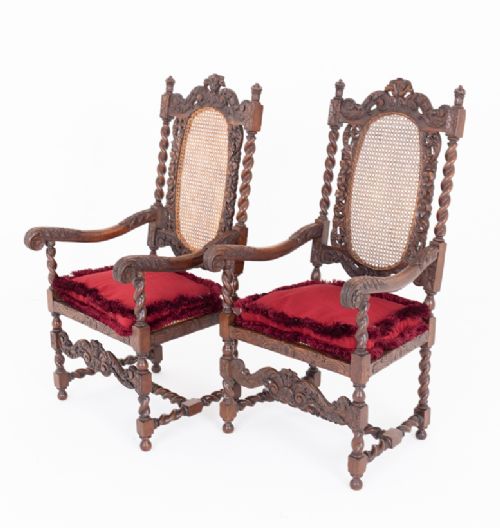


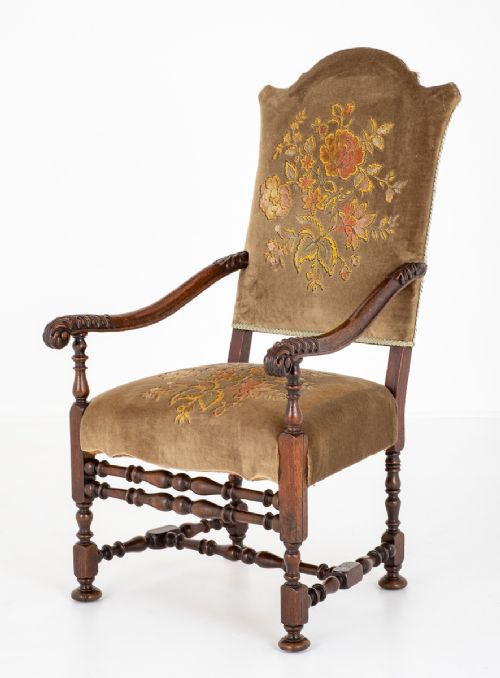

Antique Velvet Throne
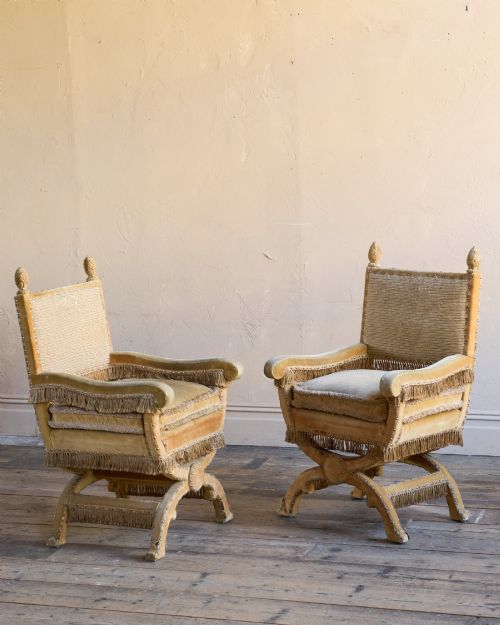
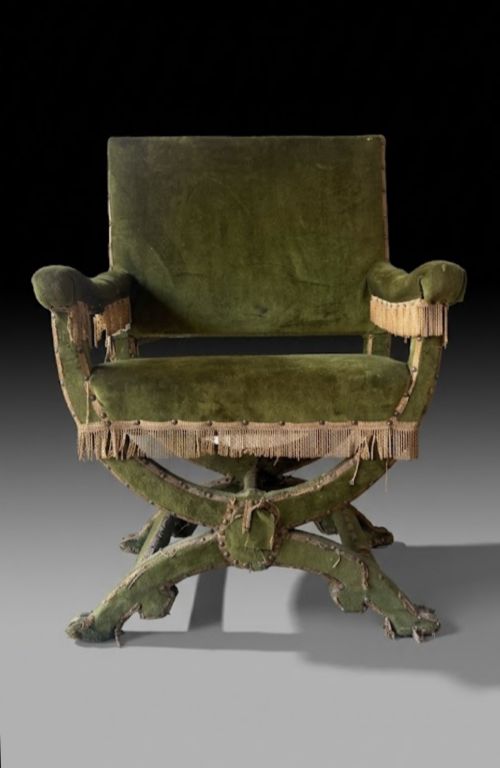
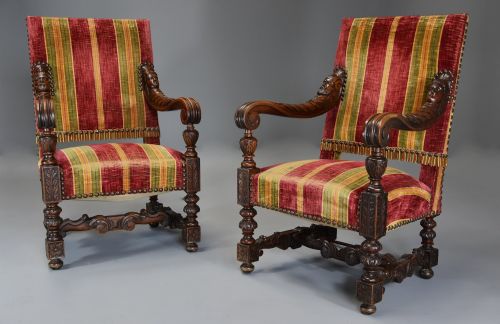
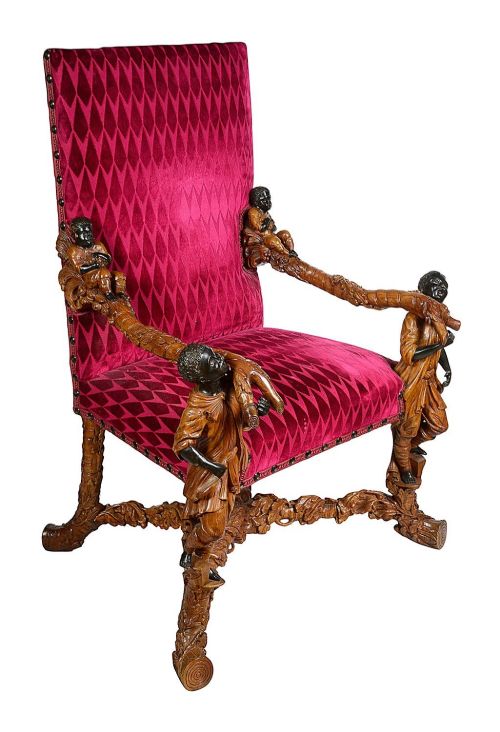
These heavy, commanding antique velvet throne pieces anchor a room with centuries of carved timber and rich textile presence.
Antique Velvet Throne
When you search for an antique velvet throne, you enter a domain of imposing high-backed seating designed to project status, authority and theatrical presence.
The pieces meeting this description span centuries of revivalist ambition, drawing heavily on Baroque, Jacobean, and Gothic idioms rather than a single unified era.
Most examples found on this page adopt the form of substantial armchairs, drawing on Italian Renaissance, French Baroque, and Victorian interpretations of historical grandeur.
Materials and construction methods
Makers shaped these chairs from dense timbers such as oak, walnut, rosewood, laburnum, and exotic hardwoods, selected for their structural integrity under heavy carving.
Upholstery relies on sumptuous velvet textiles, frequently accented with decorative fabric fringes or secured with exposed brass hardware along the structural frames.
Joinery and deep relief carving define the architecture, utilising traditional mortise and tenon methods alongside elaborate hand-chiseled ornamentation.
Antique Velvet Throne Retail Price Guide 2026
Typical asking prices for velvet throne among the pieces listed under this phrase on Sellingantiques today, from the lower quarter to the upper quarter. They describe what is for sale here now, not the wider market.
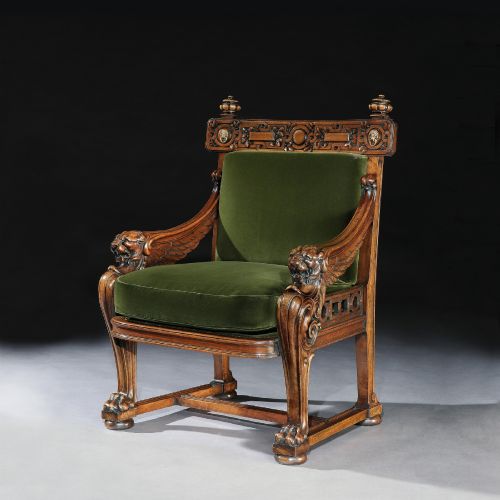
At least one ambitious nineteenth-century maker channeled Thomas Hope to seat you atop fierce carved lion monopodia.
Evaluating craftsmanship and integrity
The depth, sharpness, and ambition of the hand-carved woodwork distinguish exceptional examples from simpler vernacular production.
The retention of original textiles, period-appropriate upholstery methods, and untouched patination on the timber ground elevate the standing of a piece.
Proportional harmony between the towering backrest, arm supports, and heavy underframe dictates the visual authority of the chair.
The Antique Velvet Throne Glossary
- Velvet
- A woven tufted fabric with a dense pile, providing the characteristic soft texture seen on these grand seats.
- Monopodia
- A furniture support taking the form of a single animal leg, frequently terminating in a lion paw as seen in classical revival pieces.
- Fauteuil
- An open-armed upholstered armchair originating in France, typically featuring exposed wooden framing around the back and armrests.
- Baroque Revival
- A nineteenth-century historicist style emulating the dramatic curves, elaborate carving, and exuberant scale of seventeenth-century continental design.
- Wainscot
- An early form of solid wooden armchair constructed with panelled backrests, predating heavily upholstered seating.
Antique Velvet Throne: Frequently Asked Questions
How were throne chairs originally used?
These imposing seats were positioned at the head of a room or dais to denote authority, occupied by figures of status during audiences or formal assemblies.
Over time, their domestic role shifted toward use in grand halls, morning rooms, and libraries as statements of taste and prestige.
How do I care for antique velvet?
Protect the pile from direct sunlight to prevent fading and preserve the rich depth of the textile over decades of placement.
Gentle brushing with a soft-bristled tool helps maintain the direction of the nap without abrading the delicate fibres.
Where should I place a throne chair?
These pieces demand generous spatial allowance, functioning effectively as standalone focal points in large hallways, studies, or living rooms.
Pairing them with neutral surroundings lets the heavy carved timber and dense textile pile command the visual weight of the space.
How do I identify a revival style?
Look to the specific vocabulary of ornament, such as barley twist turnings for Jacobean pieces or scrolling acanthus leaves for Baroque forms.
Nineteenth-century makers deliberately borrowed these motifs, exaggerating scale and combining woods to signal historical reverence.